How were the media silenced during Vučić's time, without formal bans?
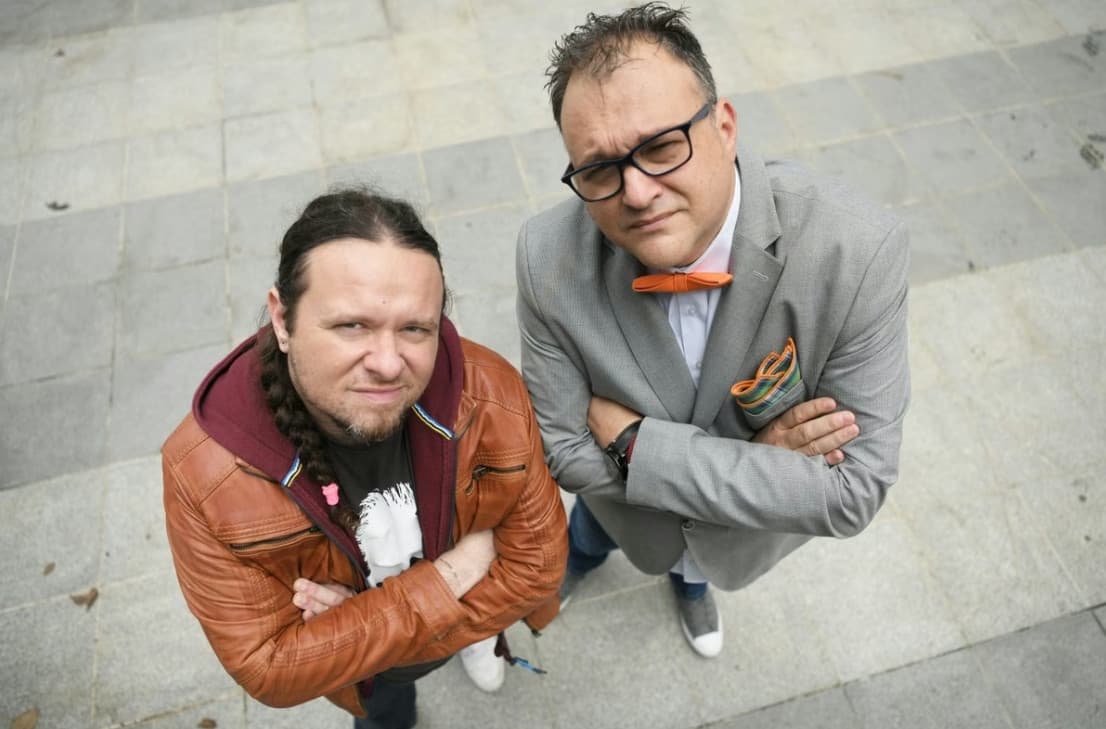
While the debate about media freedom in Serbia is once again framed around the claim that Aleksandar Vučić has never shut down any television or media outlets, the experiences of journalist Suzana Trninić and the president of the ANEM Board of Directors, Veran Matić, point to a different problem: media do not have to be formally banned in order to lose economic viability, editorial independence, and space for professional journalism.
From the shutdown of local editorial offices and changes in ownership structures to pressures on advertisers, the expansion of Telekom's influence, and attacks on journalists, the media landscape in Serbia has undergone a profound transformation during the rule of the Serbian Progressive Party (SNS).
Since the Serbian Progressive Party (SNS) came to power in 2012, the media scene in Serbia has experienced significant changes. Although Aleksandar Vučić may claim that the government has not formally banned critical media, media freedom implies not only the right to exist but also the ability for journalists to freely investigate, critique the government, and report without political and economic pressures.
Journalist Suzana Trninić believes that the assertion that "Vučić has not shut down media" is based on a misunderstanding of how media can be destroyed. As she explains, shutting down does not necessarily mean prohibiting broadcasting or revoking operating licenses. A media outlet can continue to exist but lose the conditions for normal functioning.
She cites B92 television, where she worked for over 15 years, as an example. According to her, after the SNS came to power, there was no formal ban on the station, but rather economic pressure that included pressures on advertisers and the economy.
“Vučić economically destroyed B92 through pressures on advertisers, pressures on the economy, and pressures on those who can buy advertising space on television,” says Trninić.
She explains that a television station without advertisers is hard to sustain, and that the economic weakening of B92 preceded changes in its programming and staffing structure. According to her testimony, after the cancellation of the shows she edited and hosted, she was reassigned to a position related to content entry and processing on the television's website.
After she refused to accept such a job change, she was fired without severance pay, despite her long-standing work at the television station.
“Vučić did not specifically shut down television stations. Vučić shut down people, shut down names, shut down recognizable voices,” says Trninić.
She believes that such an approach allowed media to formally continue to exist while simultaneously removing journalists who engaged in critical reporting. As an additional mechanism, she points to the establishment and expansion of new television stations, creating an illusion of media pluralism without the necessary existence of actual editorial diversity.
Privatization and changes in media ownership
One of the important turning points in the transformation of the media scene was the privatization of media, which resulted from legal changes in 2014. The state was supposed to withdraw from ownership of 75 media outlets. According to Reporters Without Borders, only 34 media outlets were sold, while many others were closed, leaving over 1,000 journalists unemployed. The organization also pointed out the concentration of ownership and the connections of some new owners with the ruling party.
In the following years, the issue of ownership became one of the key factors for understanding the relationship between politics and media.
Veran Matić believes that after Vučić returned to power in 2012, the approach was not to directly ban media but to create conditions in which they could be bought, taken over, or transformed into media that support the government.
He particularly emphasizes the role of Telekom Srbija, a state company that has expanded its presence in the media sector through the acquisition and establishment of media outlets.
Matić points out that changes in media legislation allowed the state to return to ownership structures in the media, after previous legal solutions had anticipated its withdrawal from that sector.
“He opted for this soft repression that took place in combination with corruption and the creation of opportunities for those media not to be banned but to be bought and transformed into media that support his politics,” Matić assesses.
According to him, the consequence of such a process is not only a change of ownership but also a change in editorial policy, as well as a reduction of space for media that address the public interest.
REM, national frequencies, and the question of accountability
The issue of media freedom has once again become particularly visible through discussions about the work of the Regulatory Authority for Electronic Media (REM) and actions against television stations accused of violating professional and legal standards.
Trninić believes it is important to distinguish potential regulatory measures from political retaliation. In her interpretation, the fact that proceedings are now being initiated against certain television stations does not necessarily mean a change in the approach to media freedoms but may indicate that institutions are beginning to do the work they have neglected for years.
She insists that the public must be clearly informed about the reasons for restricting or revoking a television station's right to broadcast a particular program.
“I think it is important to use this moment for educating the audience of those media, to familiarize them with the program they have been watching,” Trninić states.
According to her, the legal provision and the explanation of the regulatory authority's decision should be clearly displayed on the screen, so that viewers know that any potential sanctions are not a consequence of a change in government, but rather a result of established violations of rules.
On the other hand, Matić points out that REM has played an important role in maintaining the existing media order for years. He cites the allocation of national frequencies in 2022 as an example, when four licenses were granted to Pink, Happy, Prva, and B92 television stations.
The allocation of frequencies has been subject to criticism regarding the independence of the regulator and the editorial policies of the television stations that were awarded the licenses.
For Matić, national frequencies represent a public resource that should serve the citizens, not the interests of politically connected media structures.
Serbia's declining position on the media freedom index
Changes in the media scene have also been accompanied by changes in international assessments of media freedom. According to the World Press Freedom Index by Reporters Without Borders (RSF), Serbia ranked 63rd out of 180 countries in 2013. The following year, it improved to 54th place, but by 2015 it had dropped to 67th position.
After a brief improvement in 2016, when it ranked 59th, a decline followed: in 2017 it was 66th, in 2018 it was 76th, and in 2019 it dropped to 90th place. By 2020, Serbia had fallen to 93rd position.
In the following years, there was no significant and lasting improvement. Serbia ranked 91st in 2023, 98th in 2024, and 96th in 2025. According to the 2026 index, Serbia is positioned 104th out of a total of 180 countries.
For comparison, Serbia was 63rd in 2013, while today it is 41 places lower on the global ranking. At the same time, there has been an increase in cases of media freedom violations. According to the annual monitoring by Media Freedom Rapid Response, 208 cases of media freedom violations were recorded in Serbia during 2025, compared to 84 in 2024. These cases include various forms of pressure, threats, physical assaults, and interference with journalists' work, affecting both national and local media in Serbia.
The media scene as a space for political control
Matić believes that over the years, a system has formed in which a large part of the media scene operates in the interests of the authorities, while independent media remain in a significantly more difficult position.
Matić estimates that at least 90 percent of approximately 2,300 media outlets in Serbia, based on the situation he describes for October 25, were under the control of or functioning in the interests of the authorities. He also identifies project co-financing of media as one of the key problems, which should contribute to pluralism and better information dissemination, but which he claims is often used to favor politically aligned media.
At the same time, Matić warns that certain parts of Serbia have become media deserts, where citizens lack access to local editorial offices that would address the issues of their communities.
However, he believes there is potential for change in this situation, primarily thanks to local independent media, investigative editorial teams, and journalists who continue to work in the public interest despite pressures.
Trninić, on the other hand, believes that current changes in the work of institutions must be viewed through the lens of their prior accountability. If REM and other institutions are now beginning to enforce the laws, the question arises as to why they did not do so in previous years and who will be held accountable for the period during which professional standards were neglected.
She concludes that any potential sanctions must be transparent and based on the law, regardless of which television station is involved.
Author: Aleksandar Đokić
Source: Mašina
Related Articles
Media and journalism associations have requested Minister Bratina to suspend the competition for members of the committees for project co-financing in 2027.

ANEM: Recommendations from the European Commission on media freedom are a clear guideline for the future government.