Sharp report from the European Commission on Serbia: A number of issues highlighted regarding the state's relationship with the media.
The absence of functional REM, the allocation of state funds to media that violate the Code, issues surrounding editorial autonomy and the operation of public services, concentration in the media market, deteriorating journalist safety, and an increasing number of attacks and threats – this is part of the list of media problems highlighted by the European Commission in its latest annual report on the rule of law in Serbia for the year 2026. The report is also critical regarding the situation in the judiciary, the fight against corruption, and the institutional control of power.
The report is written in a sharp diplomatic tone and is quite similar to the draft internal report (non-paper) of the European Commission from May, which has since leaked to the media. Cenzolovka reported on this here.
The problems highlighted in the media sector relate to a range of areas – from the functioning of regulators, journalist safety, the distribution of state funds to the media, the situation in the media market, and ownership concentration, etc.
The situation in all these areas, according to the Commission's report, raises concerns.
WHAT IS THE RULE OF LAW REPORT?
The European Commission's Rule of Law Report (RoL) is an annual report by this body that maps the state of the rule of law in member countries as well as in four candidate countries (Serbia, Montenegro, Albania, and North Macedonia).
It covers the development of the rule of law in four key areas: the judiciary, frameworks for combating corruption, media freedom and pluralism, and the institutional balance of power.
REM
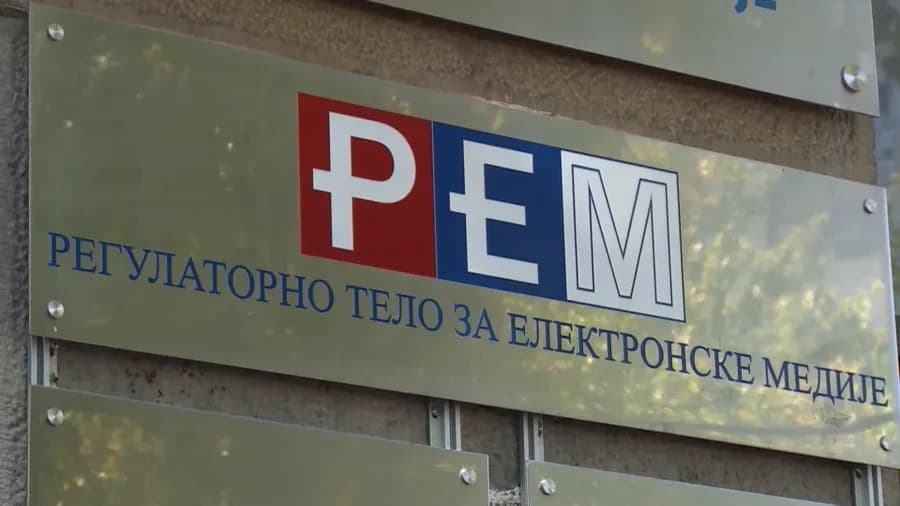
The first issue highlighted is the Regulatory Authority for Electronic Media, specifically the fact that there is still no functional Council.
Its formation has been awaited since November 2024, and it was only in July 2026 that this issue was raised in Parliament.
“In the meantime, the audiovisual market has been left without a regulator to respond to legal violations. Some TV channels have started broadcasting on the cable network of Telekom Serbia without the necessary broadcasting license. Some of these channels received public funds, and public officials appeared on them,” writes the European Commission.
Among the consequences of the absence of REM is that since 2022, the fifth frequency has not been allocated, and that some secondary legislation regarding the operation of public media services has not been adopted, including the rules for appointing management boards.
Serbia, as noted, has not taken significant measures to combat information manipulation and foreign interference. RT Balkan continues to broadcast in Serbian through the cable operator Telekom Serbia, which is majority state-owned, based on a license issued by the REM Council in 2024.
Project Co-Financing
The European Commission states that, although the law stipulates that adherence to ethical standards is one of the key criteria for the allocation of funds, “some media that violated the Code continued to receive money.”
“Although the Press Council effectively monitored adherence to the Journalists’ Code in the print media, this did not affect the fairness of the distribution of public co-financing,” the EC states, adding that the Council received 185 complaints in 2025, a sharp increase compared to 2024, when there were 88 complaints.
The document also notes that the Council is particularly concerned about the new practice of simultaneously publishing identical articles in multiple media outlets, often with completely identical headlines. These articles did not meet basic journalistic standards and seemed aimed at harming individuals mentioned in them.
Editorial Autonomy and Pluralism of Public Media Services
“Concerns remain regarding the editorial autonomy and pluralism of public media services,” the European Commission states.
They remind that the Media Pluralism Monitor for 2026 established that the independence index of public services in Serbia has worsened and that this area is of “high risk.” Even the amendments to the law in June 2025 did not secure their full financial independence, so RTV had to finance itself from the budget to compensate for the lack of subscription revenue.
No new secondary legislation has been adopted, including that which regulates the process of selecting a new commissioner for the protection of viewer rights.
The Commission notes that concerns remain about limited pluralism and biased reporting in favor of the authorities, that public services are criticized for not reporting on protests, and they remind that some journalists were dismissed due to their personal and social political views. It is also noted that a new director (Manja Grčić, editor’s note) was appointed in February 2026 after a process criticized by associations and during which another candidate withdrew due to irregularities.
Market Concentration
The media market, the EC warns, has become more concentrated following the amendments to the Law on Public Information in 2023, which allowed state-owned enterprises to own media.
“In the context of further concentration of the media market, political and economic influence on the media, including editorial policy, represents a serious cause for concern,” emphasizes the EC.
It is also noted that “concerns have arisen” regarding political pressure on critical media following the publication of a conversation between Telekom's director Vladimir Lučić and Sten Miller, who discussed how to weaken the media of the United Group. Subsequently, it is reminded, there were changes in the management and editorial staff of N1.
Concentration is also occurring at the local level. The European Commission reminds that a small number of the same companies have launched or bought several local media in some municipalities, including those where elections were held in March 2026.
Implementation of Media Laws
The European Commission assesses that media laws are not being properly implemented.
“Media laws and strategy, particularly regarding the fairness of public financing and transparency of ownership structures, are not being implemented appropriately. Media often heavily rely on public co-financing due to the large number of registered media and the limited advertising market, especially at the local level,” it is stated.
Other forms of public financing, such as the procurement of information and advertising services, are awarded through less transparent procedures, writes the European Commission.
The situation is not better regarding the transparency of public financing and ownership.
“The media register still does not disclose the ultimate owners of each media outlet, as many owners are listed as dependent companies,” the document states. Measures from previous strategies have not yet been implemented, such as those that would ensure fair and transparent distribution of state advertising tenders, and the privatization of the media sector has not been completed.
Refusal of Institutions to Provide Information
In Serbia, journalists, the European Commission notes, often face refusals from public authorities to provide information, as well as a complete lack of responses.
The Commissioner for Information of Public Importance still cannot enforce his decisions through coercive measures – according to the Commissioner’s report for 2025, which the EC recalls, a higher percentage of decisions made on complaints from journalists remained unexecuted than decisions made on complaints from other applicants.
“Access to sensitive information of public importance has been denied, particularly in cases related to environmental damage, capital projects, the use of public resources, the legalization of illegally constructed buildings, and the co-financing of media projects,” it is stated in the report.
Safety of Journalists
At the very end of the section on media, the Commission addressed perhaps the most critical issue – attacks on journalists and their safety.
“The safety of journalists has further deteriorated, with an increase in physical attacks, threats, intimidation, and hate speech. (...) The number of physical attacks, threats, intimidation, and instances of hate speech against journalists has risen, and the authorities have not consistently condemned them. Threats and serious attacks were reported in the context of local elections in March 2026. Female journalists were particularly exposed to threats and attacks, especially online,” notes the European Commission.
Verbal attacks by high officials on journalists have continued, the document reminds, but attacks from other quarters have also occurred.
“Some physical attacks on journalists occurred in front of police officers who did not intervene, and there were also reports that the police used force against journalists, preventing media workers from reporting on protests and briefly detaining journalists,” writes the EC.
The document also draws attention to the inaction of the judiciary – only a small number of reported cases, as noted, have been concluded with a final judgment.
In addition to these attacks, the European Commission also draws attention to spy software used to monitor journalists and activists, coordinated attacks by bots on the accounts of independent media and civil society organizations, as well as the rise of SLAPP lawsuits.
“Cases of Strategic Lawsuits Against Public Participation (SLAPP) continue to exist and increasingly hinder the work of investigative media and civil society organizations. In 2025, 14 such cases were recorded, compared to seven during 2024. Serbia will need to align with EU legal standards, including rules on the early dismissal of obviously unfounded claims and ensuring legal remedies against the abuse of legal proceedings,” it is emphasized.
Finally, the European Commission reminds that no progress has been made in holding accountable those responsible for the murders of Dada Vujasinović, Slavko Ćuruvija, and Milan Pantić. In the case of Ćuruvija, as noted, the Supreme Court determined that the acquittal was made in violation of the law, but this did not change the final decision.
CONTRADICTORY REPORTS OF THE COMMISSION
This report was preceded by two contradictory internal non-papers about Serbia that the European Commission has been delivering to European bodies since the beginning of the year, which Cenzolovka reported on last week. In the first, the EC extensively criticized Serbia for the situation in the area of the rule of law, including the media. Problems with the blockage of REM, attacks on journalists, non-prosecution of attacks, and the concentration of pro-regime media in the market were all highlighted – everything that is now emphasized in this official report.
However, a non-paper with a more positive tone soon followed, after a meeting between EC President Ursula von der Leyen and Aleksandar Vučić in Tivat. The officials then agreed that Serbia, among other things, would adopt amendments to a set of judicial laws and initiate the formation of the REM Council, which soon occurred. A new non-paper followed in which the European Commission stated that Serbia had made progress in the rule of law and recommended to the Council of Europe that Cluster 3 be opened in negotiations with Serbia.
The situation is not much better in other areas – the judiciary, the fight against corruption, and the functioning of the authorities.
The European Commission emphasizes that the legal amendments from January 2026 weakened the autonomy of prosecutors and judges, and although Serbia has partially addressed the comments of the Venice Commission, political pressure on judges and prosecutors is increasing. Effectiveness in criminal cases is declining, the Prosecutor's Office for Organized Crime is facing pressures, and the investigation into the collapse of the canopy remains stagnant.
Regarding corruption, there is no consistent and firm practice of prosecution and convictions for high-level corruption, the asset declarations of officials are poorly checked, and whistleblowers are under pressure. The system of institutional control of the authorities is also in trouble – the Assembly poorly performs its oversight function as there is no real debate in parliament, and as noted, legislators can only limitedly influence laws. Particularly intense public debate is provoked by the way the president exercises his powers as it exceeds constitutional limits.
Furthermore, the report concludes, civil society organizations are under increasing pressure and attacks.
Source: Cenzolovka