
Declaration of the Journalists' Association of Serbia (UNS) on May 3rd, World Press Freedom Day
On the occasion of World Press Freedom Day, observed on May 3rd, UNS is issuing a Statement. We invite journalists and media professionals to read the Statement or display it on screens, in online and printed editions, on May 3rd from 11:55 AM to 12:00 PM.
**DECLARATION**
The Serbian judiciary continues to demonstrate its inability to punish the murderers of journalists and their masterminds.
Even after several decades, the masterminds and murderers of journalists Slavko Ćuruvija and Milan Pantić have not been found or punished, nor have the circumstances surrounding the death of Dada Vujasinović been clarified. Those responsible for the murders and kidnappings of journalists and media workers in Kosovo and Metohija from 1998 to 2005 have also not been identified or punished.
In the year between two World Press Freedom Days, journalists and media workers will remember the record number of attacks on their colleagues, the majority of which went unpunished.
In 2025, the Independent Journalists' Association of Serbia (UNS) recorded 261 cases of threats against journalists, 150 more than the previous year, while the number of recorded physical attacks reached the highest level in the last five years.
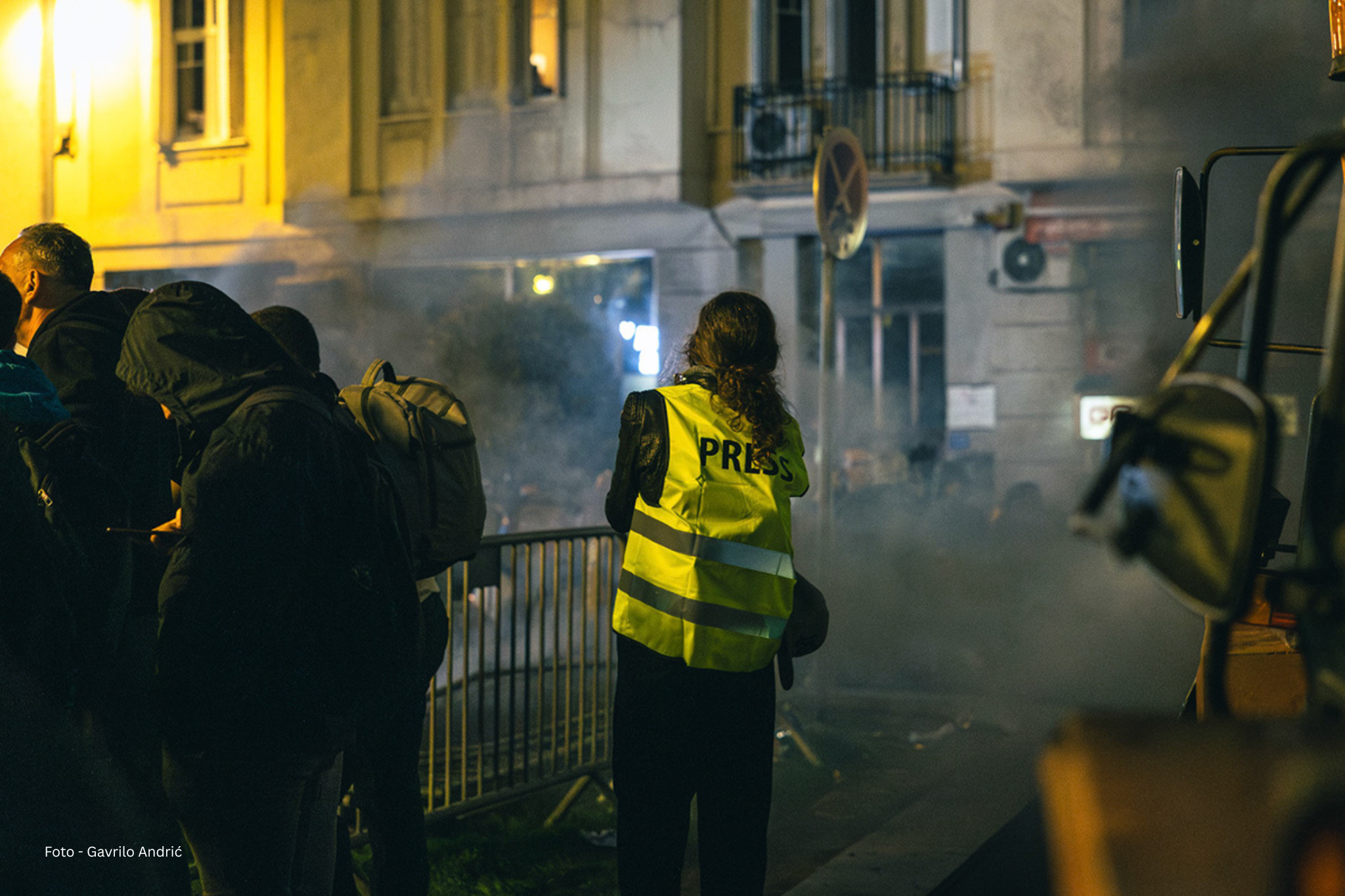
In the past year, we were particularly concerned by the trend of attacks on journalists and media workers covering events on the ground, most often at student protests or local elections. It is especially alarming that a large number of these attacks occurred in the presence of police, who did not intervene. On the contrary, police officers often physically endangered journalists.
Endangered safety, targeting, police repression, and obstruction of work are the reality for the media community in Kosovo and Metohija. The practice of unjustified bans on journalists entering Kosovo and Metohija continues.
Serbian media in Kosovo and Metohija are also facing serious financial problems, with even the most credible media outlets facing closure. The discriminatory attitude of institutions towards Serbian editorial offices and the Serbian language is even more pronounced, as is the arrogant behavior of public officials towards journalists and media workers.
Considering the ineffective response of the relevant authorities to the threats against journalists and media workers, as well as the poor economic position of our colleagues, we must state once again this May 3rd that it is difficult to be a journalist in Serbia.
This is confirmed by the latest World Press Freedom Index published by Reporters Without Borders (RSF). Among the 180 countries in the world for which RSF calculates the media freedom index, Serbia was ranked 104th in the 2026 report, which is a drop of eight places compared to the previous year, and is categorized among countries with a "difficult situation."
The year between two World Press Freedom Days will also be remembered by journalists and media workers in Serbia for numerous dismissals and reprisals by media owners against colleagues who tried to conduct their work professionally amidst changes in editorial policies and deep societal divisions.
On November 4, 2024, the mandate of the members of the Council of the Regulatory Body for Electronic Media (REM) expired. A new Council has not been elected to this day, resulting in this regulatory body not functioning for over a year and a half.
After more than a decade of project co-financing, we can say that this system has been rendered meaningless. The members of the majority of the commissions that have passed and are deciding on the distribution of funds this year are representatives of newly formed associations whose primary activity is participation in commissions, rather than advocating for better conditions for journalists and media. In the previous year, tabloids and media outlets that do not adhere to the journalistic code also received funding.
The year between two World Press Freedom Days was marked by drastic violations of the Journalists' Code of Serbia, especially in cases of reporting on tragic events.
**Therefore, UNS demands:**
- That the relevant authorities efficiently investigate all threats against journalists and media workers and regularly inform the media and the public about the results of these investigations;
- That judicial authorities do not allow the murder of Milan Pantić to reach the statute of limitations for prosecution for the crime of murder;
- That the Criminal Code be amended to ensure that more forms of attacks on journalists are subject to criminal liability;
- That effective institutional protection for journalists from pressure by public officials, media owners, and other powerful individuals be ensured;
- That public funds be distributed fairly to preserve media pluralism and provide quality information to citizens;
- That the National Assembly of Serbia finally elect the members of the REM Council;
- That the institutions of Kosovo and the international administration in Kosovo urgently establish an International Expert Commission to investigate the murders and kidnappings of journalists and media workers in Kosovo from 1998 to 2005; UNS demands that representatives of journalists' associations be included in this commission.
*In accordance with [UN Security Council Resolution 1244](https://www.srbija.gov.rs/kosovo-metohija/19944).*
**Source: [UNS](https://www.uns.org.rs/sr/desk/UNS-news/187408/proglas-udruzenja-novinara-srbije-uns-povodom-3-maja-svetskog-dana-slobode-medija.html)**
Related Articles
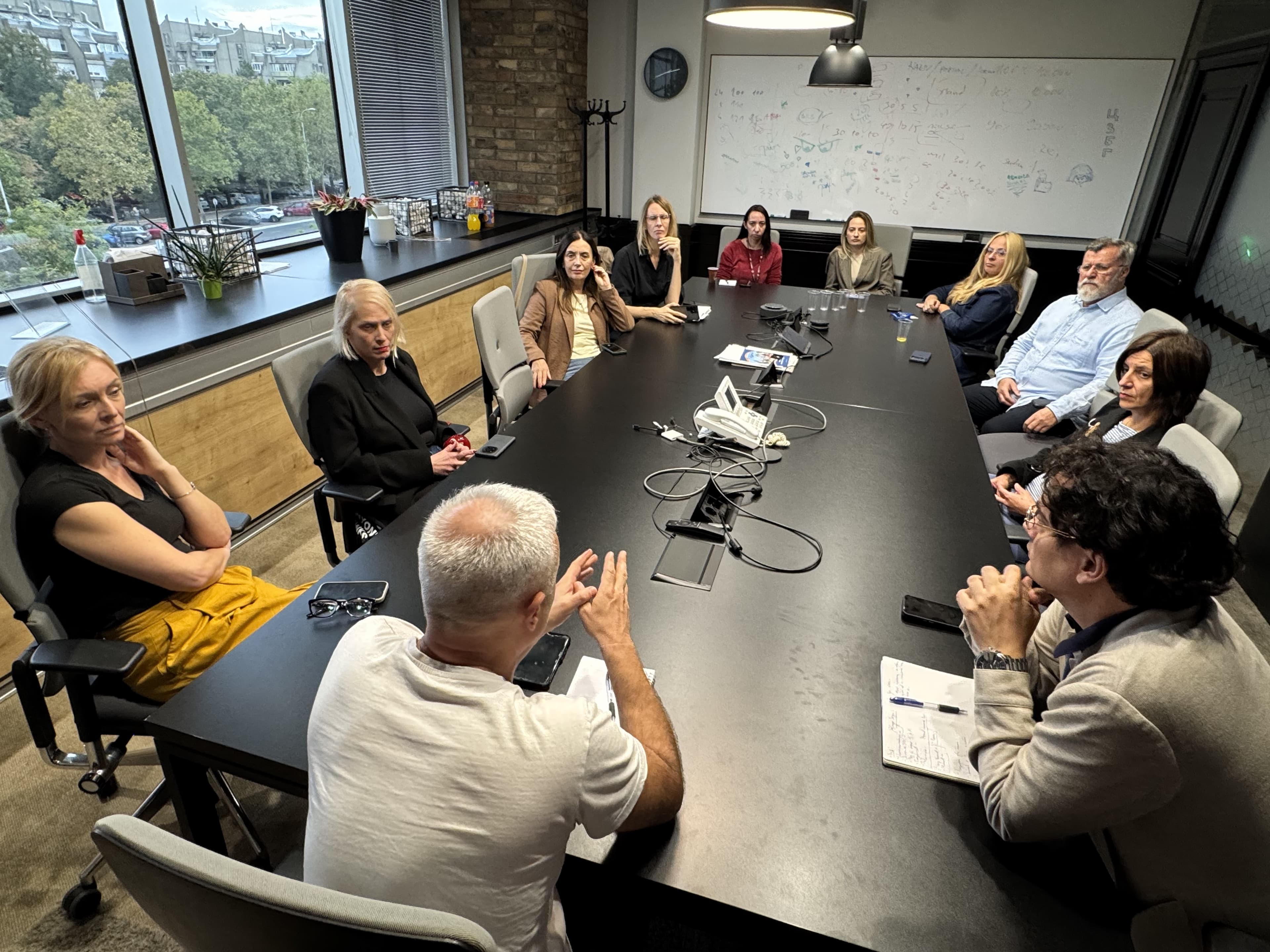
Journalistic associations provided support to the editorial team of Nova.rs: Ongoing communication and updates with international stakeholders agreed upon.

Coalition for Media Freedom: Stop Attacks and Harassment of Journalists During the Election Campaign

.png&w=3840&q=75)