
SĆF: In December, 79 attacks on journalists and media by 18 government officials.
During December 2025, the Slavko Ćuruvija Foundation recorded at least 79 cases of verbal attacks on critical journalists and media in Serbia by 18 high-ranking state officials and members of parliament, as well as one ministry, through public appearances and posts on social media.

In the last five months of the previous year, the Slavko Ćuruvija Foundation recorded a total of 673 verbal attacks on journalists and media outlets.
The number of direct verbal attacks on critical journalists and media recorded in December was lower than in previous months (October – 163, November – 154), likely due to the fact that the focus of attacks during this month was predominantly on judicial authorities due to decisions that were not favorable to those in power, especially regarding the "General Staff" affair.
Throughout December, the most active representatives of the ruling majority in verbal attacks on media and media workers were:
• Member of Parliament of the Serbian Progressive Party (SNS) Vladimir Đukanović – 30 attacks
• Member of Parliament SNS Nebojša Bakarec – 10
• President of Serbia Aleksandar Vučić – 9
• President of SNS and advisor to the President of Serbia Miloš Vučević – 7
• Speaker of the National Assembly Ana Brnabić – 3
• Member of Parliament SNS Milenko Jovanov – 3
• Member of Parliament SNS Nataša Jovanović – 3
Also involved in the attacks and targeting of critical media were: Ministers of Information and Telecommunications Boris Bratina, Culture Nikola Selaković, Finance Siniša Mali, and Economy Adrijana Mesarović; Director of the Office for Public and Cultural Diplomacy Arno Gujon; Members of Parliament SNS Milovan Drecun, Milica Nikolić, and Biljana Pantić Pilja; Commissioner for Protection of Equality Milan Antonijević; and Media Advisor to the President of Serbia Suzana Vasiljević. One attack in this month also came through a statement from the Ministry of Culture.
In December, the disinformation that TV N1 had reported the death of a boy from Valjevo due to police brutality during protests in August 2025 was once again activated. Although this claim originated on social media, pro-regime tabloids and government representatives attributed it to N1, despite repeated denials from this media outlet.
Immediately after his appointment, Commissioner for Protection of Equality Milan Antonijević joined in the spread of this disinformation, stating in a TV program on December 12: “(...) if we ignore the truth, if we ignore the facts, if we do not apologize for crossing the line and sharing information that is fabricated or inaccurate in any way, which has disturbed the public, mentioning Ljilja’s earlier reference to a 16-year-old boy, I believe that most people... (the host adds: The biggest disinformation released in the last six months). That's right. And I believe a huge number of people still think that something like that is possible, that someone's death is hidden, and it's truly incredible how far citizens believe such information.”
In December, this disinformation was also used by President Vučić and Member of Parliament Biljana Pantić Pilja in public appearances to attack N1.
The targets of attacks and belittlement in December 2025 were specific media outlets, primarily N1 (22 times) and NovaS (17), but also KRIK (8), Radar (7), Danas (5), Vreme (3), RTS (2), and CINS. Pro-regime TV Happy was also attacked, described as a media that “has long shifted to the other side” (President of Serbia), as well as specific journalists and media workers – Mladen Savatović, Ana Novaković, Žaklina Tatalović, Danica Vučenić, Draža Petrović, Dinko Gruhonjić, Nedim Sejdinović, Aleksandar Dikić, cartoonist Dušan Petričić, and Ivan Plavšić.
The majority of attacks aimed to discredit the professional autonomy of journalists and media (in 64 cases). In addition, critical journalists and media were accused of committing criminal acts (13), labeled based on personal characteristics (8), labeled as traitors and mercenaries (7), dehumanized (4), and subjected to fascization and nazification (5).
When speaking about the media, high-ranking state officials used expressions such as “anti-Serbian journalistic knives and bloodsuckers,” “transmitters of texts from Western agencies,” “tycoon clique,” “idiotic blockade media,” “fake journalists,” “scum media,” “agency.”
December was also marked by the arrest of Aleksandar Dikić, a journalist at KTV, after his statement was manipulatively interpreted and used to criminalize independent media and construct a narrative about endangering the physical safety of the President of the Republic. Following the arrest, a coordinated smear campaign ensued, directed not only against Dikić but also against journalist Danica Vučenić, who publicly commented on the controversial statement.
Additionally, at the beginning of December, a guilty verdict was handed down against the editor of the pro-regime tabloid Novosti for the criminal offense of defamation, based on a private lawsuit, due to a series of articles rife with hate speech. The same actors who not only remain silent on physical and verbal attacks against critical media and journalists, but often lead them, publicly condemned this verdict, interpreting it as “an example of the misuse of judicial mechanisms for political purposes,” “an open attack on press freedom and an attempt to intimidate all who dare to speak differently,” claiming that it “punishes and persecutes journalists, trying to block truthful reporting,” and similar.
The verdict was also condemned by the Ministry of Information and Telecommunications, which had previously not commented on attacks against independent media and journalists, while the relevant minister regularly participated directly in such attacks.
In the statement from the Ministry, it was stated that it was a “draconian sentence such as has not occurred since the time of the criminal NDH during World War II,” along with a series of insulting qualifications directed at the Journalists' Association of Serbia and the Independent Journalists' Association of Serbia.
Source: Slavko Ćuruvija Foundation
Related Articles
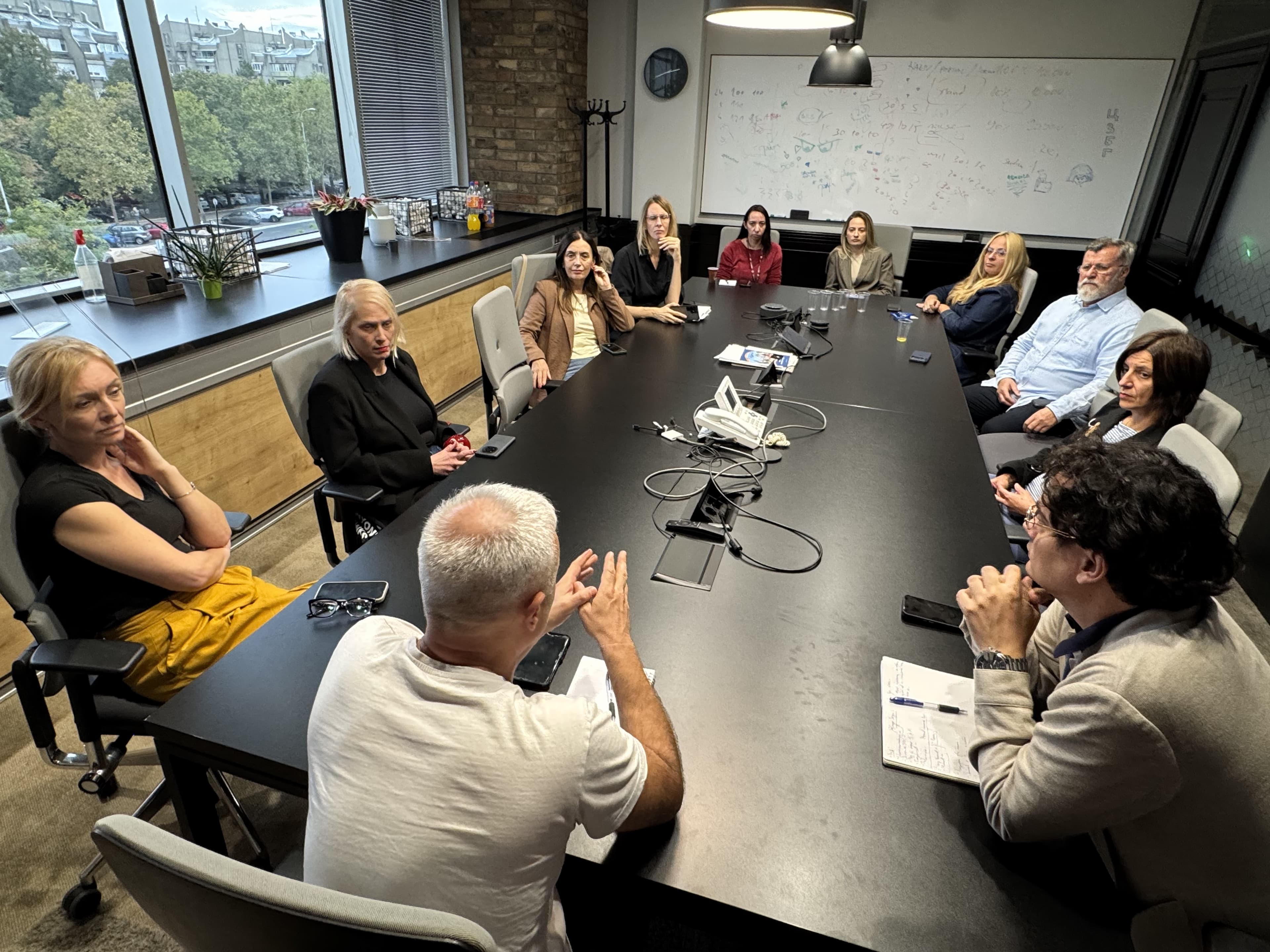
Journalistic associations provided support to the editorial team of Nova.rs: Ongoing communication and updates with international stakeholders agreed upon.

Coalition for Media Freedom: Stop Attacks and Harassment of Journalists During the Election Campaign
.png&w=3840&q=75)