
Serbia has abandoned the expulsion of Masimo Moratti: "The end of a nightmare."
In less than 20 days, the Serbian authorities expelled Massimo Moratti, an Italian researcher who publishes articles about attacks on journalists in Serbia, due to a "security risk" to the state, and then suddenly revoked their own decision "due to new information."
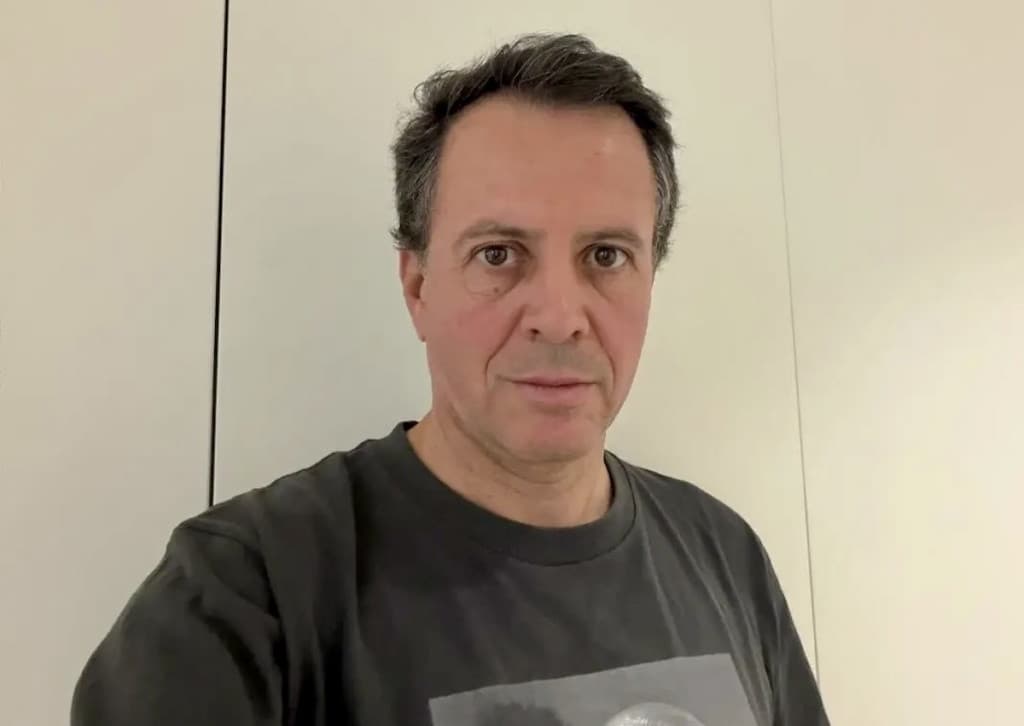
After seven months of waiting for a response to the request for an extension of his stay in Serbia, discussions with the Security Information Agency (BIA), and a decision regarding his expulsion due to "unacceptable security risk," Serbian authorities revoked the decision against Masimo Morati, a researcher at the Italian Observatory for the Balkans and the Caucasus (OBCT).
No explanation accompanied the expulsion decision. Now that he has finally been allowed to remain in Serbia, authorities stated that this was done "due to new information and changing circumstances."
On September 22, the authorities revoked the decision from September 4 that mandated he leave Serbia within 15 days, with a one-year entry ban. According to OBCT, this removed all obstacles to a new residence permit.
Relief for the Family
"This is the end of a nightmare. My family and I feel an incredible sense of relief and are very grateful to everyone who worked to resolve this issue," said Masimo Morati to OBCT.
The final resolution from the authorities arrived a day after the European Commission, on Monday, expressed concern through the spokesperson of Ursula von der Leyen's cabinet about the refusal of residency to a researcher and journalist who has legally lived in Serbia since 2022 and worked there for a long time, ordering him to leave due to an alleged risk to national security without explaining the basis for that assessment.
During the same days, Ursula von der Leyen removed Belgrade and Sarajevo from the map of her autumn tour of the Western Balkans, scheduled from September 30 to October 2. Officially, out of respect for the electoral processes. Unofficially, as OBCT reports, because Brussels can no longer ignore how the authorities in Serbia treat journalists and human rights defenders.
Morati and his partner submitted a request for temporary residence in Serbia at the end of January. She received her permit in May. He was summoned "for a conversation" at the Security Information Agency in June, where he was questioned about his professional activities in Serbia.
The expulsion order was delivered to him on September 4. The day before, the police called his partner and informed her that Morati needed to come to the Foreigners' Administration the next day.
He filed an appeal within seven days, requesting a temporary measure to suspend the execution. He warned that the decision would forcibly separate him from his family, as he has a two-year-old child with his wife, who is employed in Belgrade.
His wife is a long-time official at the Balkan office of the Japan International Cooperation Agency (JICA) and coordinates development aid to Serbia and other countries in the Western Balkans.
Therefore, there is no clear reason for the police to deny this family residency. The Editor-in-Chief of OBCT, Luka Zanoni, told Radio Free Europe that he sees no other reason for Morati's expulsion except for his work.
SIX JOURNALISTS HAVE ALREADY LEFT THE COUNTRY DUE TO THREATENED SECURITY
Ten international organizations gathered around the MFRR, including EFJ, IFJ, RSF, IPI, ARTICLE 19 Europe, Free Press Unlimited, ECPMF, Index on Censorship, and Balkan Free Media Initiative, have assessed the refusal of residency and the expulsion order as administrative harassment aimed at intimidation, as retaliation for work and support for journalists in Serbia and the region.
The President of the European Federation of Journalists, Maja Sever, who has been on several missions with Morati, described him to Radio Free Europe as a calm, honest, and professional colleague.
"All of Europe is turning a blind eye to what is happening in Serbia," Sever emphasized, reminding that six journalists from Serbia have already had to leave the country due to their own safety.
Expulsion of Foreigners is Frequent
In the last two years, several foreign activists, journalists, and human rights defenders have lost their residency or been expelled, almost always citing the same "security risk." This pattern has been recorded in two chapters of the European Commission's report on the rule of law for 2025 - the chapter on media freedom and the chapter on civil society.
According to the report, in January 2025, several foreign civil society activists, including those from EU member states, were detained and expelled from Serbia.
"Some were subsequently banned from entering the country because they represent a 'security risk'," the report states.
Certain EU citizens who were legally residing in Serbia, the Commission adds, had their residency revoked after expressing support for protests and were ordered to leave the country on short notice.
Calling on Serbian authorities to adopt the appeal and revoke the decision, the Council of Europe Platform for the Safety of Journalists requested that they explain the legal basis for the refusal of the residence permit, as well as whether Morati's work on media freedom or his comments on public interest issues influenced the assessment that he poses a security risk to the country.
The President of the ANEM Board, Veran Matić, assessed that Serbia increasingly resembles Belarus, stating that the country has now "begun to expel experts monitoring media freedom."
Following initial reactions, the day before the deadline expired, on September 18, Morati received a 15-day extension pending a decision on the appeal.
MORATI LED A TEAM FOR FREE LEGAL AID TO SERBS DISPLACED FROM KOSOVO
Masimo Morati has been a correspondent for OBCT since 2005, initially from Sarajevo and later from Belgrade. From 2011 to 2018, he worked in Serbia on EU projects for displaced persons, refugees, and asylum seekers.
Until June 2015, he led a team of lawyers on an EU project for free legal aid that represented displaced Serbs in property disputes before Kosovo institutions and courts. The project was funded by the EU Delegation to Serbia, and the beneficiary was the Office for Kosovo and Metohija of the Government of Serbia.
One of the most notable cases is the "Jovanović" case from 2014, in which the Constitutional Court of Kosovo ordered the Kosovo Property Agency to execute its own decision and return land near Pristina to a displaced woman, where an usurper had built three houses with a swimming pool. The project led by Morati prepared the request and represented that woman in court.
Morati was the deputy director of the European Regional Office of Amnesty International in London. Upon returning to Belgrade in 2022, he became a member of the MFRR team (Media Freedom Rapid Response), a European mechanism that monitors violations of press freedom and media in EU member states and candidate countries.
Author: Jelena L. Petković
Source: Cenzolovka
Related Articles
Open letter from the editorial team of Nova.rs to Dejan Kocić, Director of United Cloud: Don’t say tomorrow that you were "just doing your job."
ANEM joins the protest of journalists from Nova.rs.



.png&w=3840&q=75)