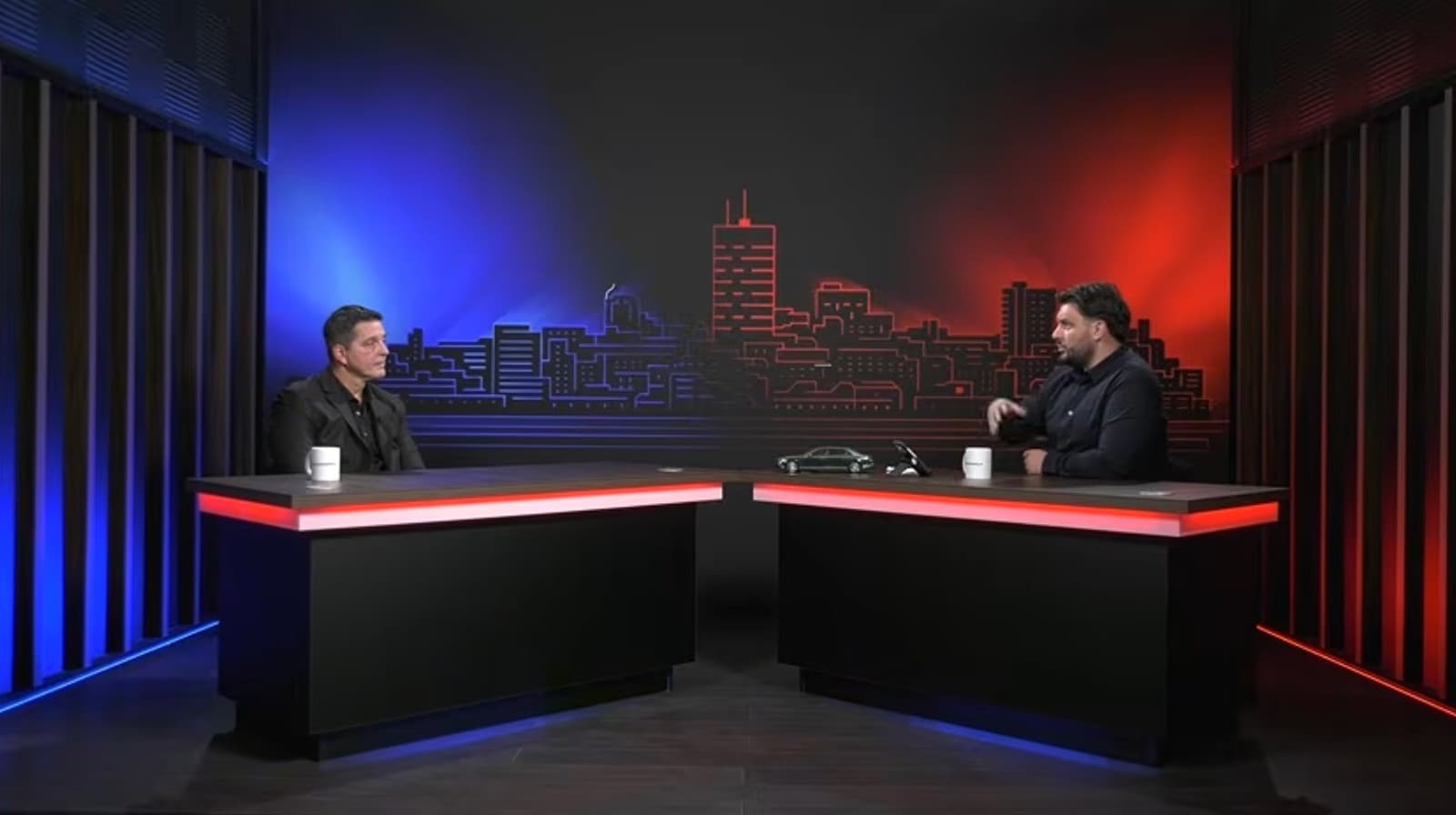
Veran Matić for RTS: The Murder of Journalists as the Cheapest Form of Censorship
The Chairman of the Board of the Association of Independent Electronic Media (ANEM), Veran Matić, has called for greater efficiency from the prosecutor's office and the police in clarifying the murders of journalists in Serbia, as well as prosecuting those responsible for hundreds of attacks on female journalists, male journalists, and media workers.
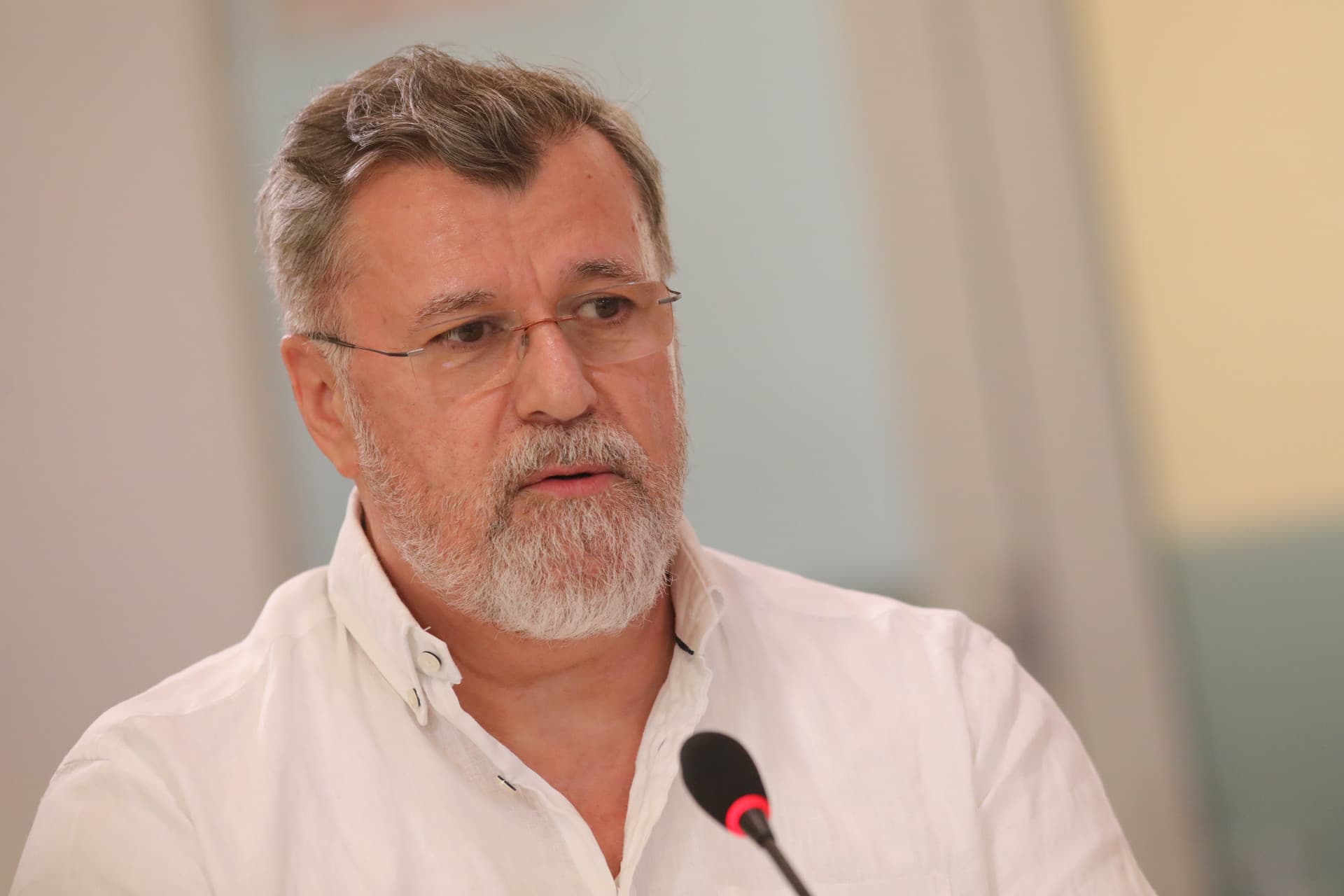
Guesting on the Morning Program of Radio Belgrade, Matić, who has himself been under police protection for years, warned that journalists are forced to leave the country precisely due to the impunity of attacks against them. Once, the percentage of unpunished crimes against journalists was 75 percent; today it stands at an alarming 86 percent.
According to data from the Supreme Public Prosecutor's Office, from 2016 until the end of September 2026, 846 cases related to crimes committed against journalists have been filed. However, despite the large number of reported incidents, the number of convictions remains low.
The reason for Matić's appearance was the initiative of journalistic associations and media organizations, members of the Standing Working Group for the Safety of Journalists (SRG), which calls on the prosecutor's office and police to reconsider certain unresolved cases of murders, attacks, and threats against journalists in Serbia, initiated on the International Day to End Impunity for Crimes Against Journalists.
“Someone from the media community has said that it seems that the murder of a journalist is the cheapest form of censorship. The high level of impunity supports this claim. In our country, we have three unresolved cases of journalist murders. In the case of Slavko Ćuruvija, we had two first-instance rulings, with four defendants sentenced to a total of 100 years in prison. However, the Appellate Court acquitted them, and the Supreme Court determined that the Appellate Panel had violated the law in favor of the defendants. We must continue to work on clarifying all circumstances surrounding this murder, as well as the cases of Dada Vujasinović and Milan Pantić. We also have a drastic case of an assassination attempt on journalist Dejan Anastasijević and his family. Two bombs were left on the window of their bedroom. Fortunately, there were no casualties, but that case remains unresolved as well,” said Matić.
The president of the ANEM Board of Directors, in an interview for Radio Television of Serbia, specifically addressed the worsening safety of journalists since the beginning of student protests, or the collapse of the canopy in Novi Sad. During that period, almost 300 cases of threats and attacks on journalists were reported, including police attacks, of which less than five percent have been resolved.
“We have seen a drastic rise in impunity over the past two years, leading journalists to leave the country because they do not feel safe. This is one of the reasons for our appeal. We demand that the indictment against Aleksandar Radić, who is now outside the country, be withdrawn so that he can return. Ljubomir Stefanović also had to leave the country, but he returned to Serbia last week after an agreement with the prosecutor's office that he would not be detained. We also have journalist Dinko Gruhonjić, who is perhaps the most attacked, even on the street, in bars, and almost none of those cases has been resolved. He also had to take cover. Until serious punishment of those responsible begins, journalists cannot feel safe. I am also under some police protection because the police assessed that my safety has been endangered for a prolonged period. Our image of journalist safety is quite poor,” said Matić.
Attacks on Brankica Stanković Must Stop
Matić particularly highlighted the vulnerability of female journalists who, in addition to threats and attacks, are also subjected to gender-based violence, assessing that such attacks are particularly serious, and the insults they face are often even more severe than death threats.
“These days, we are witnessing very heated attacks on Brankica Stanković, who has been targeted by hooligans singing threatening songs from football stadiums since 2009, and she has also been subjected to insults, threats, and targeting on social media. Such attacks must cease, and we as the media community will strive to continuously condemn and stop these attacks,” said Matić.
Easy Targets for Local Powerbrokers
In the last decade, 846 cases related to crimes committed against journalists have been filed, while 178 cases remain unresolved. At the local level, journalists and media often find themselves alone and lack developed mechanisms of solidarity and protection, as the number of media outlets is small.
“The media community has weakened during this period. The number of journalists has decreased, and cuts are being made at all possible levels. Independent media, especially at the local level, have not received any funding from project co-financing. That funding has gone to tabloids, in violation of the law. Thus weakened, journalists are easy targets for pressures from local powerbrokers and companies, who threaten them with SLAPP lawsuits, where a single verdict can shut down a newsroom,” warned Matić.
Matić also warned of a second wave of pressures directed at media within the United Media group, resulting from its sale to a Portuguese owner. Due to the owner's connections with Viktor Orban and other European autocratic leaders, as well as his support for right-wing parties, he emphasizes that there is a serious danger of ongoing pressures to change editorial policies.
“We are very concerned about the fate of the portal Nova.rs as it does not appear in the development plans of the new owners, which could leave 60 of our colleagues unemployed. The weekly Radar, one of the best in the region known for investigative journalism, is also at risk. This represents a new form of endangerment for female and male journalists, where owners want to shut down successful media for political reasons, rather than for the sake of journalism. And this is happening at a time when their circulation and website traffic are increasing, thus also their revenues,” warned Matić.
Wiretapping and Surveillance - Journalists' Daily Life
Matić emphasizes that investigative journalists are currently the most endangered, stating that at least ten female and male journalists who are continuously engaged in investigating serious and sensitive topics are in life-threatening situations. Due to the nature of their work, they must pay special attention to their own safety, and it has recently been revealed that some, including Radar, have been wiretapped.
“I believe that all of us who are in this profession are being wiretapped. I think that the abuses of the BIA and other security services, such as the VBA and VOA, have reached incredible proportions and represent a clear violation of the Constitution and the law. On the other hand, we have somehow gotten used to being under surveillance and being wiretapped, so we take care of that ourselves. However, getting used to life in a country of total surveillance is truly frightening. This must change fundamentally, including institutions like the BIA. It is often said that the BIA should be disbanded and rebuilt. I don’t know if changes will happen in that way or some other way, but they must be fundamental. If we want a democratic society, we must have democratic institutions as well. I fear that the institutions we have today have never undergone a serious transformation, not even after the changes of October 5. Only their leadership has changed, but not the structure and spirit of these organizations, which remains from the communist period, further shaped by nationalist politics during Slobodan Milošević’s rule, when members of those services participated in crimes in various parts of the country,” assessed Matić.
Matić assessed that one of the key problems in clarifying the murders of journalists is the lack of political will, which existed at the time of the establishment of the Commission for Investigating the Murders of Journalists and during its first two years of operation, when an indictment for the murder of Slavko Ćuruvija was raised. However, political will soon waned, and institutions began to obstruct the work of the Commission and the results achieved.
“In addition to political will, a strong and independent prosecution and judiciary are needed, as well as a very effective police force. In the last two years, during which the number of resolved cases has drastically decreased, we have noticed that the police have not responded to the prosecutor's requests for information gathering in a large number of cases. Thus, in the last two years, the police have obstructed the resolution of most of these cases, and their work is the starting point for their clarification,” said Matić.
Matić also noted that there is a division within the prosecutor's office, claiming that some prosecutors are close to the former government and act in the interest of their party and the former president, thereby directly obstructing the resolution of the most serious cases of attacks on journalists.
Matić states that in 2018, an analysis of the Criminal Code was conducted within the SRG, identifying provisions that could be applied in cases of attacks and threats against journalists, and that it is necessary to repeat this analysis, given that new forms of threats to journalists' safety have emerged and expanded with technological development.
“In this area, there is certainly room for changes to certain provisions. When it comes to penal policy, we have a paradoxical situation where threats can lead to imprisonment, while minor bodily harm is pursued through private prosecution rather than ex officio. There is much room for improvement of the Criminal Code based on ten years of experience from the SRG and the documentation of these cases. It would likely also be necessary to align other laws with the Criminal Code regarding the safety of journalists. We also have a large number of those who repeat threats, which we recognize by their content, style, and the addresses from which they come. However, the prosecutor's office and police do not act efficiently enough,” assessed Matić.
Vučić and Brnabić Led a Campaign of Attacks on Journalists
Matić stated that improving the safety of journalists requires a change in the political attitude towards the media, noting that the majority of cases targeting female and male journalists have come from the top of the state, including the former president, the President of the National Assembly Ana Brnabić, and leading representatives of the Serbian Progressive Party (SNS).
“This creates motives for threats on social media, as their followers and bots interpret such messages as orders to continue targeting, insulting, and harassing journalists with terrifying threats. Additionally, tabloid journalism that endangers the safety and lives of people must be restrained. Informer is one such media outlet. We have had two cases in which it was reported that the perpetrators committed their deeds immediately after watching or reading Informer. This is a combination of autocratic and undemocratic politics and tabloid media that represents its extended arm,” says Matić.
Matić emphasized the importance of transforming public services to fully serve citizens and protect the public interest. He highlighted the need for their professional strengthening so that citizens do not have to seek alternative ways of information.
“Public services play a significant role and bear responsibility in social changes, especially in educating citizens and providing them with timely and detailed information. The transformation of society will be a tough job, and public services can significantly contribute to laying the foundations of a modern, European, and democratic society,” assessed Matić in an interview for the First Program of Radio Belgrade.
Association of Independent Electronic Media (ANEM)
Related Articles

ANEM: The verdict regarding threats to the editor of the portal Volim Zrenjanin is an important message that attacks on journalists must not go unpunished.
ANEM ALARM: The Ministry of Internal Affairs and the Security Information Agency should lift the entry ban into Serbia for journalist Željko Ivanović.