

The government finances media propaganda with citizens' money: Billions for compliant media.
Of nearly two billion dinars of public money that has flowed into the media just this year, a significant portion has ended up in the accounts of editorial offices that regularly violate professional standards and spread misinformation. The propaganda conducted by pro-regime media is not only recognized by what is published but often also by what is systematically omitted.
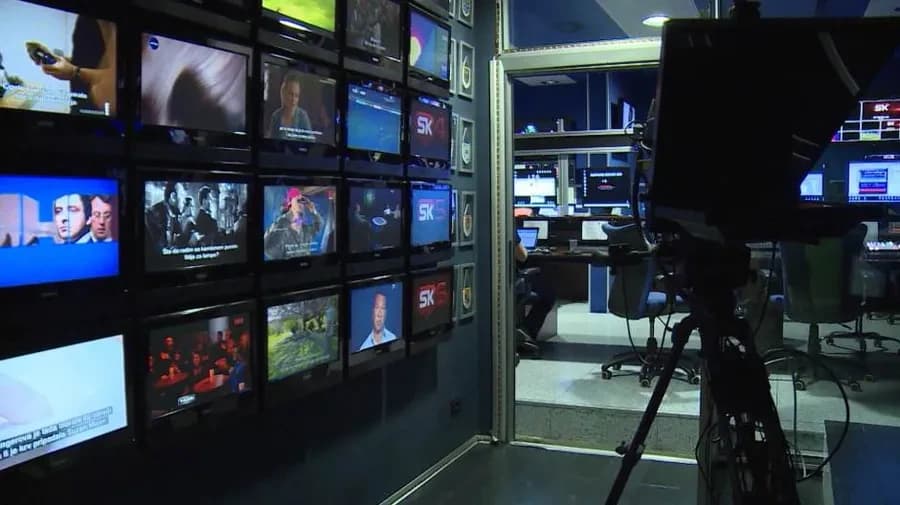
Why do media outlets that violate the Journalists' Code of Ethics day after day receive millions from the budget? The answer lies not only in media competitions but also in a web of contracts, advertising, and public procurement through which the authorities support compliant editorial offices while starving independent ones.
Zoran Gavrilović, Executive Director of the Bureau for Social Research (BIRODI), explains how clientelism directly threatens the safety and wallets of citizens, and what the first key step is to finally break this chain.
How does the mechanism for redirecting budget funds to compliant media operate in practice, and how is it possible that millions are awarded in competitions to those very media that regularly violate the Code and spread disinformation?
–The key problem is not so much that there are no rules, but in their application. The regulations explicitly state that when assessing a project, it is taken into account whether the media received a sanction in the previous year for violating professional and ethical standards, as well as the severity and frequency of the violations.
However, the Press Council indicates that during 2025 it submitted its decisions for as many as 181 competitions, but in several cases, funding was still awarded to media for which the Appeals Commission had repeatedly established violations of the Code.
Thus, the problem arises when the criterion of professionalism is formally included in the regulations but does not have a strong enough influence on the final decision of the commission. At that point, the competition can become a mechanism by which public money is distributed to media regardless of the quality of their journalism. ANEM, in its analysis of the competitions for 2026, assessed that the system is increasingly drifting away from the public interest and pointed to selective application of regulations and the absence of institutional control.
The issue of local competitions is also tied to the implementation of local anti-corruption projects, which foresee the evaluation of supported projects that is not conducted at the level of content evaluation, i.e., whether they serve the public interest.
What hidden ways does the government use to financially sustain clientelistic media while simultaneously starving independent editorial offices?
– Competitions are just one channel. There are also contracts for advertising and marketing, public information, promotion, research, sponsorships, donations, public procurement, and other work that state authorities, local self-governments, public enterprises, and other public bodies can conclude with media.
Interestingly, the Law on Public Information and Media illustrates just how broad that system is: The registry must contain data on the money that media receive directly or indirectly from public authorities, including donations, gifts, sponsorships, research, campaigns, advertising, marketing, promotion, public procurement, and other services.
Therefore, when analyzing the economic relationship between the authorities and the media, it is not enough to ask how much someone received in the media competition. We need to create a consolidated account: how much a specific publisher and related individuals have received in total from all public sources. Only then can we see the real extent of financial dependency.
How does media clientelism directly affect the budget and the safety of the average person?
– In such a system, the citizen is doubly harmed. First, their money finances content that does not necessarily serve the public interest. Second, they can be left without the information needed to monitor how their money is being spent.
Imagine a local community where there is a problem with water quality, public procurement, the condition of a bridge, or the safety of a school. If the local media is economically dependent on the local authorities, there is a risk that it will not investigate the very institution from which it depends for its income. The consequence is no longer just "bad journalism." The citizen may later learn about dangers, corruption, or misuse of funds.
Therefore, media integrity should also be viewed as a matter of the integrity of public institutions and the safety of citizens.
What does society lose when local media become a PR service for the authorities instead of acting as a watchdog?
– It loses the local mechanism of public control. The citizen no longer receives answers to questions: where is the budget money going, who is getting the contracts, why is the school reconstruction delayed, why is the air polluted, who is responsible for the municipal problem.
Instead of journalism that asks questions, we receive protocol journalism: the mayor opened, visited, announced, met, and promised.
At that point, the local media ceases to be an intermediary between citizens and the authorities and becomes part of the authorities' communication apparatus. This is especially problematic if citizens previously financed such content through the local budget.
How can citizens recognize a hidden political advertisement or one-sided propaganda?
– The simplest test is for the citizen to ask themselves a few questions: Who is speaking? Who is not speaking? Is the journalist verifying what they have been told? Are the facts separated from opinions? Does the person against whom serious allegations have been made have the opportunity to respond?
Additional signals are when a report features only one political actor, when the journalist uses the same evaluations and formulations as that actor, when there are no independent sources and evidence, when facts that change the picture of events are omitted, or when an opponent is labeled instead of presenting their arguments.
Thus, propaganda is not only recognized by what is published but often by what is systematically omitted.
Are there legal mechanisms to contest disputed decisions of competition commissions and demand accountability for the misuse of public funds?
– Yes. The decision on the distribution of funds is final in the administrative procedure, but an administrative dispute can be initiated against it. The law also stipulates narrative and financial reporting on project implementation, the submission of evidence of implementation, and for amounts over 1.2 million dinars, a report from an authorized auditor.
In addition to the judicial route, public control is also very important: requesting score lists, biographies of commission members, explanations of decisions, contracts, financial and narrative reports, and evidence that the promised media content has indeed been produced.
In other words, control should not conclude with the question "who received the money?" but rather with the question "what has been produced for that money and has the public interest been achieved?"
What is the key first step to break the chain of clientelism between the media and politics?
– The first step is complete financial transparency in the relationship between the state and the media. Every media outlet should enable citizens to see in one place how much money it has received from the national, provincial, and local budgets, from public enterprises and other entities under state control — through competitions, advertising, marketing, promotion, public procurement, sponsorships, and all other contracts.
Along with this financial trail, a professional trail should also be displayed: decisions of the Press Council, i.e., measures by relevant regulatory bodies. This is particularly important because the data for 2026 show the scale of the system: according to ANEM, around 1.9 billion dinars were distributed across 155 completed competitions and one supplementary competition by September 21.
The second step is the evaluation of supported content that local self-governments are required to conduct under local anti-corruption plans.
Source: Kruševac Press
Related Articles
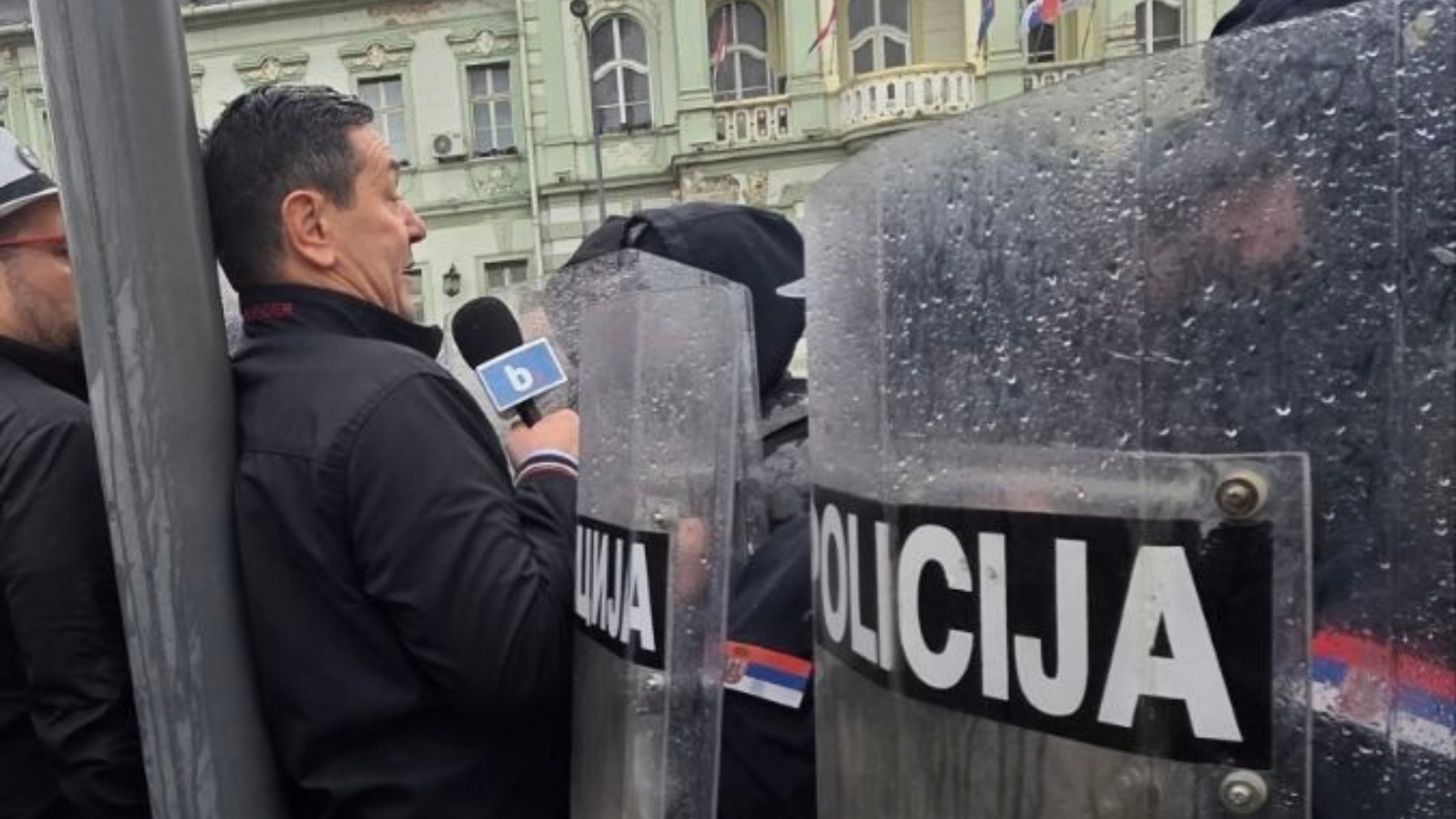
ANEM reported to the prosecutor's office a threat of serious violence directed at Šarović following police action against the KTV team in Zrenjanin.

Journalistic associations provided support to the editorial team of Nova.rs: Ongoing communication and updates with international stakeholders agreed upon.


.png&w=3840&q=75)