
"The goal is local intimidation and - 'scorched earth': What role do the 'clone branches' of Informer and Alo play?"
The expansion of the propaganda network, targeting, and unprofessional journalism at the local level - this could briefly characterize the recent takeover or establishment of local media in Serbia, predominantly by two main media figures of the current regime - Saša Blagojević and Dragan J. Vučićević. In this regard, as Veran Matić explains for N1, "the offensive continues," and the message is clear: "We can do anything, and no one can stop us."
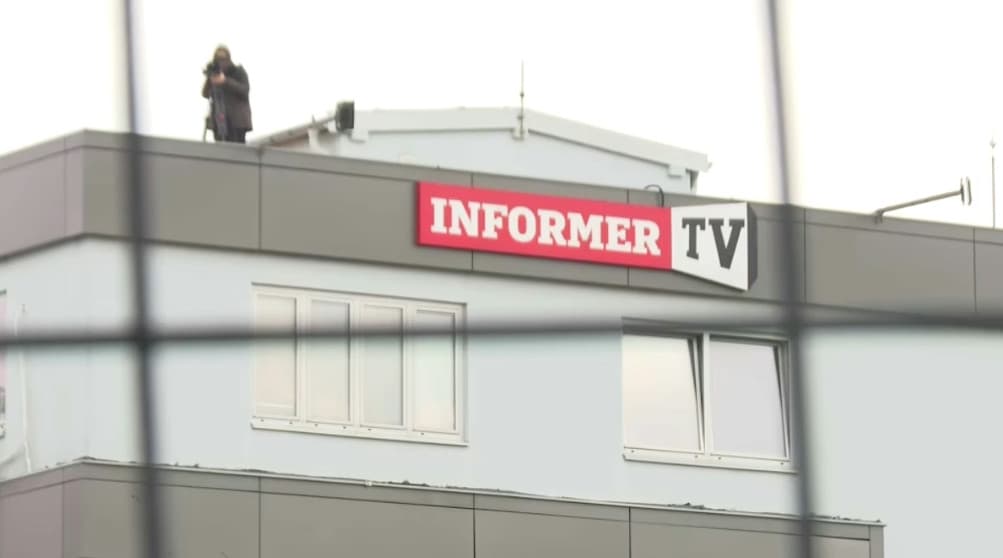
When Aleksandar Vučić was the first, exclusive guest of the newly established Niš TV on May 16 of last year, few could have anticipated that this appearance would mark the beginning—or perhaps the continuation—of the regime's influence expanding over local media in Serbia.
For since that moment until today, numerous local media outlets have been, in one way or another, bought or established by groups close to the current regime.
Additionally, many of these media outlets have come under the control of companies that are, in one way or another, connected to the regime's main propaganda assets, Informer and Alo, specifically their owners—mentioned Saša Blagojević and Dragan J. Vučićević.
"Expansion" of Saša Blagojević
As N1 previously reported, the publisher of the newspaper Alo is Alo Media System Belgrade, and according to available data from official registers, this company is connected to a total of nine enterprises: three sister companies and six subsidiaries. However, this number significantly increases as some of them also have their own subsidiaries.
This is, for example, the case with the production and broadcasting company "Best Media Team," which besides Alo Media System also includes the company Insajder Tim with a 10% share (the publisher of the daily Informer).
"Best Media Team" alone owns 12 companies. These include: Miomedia, Konzum Lav Čačak, TV-5 Užice, InfoMačva, Informative Center, Televizija V5, RTV Bačka Palanka, Santos-komerc Zrenjanin, Lotel plus, Televizija Kikinda, RTV Golija Ivanjica, and RTM Zaječar.
The owner of the "umbrella" (parent) company Alo Media System is Saša Blagojević, who, according to available data, has ownership (both direct and indirect) in more than 30 companies, among which, in addition to those mentioned, are: Studio B from Belgrade, TV Kikinda, Radio Lola, Radio JAT, Radio Karolina, Radio 5 Novi Sad, TDI Radio Television Belgrade...
And it is precisely in the last 15 months that several examples of, to put it mildly, gross violations of the Code of Journalists of Serbia have been recorded on these media outlets—specifically attacks on certain individuals locally, from lawyers to teachers and students.
Reading the Grades of a Student from Valjevo
Perhaps the most disgusting example occurred recently, when on the Valjevo television station V5, host Andrea Veskov—who, at least according to her testimony, was "delegated" to this local media directly from Informer—read live on air the grades of former Valjevo Gymnasium student Vuk Vasiljević. How Vasiljević's gradebook came into the hands of Andrea Veskov remains unknown.
"Vuk Vasiljević received a grade of 4 in Serbian language at the midterm of the 4th grade of high school, well done," the host read. It should be noted that Vasiljević, now a student, was a speaker at protests in the previous period in Serbia.
Regarding this act, or the public disclosure of Vasiljević's grades while he was still a high school student, perhaps the best commentary comes from Rodoljub Šabić, a member of the Regulatory Body for Electronic Media, on social media.
"This represents very serious and grave violations of the legal obligations of media service providers and deserves an adequate reaction from the Regulatory Body for Electronic Media, but if, for known objective reasons, the REM Council is currently unable to react, other competent authorities should not fail to respond," Šabić stated.
And concerning this case, the president of the Association of Independent Electronic Media (ANEM) Veran Matić—who himself has received numerous death threats in the recent period due to targeting by pro-regime media—states that the message is clear: "We can do anything, and no one can stop us."
"This is a blatant form of violence that leaves serious consequences for anyone who becomes a target. It is not just the person who has been publicly named that suffers, but also their family, friends, school, workplace, and all those who share similar views or simply have a normal value system," Matić explains.
As he states, such campaigns label people as enemies who should be removed from public, social, and political life.
"Such targeting resembles the branding of people as undesirable and less valuable. Very often, violence follows such branding," Matić points out.
No Count of Their Numbers
Matić admits that it is difficult to make a precise record of how many local media outlets (television, digital, and print) fall under the direct or indirect ownership or editorial control of Informer and Alo.
"Niš TV was established and registered as a portal and does not have a license for broadcasting television programs. However, it was evidently sufficient for President Vučić to attend its opening—after which a license seems no longer necessary. This also signals that this illegal media outlet can receive enormous funds from the budget, both through project co-financing and other means," notes Matić.
The owner of this "Niš Informer," as Matić states, is a group gathered around the tabloids Alo and Nišlije Bojan Avramović—and he adds that from April of last year to May of this year, they received more than 23 million dinars from public sources.
Matić emphasizes that, according to his data, the publishers of Alo and Informer, along with their affiliated companies, have received more than 180 million dinars, or over one and a half million euros, from the completed project co-financing competitions this year alone.
"The offensive continues, and very soon Serbia will be saturated with media that will be bought or newly established," Matić assesses.
Purchase, Perhaps Undisputed—but Financing Definitely Is Not
When asked if there is anything questionable about the purchase or establishment of these media, Matić states that he cannot claim that the purchase itself is questionable—but he reminds that local media have been financially drained for years and subjected to constant political pressure.
"As a result, they have become easy prey for oligarchic tabloids that today function as the hammer of the ruling party, or President Vučić himself," Matić believes.
In light of this, when asked if there is anything questionable about the manner of their financing, the N1 interlocutor responds—almost everything.
"For a media outlet to receive funds through project co-financing, it must meet certain conditions: achieve measurable results, adhere to the Code of Journalists of Serbia, be duly registered, and fulfill other legally prescribed criteria. In the case of Niš TV, it is clear that it has never received a license for broadcasting television programs," explains Matić.
He adds that some media have received funds by postponing project co-financing competitions to ensure that at least two months have passed since their establishment, thus formally acquiring the right to apply.
"For several years now, the project co-financing system has been turned into a scheme for plundering local and national budgets. Money intended for the improvement of journalism, the protection of the public interest, support for media content that promotes European values, human rights, minority rights, civic activism, and investigative journalism ends up in media that do the exact opposite," stated the ANEM president.
Financing Hate Speech
As a result, as Matić states, public funds are being used to finance hate speech, targeting professional journalists, activists, opposition politicians, professors, and other free-thinking citizens.
"Funding is directed towards the spread of xenophobia, historical revisionism, and the production of fake news that endanger the safety of individuals who become targets of organized campaigns," emphasizes Matić.
Regarding the previously mentioned points, when asked why numerous local media, in one way or another, place themselves at the service of the regime, Matić highlights that media like Informer and Alo cannot achieve maximum toxic influence on local communities by themselves nor be sufficiently intimidating to all citizens.
"That is why their local branches-clones are formed, which, alongside the central propaganda machinery, take on the task of dealing with every citizen who thinks differently, protects the public interest, or points out local problems. The goal is to intimidate local media, civic activists, the opposition, and reputable individuals in local communities—all those who may represent a political problem for a government that daily displays the consequences of corruption of unfathomable proportions," explains Matić.
As he adds, the strategy is based on creating a "scorched earth" policy, cleansed of all who may represent a counterbalance to propaganda, manipulation, and unscrupulous lies.
"Already today, there are entire regions of Serbia that have become media deserts, without a single professional local media outlet. Although it can be said that of around 2,300 registered media in Serbia, more than 2,000 are in some way favorable to the authorities, and that is evidently not enough," said Matić.
Finally, when asked how dangerous the operations of all these media that have, in one way or another, fallen under regime control are, Matić emphasizes—extremely.
"Citizens must recognize this danger and prioritize opposing this model of propaganda among their highest social and political priorities. At the same time, solidarity with the remaining professional local media must become concrete, including financial support for their survival. Without them, it will be increasingly difficult to know what is truly happening in local communities," Matić concludes.
Source: N1
Related Articles
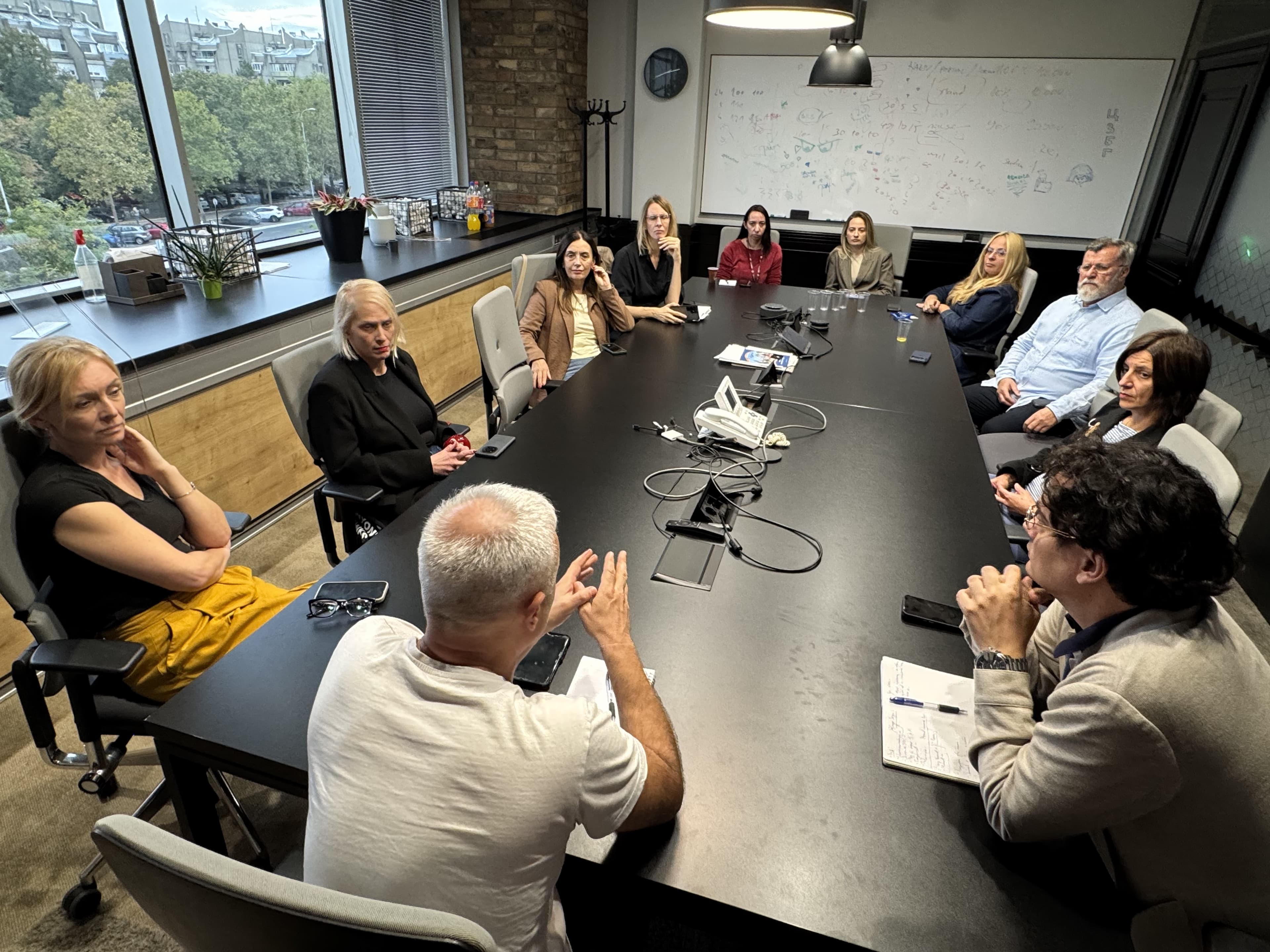
Journalistic associations provided support to the editorial team of Nova.rs: Ongoing communication and updates with international stakeholders agreed upon.

Coalition for Media Freedom: Stop Attacks and Harassment of Journalists During the Election Campaign

.png&w=3840&q=75)