
Dutch portal Nu.nl: As long as the Serbian regime keeps the media in its pocket, EU membership is far away.
The European Union is discussing expansion in Austria on Friday. Media freedom is one of the conditions, but in Serbia, a candidate for membership, journalists are facing increasing difficulties. "I am still having problems with my kidneys. They injured them quite seriously."
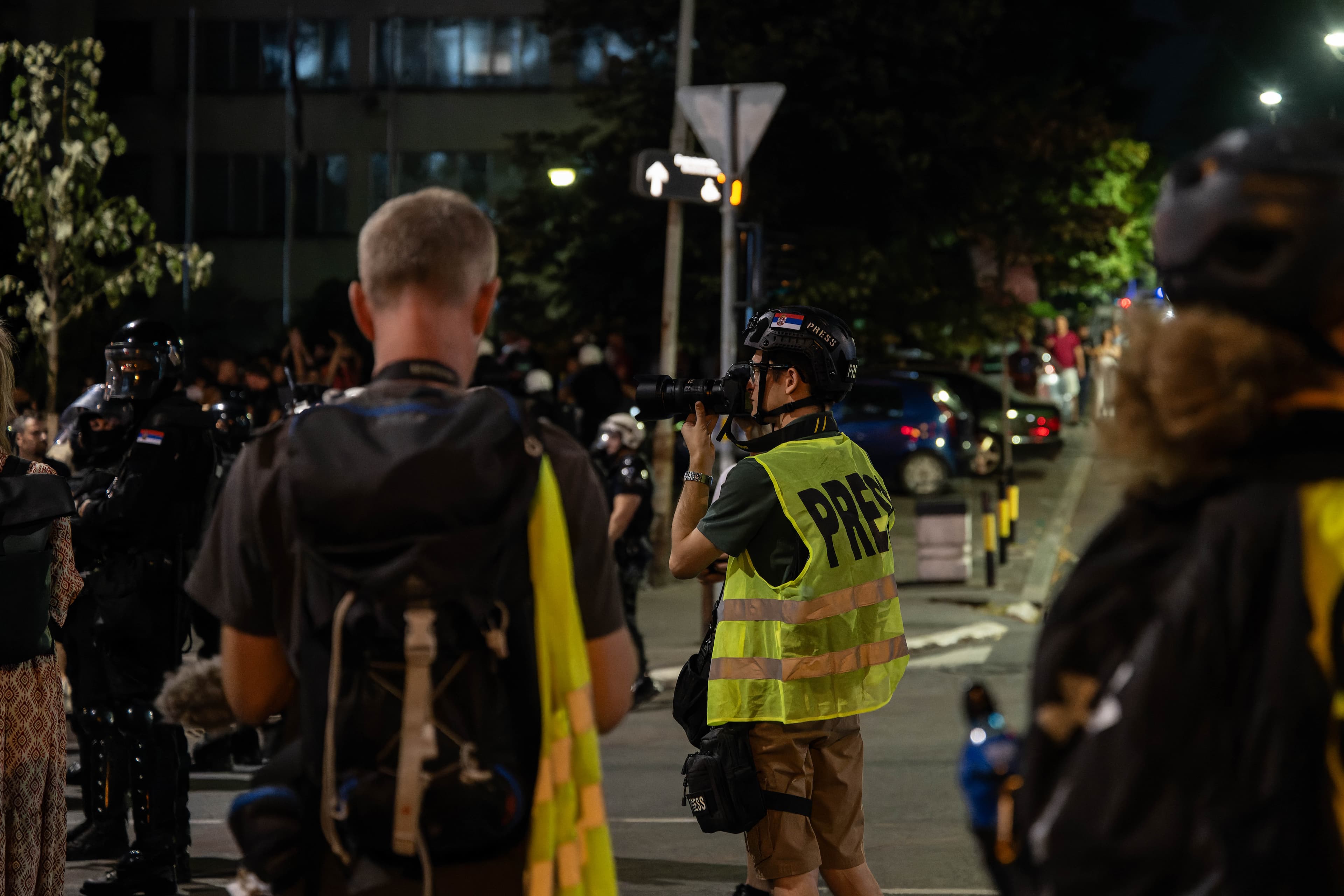
Photojournalist Zorica Popović went to the municipality of Bor on March 29 with colleagues to report on the local elections. Since there were cases of fraud in the previous elections as well, Popović, along with two colleagues, visited polling stations.
They discovered that there may have been electoral theft in the village of Šarbanovac. Together with a local politician, they asked the members of the electoral board how the voting had proceeded, but they denied any fraud. When they left the polling station, a group of men dressed in black and with covered faces was waiting for them.
“They started to insult us,” says Popović. A second group of men arrived in cars, attempted to grab her camera, knocked it to the ground, and kicked her in the stomach. Her colleagues were also beaten. Popović tried to escape. “At that moment, I saw a man with an axe behind me. He asked the politician: ‘Would you rather we cut off your left or right arm?’”
One of her colleagues was beaten so badly that he could not open his eyes. Another suffered fractures of the cheekbones. “I still have kidney problems. They seriously injured them,” says Popović.
“State hooligans” used against journalists and demonstrators
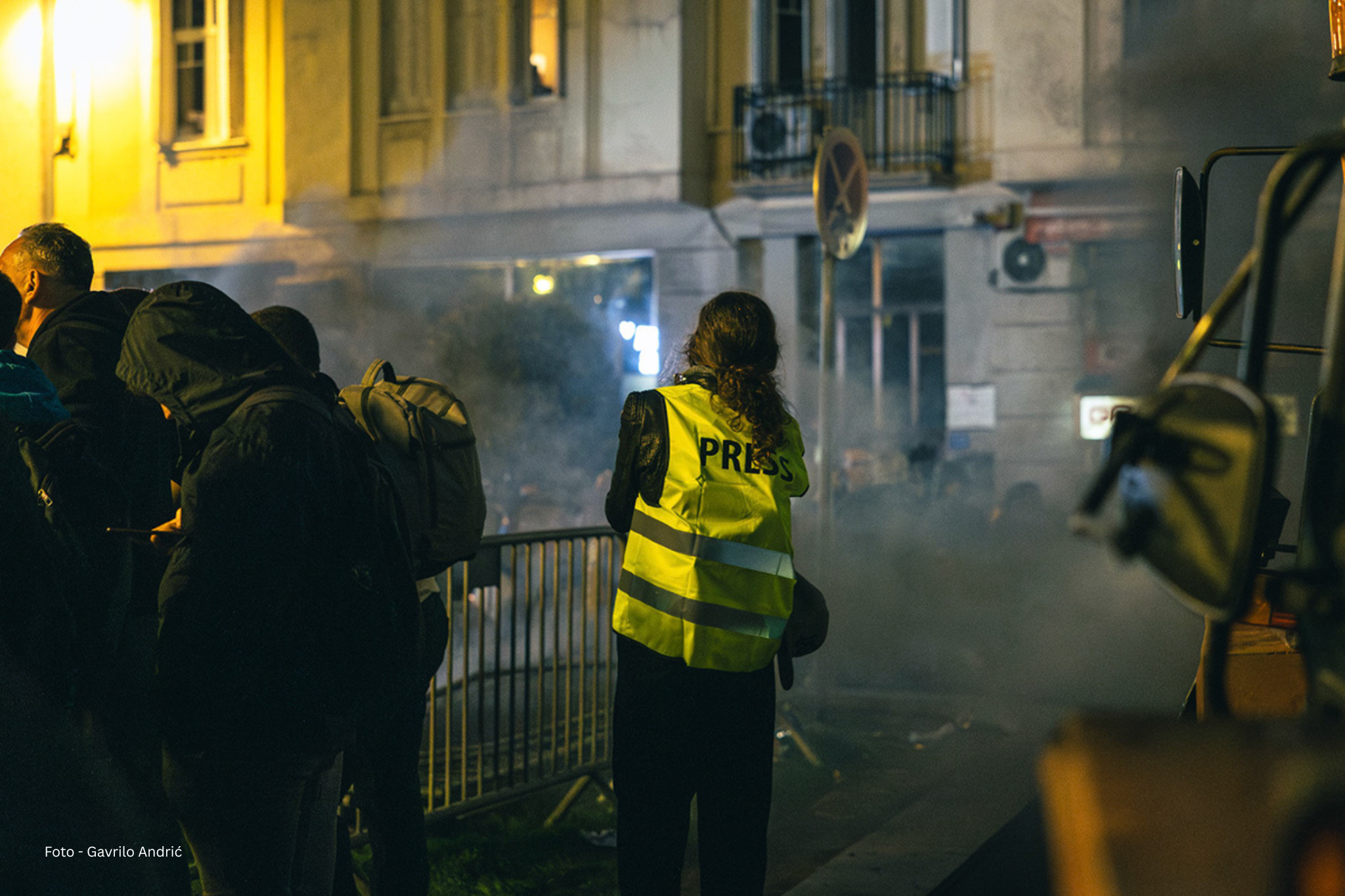
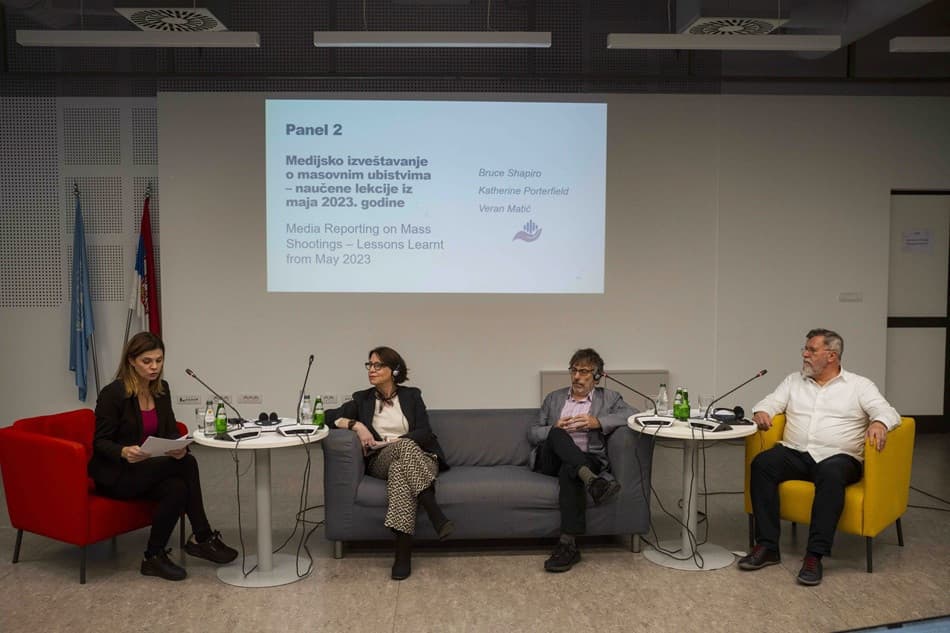
Zorica Popović's experience is not unique, she says. In the elections she has covered in recent years, violence has become increasingly severe. “Today, journalists prepare for elections as if they are going to a battlefield,” says Veran Matić, president of ANEM, an organization that supports Serbian journalists.
Groups like the one Popović encountered are often seen during protests in Serbia. The investigative platform KRIK reported on criminals and supporters of the football club Partizan who were spotted at protests against the government, where they allegedly intimidated demonstrators and journalists. Reportedly, all have connections to the ruling party SNS or even personal ties to President Aleksandar Vučić.
Since Vučić came to power in 2014, media freedom in Serbia has been under increasing pressure. Journalists regularly face verbal and physical threats. When Vučić came to power, Serbia was ranked 67th in the World Press Freedom Index by Reporters Without Borders. Twelve years later, it has fallen to 104th place, among the lowest in Europe. Only Belarus, Turkey, and Russia rank lower.
In recent years, Vučić has concentrated power increasingly in his hands, believes Balkan expert Geert Luteijn from the Vrije Universiteit Amsterdam. There is almost no opposition in parliament, and criticism of the government is scarcely found in the media. “Vučić quickly began to intimidate journalists,” he says.
According to Luteijn, the reason is that almost all newspapers and television stations in the country are connected to the regime in some way. The publisher of the newspaper Informer, according to the Media Ownership Monitor, is a fervent supporter of the government. “That almost directly comes from Vučić’s PR department,” says Luteijn.
Journalists are demonized on television
Veran Matić was once the editor-in-chief of the radio station B92, but it too has been bought by Vučić’s ally. At that time, he published critical stories about the regime of dictator Slobodan Milošević, who was arrested in 2001 for war crimes committed during the Yugoslav wars of the 1990s.
“The same hostile attitude toward journalists and the media exists today,” says Matić. According to pro-government media, anyone who writes critically about the Serbian government is acting against the state. He hears that from citizens as well. “I have not yet been physically attacked. But I receive threats and insults on the street.”
The regime has Matić in its sights. In February, a documentary was made about him in which he was portrayed as a traitor to the state. He allegedly collaborates with British and American intelligence services and has established a spy network in Serbia for Albania. The film was broadcasted on national television, but the author is unknown.
According to Matić, the aim of the film is to discredit him and force him to stop helping journalists. “It gives people the impression that they can attack me without consequences,” he says. In his opinion, little has changed since the regime of thirty years ago. “The difference is that this government is now recognized abroad, which makes the situation even more complex.”
Serbia's accession to the EU is still far off
Serbia has been a candidate for EU membership since 2012, but according to expert Geert Luteijn, the accession will take some time. “If you look at the progress report, media freedom is most often cited as a major problem,” he says. “The message is: ‘If there is no progress on that front, we will not move forward.’”
According to Vouter Zvers, an EU enlargement expert from the Clingendael Institute, there are no concrete models for how a candidate for membership must ensure media freedom. “The judiciary and the media must be independent and free from political pressure. There must be a pluralistic media landscape. But how exactly that will be organized is left to the states.”
Both experts believe there are other issues that are slowing Serbia's accession. Serbia has yet to improve its relations with Kosovo, which separated from Serbia in 2008, a fact that the authorities in Belgrade still do not recognize. Additionally, obstacles include Serbia's relations with Russia and China, as well as the way the authorities suppressed protests in previous years.
Ultimately, there is a desire within the EU for Serbia to become a member, but for that to happen, the current regime would need to leave. Over the past year and a half, demonstrators have called for immediate elections, but Vučić is waiting for the situation to calm down. The next elections are planned for next year.
Source: nu.nl
Related Articles
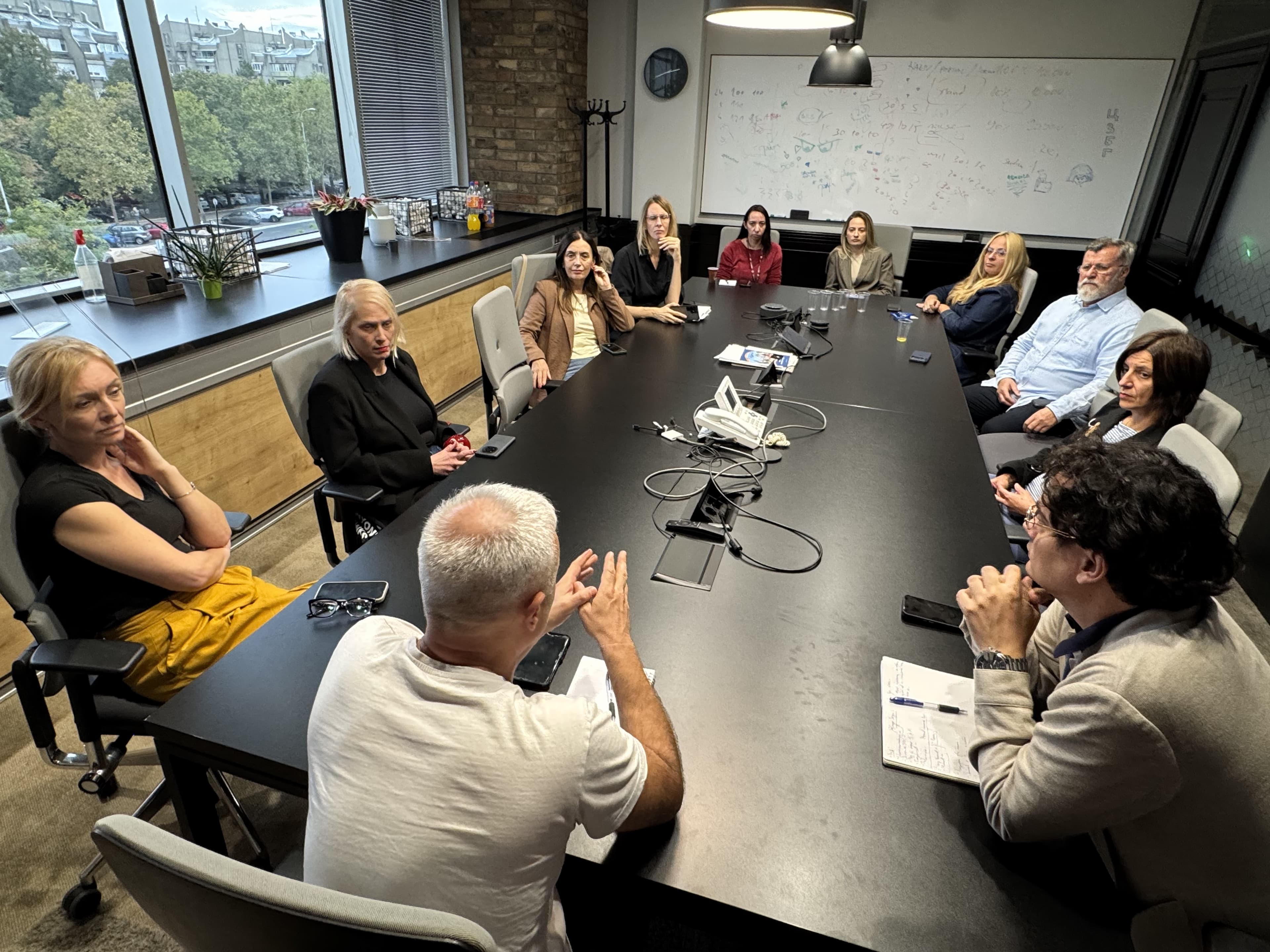
Journalistic associations provided support to the editorial team of Nova.rs: Ongoing communication and updates with international stakeholders agreed upon.

Coalition for Media Freedom: Stop Attacks and Harassment of Journalists During the Election Campaign
.png&w=3840&q=75)