
Dutch Trouw: President Vučić is now exerting pressure on the last critical media in Serbia.
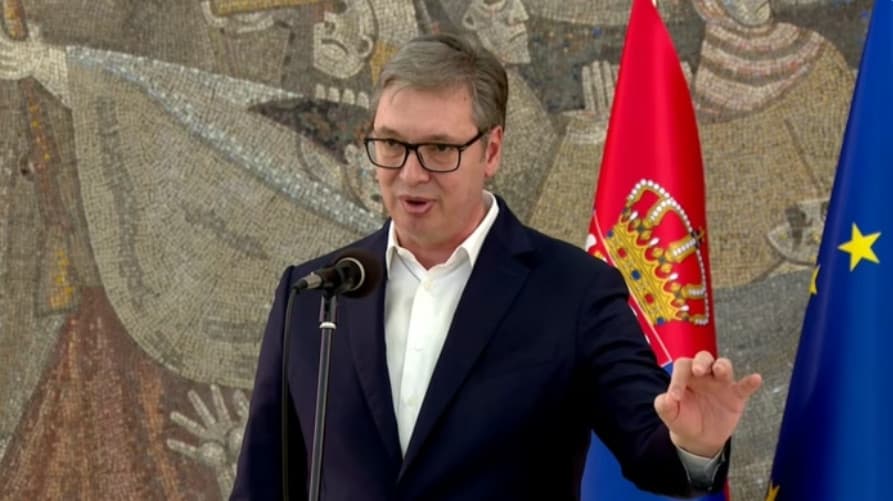
Media freedom in Serbia continues to rapidly decline. Ahead of the early parliamentary elections, there is growing fear that President Aleksandar Vučić wants to further silence all independent media, writes the Dutch media outlet Trouw.
The text is published in its entirety:
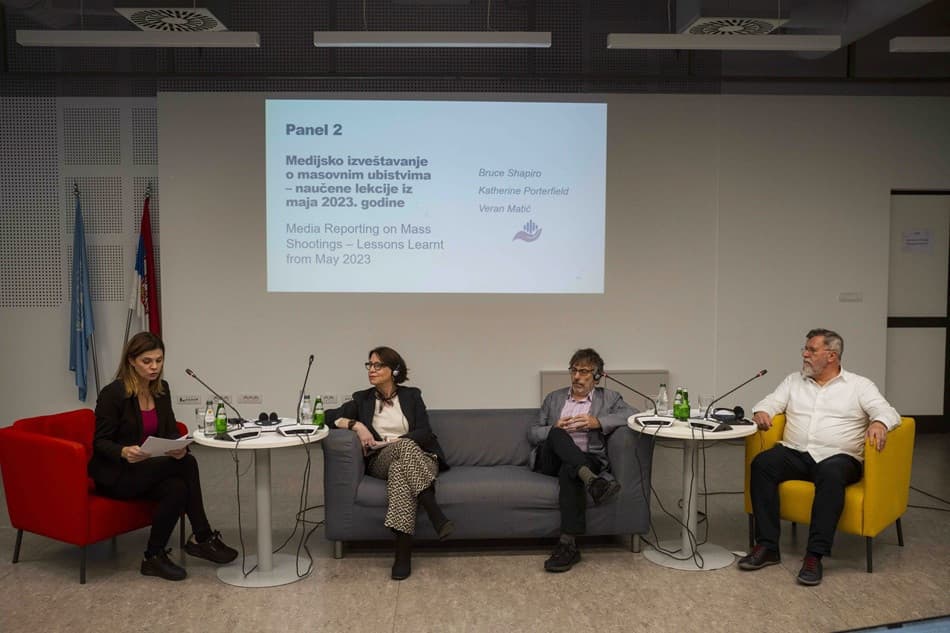
Veran Matić (63) receives his guests, as befits a veteran journalist, in an office surrounded by piles of papers, magazines, and old newspapers. This is the heart of the B92 Foundation, a humanitarian organization of the renowned Serbian broadcaster of which Matić was the director during the 1990s. Photographs in the hallway remind one of the time when B92 drew the ire of then-President Slobodan Milošević.
B92 was the largest critical radio station at a time when Milošević was dragging the country into multiple wars, while the population was being impoverished, in part due to international sanctions against Yugoslavia, which then consisted solely of Serbia and Montenegro. Matić and his media company were constantly threatened and obstructed, and his station eventually went underground with the help of Dutch media.
Today, more than 25 years after Milošević's fall, B92 television, after several ownership changes, has become one of the spokespeople for current President Aleksandar Vučić, while the radio station plays music. “We completely separated the Foundation from the media company many years ago,” says Matić from behind his desk. This situation symbolically illustrates the current media landscape of Serbia. Vučić is slowly but surely taking control.
The organization Reporters Without Borders also concludes that there has been a serious deterioration in the situation in its annual index of media freedom, published at the end of April. Serbia has fallen to 104th place among 180 countries and is now the worst-ranked country in the Balkans. “Despite a solid legislative framework, journalists in Serbia face political pressures. Crimes committed against them remain unpunished,” states the report.
Police Attacks
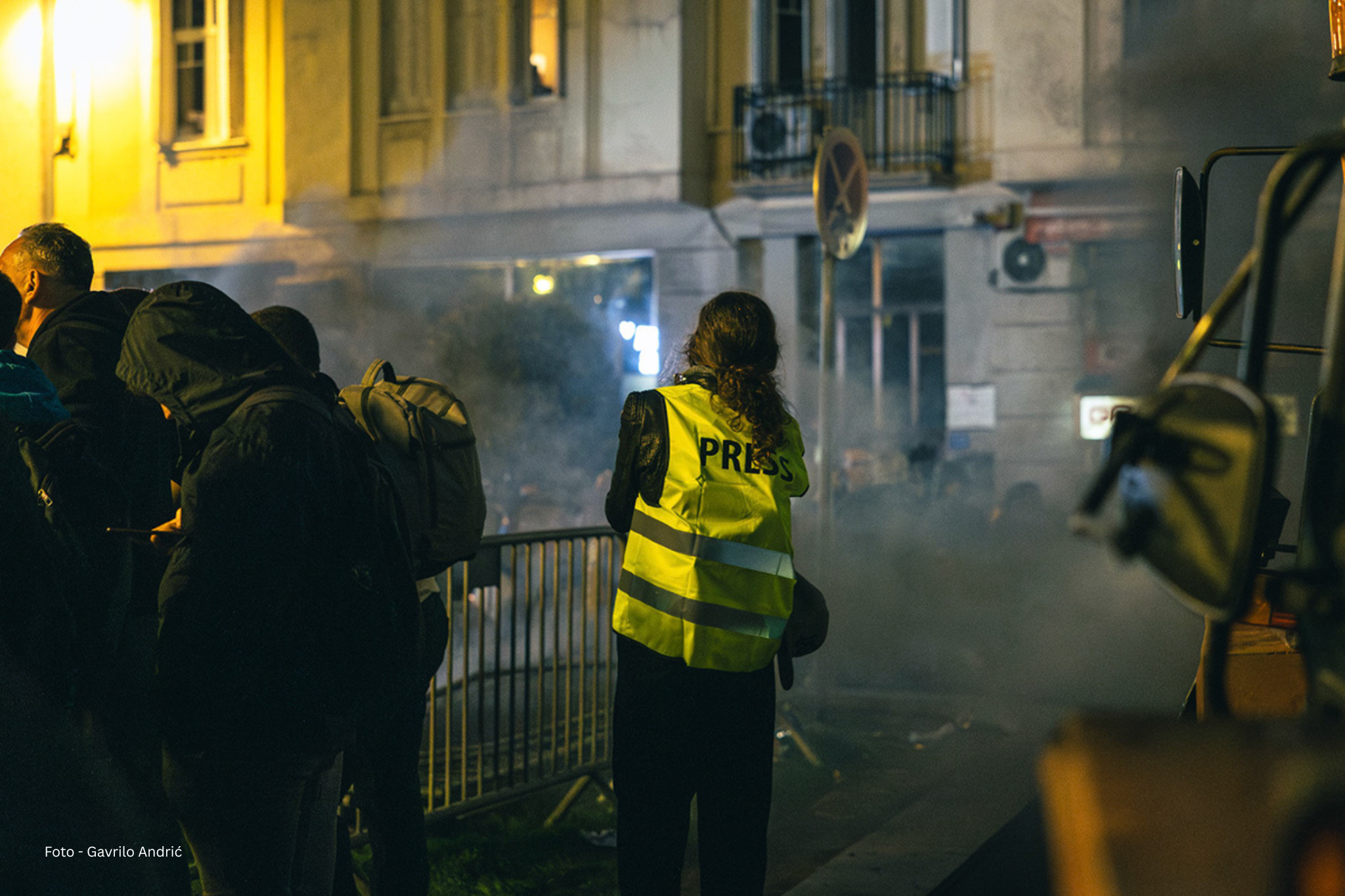
Matić confirms this in his capacity as director of the Association of Independent Electronic Media (ANEM). Over the past year, more than a hundred journalists have been attacked while performing their duties, and in many cases, the attackers were police officers.
This most often occurred during protests organized by students against Vučić, accusing him of corruption. “We see that the number of police investigations into violence is drastically declining. In more than half of the cases, even the public prosecutor does not receive a response from the police to questions about the circumstances of the attacks.” According to Matić, this shows that the police have transformed from a public order service into a personal guard for Vučić and his supporters.
Violence is one thing, but the way of reporting is another: the state service RTS and the vast majority of private media are under the control of Vučić and his close associates. Friendly companies and the state telecom have taken over one media group after another in recent years, including B92.
Reporting has thus become uniform. The focus is mainly on Vučić's successes, while demonstrators are portrayed as hooligans and traitors funded by foreign powers to weaken Serbia.
The main exceptions are the N1 and Nova television stations, as well as several smaller newspapers and magazines operating within the same media group. “Vučić constantly attacks and discredits them. Everything indicates that he is trying to bring these televisions under his control as well,” says Matić.
As a warning sign, it is noted that management has recently changed hands, although the new leadership claims to firmly stand behind editorial independence. The editorial staff of N1 does not believe this and has already organized several protests.
For Matić, there is no doubt: President Vučić wants to take control of the last critical televisions in order to conduct a smooth campaign for early parliamentary elections, which he has announced plans to call for later this year. Vučić is expected to run for Prime Minister, as his presidential term, according to the Constitution, is nearing its end.
His party dominates in all municipalities; employees in public administration and state-owned enterprises are under pressure to vote for him along with their entire families, as otherwise, they are threatened with job loss. The few remaining critical media outlets pose an obstacle to Vučić's mission.
Target
Matić himself suffers the consequences of intimidation. Recently, various television stations close to Vučić aired a so-called documentary film about him. The authors are unknown. In the film, he is accused, among other things, of espionage on behalf of the British and Americans.
Matić says he feels as if a target is painted on his back. He warns that there could be even greater violence against journalists. During Milošević's time, he says, the situation was somewhat simpler: Milošević was an international pariah, so support from abroad was much stronger.
However, Serbia is today a candidate for membership in the European Union, and Vučić remains a dialogue partner for the EU, even as it becomes increasingly critical. “In the latest progress report, the European Commission was finally honest about the catastrophic state of media freedom. But the consequences, sanctions, and penalties are still absent.”
Source: Trouw
Related Articles

Journalistic associations provided support to the editorial team of Nova.rs: Ongoing communication and updates with international stakeholders agreed upon.

Coalition for Media Freedom: Stop Attacks and Harassment of Journalists During the Election Campaign
.png&w=3840&q=75)