
Even journalists vote: Where does personal opinion end, and political bias begin?
A journalist is not a person without a political opinion. They vote in elections, fill out ballots, and almost certainly have a stance on the government, the opposition, a student list, or some other political option. But what happens when that choice ceases to be private – when it appears in a profile picture, in a frame, a slogan, or open support? And can a media outlet have an editorial stance without becoming partisan?
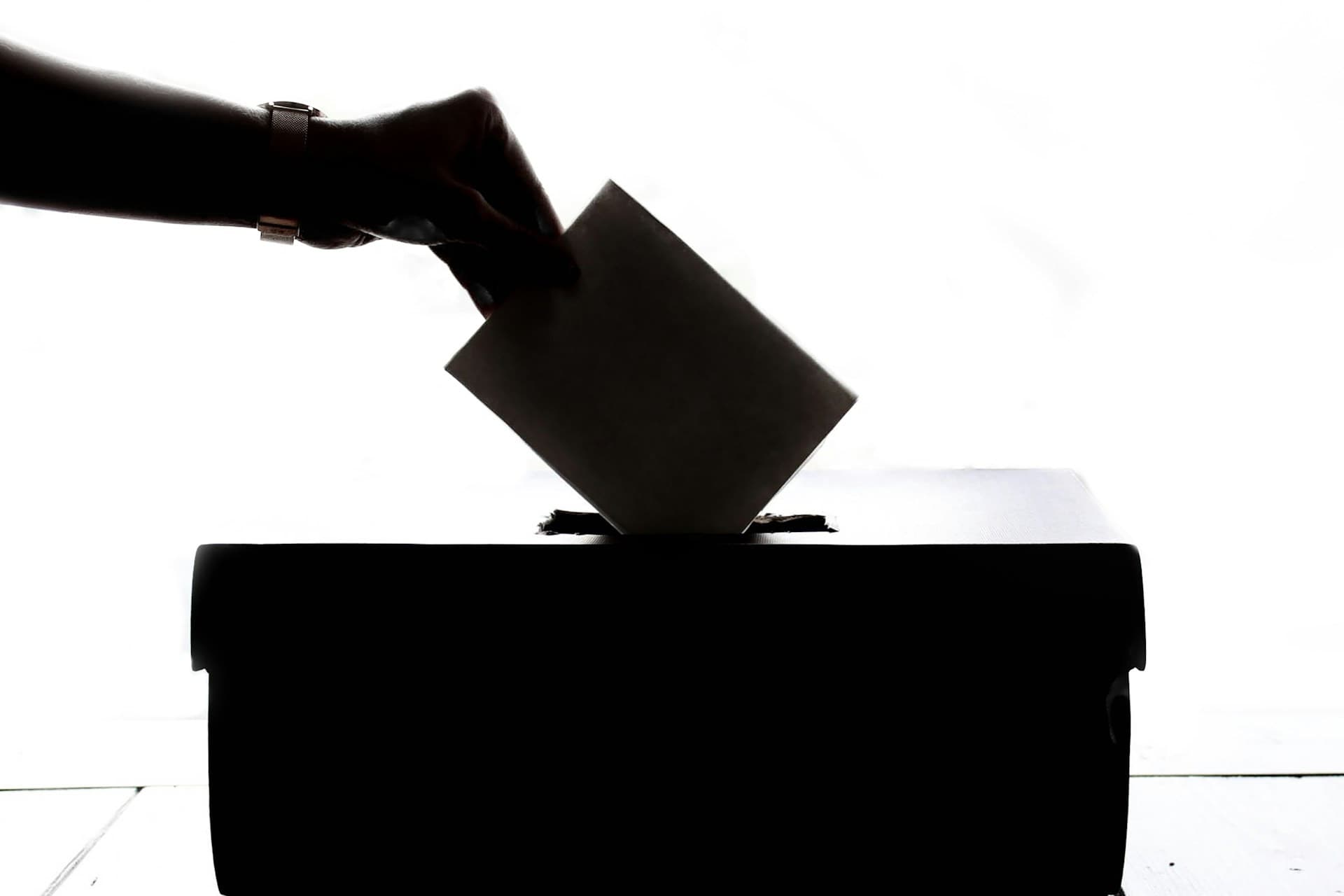
The electoral campaign almost invariably intensifies existing divisions. Social media is filled with profile pictures adorned with frames, slogans, logos, and calls to vote. Among those posting such content are journalists.
By itself, a journalist's political opinion is not unusual. A journalist is not stripped of the rights that other citizens have. The question arises where their private opinion becomes a public political alignment, especially when the same journalist reports on the people and options among which they have previously publicly chosen a side.
Code: media can have an editorial concept, facts cannot have a party membership
But where exactly does a journalist's right to express their thoughts end, and "advocacy for a political option" begin?
Gordana Novaković, the Secretary General of the Press Council, tells Webinfo that the answer is not entirely straightforward.
“A journalist's political affiliation should never influence their journalistic work, and that is likely the 'red line',” says Novaković.
On the other hand, she adds, journalists, like all other people, have the right to freedom of expression and political affiliation.
When it comes to social media, part of the answer is left to the audience.
“If they express personal views on social media, it is up to the audience to assess whether they will believe in their objectivity and impartiality,” Novaković explains.
She also points out that many large newsrooms have internal rules that more precisely define what a journalist can do privately without compromising their own credibility and that of the media. Moreover, she adds, not every journalist's position is the same—commentators and columnists have significantly more freedom to express political opinions.
Private profile – how private is it really?
Veran Matić, the Chairman of the Board of ANEM and a long-time journalist, believes that the Code should be the primary guideline.
“Everyone can have personal political opinions, and certainly does,” Matić tells Webinfo, but he adds that professional responsibility rests on respecting the Code and the law.
For him, the boundary between a well-known journalist's private profile and their professional identity is not complete.
“If your professional orientation is tied to respecting the journalistic code, your private 'profile' should not deviate from the values clearly outlined in the code. Otherwise, credibility and trust with the audience are lost,” Matić states.
When asked what happens when a journalist publicly shows which electoral option they support, Matić assesses that this does not automatically mean they are no longer capable of reporting professionally, but raises the question of the purpose of such public alignment.
“We all roughly know which political option belongs to whom. And I see no benefit in publicly disclosing that information to self-define on the political scene. It can only hinder the performance of journalistic work,” Matić argues.
His response to the question of whether the same rules should apply to a journalist supporting a student list, the government, or the opposition is very brief:
“Absolutely, the same rules should apply to everyone.”
Reuters: you can vote, but be careful what your public engagement says about your impartiality
A similar dilemma has long existed in the largest newsrooms worldwide.
Reuters explicitly acknowledges the right of its journalists to vote in its professional standards, but requires employees to ensure that their activities outside of work do not call their impartiality into question or create an impression of political bias.
Reuters asks its journalists not to identify themselves or the organization with one side in a political dispute and warns that even the perception of a conflict of interest can undermine the credibility of the individual and the entire newsroom. At the same time, it insists on the distinction between factual reporting and clearly marked commentary and columns.
The Associated Press goes even further. Its journalists should avoid political activity regardless of whether they regularly report on politics, and the rules regarding public expression of opinion apply to social media, blogs, petitions, and even political stickers or badges. The reasoning is simple—publicly expressed political opinions can jeopardize AP's reputation as an impartial news source.
The American Society of Professional Journalists (SPJ) makes an important distinction: a journalist has the right to vote and does not have to be a person without political opinions, but should avoid political activities that could undermine their integrity or credibility. For journalists who closely follow politics, the SPJ considers even party badges, stickers, and other public symbols of support to be problematic.
In other words: the profession does not demand that journalists have no opinion, but that readers do not have to wonder whether the news they are reading is shaped by that opinion.
Can a media outlet "take a side"?
This raises another, perhaps even more important question.
A media outlet has the right to an editorial policy. It can decide to pay much more attention to corruption, human rights, ecology, local government, social issues, or government oversight. The Code does not prohibit this—in fact, it explicitly recognizes different editorial concepts. What it does not allow is for facts to be subordinated to that concept or for political propaganda to be presented as journalistic content.
Thus, critical reporting on the government is not by itself support for the opposition, just as publishing relevant information about the ruling party is not support for that party.
One of the fundamental tasks of journalism is the oversight of those in power. The SPJ identifies “holding the powerful accountable” as one of the core professional obligations of journalists.
But this work comes with a condition: the same rules of scrutiny must apply to all.
If there are serious facts against representatives of the government—these should be published. If there are facts against an opposition politician—those should also be published. If the criticism pertains to a student list—the fact that part of the audience supports it cannot be a reason to withhold information. And vice versa.
Equal rules do not mean equal number of articles
Professional balance does not mean that every political actor must receive an exactly equal number of articles, the same headlines, or the same number of sentences.
Even Reuters does not define fairness as a mathematical distribution of space into equal parts. The importance of an event, the responsibility of actors, their power, and relevance to the public influence how much space a particular topic receives. What must remain consistent are professional standards: facts must be verified, accusations should not be presented as proven facts, and those who are the subject of serious criticism should be given the opportunity to respond.
This also means that a media outlet is not obliged to be a megaphone for any party. A party statement is a party statement and should be labeled as such. The Code demands exactly that.
And where does the reader fit in?
Perhaps the reader is the best test of all.
One will see an article that criticizes the government as "an opposition media outlet." Another will see a published statement from a government representative as "promotion of the regime." A third will interpret criticism of the student list as an attack on students, while a fourth will view any news about that list as political support.
A journalist cannot control the political orientation of the reader.
They can control their own work.
For Webinfo, this means that the criterion for publication cannot be a question of who will like the news. The criteria must be public interest, relevance, verifiability, and the same professional standard for everyone being reported on.
A journalist will, at the elections, like any other citizen, be alone behind the partition with their ballot.
Perhaps that is one of the few places where their political decision can truly remain just theirs.
Author: Tijana Janković
Source: Webinfo.rs
Related Articles

Journalistic associations provided support to the editorial team of Nova.rs: Ongoing communication and updates with international stakeholders agreed upon.

Coalition for Media Freedom: Stop Attacks and Harassment of Journalists During the Election Campaign


.png&w=3840&q=75)