
INTERVIEW – VERAN MATIĆ: "Vučić has wet dreams of spreading the toxic content of his tabloids into the neighborhood."
In an interview for the portal Lupiga, the president of ANEM, Veran Matić, discusses the increasingly difficult position of independent media and journalists in Serbia, the pressures on the media landscape, the safety of journalists, and the potential consequences of changes in media operating within the Adria News Network.
Matić warns of the growing pressures on independent journalism and the possibility of further narrowing the space for professional media, as well as the danger that models of political media control from Serbia may spill over into the rest of the region.
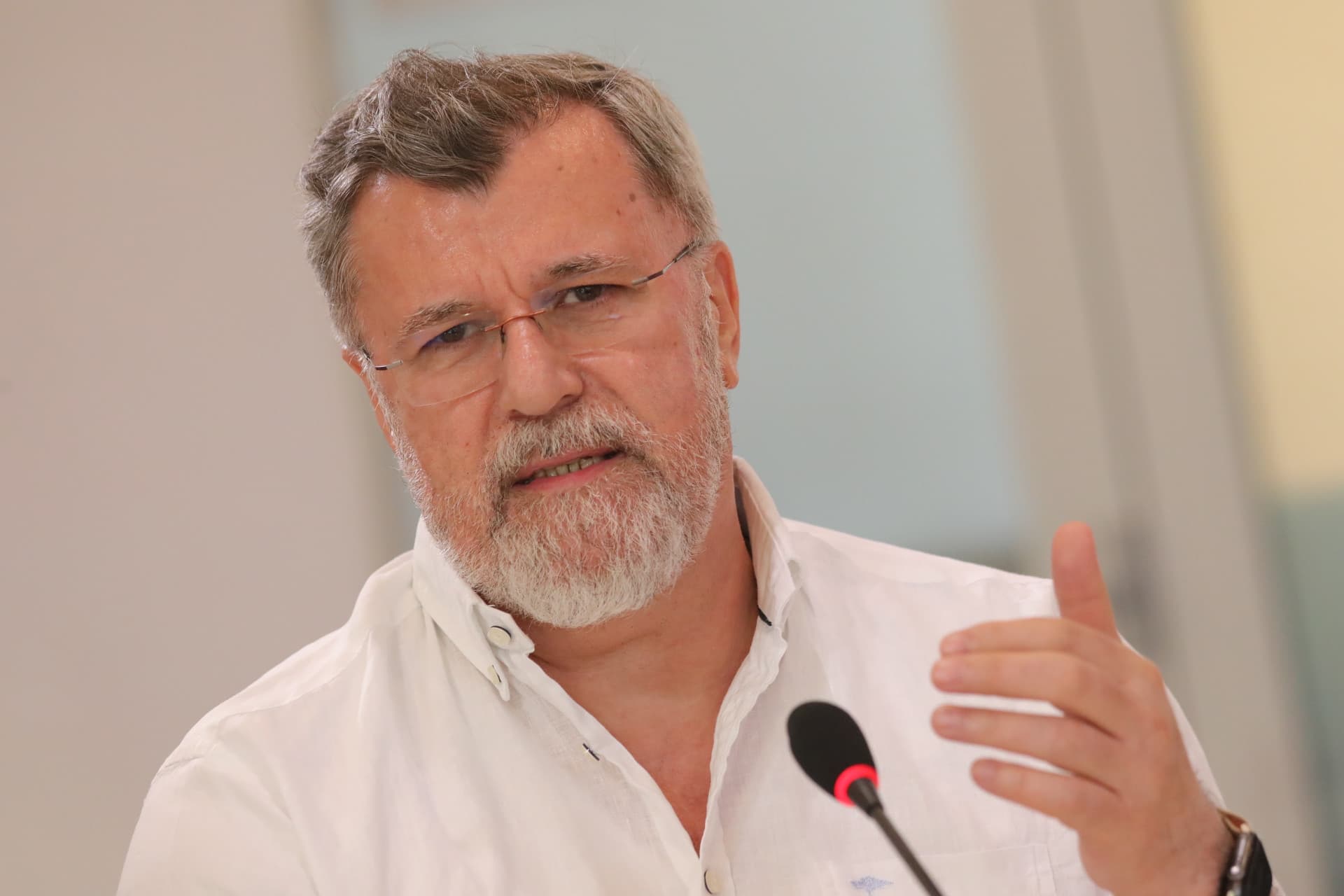
Our interlocutor has been one of the key players in independent journalism in Serbia for the past few decades. **Veran Matić** began his career in journalism back in 1984, when he worked in alternative and youth media in Belgrade, Zagreb, and Ljubljana. He is one of the founders, long-time director, and editor-in-chief of Radio B92, a media outlet that became a symbol of engaged and free journalism in the 1990s, as well as a symbol of resistance against the war-mongering regime of Slobodan Milošević.
During the 1990s, **B92** was targeted by the regime, being banned multiple times, with the hardest period following the appointment of the current ruler of Serbia, Aleksandar Vučić, as Minister of Information. In March 1999, just before the NATO bombing, the authorities shut down the radio station, and Matić was **briefly arrested**. Nevertheless, he continued to broadcast programs over the internet and through a network of partner stations.
This background has led to **many being surprised by Veran Matić's collaboration with Aleksandar Vučić** after the latter took control of Serbia. Vučić reached out to Matić when establishing the Commission for the Investigation of Murders of Journalists and later appointed him as Vučić's **envoy on the issue of the missing persons in Croatia**. Their collaboration was severed a few years ago, and today, Matić is once again a target of intense scrutiny in regime-controlled media. In essence, he has become "the state's number one enemy" again, at least in the eyes of the media and journalists. Among other things, we discuss with Matić how and why this collaboration with Vučić came to be.
Of course, we also talk about the safety of journalists in Serbia. As the head of the **Association of Independent Electronic Media** (ANEM), and as a member of the Working Group for the Safety of Journalists, Matić makes enormous efforts daily to help endangered journalists in various ways. He also speaks about the media scene in Serbia and the region after the controversial Portuguese company Alpac Capital, unequivocally linked to the late Orban regime, became the owner of the media formerly known as United Group, now the Adria News Network. This group consolidates 14 television, print, and digital news brands from Serbia, Bosnia and Herzegovina, Croatia, Montenegro, and Slovenia. Among them are, to name a few, N1, Nova S, **Danas**, and **Vesti**, employing more than 1,000 journalists and other staff.
**Let's start the conversation with current media topics that have been attracting attention across the so-called region in recent weeks. We have long been monitoring, as much as possible, the behind-the-scenes actions, a sort of political management over the media that until recently operated under United Group and are now owned by the controversial Portuguese company Alpac Capital. Many perceive that things are moving in the wrong direction, meaning that these media outlets, especially in Serbia, will lose their critical edge and come under the direct influence of Aleksandar Vučić's cabinet, which unequivocally controls almost all other media in this country. What is your understanding of what has happened and what is happening behind these unusual financial and political transactions, and what can we expect in the near future?**
- It is certain that things have started to accelerate recently, especially after President Vučić announced that the parliamentary elections could take place in the second half of October. It is clear that the authorities did not intend to welcome the formal beginning of the election campaign with the current owners and management of these media outlets. Certain changes in the editorial policy of some, primarily electronic media from this group have been announced and are already visible. For now, it’s still hard to predict the possible long-term editorial and programming changes being discussed. The significance of these changes for the authorities is perhaps best illustrated by the unprecedented open letter from the Minister of Information and Telecommunications, Boris Bratina, to the new owners of these media outlets, in which he criticizes the editorial policies of N1 and Nova S, the behavior and decisions of the Luxembourg regulator, suggesting that the mentioned two television stations be brought under the auspices of the local Regulatory Authority for Electronic Media (REM) in the future, which has not been the case since their establishment. In what appears to be a pre-arranged correspondence, the executive director of the new owner from Alpac Capital, Pedro Vargas David, responded that there would be no political influence or pressure on editorial policy and requested the authorities to ensure a fully independent and functional REM while criticizing activist journalism that, for the sake of clicks and viewership, promotes divisions instead of providing bare facts without shaping opinions. I believe that this last message is the most important and contains the argumentation that will justify the anticipated future editorial and programming changes that will inevitably follow.
**Yes, David essentially suggests that media and journalists should be mere transmitters of information, not full-fledged actors in the social scene. This could lead to the conclusion that the media should not have the role they have, or should have, in democratic societies – to act as a corrective to political and other social deviations. What do you think about this position, which is not only held by David? Does this mean that these media will have their "teeth pulled out"?**
- I believe, above all, that this is a scripted dialogue in which Minister Bratina was merely a platform from which the Serbian authorities publicly and officially sent a message to the new owners, primarily to the domestic and foreign interested public. After the response that followed, nothing can surprise us anymore. In this political farce, key themes and challenges regarding future editorial policies, the significance of the role of the regulator, and possible political influence were addressed. The letter from the minister is an unprecedented form of address and communication that did not surprise me too much, given Bratina's previous outbursts, as Vučić clearly protects and utilizes him for this type of public communication. However, I do not expect radical editorial shifts before the elections, as I believe Vučić is also aware that a radical shift would motivate his political opponents to further mobilization. We will see what happens after the upcoming elections – I would not rule out any scenario depending on the course and results of the vote.
**David has promptly dismissed all directors of ANN media (Adria News Network) and positioned himself as the "multi-director"? Some have claimed that this is just a prelude to the dismissal of editors. So, you believe this will not happen, at least not for some time?**
- It seems to me that, at least for now, the editorial structure in any media in Serbia will not be touched. But I also think this is a direct result of the media defense campaign led by journalists, media, and journalistic organizations directed towards Brussels. This campaign needs to be conducted non-stop and expanded, as the Portuguese are sensitive to messages coming from European institutions.
**Investigative journalists from Hungary and France have uncovered and documented financial ties between Alpac Capital and Viktor Orbán's regime, the former Prime Minister of Hungary. Specifically, €52.5 million was transferred to this company's account from Hungary, from state and quasi-state funds, for the purpose of this company buying the media house Euronews in 2022. If nothing else, then based on the statements of Aleksandar Vučić, a close associate and friend of Orbán, we can conclude that the Serbian state leadership was somehow involved in the unusual agreements that clearly aimed to exert influence over the media of United Group, now ANN. Can we speculate on Serbia's role in this process?**
- Although there is a clear and unequivocal implication of Serbian authorities in this transaction, we have not yet seen evidence that has come to light to support this claim. However, Vučić has a "tolerance" threshold and sends certain signals, such as – "the new owner will have to pay attention to editorial policy if they wish to profit." In other words, if you are disobedient, we will tame you by tightening the faucet from distributors, advertisers, state subsidies, and the like. I believe that a proactive role from the new Hungarian authorities led by Prime Minister Péter Magyar could provide undeniable answers to your question. Especially since we know the nature and closeness of Orbán and Vučić, as well as the copying and transfer of all the bad media policies from Hungary to Serbia, which may have differed in some modalities while the essence remained the same – complete and undeniable control over the media space that enables remaining in power. Orbán has been in power for 16 years, while Vučić's regime has been ruling Serbia for 14 years.
**If ANN media are "conformed," Serbia will face a complete media blackout. Only a few national and some local media that are not under direct regime influence will remain, and they are barely surviving, both financially and due to the increasing pressures they are subjected to. This is no longer just a media and political problem; for many media professionals, it is becoming existential: many of the best journalists could end up on the streets. What should be done? What can we hope for?**
- I'm afraid we cannot hope for anything good. The situation will become increasingly difficult and complicated. Media financing has been further complicated by the closure of USAID and the increasing pressure on remaining European donors, who do not have enough resources or capacity to support demands at a time when independent media have had their funding channels cut from the budget through project co-financing. We must impose this topic as one of the urgent issues before the representatives of the international community in the same way that the importance of the functional existence of an independent REM Council has been recognized. This is important because it is quite clear that the authorities do not intend to stop here, but want to implement a Russian model in Serbia for treating foreign donors, which will treat recipients as foreign agents. Independent media are currently cut off from advertising funds, threatened with being ostracized if they advertise in these media; otherwise, they will be demonized through tabloids, and they are now aiming to criminalize donations and those who receive them. This dramatic situation requires a systemic response from European institutions: political, but also the establishment of serious funds to support independent and professional media. If that doesn't happen, dozens of small and local media could soon be literally suffocated.
**The problem is, of course, also regional. If ANN media are managed, at least partially, from Vučić's cabinet, as feared, this would mean that there would also be a change in editorial policy of influential media in Croatia, Bosnia and Herzegovina, and Montenegro. This would be quite an unusual situation, considering that Vučić's media are extremely nationalistic. What consequences could this have for the media scene in the region?**
- I do not rule out the possibility that someone from the local authorities might think of exporting Vučić's policy to the region in this way, thereby supporting the exponents of his policy who constantly destabilize neighboring states. Vučić himself has wet dreams of propagating the toxic content of his tabloid media into the neighborhood. I assume that regulators there would take note and react promptly, as the Montenegrin regulator has already done by banning the re-broadcasting of Informer, Pink, and Prva television.
**We come to the topic you have been intensely engaged with for years – the safety of journalists in Serbia. The situation is, to put it mildly, very dire, with a tendency towards further deterioration. Currently, six journalists have been "relocated" from Serbia, as their safety and that of their families is assessed to be at risk. You are very active in protecting journalists, assisting them on a daily basis. However, how can we protect them in the long term? Can we fear a scenario where Serbian journalists and media will soon have to, as is the case with Russian and Belarusian journalists, write about events in their country from abroad?**
- If we draw a parallel between today and the period from 1998 to October 5, 2000, during the last years of Slobodan Milošević's rule, the similarities are perhaps most evident in the intolerable position in which journalists and media find themselves. Aleksandar Vučić was then the Minister of Information in Milošević's government, and one of his first moves was to introduce a kind of state of emergency in the sphere of information: the re-broadcasting of BBC, Voice of America, and other foreign media in Serbian was banned. Soon followed a systematic persecution of media, epitomized in the infamous Law on Public Information, aimed at intimidating independent journalists and media, financially exhausting them, and forcing them to shut down – or compelling journalists to leave the country. The peak was the assassination of journalist and owner of **Dnevni Telegraf** and **Evropljanin** Slavko Ćuruvija. We also had the ban on Radio B92, forcing us to set up transmitters in Bosnia and Herzegovina and Romania to continue broadcasting to the citizens of Serbia. Back then, we had over 50 local and regional radio and television stations in free cities, where the opposition won and defended its victory in 1996 and 1997. Today, we do not have that, but we have dozens of small and local media that we must network and strengthen. We should also connect all influential and engaged actors on social media, student accounts, and other relevant stakeholders. Some journalists will still have to leave the country due to immediate danger, but I believe in the resolve of most citizens to fight for freedom of speech and journalism in the public interest. I hope that the international community will awaken as well, to support us unanimously as they did in the 1990s, and to create support funds.
**You mentioned Radio B92, which at the time was a symbol of media freedoms and professional journalism. As an editor and journalist, you were persecuted, among other things, for your engagement in addressing the legacy of war, crimes, and the fight for justice for victims. How do you comment on what is happening in Serbia and the Republic of Srpska after the death of Ratko Mladić? It is incredible how many people glorify a war criminal, and it seems he will be buried with state honors. Is this a defeat for Serbia, but also a defeat for all of us who have strived for years to shed light on the horrific results of nationalist policies?**
- I believe that the committed crimes and genocide are a great historical shame. Unfortunately, from the first day after the changes on October 5, 2000, there has been no will to confront these crimes, prosecute the criminals, and protect the truth about these crimes from any form of relativization and revisionism. Today, we are in a situation where the entire region is dominated by comprehensive revisionism that includes the negation of the results of World War II. The nationalist ideology that fueled wars and encouraged criminal acts has never been critically and historically sanctioned, and because of this, we have a **déjà vu**, a renewed toxic rhetoric, an unbearable amount of hate speech, and the glorification of war criminals as national heroes. Victims remain without any satisfaction, there are still thousands missing, and the main actors of the wars are back in power, along with their ideology from that time. And if Ratko Mladić is not buried with state honors, everything that has been said about him up to now and is said now after his death is merely a continuation of the justification of crimes, which causes immeasurable damage to the process of confronting the past. All of us who think and speak differently are once again under threat, with security risks from admirers of the criminal. Unfortunately, new generations readily accept such narratives even though they did not live through the time of evil. I believe that such behavior from the authorities and the media that belong to them represents complicity in the crime committed, but also a new crime against the citizens of Serbia and future generations: it strongly encourages a negative stereotype about Serbs, formed also on the crimes of Mladić, Milošević, and numerous others whose misdeeds are now being rehabilitated.
**We certainly must mention your collaboration with Aleksandar Vučić, which surprised many. Namely, you were persecuted for years by those who make up his institutional and electoral base, and then you became his special envoy for missing persons in Croatia. You also had other forms of cooperation within the establishment of the Commission for the Investigation of Murders of Journalists. How did this collaboration come about?**
- Even before Vučić came to power, I initiated the establishment of the Commission for the Investigation of Murders of Journalists, which the previous government did not accept and operationalize. Vučić accepted this idea, probably to strengthen the narrative about the European path and values, and to rehabilitate himself from the media persecution of the 1990s, and not just that... As you know, alongside managing the media house, I was engaged in humanitarian and social work, and when I assisted maternity wards with life-saving devices for premature babies, there were criticisms that I was helping the regime because it was their obligation. My motivation was very clear and remains so: that help is needed at a specific moment, immediately, to reduce the mortality of premature babies or babies born with certain problems. And I knew that the authorities would not do it. Therefore, every day represented a possibility for increased mortality. The only way was rapid response, and we managed to solve the problem and reduce infant mortality. In the case of forming the Commission for the Investigation of Murders of Journalists, it was clear to me that I could not wait another 15 or 20 years for a change in power. I wanted to do everything possible to uncover the murders of Dada Vujasinović, Slavko Ćuruvija, and Milan Pantić. Aware of the possible trap, I set the condition that I would not be part of the administration, that I would not receive compensation, i.e., that I would fund my engagement alongside other members of the commission and receive support when obstruction occurred. I believe we managed to prove in a very challenging environment who killed Slavko Ćuruvija. What followed was beyond my control. Five judges decided to make a ruling in violation of the law, which was later confirmed by the Supreme Court of Serbia.
**And when you look back today, do you regret the decision to accept Vučić's hand?**
- I have invested ten years in efforts to uncover the truth about the deaths of our colleagues, and of course, I do not regret it. I am proud of the engagement of a few dedicated individuals who worked alongside me with the same enthusiasm and belief in this work that no one before us had done in this way.
**And why did you agree to become Vučić's special envoy for resolving the issue of missing persons in Croatia? What are the results of your engagement in that field?**
- This initiative also came from an informal circle that included Drago Hedl, the most well-known investigative journalist from Croatia, Milorad Pupovac, the leader of the Serbian community in Croatia, and Ivica Vrkić, the then Mayor of Osijek. We concluded that Croatia and Serbia had politicized their role through their Commissions for the Missing and the Office for the Missing, blocking the process of finding and identifying the missing, and that it was very important to involve the civil sector, to help individually. Thus, an initiative was submitted to the then President of Croatia, Kolinda Grabar Kitarović, and Aleksandar Vučić, who gave us a mandate, but again with my identical condition – not to be part of the cabinet and administration, and not to receive compensation or any privileges. I worked with associations of the missing and families to find information about possible burial sites, exchanged data with the Croatian side... Unfortunately, I soon found myself alone, as my colleague Vrkić fell ill. I tried to support the organizations of Serbs in Croatia, who are very often targets of nationalist hysteria and the Ustasha-ization of parts of Croatian society. I still do this individually. I have investigated the obstructions and reasons for blocking the search for the missing and publicly spoken about it. I made the whole process and the numbers transparent. I provided initiatives and proposals on how it is possible to resolve the largest number of cases in a few years – through more efficient identification (collecting DNA material from families), forming joint investigative teams for Operation Storm and the Vukovar region (the two periods during which there are the highest number of missing persons), etc. Of course, I could not influence state policies, as relations between the two countries were systematically damaged, but I helped families to obtain information, and there were several cases in which successful exhumations, identifications, and dignified burials were achieved. Unfortunately, there are still over 2,000 missing, and there is no cooperation between the two countries when it comes to the search for the missing. Additionally, the attitude of the current authorities in Serbia towards Serbs in Croatia is shameful. For years, there has been no cooperation or support. At the same time, the Serbian community has managed to establish dozens of Serbian Cultural Centers across Croatia, initiating and implementing numerous initiatives to support Serbs living in Croatia as well as returnees. Furthermore, it is very important that the Serbian community simultaneously fights daily against rising revisionism and Ustasha-ization, regularly demonstrating resistance through commemorations and other activities against attempts to negate the facts about the anti-fascist movement and Serbian victims during the wars.
Related Articles
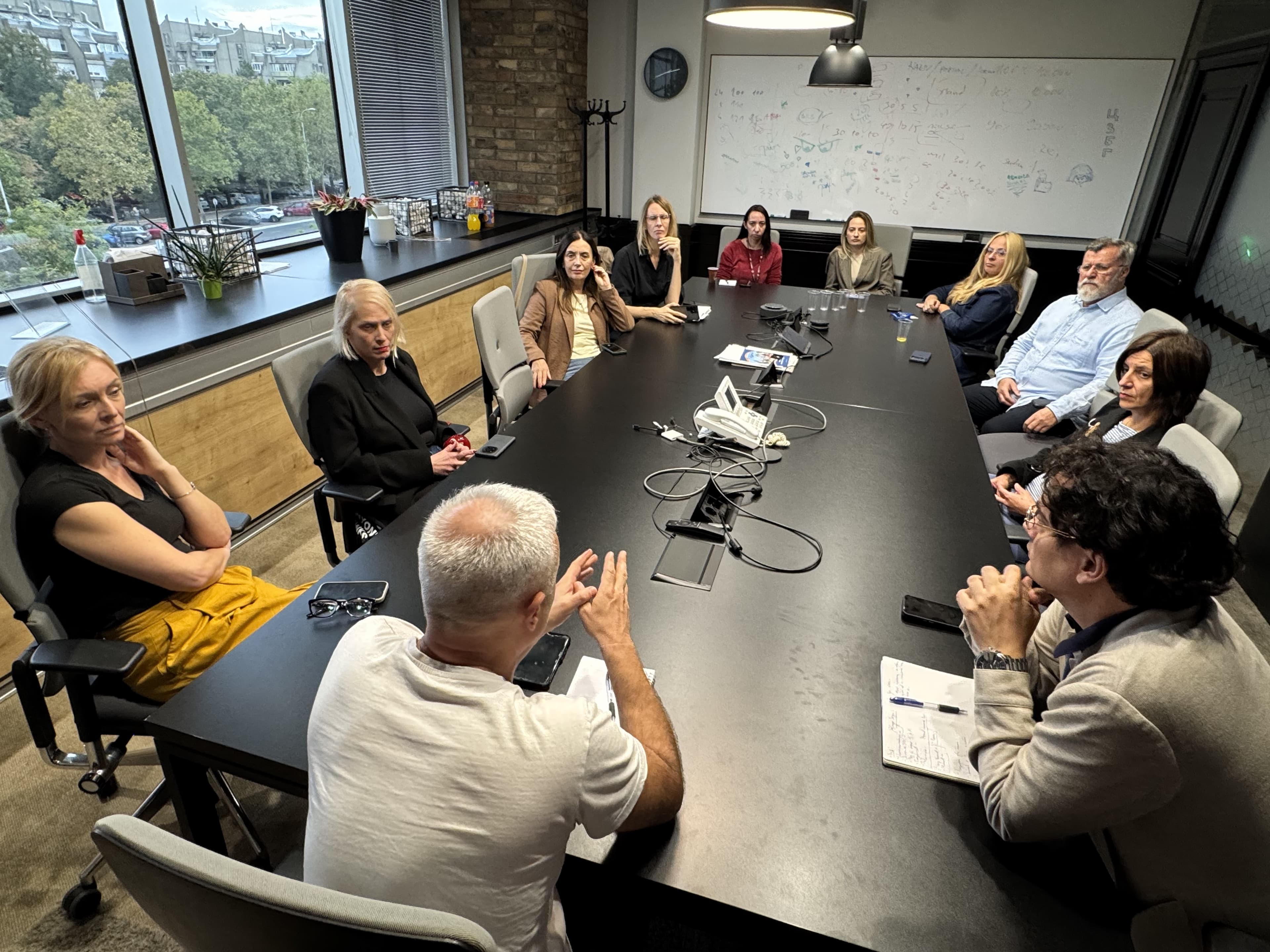
Journalistic associations provided support to the editorial team of Nova.rs: Ongoing communication and updates with international stakeholders agreed upon.

Coalition for Media Freedom: Stop Attacks and Harassment of Journalists During the Election Campaign
.png&w=3840&q=75)