
International Journalistic Organizations: The spiral of violence against journalists in Serbia is intensifying amidst complete impunity.
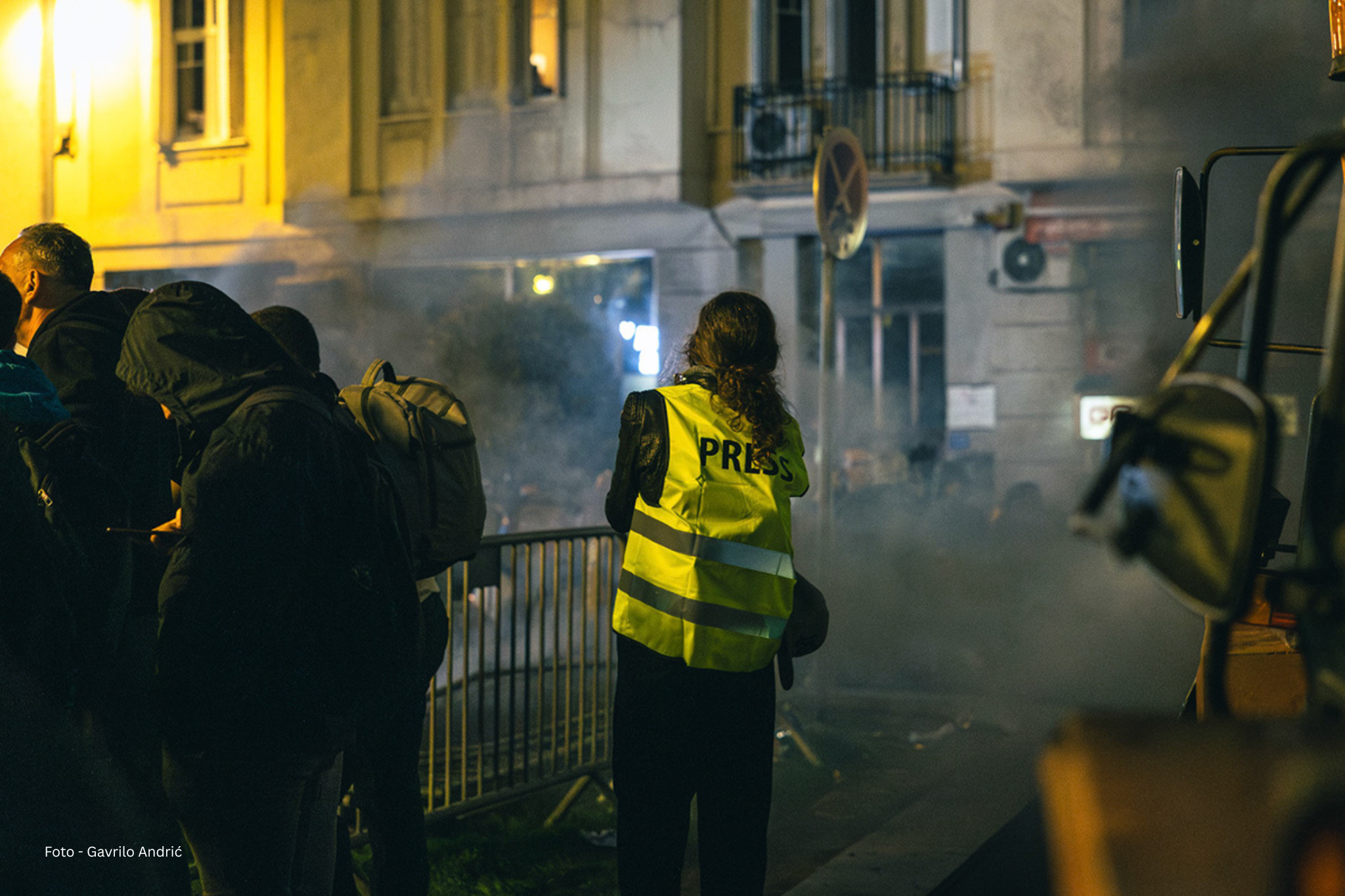
International journalism organizations express serious concern over the escalating spiral of violence against journalists in Serbia, which has intensified in recent weeks. Since their international mission in Belgrade in March, they add, death threats online, as well as threats of sexual violence directed against professionals in independent media and their families, have become increasingly frequent and are almost entirely going unpunished.
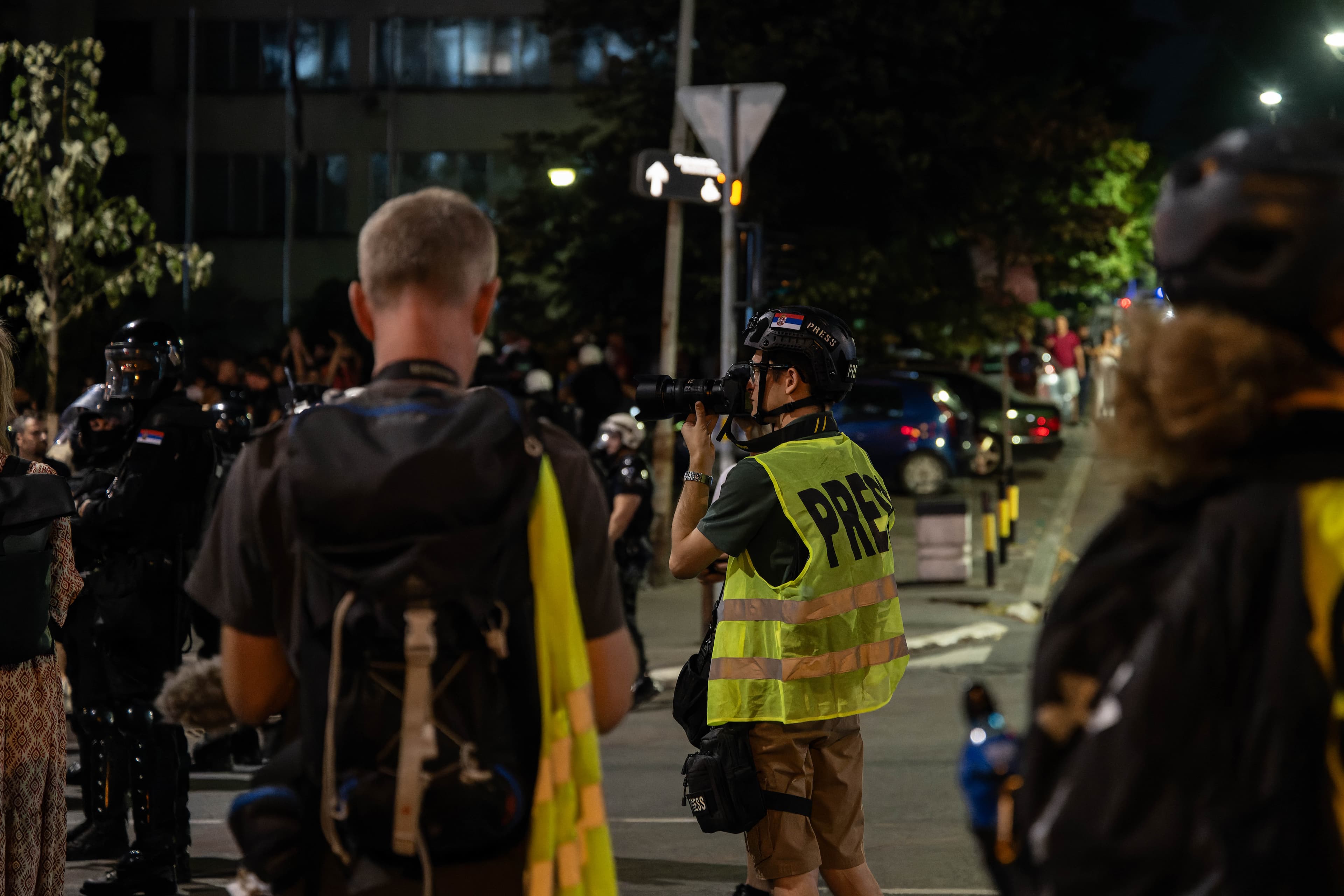
Organizations are urgently reiterating their calls to Serbian authorities to end the climate of impunity by prosecuting those who attack media professionals, refraining from using dangerous rhetoric, and publicly condemning any attempts to silence reporting of public interest.
"Although Serbian authorities have reacted more actively to violations of media freedom documented on the Council of Europe Platform for the Protection of Journalists, these responses have not adequately reflected the scale of the problem, have not led to concrete results, or relevant authorities have not responded appropriately to them. Considering the latest response, which again did not condemn the threatening rhetoric of state officials, the undersigned organizations call on the authorities to approach these warnings with the seriousness they deserve, to sanction violations of media freedom, and to ensure the protection of journalists who have been exposed to dehumanization for far too long," states the joint statement.
Since the beginning of this year, the Mapping Media Freedom platform has recorded 31 death threat online directed against 44 media professionals.
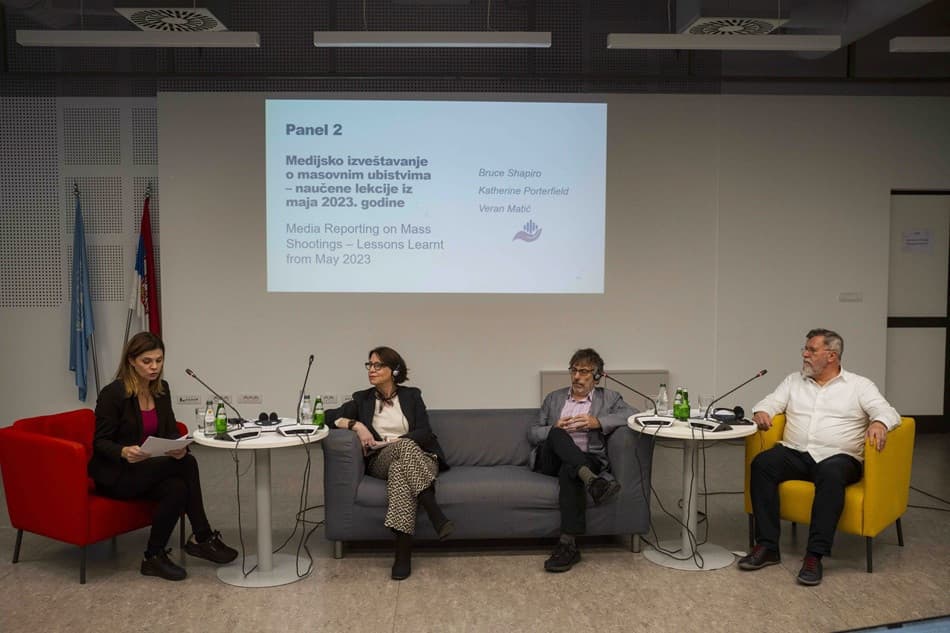
It adds that prominent figures such as the president of the Association of Independent Electronic Media (ANEM) Veran Matić, columnist for Danas and host of the podcast "Dobar Loš Zao" Marko Vidojković, and Nenad Kulačin, journalist Dinko Gruhonjić, and Predrag Simonović, columnist for Radar, face harassment almost daily, including threats against their families and children.
Veran Matić, who was presented as a "state enemy" in a prime-time broadcast and who was recently attacked on the street, received online threats this month stating that he should be “left to die and torn apart by animals” and that he should have his “head cut off.”
Only the threats against journalists Marko Vidojković and Nenad Kulačin constitute at least six recorded death threats. Their mothers have also received threats of sexual violence, as well as Kulačin's daughter last year.
Among the 19 family members who were targeted by threats, a particularly brutal comment was directed at the newly appointed news director of N1, Branislav Šovljanski, stating “We will f*** your children, your family, everything you have, and we will do it slowly.”
Threats of sexual violence have also been directed at a small child of Predrag Simonović, a former police inspector and columnist for the weekly Radar, who has also been regularly threatened, including death threats.
Organizations emphasize that state institutions and political actors who have incited and spread hate towards these media professionals bear responsibility for the daily threats they face.
"Despite repeated promises made to European institutions and civil society, the authorities continue to fail to prosecute the perpetrators of attacks, even in cases where the perpetrators have been identified. Several journalists, including Marko Vidojković and, most recently, freelance journalist Aleksandar Radić, have been forced into exile for security reasons. This violence is not limited to well-known journalists; local journalists, who are more visible and vulnerable in their communities, face even greater risks," the statement emphasizes.
The recent beating of professor Stevan Filipović in Belgrade, in front of multiple witnesses, they note, clearly demonstrates that political violence is becoming increasingly prevalent in Belgrade. Particularly concerning is the destruction of the car belonging to the son of journalist and program director of the Independent Journalists' Association of Vojvodina, Dinko Gruhonjić.
"Independent journalists are no longer safe in Serbia. As long as attacks remain unpunished, media professionals are more at risk than ever of being attacked or even killed. This pattern of impunity extends to the judiciary as a whole. In 2025, judicial authorities managed to secure only three convictions against those responsible for criminal attacks on journalists. Ongoing impunity in the case of the murder of Slavko Ćuruvija, along with the unpunished murders of Dada Vujasinović and Milan Pantić, indicates a systemic failure of the criminal justice system, as well as a broader erosion of the rule of law," international journalist organizations state in the announcement.
In light of the escalating violence, the undersigned organizations reiterate their call for the authorities to approach these cases with the seriousness they deserve. As they point out, while it is positive that Serbian authorities have become more willing to cooperate with the Council of Europe platform, these responses rarely represent a genuine effort to address reported cases.
They also remind that no case has yet been resolved in 2026.
"Furthermore, the question remains whether the relevant authorities have responded to a number of recent warnings. For example, the official response from the Republic Public Prosecutor's Office of Serbia dated August 17, regarding derogatory and threatening statements directed at journalists during a parliamentary debate, is deeply concerning. Instead of acknowledging and condemning the threatening nature of those statements, particularly the statement by the Minister of Culture that "something bad should happen to Gruhonjić," which referred to journalist Dinko Gruhonjić, the Prosecutor's Office's response focused solely on the fact that "derogation" is not prosecuted ex officio under the Criminal Code — a legal technicality that has never been in dispute. Such a response is not only disappointing; it once again reflects the ongoing impunity on the ground and the urgent need for state officials to publicly denounce and condemn such occurrences. Media professionals must no longer be exposed to public persecution or considered legitimate targets of such persecution," the organizations conclude.
Signatories:
- European Federation of Journalists (EFJ)
- Free Press Unlimited (FPU)
- Osservatorio Balcani Caucaso Transeuropa (OBCT)
- European Centre for Press and Media Freedom (ECPMF)
- International Federation of Journalists (IFJ)
- Index on Censorship
- Reporters Without Borders (RSF)
Related Articles

Journalistic associations provided support to the editorial team of Nova.rs: Ongoing communication and updates with international stakeholders agreed upon.

Coalition for Media Freedom: Stop Attacks and Harassment of Journalists During the Election Campaign
.png&w=3840&q=75)