
Impunity for Attacks on Journalists in Serbia: Of 111 Cases, Only Three Resulted in Convictions
The Independent Association of Electronic Media (ANEM) reminds that more than half of the cases initiated this year due to threats to journalists' safety in Serbia are still in the information-gathering phase, while only three cases have resulted in guilty verdicts, as of the data from September 30.
On the occasion of the International Day to End Impunity for Crimes Against Journalists, November 2nd, the latest data shows that, despite an increasing number of reported cases, accountability for attacks and threats often remains absent, or there are long waits for judicial outcomes. At the same time, no case of journalist killings in Serbia has received a final judicial resolution, and the families of victims have been waiting for justice for decades. Such practices further discourage journalists from reporting attacks and threats, leading them to seek protection and support more frequently from journalistic associations and the public, rather than from institutions responsible for their safety.
In Serbia, during the first nine months of 2026, a total of 111 prosecutorial cases related to the endangerment of journalists' safety were formed, which is an increase of 18.09 percent compared to the same period last year, when 94 cases were initiated.
According to the data from the Supreme Public Prosecutor's Office, in three cases from this year, convictions were issued, while 66 are in the phase of gathering necessary information. In seven cases, potential perpetrators have not been identified even after preliminary investigative actions were undertaken.
At the same time, ANEM recorded 269 threats, attacks, pressures, and instances of obstruction of work against journalists, female journalists, and activists from the beginning of the year until now, with 39 cases documented just in October through the SOS hotline "Safe Line".
In October, incidents recorded included attacks, threats, mobile phone thefts, work obstructions, detention of journalists and media workers, hindrance of reporting, threats of sexual violence, insults and abuse of a female journalist on a national basis via social media, a case of threats of severe violence directed at a host under a post on an Instagram page, a case of a hacking attack that prevented the publication of photographs and other visual content on a portal, and a case of threats from a court hearing directed at all representatives of independent journalism, among others.
More Reports, Proceedings Without Resolution
Data from the Supreme Public Prosecutor's Office show that from the beginning of 2016 to the end of September 2026, a total of 846 cases related to the endangerment of journalists’ safety have been initiated. In 86 cases, convictions were issued, while in 178 cases, potential perpetrators were not identified even after preliminary investigative actions were taken. In 331 cases, the prosecutor's office assessed that the elements of a criminal offense for which prosecution is undertaken ex officio were not met.
These data raise questions about the effectiveness of institutional protection for journalists, especially in cases where investigations remain unresolved with no identified perpetrators or stall for long periods in preliminary procedures.
ANEM warns of the endangerment of journalists' safety while reporting from the field, where instead of protection, they are often exposed to violence, intimidation, and obstruction during their work. Particularly concerning are cases where the police have not reacted to prevent attacks, as well as those in which police officers themselves participated in violence against journalists. Such behavior represents a serious threat to media freedom and further undermines trust in the institutions that are obliged to protect journalists.
Gender-Based Attacks on Female Journalists Require Special Recording and Protection
Journalistic associations do not categorize attacks by gender, so there is no official statistics on the number of gender-based attacks on female journalists, attempts at discrediting them through comments on their appearance, sexuality, and private lives, sexist insults, sexual harassment, threats of rape, and other forms of violence. Such attacks aim not only to intimidate female journalists but also to humiliate and push them out of the public space. Although according to the records of the Supreme Public Prosecutor's Office, 43 percent of the victims are female journalists, ANEM's data show that the number of attacks and other forms of endangerment of their safety is higher than that of their male colleagues, both in physical and online spaces.
ANEM points out the necessity for journalistic associations and relevant institutions to systematically record and classify attacks by gender and gender-based characteristics, recognizing the specific forms of violence to which female journalists are exposed. Threats of sexual violence and misogynistic campaigns must not remain unrecognized in general statistics on the endangerment of journalists.
Three Decades Without Justice for Killed Journalists
The impunity for crimes against journalists is evidenced by the cases of the murders of journalists Slavko Ćuruvija and Milan Pantić, as well as the unresolved death of journalist Radislava Dada Vujasinović. Journalist Radislava Dada Vujasinović of the magazine "Duga" was found dead in her apartment in Belgrade in April 1994. Even after 32 years, it remains unclear whether it was murder, suicide, or an accident, while the criminal prosecution for possible murder expired in 2024.
Slavko Ćuruvija, the owner and editor of "Dnevni Telegraf" and "Evropljanin," was murdered on April 11, 1999, in Belgrade. After years of legal proceedings, four former members of the State Security were definitively acquitted of charges in 2024. The Supreme Court determined at the end of 2025 that the acquittal was made with significant violations of the provisions of the criminal procedure, but this decision does not affect its finality. No one has been definitively convicted for Ćuruvija's murder.
Milan Pantić, a correspondent for "Večernje Novosti" from Jagodina, was killed on June 11, 2001, in front of his apartment. Although 25 years have passed, no charges have been filed against his killers.
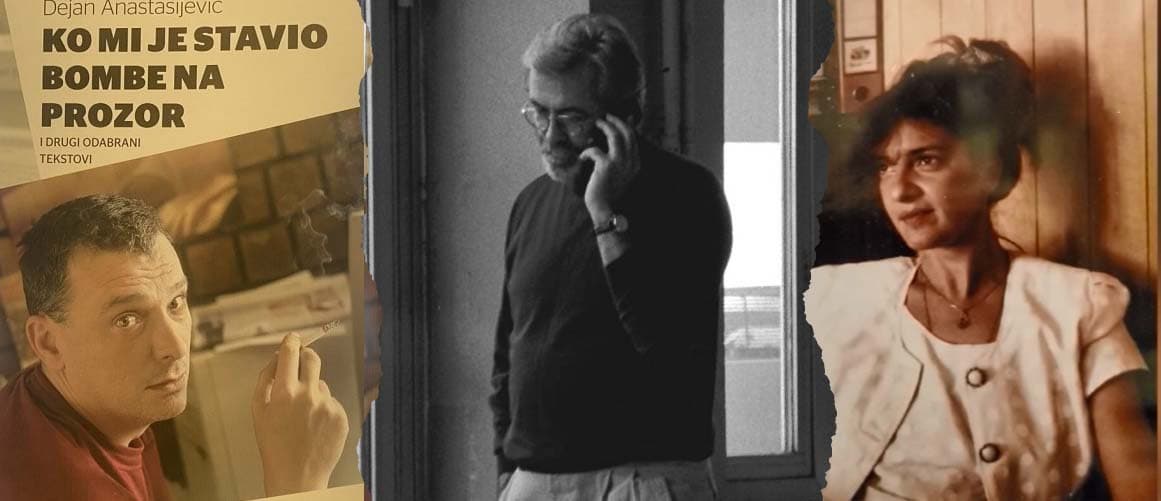
At a time of deep political changes in Serbia and following the electoral defeat of the previous authorities, when questions of accountability in the police, security services, and judiciary are being raised, ANEM warns that cases of journalist killings, as well as numerous unresolved attacks and threats, must not be sidelined again, while the media segment of the Permanent Working Group (SRG) has called on the prosecution and police to reconsider certain cases from the past, such as the murders of Ćuruvija, Pantić, Dada Vujasinović, the attempted murder of Dejan Anastasijević, illegal wiretapping and surveillance of Slaviša Milanov's phone and other means of communication, the physical attack on Vuk Cvijić from 2024, as well as still unresolved cases of threatening intimidation directed at numerous journalists from professional media.
Unpunished Murders of Journalists in the Balkans and Worldwide
Research by the Balkan Investigative Network (BIRN), published as part of the Last Despatches project, shows that more than 140 journalists were killed during and after the wars of the 1990s in the Balkans, while convictions against members of war formations responsible for these murders have been issued in only two court cases.
Additionally, there are concerning cases of Serbian and Albanian journalists who were killed or went missing in Kosovo. BIRN documented 15 cases from the period of 1998 to 2005 that were not resolved at the time of the investigation.
According to data from the international Committee to Protect Journalists (CPJ), since 1992, at least 1,053 journalists have been deliberately killed worldwide because of their work. In 842 cases, no one has been convicted for the murder, while complete justice, which includes convictions of the direct perpetrators, organizers, and instigators, has been achieved in only 50 cases.
There is No Democracy Without Free Media
The International Day to End Impunity for Crimes Against Journalists, established by the United Nations (UN) in 2013, is an opportunity to remind state authorities worldwide of their obligation to protect journalists and their families from violence, threats, intimidation, and other forms of endangerment of safety, as well as to prevent censorship, pressure, and obstruction of journalists in carrying out their work.
ANEM believes that current political changes and the announced oversight of the work of public prosecutors must be accompanied by concrete results in clarifying attacks and threats against journalists. It is particularly important that the Supreme Public Prosecutor's Office has announced control over the handling of cases related to journalists' safety. We expect the results of this oversight to be presented to the public, to identify the reasons for past shortcomings and delays, as well as accountability for any illegal or negligent actions.
The role of free media is to control the work of public authorities in the public interest and expose abuses. The media contribute to ensuring that power remains under the control of citizens, to whom power in a democratic society rightfully belongs. The protection of journalists is not only a matter of their personal safety but also the protection of democracy and the public interest, as there can be no free media without safe journalists.
Association of Independent Electronic Media (ANEM)
The project "Enhancing the System of Prevention and Response Mechanisms in Cases of Threats to the Safety and Life of Female and Male Journalists in Serbia" is implemented by ANEM in partnership with Insider TV and the Center for Development of Local Media, with support from the European Union.
The OSCE Mission in Serbia has supported ANEM's project "24/7 SOS Hotline for Assistance to Journalists and Other Endangered Media Workers," as part of the EU-funded project "Strengthening Freedom of Expression and Freedom of the Media in Serbia."