
SĆF: 107 verbal attacks on journalists and media in August
In August 2026, the Slavko Ćuruvija Foundation recorded at least 107 verbal attacks by state officials, other representatives of the government, and party officials of the Serbian Progressive Party (SNS) on journalists and media outlets. The total number of attacks this month is almost identical to that in July (106) and, on average, represents nearly 3.5 attacks per day.

During August, the highest number of attacks was triggered by changes in the management structure of the United Group media, the anniversary of the protests marked by police brutality in Valjevo in August 2025, the announcement of elections, and public opinion surveys, as well as incidents at a rally of the ruling Serbian Progressive Party in Užice.
August was also marked by large fires in the Deliblato Sands. This event, despite its significance, public unrest, and extensive media coverage, did not provoke a wave of attacks on the media as previously recorded during similar crisis situations. In connection with media reporting on this event, only four attacks were noted.
However, Justice Minister Nenad Vujić, a month after the fires began, urged institutions to protect citizens from individuals spreading unverified and false information about the fire in the Deliblato Sands, and called on the media to verify information with relevant institutions. At the same time, the Higher Public Prosecutor's Office in Belgrade announced the identification and prosecution of individuals spreading false news about the fire on social media, due to suspicion of committing the criminal offense of inciting panic and unrest. Although these statements are not included in the total number of attacks recorded in August, they represent a form of institutional intimidation, and part of the community perceived them as such.
Additionally, in the sample monitored by the SĆF, no attacks by state officials on the media or journalists regarding the reporting on the death of Ratko Mladić, a convicted war criminal, were recorded. This task was taken over by pro-government tabloids in this case.
In one-third of the recorded attacks in August (33%), state officials criminalized journalists and media, accusing them of committing or inciting the most serious criminal offenses: from allegedly working towards the overthrow of the state and government, to inciting civil war, to allegedly illegal operations of media registered in Luxembourg or spreading hate speech.
The highest number of attacks was noted in statements by Serbian President Aleksandar Vučić (22). This is the third time in the last four months that Vučić has directed the most attacks at critical journalists and media. Following him in August were:
- SNS MP **Nebojša Bakarec** (19),
- SNS MP **Vladimir Đukanović** (13),
- Speaker of the National Assembly **Ana Brnabić** (11),
- SNS MP and leader of the SNS parliamentary group **Milenko Jovanov** (9).
Seventeen other officials participated in the attacks, including: the ministers of information and telecommunications Boris Bratina, culture Nikola Selaković, public investments Darko Glišić, the president of SNS and advisor to the President of the Republic Miloš Vučević, the minister of mining and energy Dubravka Đedović Handanović, the minister of labor, employment, veterans, and social affairs Milica Đurđević Stamenkovski, the president and vice president of the Provincial Government Maja Gojković and Sandra Božić, vice president of the National Assembly Marina Raguš, the president of the City Assembly of Novi Sad Dina Vučinić, and the vice president of the Assembly of AP Vojvodina Nemanja Zavišić.
As much as 70% of the recorded attacks in August were directed at the editorial offices and individual journalists who were recently part of the United Group – N1, Nova S, Danas, and Radar. The targets also included the portals Cenzolovka, Izlaz, and Radio Free Europe, the weekly Vreme, and the investigative portal KRIK.
In August, Pedro Vargas David, the director of the Portuguese fund Alpac Capital, was appointed as the director of the companies under which some of the largest independent media in Serbia operate – N1, Nova S, Nova.rs, Radar, and Danas. This appointment occurred before the formal completion of the sale of these media, that is, before the Luxembourg government and relevant bodies approved this transaction.
In light of these changes, Minister of Information and Telecommunications Boris Bratina sent an open letter to the new director on behalf of his ministry, in which he portrayed the television stations TV N1 and Nova S as part of a "pirate scheme" that allegedly "illegally" avoided paying taxes and fees in Serbia because they are registered in Luxembourg. The letter also stated that these television stations have become "a main and indispensable political factor," arguing that "no action, be it by political parties, the non-governmental sector, or individuals, can be imagined without their logistics." The Luxembourg regulatory body ALIA was presented as a "steel umbrella" shielding N1 and Nova S from responsibility and part of what the minister described as the forthcoming "fraud of the century" in media.
President Aleksandar Vučić accused N1 and Nova S of representing "a political project, financed by foreign services, by foreign intelligence agencies, to overthrow the government in Serbia." He added that "there is no lie that these people have not invented," asserting that N1 is "the most unprofessional media outlet on the planet."
Minister Darko Glišić claimed that the editorial policy of these media was "exclusively detrimental to Serbia" and aimed at "inciting civil war," with a message that "the time of accountability is coming."
Provincial Government President Maja Gojković accused N1 and Nova of having "their role" in a "colored revolution" and that their task is to "disinform, incite, and divide Serbia."
Although part of the recorded statements by officials regarding these changes could be attributed to sarcastic commentary on events in the business community, in the current socio-political context in Serbia, they carry a completely different meaning, especially considering the questionable appropriateness of the language used and the power position from which it comes. Journalists who critically report on the government, especially those employed by United Group media, have been subjected to a campaign of discreditation and criminalization orchestrated by the very top of the government for years.
Mockery, insults, and other forms of microaggressions from SĆF officials were already recorded in April, during the campaign against N1 journalist Žaklina Tatalović and following the dismissal of then-director of N1 Igor Božić. Therefore, cynicism and gloating regarding changes in the management of these media cannot be viewed as isolated and justified comments. Such statements are also included in the final count of attacks in this monthly report.
August also marked the anniversary of the civil protest in Valjevo, when documented police violence against demonstrators occurred. This was also a reason for state officials to continue their campaign against TV N1 and Nova S, which have been continuously accused for a year of disseminating disinformation about the alleged death of a minor protest participant following police beatings. Although these media never reported such news, officials accuse them of disseminating information about the boy's death to incite public outrage and conflicts in the streets.
MP Vladimir Đukanović repeated the same accusation, adding that the publication of that news was "deliberately orchestrated" and represents "a school on how to best raise panic," asserting that in other countries, media that would publish such news would face "severe sanctions."
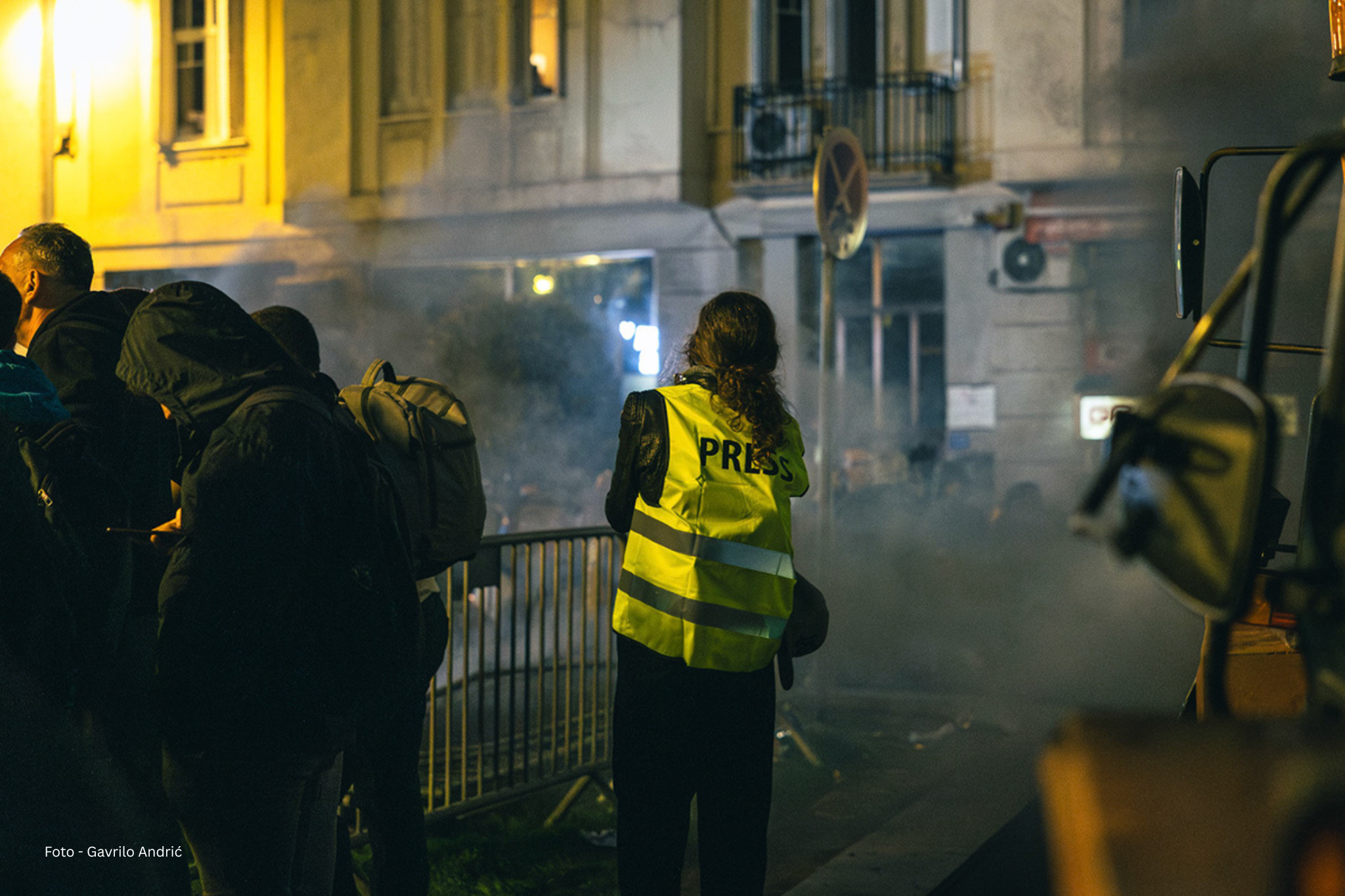
At the end of August, an SNS rally was held in Užice, where Aleksandar Vučić also spoke. There, clashes occurred between opponents and supporters of the government, with police dispersing the gathered crowd, resulting in multiple incidents where journalists suffered physical violence and police interference in their work.
SNS MP Ivan Antić accused the reporters from Nova S and N1 in Užice of having "orchestrated and directed the violent action," while the president of SNS and advisor to the President of the Republic Miloš Vučević made unsubstantiated accusations that "journalists from certain tycoon media directly coordinated those attacks."
Speaking about the events in Užice, Speaker of the National Assembly Ana Brnabić stated that "new parallel media" are now being created, that there is an "invisible hand behind the scenes" that is creating "other portals, other media" which "continue to spread hatred."
As an example, she mentioned the portal Izlaz, stating that it "pours that hatred" and "practically does what N1 and Nova S did in their golden blockading times - it leads, in fact, the attacks on people."
Related Articles
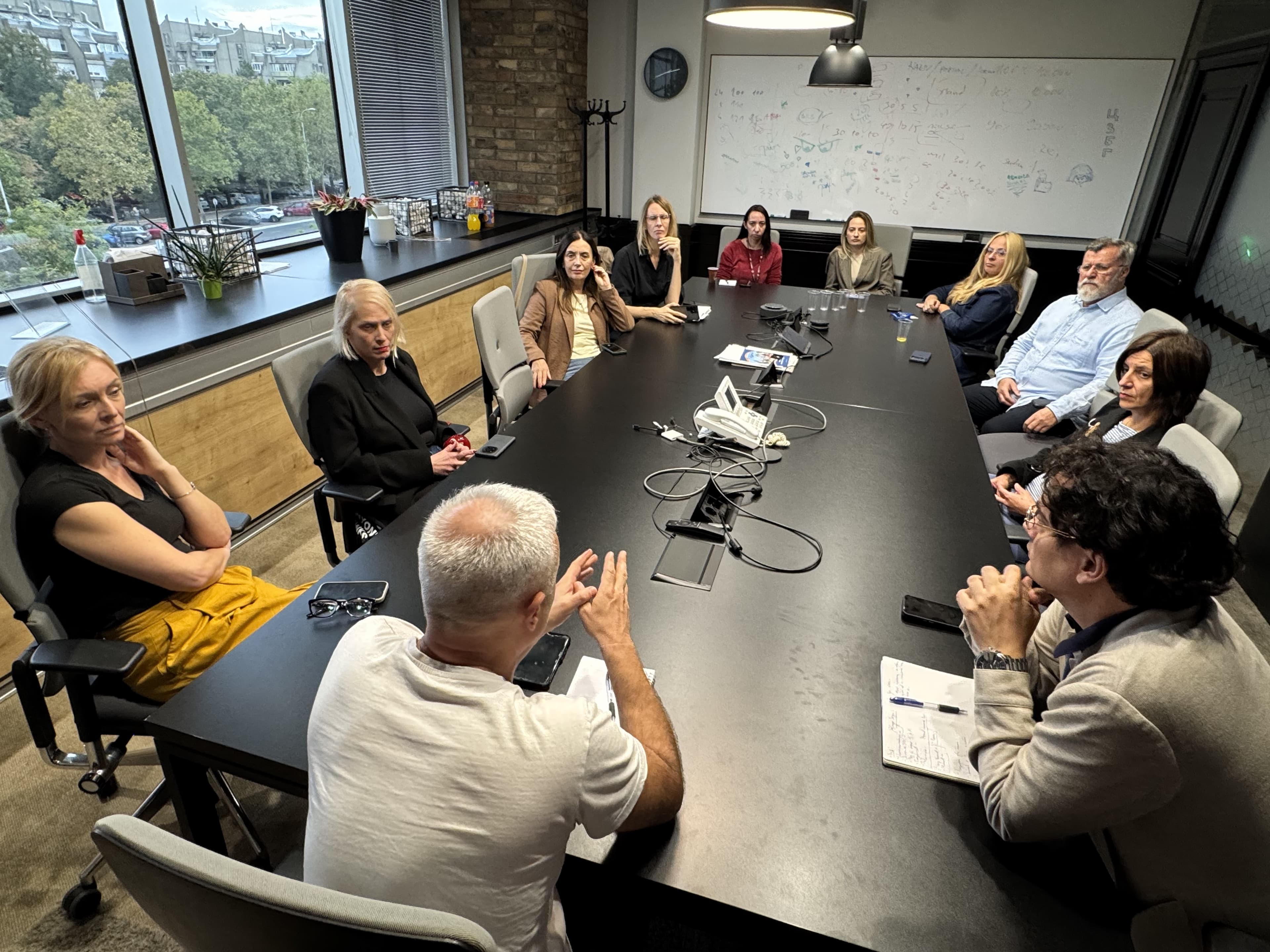
Journalistic associations provided support to the editorial team of Nova.rs: Ongoing communication and updates with international stakeholders agreed upon.

Coalition for Media Freedom: Stop Attacks and Harassment of Journalists During the Election Campaign

.png&w=3840&q=75)