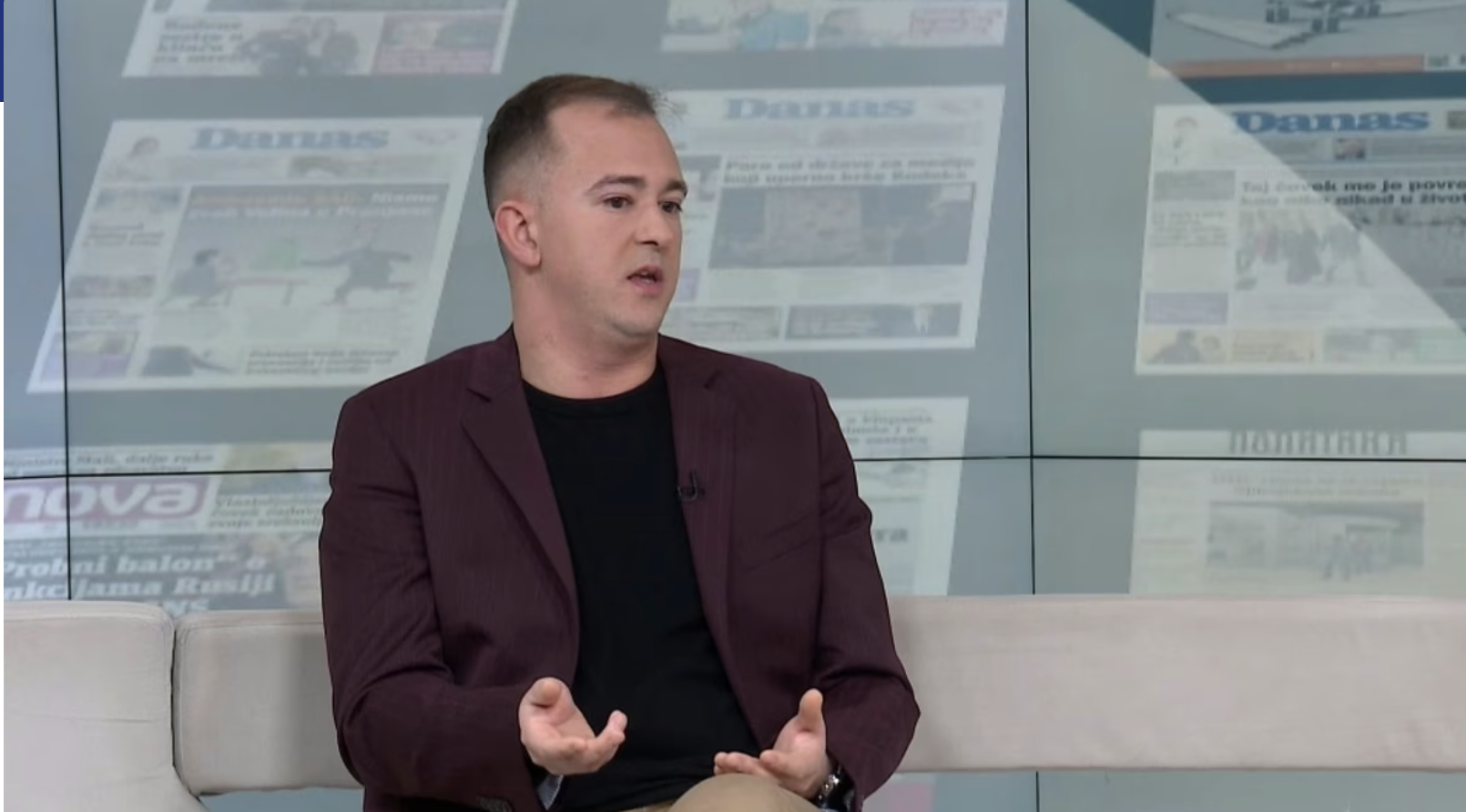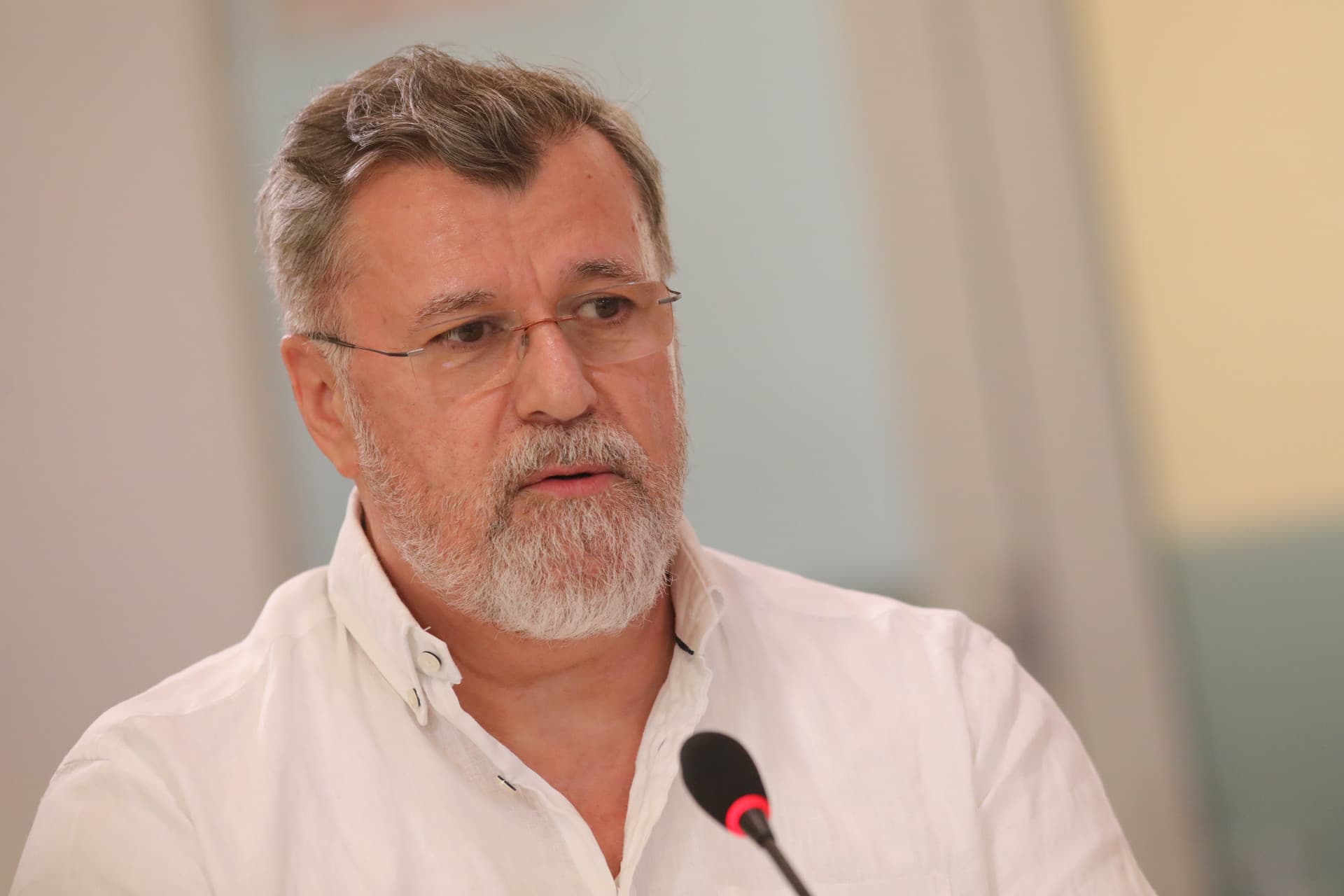

Editor of Mašine Marko Miletić: Plenums, blockades, and protests are not new.
Sometimes I remember certain details from the past. I think of people and beautiful moments, but occasionally some current events remind me of the traumas I once experienced. Nevertheless, the past is for me a "space" in which I rarely dwell; it is important to me that I am firmly on two feet in the present, ready to step into the future.
I remember the flow of warm air around the building where I grew up. That scent of spring that I would feel with the breeze every time I entered the building is something that is etched in my subconscious, and every time I feel such a current of air, I remember my childhood.
***
Most of my memories are connected to photographs, of which we had many since my father's hobby at the time was amateur photography, a hobby that would later influence my choice of school and guide me toward art and culture. What was not captured in photographs – I first tried ice cubes in kindergarten with the teachers while my mom was talking to them; my brother and I made our "house" under the bed; on the way home from school, we collected chestnuts, the more the better; I entered the National Museum "sneakily," and much later, I actually worked at the counter at that very entrance and realized that the guards at the time must have seen me entering.
***
Teachers influence our character almost as much as parents do, which is why I always support their struggle for better working conditions and a better status for education in society. In second grade, I had my first political debate with teacher Mira Jekić: the name of Marshal Tito Street was changed to Main Street, the teacher supported this, while for me, Tito was a symbol of the struggle for freedom. Nevertheless, the teacher tolerated my constant fidgeting in my chair and looking out the window – the events in the classroom and on the blackboard were not enough for me.
***
Class teacher Milan Atanacković taught art, and he strengthened my interest in culture but also confiscated the trumpet I brought and used during a protest organized by us students. At the very end of elementary school, I was faced with something that I would later clearly see as a systemic problem in the education system – for several years, I wanted to be educated as a photographer; however, the school psychologist believed that as an "excellent student," I should enroll in a "stronger school," thus applying pressure on both me and my parents.
***
I managed to overcome that and enrolled in the Graphic School, photography direction. I remember that the brilliant professor Dragoljub Tošić advised us in the first practical class that if we want to be photographers, we must follow "everything," look around us, and engage with all forms of art. It was not difficult for me to truly start following, watching, and listening to "everything," and thanks to the dedicated work of Serbian language teacher Maja Ugrenović, I also began reading books that were not part of the curriculum.
***
The time spent in high school and around it was undoubtedly the period that directed me the most in life, and it was during this time that the final phase of the struggle against Slobodan Milošević's regime was taking place – I had the opportunity to be a reporter at mass protests for the first time. I climbed on garbage bins and flower pots to photograph the "river" of people crossing the Brankov Bridge.
***
During my studies, I also worked, and the political and economic changes in the country at the beginning of the 2000s affected higher education as well. The fight against the commercialization of education became the main basis for political organization at the Faculty of Philosophy – plenums, blockades, and protests were common occurrences.
***
I learned a lot about art history; however, I was much more interested in contemporary art, its creation, presentation, and interpretation, which would not have been possible without modern sociological theories that I encountered during my studies, not at the faculty itself but through socializing and working with more experienced colleagues or individuals connected to other scientific fields, primarily sociology.
***
As a teenager, I created fanzines that focused on the local punk music scene and culture, and during high school, I began working occasionally as a photojournalist.
***
The events surrounding October 5th certainly directed me towards "fieldwork"; as a young person, it was significant for me to be part of something "big," and I found my social role in documenting events. Already at the beginning of my studies, I began writing occasional reviews of contemporary art exhibitions and later more engaged opinions regarding cultural policies and the position of cultural workers for several media outlets.
***
Towards the end of high school, I worked on a major photo report about the local graffiti scene. Photographing people and events evolved into organizing graffiti jams and exhibitions where I presented my photographs as well as the work of graffiti artists. During this period, I became more interested in working in culture and met colleagues with whom I would later collaborate within the Kontekst Gallery and Kontekst Collective.
***
During my studies in Art History, this work became more serious both theoretically and organizationally, resulting in organizational and curatorial work on a large number of exhibitions held in Serbia, as well as at the international level. Kontekst, as part of the independent cultural scene, was active in launching networks such as the former Second Scene and, still active, the Independent Cultural Scene of Serbia.
***
Journalism is something I have been involved with for quite a while, but it became my profession about 15 years ago. However, more important than that professional-material aspect is that serious engagement in journalism truly means that it becomes a life "calling." Journalism enables a specific form of social action that involves both monitoring and controlling power, as well as opening spaces for those without power and informing citizens about all relevant events and phenomena so they can form their opinions and become socially active themselves.
***
I believe journalism should inform, educate, and encourage people to participate in society. We inform about matters of public interest, and this is not the interest of a minority that possesses economic and political power but of citizens who struggle daily to have their voices heard, to resolve the issues they face, and to have their successes recognized.
***
Journalism should convey and produce knowledge about the problems we face as well as the ways to resolve them. Ultimately, such journalistic work encourages people to engage and take an active role in democratic processes and work towards improving society. We are living such a reality right now.
***
We built the editorial team from scratch; the idea was to participate with a group of ten participants in education on socio-political topics we wanted to write about, and the result of this process would be the articles we would publish. We wrote about education, healthcare, culture, the environment and urban issues, women's rights, labor and social rights, and success in this work led to the development of our capacities and consequently to the professionalization of the editorial team.
***
Over time, shorter informative formats began to dominate over longer analyses, which was accompanied by adjustments in our work on social media, thus profiling us as an informative portal that has gained a reputation in recent years as a fast and reliable space for informing the public about relevant issues.
***
In the past two years, Mašina has gained the trust of a significant number of people. They came to us primarily by following our social media, where they could notice our timely and brave reporting from the field and from situations that were often violent and quite dangerous for the journalists working in the public interest. Given the polarization of society and the media landscape, which has been deliberately created by the SNS regime, merely reporting on events that were in the public interest was enough for Mašina to play a significant role in the social changes occurring over the past two years.
***
Inadequate or often non-existent reporting by public services or the absence and inability of other mainstream media to be present at certain locations has led to a lack of relevant information regarding some events, which Mašina has often managed to compensate for. We gained additional public trust through continuous critical writing about certain phenomena and events such as processes against activists and university workers, the challenges faced by education and cultural workers, as well as reporting from local elections in ten places simultaneously and covering areas affected by forest fires.
***
Many problems we face today are systemic; they are not merely the result of the actions of individuals who have disregarded certain laws but are part of broader processes arising from poorly established laws and societal organization in various segments.
***
If we look only at the media sector, the problems we currently have are the result of laws enacted in 2014, which were then partially amended to merely confirm and legitimize the poor state of affairs. It is unlikely that things can improve solely through personnel changes; when we talk about public services, changes in regulation and structure are also necessary for these, the most important media for any society, to truly take on that role.
***
Regulatory bodies need to be further strengthened and separated from the influence of political power centers, while in discussing the Press Council, its significance should be recognized, and its recommendations made binding, particularly regarding the allocation of public funds for media financing. A particular issue is the question of media ownership, which has proven crucial in influencing social and political events and requires broader discussion and serious political decision-making.
***
In this regard, it will be necessary to consider that the bearers of political change are self-organized citizens who also need media that can respond to all needs, primarily concerning reporting "from the local level," which means that various models of public ownership in the media need to be put back on the agenda. If in a new, liberated Serbia, I can choose what I will do, I will strive to use my knowledge and experience to contribute to the building and defense of a democratic society.
About the speaker
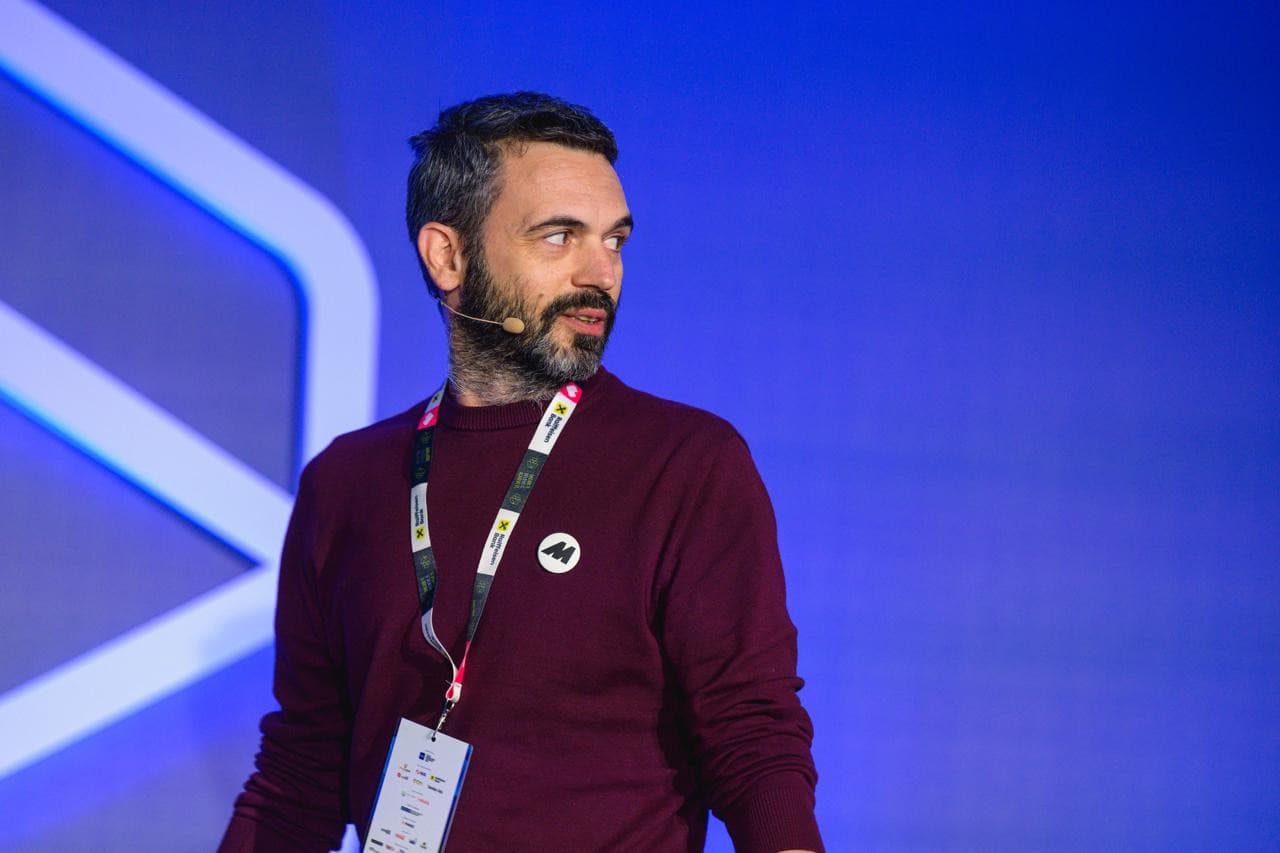
Marko Miletić, co-founder and editor-in-chief of the multiple award-winning portal Mašina, was born in Zemun in 1983. A photographer, art historian, and journalist, with over a decade of experience as an editor, previously as a journalist and manager in media related to culture, he is particularly interested in innovative journalism and media freedoms, the development of digital media, and high-standard journalism as well as experimental formats that engage the audience and build community. In the last two years, he has also focused on the issue of journalist and media safety, educating himself through practical work as well as programs from relevant institutions. In his free time, he engages in analog formats – photography and philately. He lives and works in Zemun and Belgrade.
Regulatory bodies
Regulatory bodies need to be further strengthened and separated from the influence of political power centers, while in discussing the Press Council, its significance should be recognized, and its recommendations made binding, particularly regarding the allocation of public funds for media financing. A particular issue is the question of media ownership, which has proven crucial in influencing social and political events and requires broader discussion and serious political decision-making.
Journalism
Journalism should convey and produce knowledge about the problems we face, as well as about the ways to resolve them.
Source: Danas
Related Articles
In Memoriam: Who Was Milan Jovanović (1950–2026) – From Award-Winning Policeman to Symbol of Free Journalism
During the public discussion on the draft regulation regarding the selection of members of the management boards of RTS and RTV, the deadline for proposals and suggestions is December 2nd.