
Veran Matić: Vučić's goal is to destroy anyone who is unpleasant for his regime.
The state declares journalists who do their job according to European standards as enemies of the state. The government has turned into an open enemy: the police beat media workers while actively protecting criminals and thugs connected to the SNS. In order for Vučić to consolidate absolute power, he consciously oppresses workers in culture, education, and the economy, says the founder of Radio B92, the president of ANEM, and a steadfast defender of historical truth.
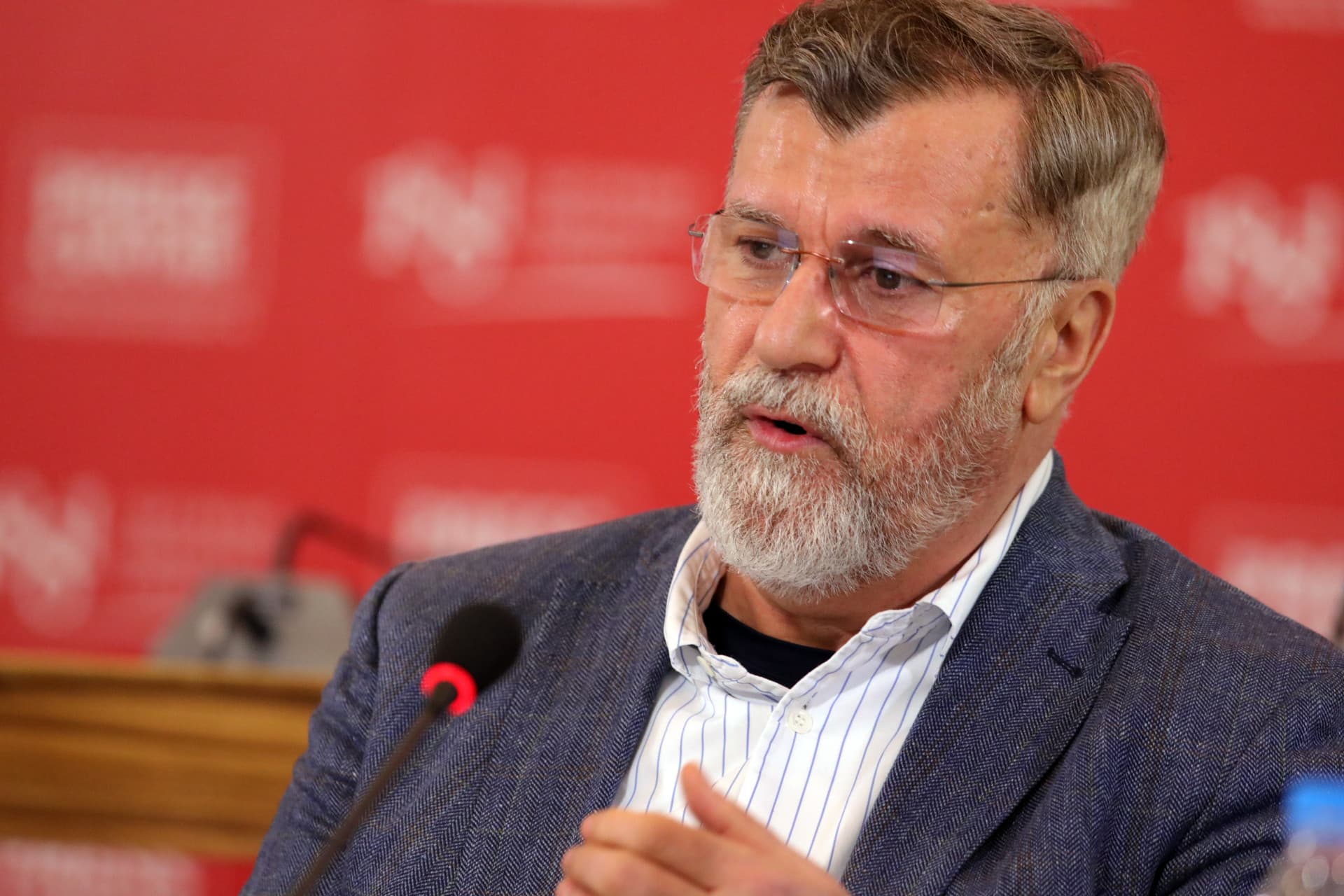
Veran Matić, founder of Radio B92, president of the Association of Independent Electronic Media in Serbia, and a steadfast defender of historical truth, speaks in the second part of an interview for the Novosti portal about the state of Serbia under the rule of Aleksandar Vučić, the position of journalists, including his own, memory policies and confronting the past, as well as his role in this and the rampant Ustaša movement in Croatia and Chetnikism in Serbia.
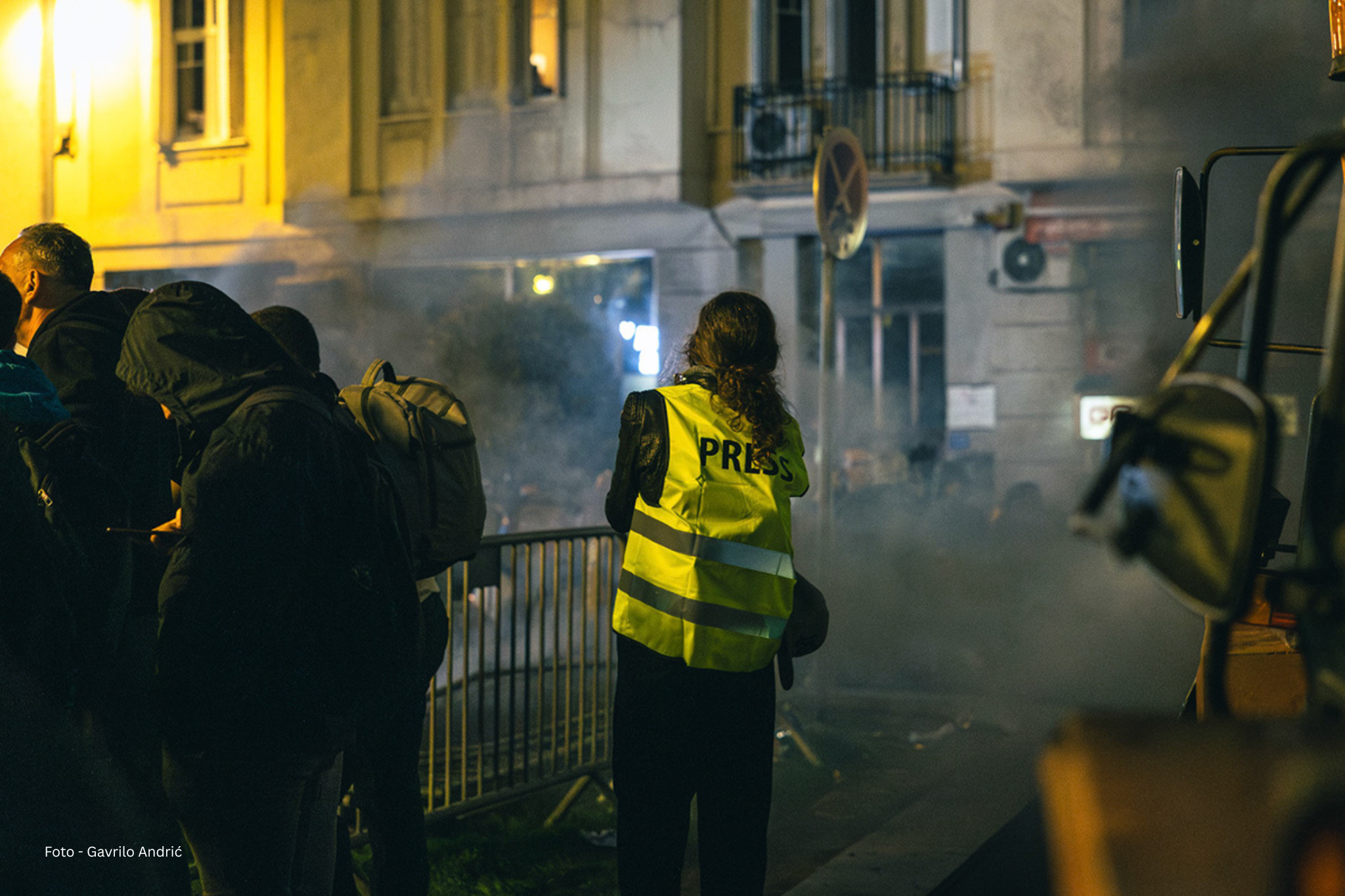
Serbia has become a prison for free speech and an area of street terror. While the regime boasts a facade of progress, according to the Media Freedom Index by Reporters Without Borders, Serbia ranks low on the list, in a zone marked as “problematic” or “difficult.” The police act brutally towards media workers, openly attacking them and knocking them to the pavement while holding cameras. They savagely beat those who think differently. Why does Vučić's regime persecute the word?
Because Vučić's goal is to destroy anyone who poses an inconvenience to his regime. He declares journalists who do their jobs according to European standards to be state enemies. The state has turned into an open enemy: the police beat media workers and actively protect criminals and thugs from the SNS environment and their fan groups.
In order to consolidate absolute power, Vučić consciously crushes workers in culture, education, and the economy, carrying out autogenocide on his own society and destroying its most valuable substance. Due to the threats to their lives, at least six media workers from Serbia are currently in exile. A group of six activists from Novi Sad cannot return to the country because they have been targeted for allegedly undermining the constitutional order.
In the last two years, a huge number of middle-aged people with families have left Serbia. Life in Serbia has become unbearable because you are blackmailed in every segment of existence. If you want to receive social assistance of about fifty euros or any job, you must guarantee votes for the SNS. People within that system not only do not fear punishment, but they are convinced that the regime expects them to sow fear. This is systemic monstrosity.
Where are the institutions in Serbia in protecting free speech? Does this mean that both the police and the judiciary have become accomplices in sowing fear?
The judiciary and police participate in the open persecution of journalists. In the past year, the situation has escalated to the point where the police no longer even pretend to protect journalists but openly attack them during reporting.
The prosecution has completely submitted to political dictate. Half of the prosecutors work directly against the profession and automatically dismiss reports, while the judiciary, under pressure, sides with the powerful, ignoring European judicial practices. This is a complete inversion of values in which institutions, instead of protecting us, actually persecute us.
When we established the Permanent Working Group for the Safety of Journalists in 2016, our goal was to oversee institutions. In the last two and a half years, we have had as many as 271 reports to the prosecution, and only 12 have been resolved with a final verdict! For instance, in 2019, we had 60 registered threats and attacks on journalists, of which a third had a judicial conclusion. The situation is even worse with the Prosecutor's Office for High-Tech Crime, where out of 111 cases of threats on the internet, only one has been resolved.
Plan for Liquidation
You have been one of the regime's targets since the nineties. You receive daily death threats, and pro-regime circles even produced a propaganda series called “Evil Age” in which they discredit you, accusing you of espionage and treason, placing you directly as a victim on the altar of the homeland. Vučić publicly stated on TV Pink that you should take a bottle of wine and apologize to those accused of killing Ćuruvija.
I am not the opposition; I am a journalist doing my job. I led ANEM when Vučić was Milošević's Minister of Information. That association defeated him, and he fell on October 5th. Vučić cannot forget that; our battle has lasted thirty years.
The government NGO Center for Social Stability produced a propaganda film against me, twisting my anti-war past and accusing me of “bloody traces,” espionage, and the “sale of Kosovo” at a time when I was helping the monasteries of Dečani and Gračanica. Đorđe Prelić, a convicted killer under the regime's patronage, openly threatened me regarding the case of the murder of French fan Bris Tatone, which is a clear message to criminal structures to target me. The police confirmed that there was a plan for my liquidation in the Niš prison.
They use rhetoric identical to that before the murder of Zoran Đinđić. I receive messages saying “I am not the only journalist with a beard,” which evokes the liquidation of Slavko Ćuruvija and Milan Pantić, and that something should be “finished with lime,” as was the end of Ivan Stambolić's life. The official security assessment of the Ministry of Interior has shown that my life is in danger, but I do not have permanent police protection as I did between 2010 and 2016 when my life was threatened.
It would now be paradoxical for those who attack and beat journalists to protect me. Although ANEM files criminal complaints with the Prosecutor's Office for High-Tech Crime, cases are sitting in drawers, attackers are free, and regime figures continue their hunt. At the same time, when controversial messages reach Vučić, the police spectacularly arrest people in front of cameras.
But you have been Vučić's collaborator and advisor for years?
I have never been Aleksandar Vučić's advisor. I was a special envoy for resolving the issue of missing persons and the president of the Commission for Investigating the Murders of Journalists, which was formed out of pure desperation of the profession, with a basic agreement that no one receives remuneration or has privileges.
After two first-instance verdicts totaling 100 years in prison for the murder of journalists, the Appellate Court issued an acquittal for the murder of Slavko Ćuruvija, which resembles a political amnesty much more than a judicial decision. I took that risk because as a journalist, I did not want everything to come down to giving speeches at anniversaries.
The appointment as special envoy for resolving the issue of missing persons had the exact same humanitarian, non-political background. At that moment, we had more than two thousand missing persons, which was purely a humanitarian issue completely trapped in politics and stagnation. In reality, NGOs and associations of victims’ families, which the authorities consciously marginalized, did far more in data collection than the state itself.
It was necessary for individuals without political mortgages to be involved, as a bridge between families and real centers of power – Vučić in Belgrade and Kolinda Grabar-Kitarović in Zagreb. She chose Ivica Vrkić, while I, at the suggestion of the families, took on that role from the Serbian side, again on the condition that I receive no compensation or any privileges.
Your humanitarian engagement provoked sharp political reactions after your kneeling at Ovčara, which did not sit well in Belgrade.
The political structures in Belgrade are deeply uncomfortable dealing with the issue of the missing, fearing that revealing the location where the slain Croat is buried will lose them support among the nationalist body. There is eternal manipulation: “Why do you reveal theirs, and where are ours?”.
When I spontaneously kneeled at Ovčara at the end of 2020 because I felt I had to do something different from the usual protocol, as soon as the news broke, Vučić called me and said in principle that he supports my gesture, but that I should have announced it to him. I replied: “I didn't plan it, and if I had told you, you would have said: don't.” Immediately after that, I received a call from the then Secretary General of the Presidency Nikola Selaković, who harshly criticized my kneeling and demanded that I return to Belgrade immediately. I refused because the next morning I was laying wreaths at the Vukovar cemetery.
In Croatia, my gesture was seen as a civilizational shift, while in Serbia, the standard media lynching followed, labeling me as a Ustaša and a traitor. Despite the witch hunt, I continued to support Serbian institutions in Croatia. In the end, Vučić called me again and asked how I plan to go there as his envoy while doing things that are not aligned with state policy.
It has obviously become unacceptable for me to speak as a messenger of peace at regional events, so I told him: “If you see it that way, it’s best to remove me from the position of special envoy.”
As a messenger of peace in the region, do you believe there was any political will in Serbia to dismantle that official nationalist narrative that flees from graves and facts?
There has never been a serious, systemic effort to confront the past. At B92, we filmed about ten documentaries. One was about the horrific crime in Severin, where we uncovered the abduction and murder of 16 Muslims, citizens of Serbia. Although their bodies have still not been found, we published the identities and photographs of the killers, after which the leaders of that unit were arrested and prosecuted. But that job had to be done by the state.
We missed the opportunity to go through a true social cleansing to rid ourselves of the revisionist burden through education, media, and serious programs about the causes of wars and the crimes committed, because only in this way can we build institutions on healthy foundations.
We have only suppressed the crimes and left them smoldering. Milošević's legacy today surfaces completely unscathed among young generations, so we must explain wartime crimes that have long been proven in courts. And we should not be surprised that a large number of young people sincerely believe that Ratko Mladić is a hero.
Let us remember our circle of evil – Slobodan Milošević opened prisons in 1991, amnestied the worst killers and criminals from the asphalt, and sent them to the battlefields. Those people committed unimaginable evil from Vukovar to Kosovo. But three decades later, that evil has returned to its source, to the pavement in front of the very parliament and presidency in the center of Belgrade.
Fear of Modernization
Why has social maturity been lacking in accepting reality?
Because Serbia has a systematically developed fear of modernization, which is traditionally perceived as a threat to national identity. This fear is persistently nurtured by key institutions that society swears by, from the Serbian Orthodox Church to the Serbian Academy of Sciences and Arts (SANU). A dogmatic narrative has been established in which no critical word can be said against the church; everyone hides behind icons, saints, and false patriotism.
It is regrettable to observe the transformation of the current patriarch Porfirije: while he represented values of coexistence in Zagreb, in Belgrade he completely turned into an open spokesperson for radical politics, with aggressive outbursts against women and free-thinking intellectuals.
With your decades of experience surviving in the Belgrade media bunker and the continuous struggle on the front line for free speech, how do you perceive the media scene in Croatia today? It seems that free journalism here is no longer breathing easily either.
Although violence against journalists in Croatia is not as pronounced as in Serbia, I must emphasize the constant attacks on the editorial office of the weekly and portal Novosti and on TV Vida, as a very dangerous continuity that is only escalating. For the past few years, these attacks and the desire to destroy these messengers of free speech have turned into a systemic threat to their existence.
Under the threats of the Homeland Movement, but also constant similar attempts by the ruling HDZ, support from the state budget is drastically reduced, especially for Novosti, which can be said to be one of the best weeklies not only in the region but also in Europe.
The publisher, the Serbian National Council, is finding ways to protect the existence of these media, but I think European institutions also need to get involved. They should not only reprimand the behavior of the government in Croatia but also directly financially support the survival of Novosti and TV Vida.
Witnessing parallel historical abysses on both sides of the border, how do you diagnose the state in Croatia where Ustaša ideology again marches freely? Even official Zagreb has not distinguished itself by its persistent ignoring of the black iconography of HOS and singing Ustaša songs in Knin.
The process of Croatia's independence has largely been based on the politics of Ustaša emigration, which still has a huge influence today. From this root, we live a permanent historical revisionism that has become mainstream politics, embedded in the very institutions.
A turning point for awareness was the Thompson concerts in Imotski and Zagreb, which were supported by the ruling political elites, which is the most direct possible message to Serbs in Croatia about what that elite thinks about the constitutional foundations of Croatian statehood, the partisan movement, and the horrors of World War II.
Over the decades, there has been a cultural transformation and perversion in which the darkest has been proclaimed the most valuable in society, while the brightest is daily nullified. For this reason, I sincerely regret and feel it as my own shame. We are forced to live in a region where such retrograde forces – Chetniks in Serbia and Ustaše in Croatia – are shamelessly glorified as part of official state policies.
Life in a Prolonged War
So, both countries are like married partners in a shared shame in a political pact that discredits the civilizational values of their own histories?
This sets in motion a negative cycle in which incidents nourish the other side and constantly sustain mutual enmity. We have a mutually rehearsed pathology. The Mayor of Belgrade Aleksandar Šapić insists on erecting a monument to Draža Mihailović in the capital and naming streets after collaborators of the occupiers, while in Croatia, the Ministry of Veterans, led by the minister and Deputy Prime Minister Tomislav Medved, officially participates in the funerals of members of the Ustaša army with the highest state honors.
This is a complete denial of historical facts, irresponsible towards one’s own people, and unjust towards the victims – Serbs, Jews, and Roma. The two states seem to consciously choose to live in a prolonged war. Just look at the railway between Zagreb and Belgrade – it is a historical disgrace for both countries.
We talk about the European corridor, and that railway is in catastrophic condition simply because officials cannot sit down and sign an agreement. At the same time, we see that leading politicians from both countries communicate normally with each other, just like Milošević and Tuđman used to, while inciting their peoples against one another.
You regularly participate in commemorations organized by the Serbian National Council. We have come to a situation where even cemeteries are losing the last line of defense of historical truth. How do you perceive our silent battlefields?
It would be completely natural for those commemorations to adopt a calmer tone over time. When I look at our people, I see that they no longer come just to pay their respects, but literally come to defend the truth about who killed those victims and why. They come to those sites as if they carry invisible guns because they know that not only marginal Dražen Keleminec appears there, but representatives of the authorities who distort that history.
It has been shown that civilizational progress can be made through collective gestures; however, Plenković stated that we have “consumed” that, so now we can move on, as if we have tasted, eaten, and nothing. This use of the term “consumption” for the process of reconciliation is simply unbelievable. By that logic, since it no longer brings us political profit, we will return a bit to fascism and historical revisionism, because that evidently better feeds the ratings of the ruling elites on both sides.
Source: Novosti
Related Articles
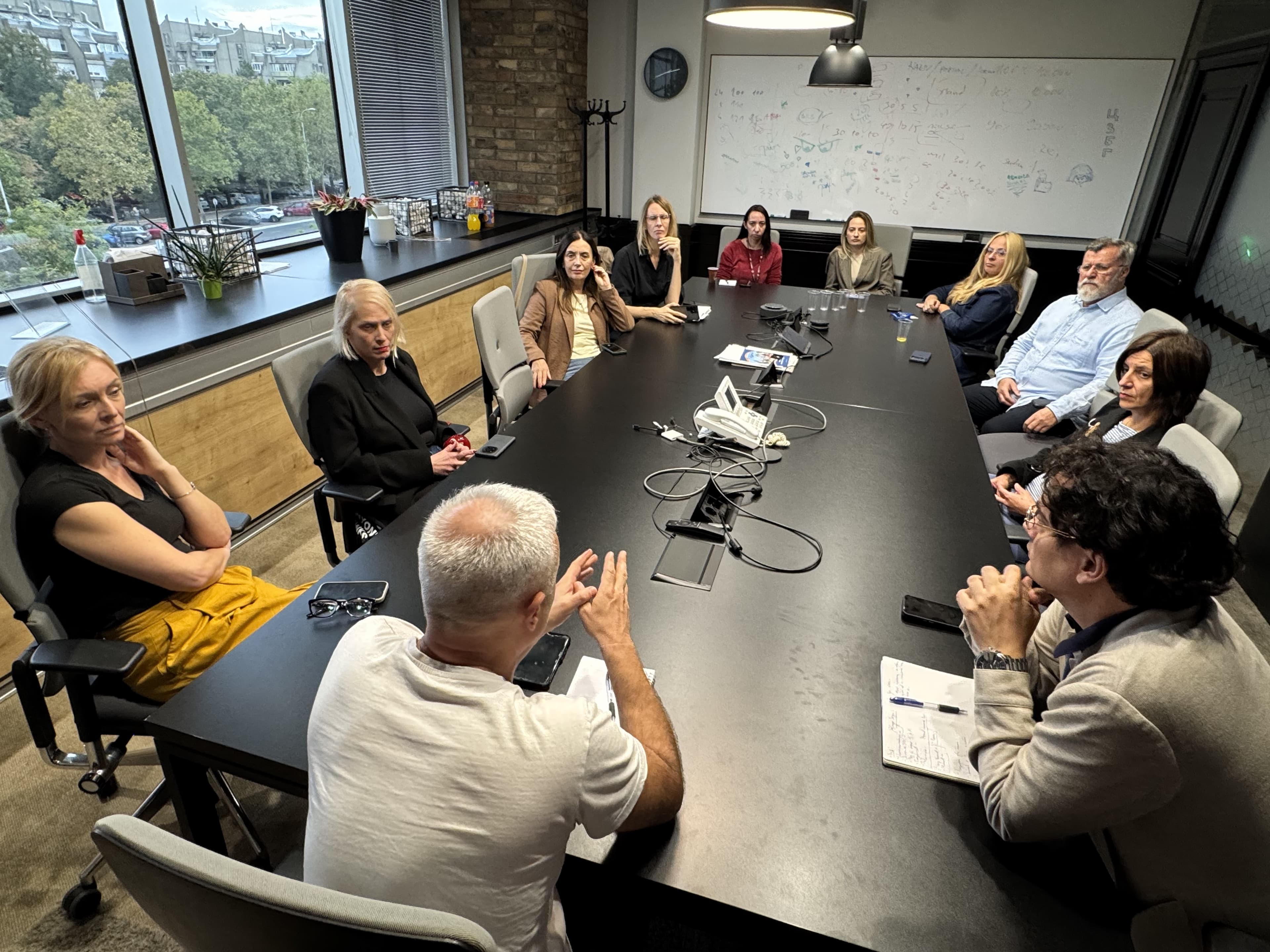
Journalistic associations provided support to the editorial team of Nova.rs: Ongoing communication and updates with international stakeholders agreed upon.

Coalition for Media Freedom: Stop Attacks and Harassment of Journalists During the Election Campaign
.png&w=3840&q=75)