
Aldina Salkanović: A person with solidarity has more freedom, confidence, and the ability to fight for what is truly worth fighting for.
According to the Media Freedom Index for 2026, Serbia ranked 104th among 180 countries, placing it among the countries with the worst results in Europe. Compared to last year, when it held the 96th position, it has experienced a decline, and this year it remains in the group of countries where the state of media freedom is assessed as "difficult."
Compared to the previous year, Serbia has lost four index points, indicating a further deterioration of media freedoms. Independent local media and journalists remain in the most unenviable position, working under constant political and economic pressure and often feeling isolated in their local environment.
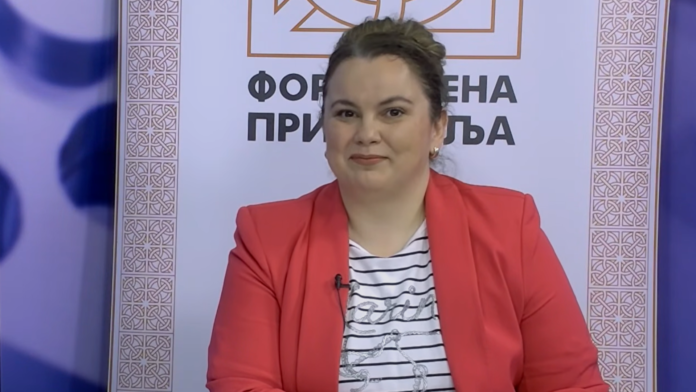
Aldina Salkanović is a journalist for the Foruminfo portal and Forum Television in Prijepolje. Forum Television operates under the Forum of Women in Prijepolje, an organization dedicated to advancing gender equality and the status of women. It was established in 2008 as the first television station in Serbia founded by women and is also the only local television station in this city.
Last week, Aldina experienced an unpleasant situation while trying to film a fire at the landfill in Drugalići, when a group of men, including the mayor, impeded her from capturing the footage.
In an interview with ZOOMER, she describes the situation she encountered on the ground, as well as the various pressures and obstacles faced while working in local media.
How difficult do you believe it is to report independently in Prijepolje?
“It can be said that it is difficult because many local media outlets, both from Prijepolje and nearby towns, are bought and placed under one umbrella, producing a single ‘Daily of Western Serbia’. This creates a monopolistic environment and is essentially a PR tool for the ruling parties, or a kind of pre-election campaign before the actual campaign. Because of this, independent reporting is not exactly desirable. We are often not invited to various events and do not receive all the information we need.”
Could you tell me more about what exactly happened when you were obstructed while reporting on the landfill fire?
“I was actually filming it. Since I live in Priboj and work in Prijepolje, I was heading home, and halfway there is the landfill where waste from Prijepolje, Nova Varoš, Priboj, and recently Sjenica is disposed of. The huge thick smoke was impossible to miss. This is a disaster threatening the environment, the forest, and everything around it. I stopped by the roadside to make a report and saw that the mayor of Prijepolje, representatives from the utility company, and several other people were there. At that moment, the mayor and some others present began to prevent me from filming the report. There was no physical violence, but they did everything verbally to distance me and prevent me from reporting on the event.”
Did they just tell you that you couldn't film, or was there a more aggressive approach?
“The mayor said: ‘Don’t film us and our vehicles. If you film me and publish it, I will sue you.’ One of the contractors literally got in my face, a police officer asked for my identification, and there were comments that my car was in the way and that I should move it, even though that wasn’t the case. I was alone, surrounded by a group of seven or eight men who were trying in every way to prevent me from working. They did not provide me with statements about the fire – when it started, the extent of the damage, and what actions were being taken. I was unable to complete the report, but I did manage to capture footage of the burning landfill and publicly speak about the treatment I was subjected to.”
When we talk about economic pressures, how challenging is the financing situation at the local level? Are you able to obtain projects that the municipality announces for media?
“It is very challenging. Our salaries have never been lower. Although the municipality allocated five million dinars for media, we, as the only television station in the city, received only 220,000 dinars, which I consider a severe undervaluation of our work and contribution to informing the public.”
And how about at the national level?
“We applied to the Ministry of Information and Telecommunications with five projects, and for the first time, none were supported. This is certainly not because we do not know how to write projects, as we have undergone numerous training sessions, and I am confident they were of high quality. Simply put, it is almost impossible to receive support unless you report as a PR for the ruling coalition. We strive to inform the public objectively about the real problems in our municipality.”
Given that you were established under a women's organization, do you think that in some way affects the negative treatment you experience in your environment?
“At first, there were comments like: ‘You only report on women and women's rights, but where are the men?’ However, I believe that over time we have managed to educate the public and change that perspective. Today, there are not many negative comments, aside from sporadic ones, mainly because we use gender-sensitive language and address topics that other media often overlook. We report on Roma people, older women, women in rural areas, women with disabilities, and other groups that are often invisible in mainstream media.”
The community has a good relationship with us, and we do not feel threatened because we are a women's television station. We feel much more threatened as independent journalists trying to report objectively at a time when objectivity is not welcome.”
How has the solidarity of the journalistic community impacted you at the moment when you were prevented from reporting?
“Journalistic solidarity is very important because today it was me in that situation, and tomorrow it could be someone else. Without mutual support, we cannot accomplish much. Several media outlets reported on this case, and ANEM reacted and contacted the prosecutor's office. Because of this, we feel that we are not alone, which is particularly important for local media that are not financially stable and do not have a large number of employees.”
When you have an association backing you, and when other media outlets solidarity convey what has happened to you, everything is different. One then has more freedom, more confidence, and more opportunities to fight for what is truly worth fighting for.”
Source: Zoomer
Related Articles
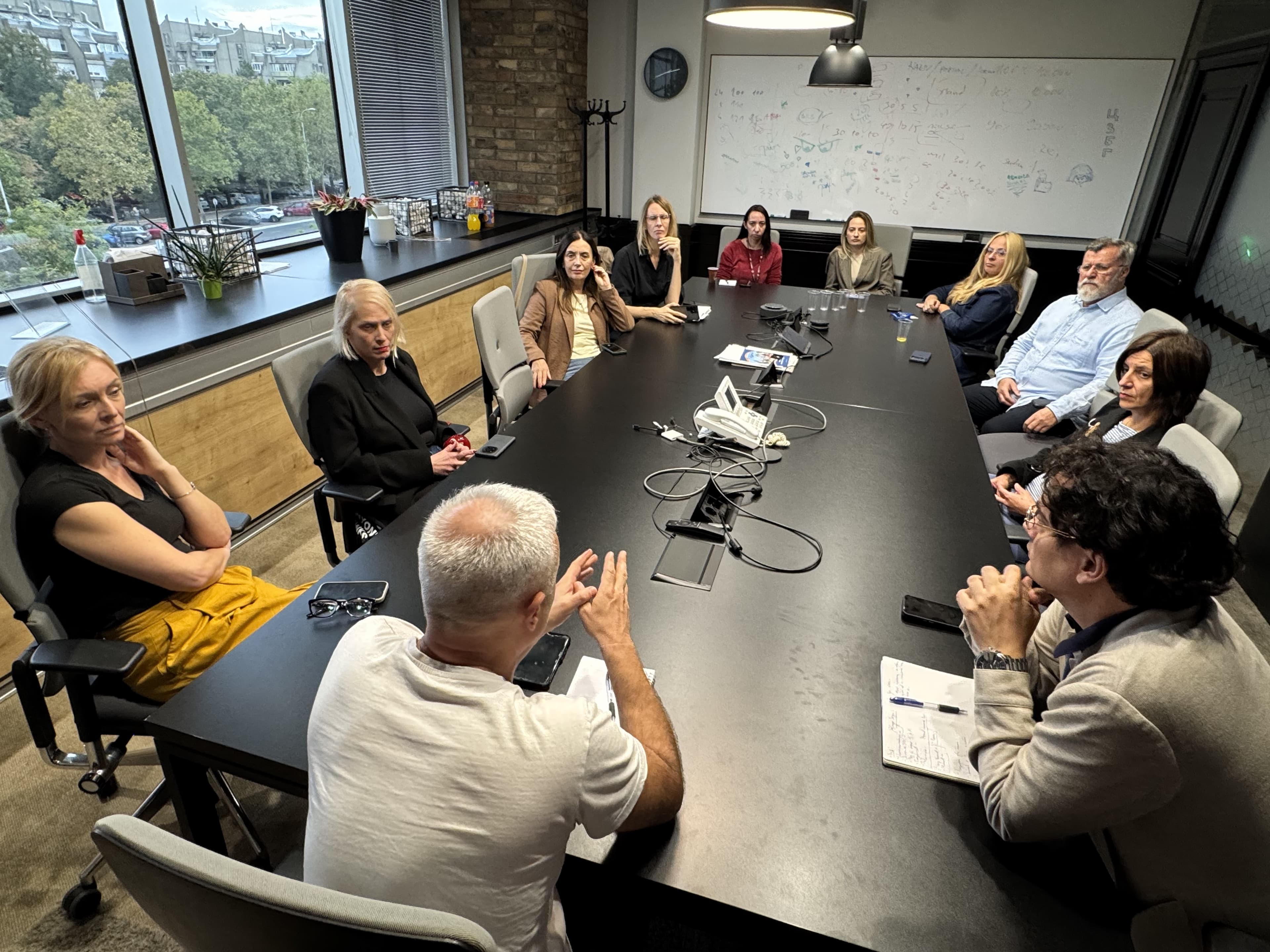
Journalistic associations provided support to the editorial team of Nova.rs: Ongoing communication and updates with international stakeholders agreed upon.

Coalition for Media Freedom: Stop Attacks and Harassment of Journalists During the Election Campaign
.png&w=3840&q=75)