
Everyone Against KRIK
Written by Veran Matić, President of ANEM
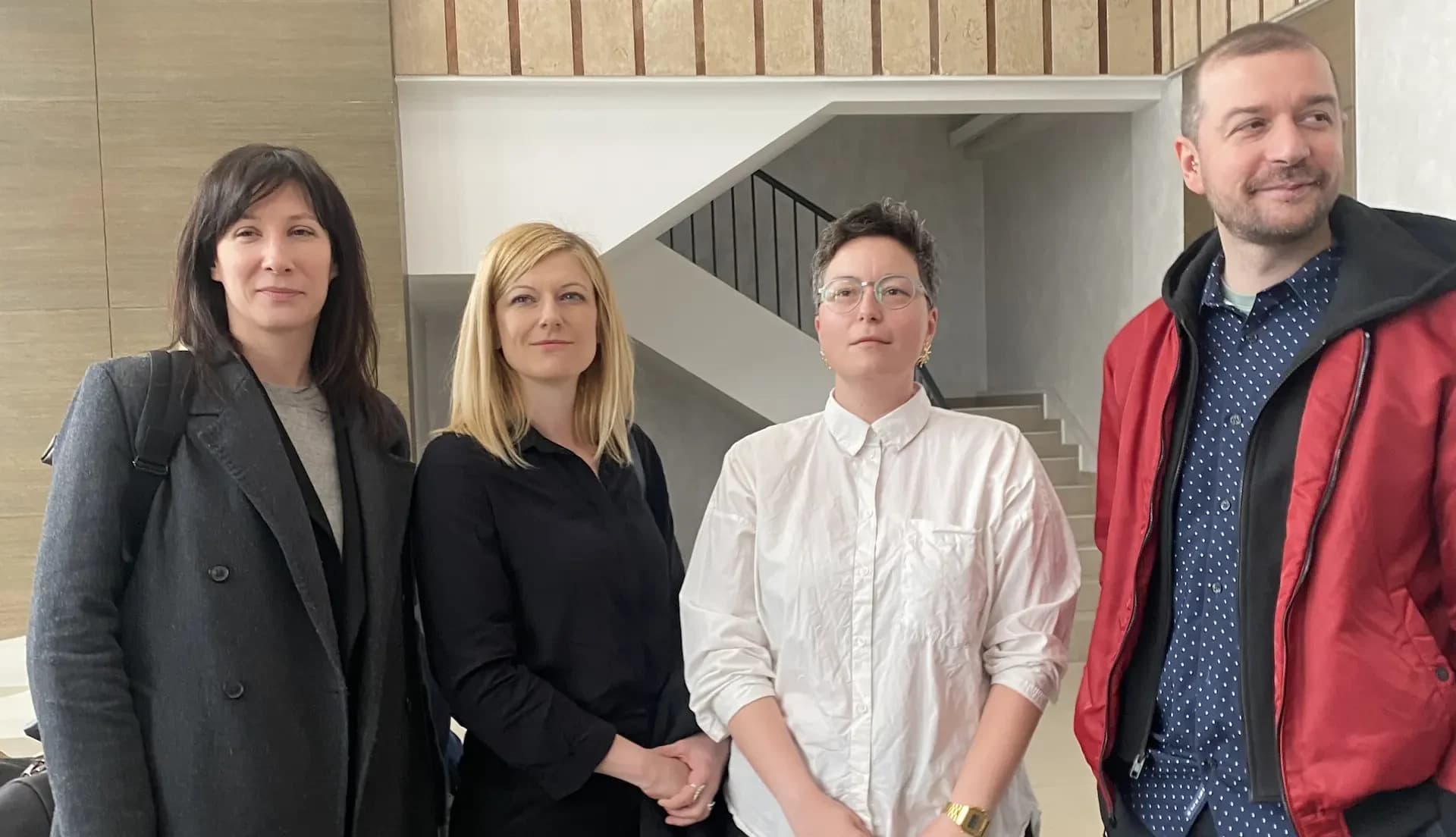
“This is not about a SLAPP lawsuit; we only have one criminal and one civil lawsuit, although it could have been two criminal and two civil lawsuits” – this statement was made today during the main hearing by Aleksandar Đorđević, lawyer and husband of Appellate Court Judge Dušanka Đorđević, with whom he has sued the Crime and Corruption Research Network KRIK. The fact that this does indeed involve a lawsuit with SLAPP elements, aimed at preventing further investigation by this globally awarded journalism team and editorial office, is best illustrated by the fact that the Đorđević couple first sued the Editor-in-Chief Stevan Dojčinović and journalist Bojana Pavlović. They filed criminal charges against them seeking prison sentences of 10 months each and two-year bans on practicing journalism, which is the most extreme demand in Europe in recent years. Following the lawsuit against Dojčinović and Bojana Pavlović, lawyer Đorđević and Judge Đorđević, just a few months later, also filed a lawsuit against Deputy Editor-in-Chief Bojana Jovanović and journalist Jelena Radivojević with the same demands. Thus, the Đorđević couple is seeking a total of approximately three years in prison for the journalists and eight years of prohibition from practicing journalism, while in the civil lawsuit, they are seeking 700,000 dinars in damages.
This would be the most drastic punishment for journalists since the so-called Šešelj law of 1998, when several editorial offices were destroyed, culminating in the murder of journalist Slavko Ćuruvija, who was followed on the day of his execution by 27 members of the State Security Service of the Ministry of Interior of Serbia. The couple Đorđević is suing KRIK solely because they verified and accurately reported publicly available information about the judges' assets. After the publication of the data in KRIK's database "Prosudi ko sudi," the judge and the lawyer did not deny the information. They could not deny it, as the data regarding their assets is accurate.
It is important to emphasize that at the time when Radomir Marković was at the helm of the State Security Service (convicted to 40 years in prison for his involvement in the kidnapping and murder of former Serbian President Ivan Stambolić, for the murder of four officials of the opposition Serbian Renewal Movement, and for the attempted murder of opposition leader Vuk Drašković in Budva), current lawyer Aleksandar Đorđević was a high-ranking official in the State Security Service, initially holding the rank of captain. He was the head of the Security Administration and a bodyguard for Mirjana Marković, the wife of President Slobodan Milošević, who many believe had significant influence over the leadership of the State Security Service. His wife, Judge Đorđević, who is suing the KRIK editorial office alongside him, was a member of the Appellate Panel that unanimously acquitted the first-instance convicted suspects for the murder of Slavko Ćuruvija. The Supreme Court of Serbia determined that this acquittal violated the Criminal Procedure Code in favor of the accused.
The lawsuit against KRIK is currently assessed by professionals as the largest and most significant SLAPP (Strategic Lawsuit Against Public Participation) process in Europe, considering the penalties threatened and the number of journalists involved in the editorial office, although the plaintiff claims they could have filed twice as many lawsuits.
Since the initiation of the proceedings to date, four hearings have been held for the civil lawsuit and ten hearings for the criminal lawsuit, plus two attempts at mediation. I have attended nearly all of the hearings, along with several colleagues and observers from international organizations and diplomatic missions in Serbia. We all understand how difficult the situation is for the accused colleagues and their defense.
KRIK is a relatively small editorial office whose functioning is hampered and whose daily obligations suffer when four editors and journalists are involved in the lawsuit. Threats of imprisonment and bans on practicing journalism leave a mark on both the accused and other members of the editorial team. This is indeed the goal of SLAPP lawsuits: to prevent journalists from doing their job.
In the coming month, the KRIK editorial office is facing six trials in proceedings with elements of SLAPP, lawsuits from very powerful politicians and businessmen: in addition to two hearings involving the judicial couple Đorđević, KRIK has also been sued twice by the former acting director of Infrastructure Railways of Serbia, Jelena Tanasković, and two hearings are scheduled for this month. A hearing has also been scheduled for the lawsuit by Nikola Petrović, the godfather of President Vučić, in a retrial, as well as a lawsuit from Predrag Koluvija, who is being tried in cases where he is accused of organizing a criminal group that cultivated marijuana for sale.
The state and criminal elite have risen against the editorial office that employs no more than 15 journalists. This has been a regular state of affairs in this media outlet for the past 11 years. It should also be noted that in addition to these drastic threats related to lawsuits, KRIK journalists are regularly subjected to demonization and targeting by leading and most powerful politicians in Serbia, the most widely circulated and viewed tabloids, that three journalists' apartments have been broken into, that they are regularly followed, and their internal communications are constantly at risk of surveillance.
Such pressure creates situations in which journalists cannot withstand the pressure and leave for other professions or require constant psychological support due to burnout, or they leave the country due to security threats. Financial penalties represent a threat to the existence of the editorial office.
All of this can be viewed as the experience of the KRIK editorial office and through this judicial process initiated by the lawsuit from the judicial couple Đorđević, as well as several trials the editorial office is facing this month against those accused of the greatest tragedy, the "collapse of the awning," and against the most powerful "businessman" in Serbia and his godfather.
Lawyer Đorđević, a former bodyguard of Mirjana Marković, complained in court that after the publication of information about his and his wife's assets, there were only negative comments. He stated there was not "a single positive comment."
In his arrogance and insolence, which dominates the lawyer's performances, and as a former head of the Security Administration of the State Security Service during Radomir Marković's management of this institution (who has been sentenced to 40 years in prison and is currently serving that sentence), the plaintiff presented the information that KRIK journalists, to his recollection, were informed by the management of the Appellate Court that they were violating certain laws if they published publicly available data.
Defense attorney Kruna Savović objected to the plaintiff's testimony, assessing it as calculated to expose four KRIK journalists to criminal prosecution. The attorney stated that there is a message in the case files that the plaintiff sent from a private address, rather than an official response from the court administration. His subsequent apology suggested that he may have been mistaken and that he partially agrees with the defense attorney, but this detail defines the entire process: an attempt to stop KRIK and investigative journalism at all costs through the appropriation of institutions and through falsehoods, with tabloids used as evidence.
This judicial process strongly reminds me of one of the most horrific periods for journalism in Serbia: when the Serbian Radical Party came to power, when the so-called Šešelj Law on Information was enacted, which was vigorously implemented by Aleksandar Vučić, when the police and the secret service, the State Security Service, were mass abused, as was the army. All with the aim of eliminating freedoms, media, political organization, democracy, and human rights. It did not succeed then, and it will not succeed today, but it is very important that we collectively resist this, not only as journalists and media, but also as civil society organizations, student movements, and political parties.
We must not allow editorial offices like KRIK to be systematically destroyed. Concern for free media is primarily a concern for our freedom.




.png&w=3840&q=75)