
Democratic Shield: Media Freedom and Journalist Safety During Elections
The safety of journalists during election periods is a matter of paramount importance, as the role of the media is very significant when reporting on democratic processes in a country. This was concluded at the event "Democratic Shield: Media Freedom and Journalist Safety During Elections," organized by the OSCE Mission in Serbia and the Association of Independent Electronic Media (ANEM) as part of a project supported by the European Union.
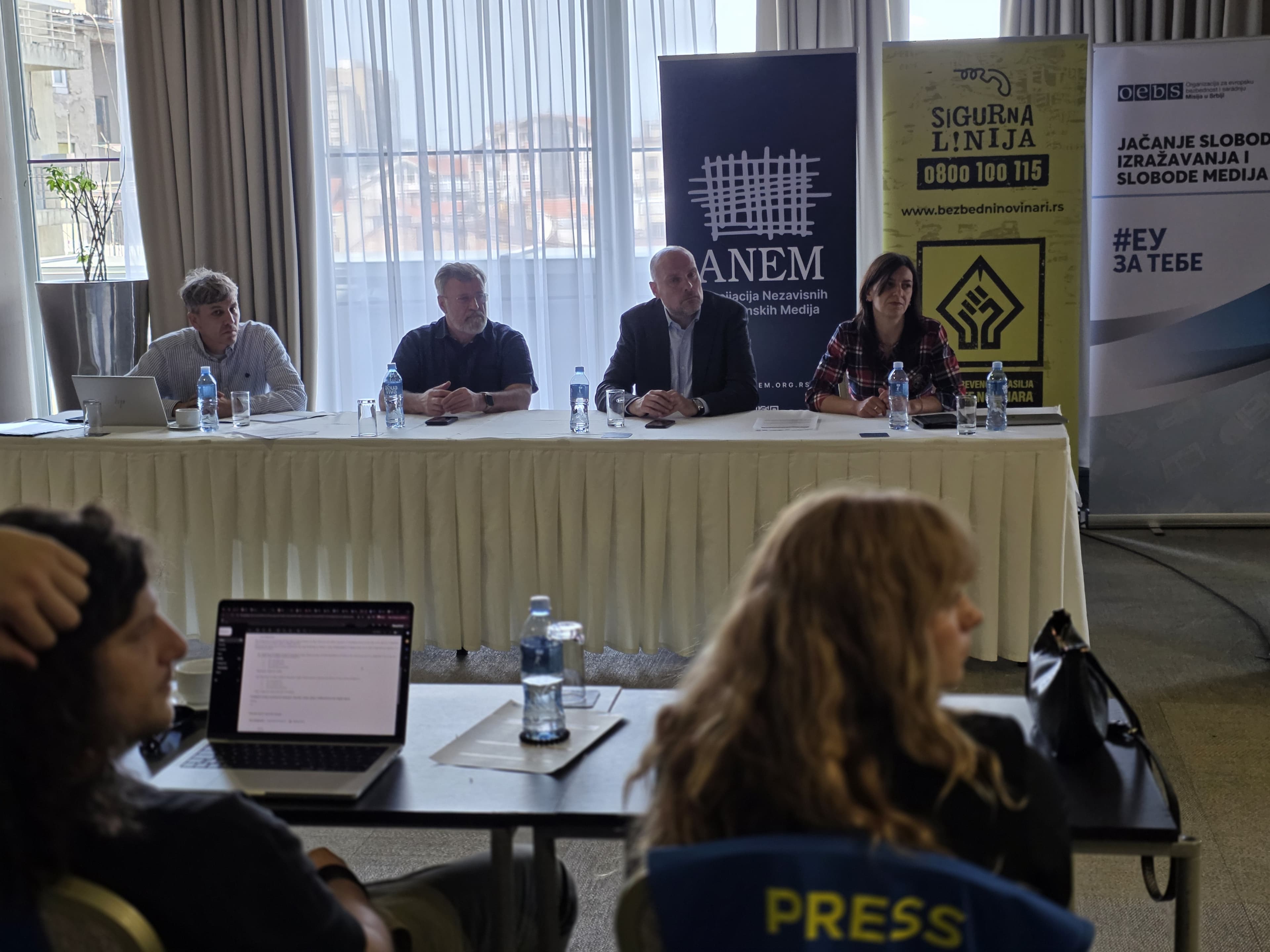
At the gathering attended by more than 40 media representatives, mostly local, the head of the OSCE Mission in Serbia, Marcel Pesko, emphasized that the OSCE has been supporting media freedom and independence in Serbia for some time, but now recognizes that the safety of journalists is a very important issue. According to him, when journalists are frightened, threatened, and harassed, it affects journalism as a whole and public information.
“Attacks must not be normalized, especially not during election times, as this directly impacts democratic values,” Pesko stated, adding that the OSCE especially supports the Permanent Working Group on the Safety of Journalists (SRG) and that it is essential to expand the network with new collaborators.
The head of the European Union Delegation to Serbia, Andreas von Bekeret, reminded that media freedom and journalist safety are crucial in the EU accession process, but also noted that journalists in Serbia today face various forms of security threats.
He also recalled that in Serbia, 27 years later, the murder of journalist Slavko Ćuruvija remains unresolved and pointed to the negative consequences of targeting and discrediting journalists and media by those in power.
“Every attack on journalists must be investigated and every perpetrator prosecuted. Protecting journalists and media also represents protecting democracy,” Bekeret assessed.
The president of the European Federation of Journalists (EFJ), Maja Sever, pointed out that Serbia is the most dramatic and visible point regarding the erosion of media freedoms in Europe, although we witness a similar trend in many European countries.
“Serbia is not just a regional problem but a mirror of Europe. What can I tell you about the fight for free journalism, about professional courage, about pressures, and about the responsibility of the profession? The EFJ and a large part of Europe can and must learn from you how you fight for media freedom in an atmosphere of political pressure and social polarization,” Sever stated, adding that “there is no chance for journalism to survive if small, local media do not survive.”
The representative of the Journalists' Association of Serbia (UNS) in the Permanent Working Group on the Safety of Journalists (SRG), Dragana Bjelica, spoke about the SRG's Activity Report for 2025, of which she is one of the authors. She cited data from the prosecution indicating that the number of cases involving crimes against journalists increased by 106 percent last year compared to the previous year.
Bjelica noted that, according to the publicly available report from the Prosecutor's Office, the number of physical attacks on journalists surged from six in 2024 to 28 in 2025.
Representatives of the SRG from ANEM, the Independent Journalists' Association of Serbia (NUNS), and the Media Association – Veran Matić, Tamara Filipović, and Stevan Ristić, shared their experiences from the field while monitoring the election day on March 29.
Matić emphasized that there is currently no serious support and protection for journalists from institutions in Serbia and added that no one has yet been prosecuted for attacks on media workers during the local elections held in 10 local self-governments.
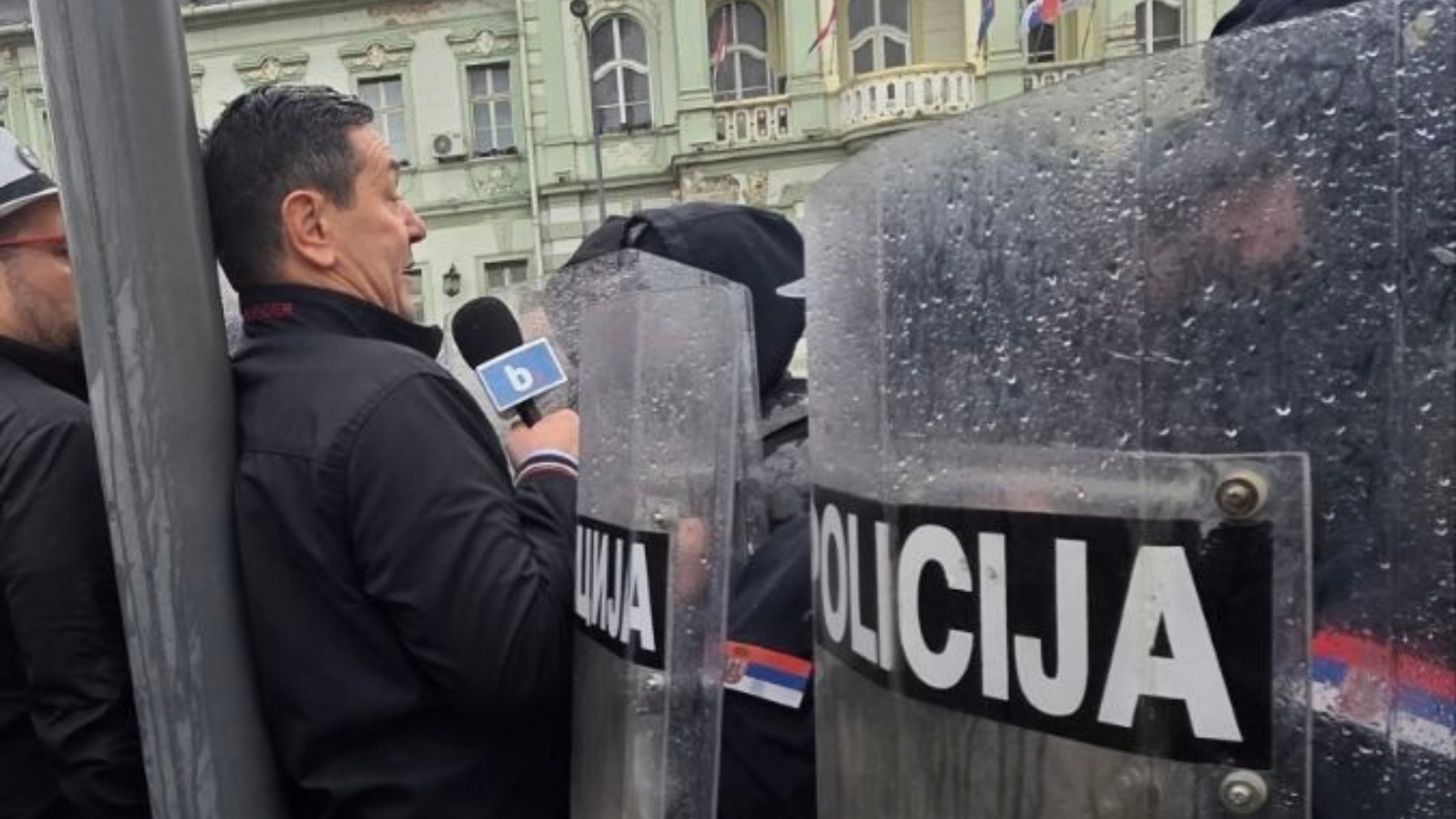
Tamara Filipović also reflected on the protest held in Belgrade on May 23, emphasizing that during scenes of unrest in the streets, media representatives must be adequately protected, and that vests and helmets can be very useful to prevent injuries during stone-throwing and similar situations.
“Based on field experience, on Saturday, the police did not protect journalists reporting from the protests, but they also did not beat them as was the case in previous periods,” Filipović assessed.
Source: ANEM / UNS



.png&w=3840&q=75)