
Jamie Weissman (IPI): After Ukraine, Serbia is the most dangerous place for journalists.
Attacks on media professionals reflect the general climate of polarization in Serbia and the high tensions caused by anti-government protests. The fact that only two attacks last year resulted in convictions is shocking. We have not seen such coordinated bot attacks in Europe before.
In January, there were a recorded record 47 threats and attacks against female journalists, male journalists, and media in Serbia, indicating that the wave of violence continues. Physical attacks, even from police officers, threats to the media that they could end up like Charlie Hebdo, an audio recording of a phone conversation between the general director of United Group, Sten Miller, and the general director of the competing Telekom Srbija, Vladimir Lučić, suggesting direct interference by Serbian President Aleksandar Vučić in personnel changes and the operations of United Media – over 380 attacks, threats, and pressures were noted in the 2025 report, as referenced in the resolution of the European Parliament and the recent report from the UN Special Rapporteurs.
The new year has also brought digital violence, massive bot attacks on critically oriented media, and financial pressures that are not subsiding. Serbian journalism is gasping for its last molecules of oxygen, with international organizations describing the situation as fatal – state capture media (a form of systemic corruption in which governments, corporations, or powerful individuals control the media for personal gain).
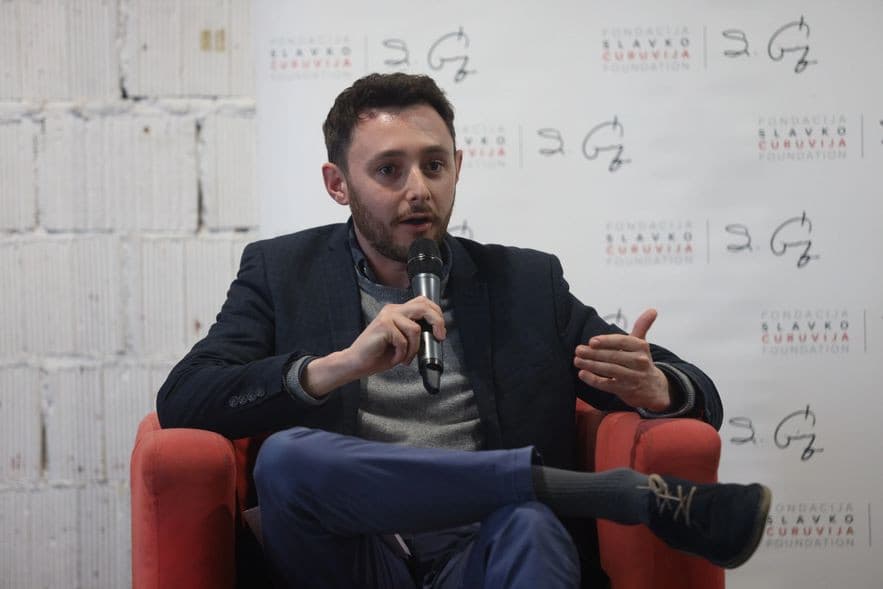
“Besides Ukraine, Serbia is currently the most dangerous place for journalists in Europe,” succinctly summarizes the media situation in an interview with Radar by Jamie Weisman, a lawyer at the International Press Institute (IPI) in Vienna, who is coming to Belgrade in March with the Council of Europe Platform for the Safety of Journalists, attempting to discuss this issue with the authorities.
How do you assess media freedom and the safety of journalists and media in Serbia?
January was a terrible month for press freedom. Journalists face physical threats on the streets and death threats online. The impunity for attacks is shockingly high. Media capture in Serbia remains one of the “toughest” in Europe. Political maneuvers against private broadcasters continue. Investigative media are particularly facing exhausting SLAPP lawsuits initiated by government politicians. It is concerning that pressure is unabated, and the freedom and climate for journalists' safety remain at their lowest point in decades.
New forms of digital violence have emerged, including bot attacks on the Instagram accounts of independent media. Several editorial offices have received threats that their social media accounts will be suspended if they continue to write negatively about President Aleksandar Vučić.
The documented bot attacks in recent weeks are a new element of a broader campaign of pressure aimed at online audiences. They appear coordinated and politically motivated. Cyber-attacks on media organizations come in various forms, but this kind of coordinated bot attack has not been frequently seen in Europe before.
When the president labels the reporting of independent media as terrorism, it serves as a signal for government supporters to target these media and their journalists.
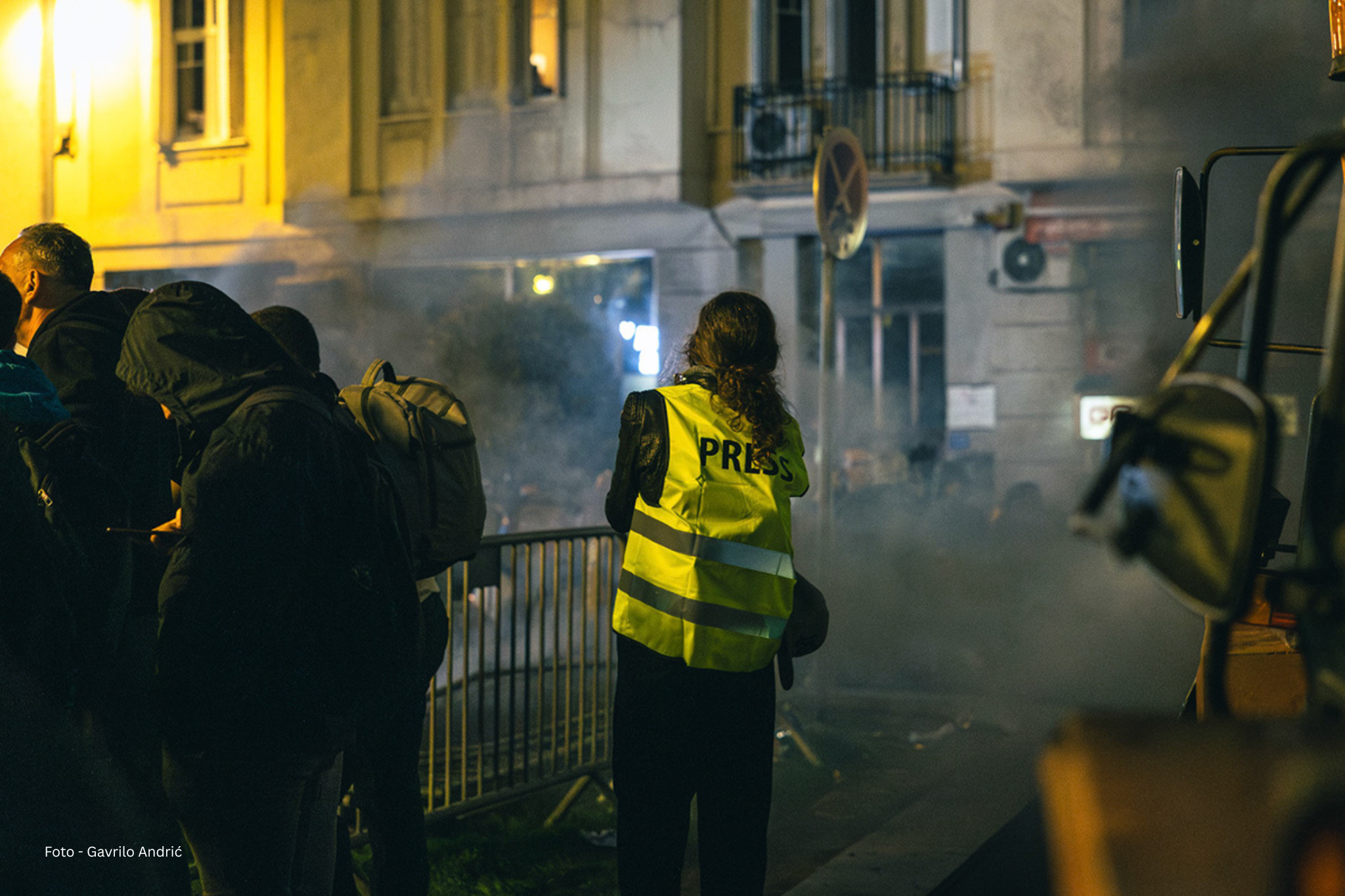
Reporting from protests has significantly impacted the safety of journalists on the streets. At least 35 attacks and harassment of journalists by government supporters have been recorded near the illegal tent camp in Pionirski Park in Belgrade, right in front of the police.
This reflects the overall climate of polarization in Serbia and the high tensions caused by anti-government protests. The strict police policy is deeply problematic. The fact that only two attacks on journalists last year resulted in criminal convictions is shocking and must also be addressed.
Journalists from United Media are the most attacked. Our magazine’s journalist, Vuk Cvijić, has been a repeated target of violence and threats. He was physically attacked by the director of the pro-government tabloid Srpski Telegraf, as well as by police officers while reporting, and then a police officer sprayed him with an unknown chemical. He has recently received threats due to an article. The editorial team of Radar regularly receives threats and disturbing messages. Impunity is apparent.
IPI condemns the attacks on Vuk Cvijić and all colleagues at Radar. Being a journalist in Serbia is currently one of the most dangerous professions. One attack would be concerning, but the continuous threats from all sides, both on the streets and online, and defamation from other media, lead many journalists to question whether they want to continue in this profession. Clearly and simply, this is coordinated intimidation.
Since the beginning of the protests, Aleksandar Vučić has targeted professional media by calling the reporting of N1 and Nove S “pure terrorism,” attempting to provoke the Prosecutor's Office to initiate criminal prosecution. How does what the president and his close associates say affect the safety of journalists and media freedom in Serbia?
The fact that the head of state in a European country accuses major media of conducting “terrorism” shows how toxic the climate for media freedom in Serbia has become. When the president acts this way, it serves as a signal for government supporters to target these media and their journalists. It is alarming how normalized and widespread this type of irresponsible rhetoric has become. Smearing critical journalists as “traitors” or “enemies of the state” is also deeply alarming and seems aimed at making them clear targets. We have too often seen how hate speech on social media can spill over into real violence on the streets. We are witnessing this now in Serbia. The rhetoric used by President Vučić and other ministers has no place in a country striving to become an EU member.
The daily newspaper Danas has reported that Telekom Srbija currently owns as many as 35 different media outlets, 30 of which are television channels. After a series of previous acquisitions, it recently also bought the television station Kurir, daily newspapers, and a portal with accompanying magazines and websites. How do you comment on such media concentration in the current political environment in Serbia?
This dramatically limits media pluralism and undermines journalism. The last-minute amendment to the media law in 2023 allowed for the return of partial or direct state ownership of media through Telekom Srbija. This legal reform was supposed to align domestic legislation with EU standards, but it actually created a loophole in the law that enabled increasing acquisition and concentration of media assets under the control of state-funded entities that the government controls. This type of ownership directly violates the European Media Freedom Act (EMFA).
We have written to BC Partners, urging them to protect the editorial independence of N1 and Nove S. The Institute and our partners have offered meetings and discussions multiple times, but we have not received a response.
OCCRP released an audio recording of a conversation between the general director of United Group and the general director of the competing company Telekom Srbija, which allegedly shows direct interference by the President of the Republic of Serbia, Aleksandar Vučić, in personnel changes and the operations of United Group. Program directors and chief editors of United Media addressed European institutions and international journalism associations.
We have carefully followed the recent chapter of political pressure on United Media, N1, and Nove S. Last year, following OCCRP's revelations, together with other international media freedom and journalist groups, we wrote to BC Partners, urging them to protect the editorial independence of these media. IPI and our partners have offered meetings and discussions multiple times, but we have not received a response.
In reports, IPI and other international organizations describe the situation in Serbia as state capture media, alluding also to the situation with national frequency televisions, as well as REM.
The current debacle over the elections for the REM Council has paralyzed any media regulation and created a vacuum in which major broadcasters and tabloid newspapers are allowed to intensify disinformation and shocking defamation against independent journalists, without any sanctions. The coordinated attacks conducted by Serbian tabloid media are not normal. But without an independent REM Council, Serbia will not have independent media, nor will it be possible to create conditions for appointing independent leadership for the public broadcaster RTS.
A fair, transparent, and merit-based selection of professional candidates representing a range of experience in the media industry is essential for the advancement of the REM Council. The ongoing attempts by the ruling party to interfere in the process or block the election of the Council, which is not recognized as a government-connected Council, are a fundamental example of this media capture.
How do you comment on the fact that the UN Special Rapporteurs – Irena Kan, for freedom of opinion and expression, and Gina Romero, for the freedom of peaceful assembly and association – recently expressed their views on the issue of media freedom in Serbia?
The fact that UN rapporteurs are focusing on the situation in Serbia is another indication of how bad the situation has become, and it should serve as a wake-up call for the Serbian government. Whether it will have any real impact – after similar criticisms from other bodies like the EU, OSCE, and the Council of Europe – remains to be seen.
In Serbia, impunity for the murders of journalists in the late 90s and early 2000s is a hundred percent. Recently, the Supreme Court determined that the acquittal in the murder of Slavko Ćuruvija was made in significant violation of procedure.
The annulment of the verdict represents a complete failure of the rule of law and dealt a devastating blow to media freedom and the fight against impunity for the murders of journalists in Serbia. The failure of the judicial system to ensure the prosecution of Ćuruvija's killers is a dark stain in the recent history of the country.
The failure of the judicial system to ensure the prosecution of Ćuruvija's killers is a dark stain in the recent history of the country.
IPI has been monitoring this case for years and hopes that, despite all expectations, justice will one day be served. Until then, we continue to stand in solidarity, primarily with the “Slavko Ćuruvija” Foundation.
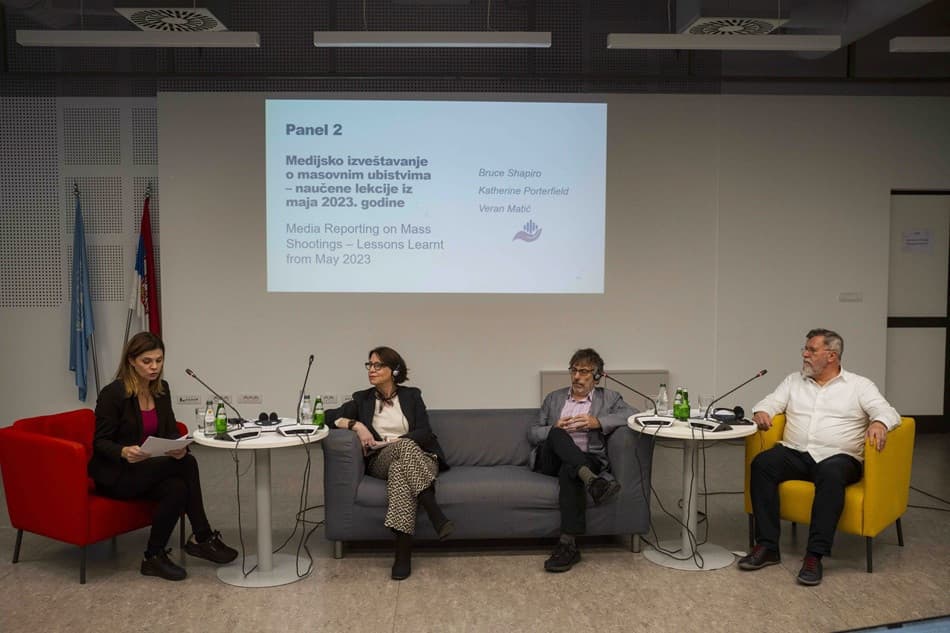
Recently, Veran Matić, the president of the Commission for Investigating the Murders of Journalists, was targeted by a “documentary” film.
Veran Matić is one of the world’s heroes of press freedom awarded by IPI, our highest honor given for dedication to the fight for media freedom. Over the past decades, few have done more than him to advocate for the public interest, media freedom, and systems for protecting the safety of journalists in Serbia. On behalf of all colleagues at IPI, I strongly condemn the recent slanders and personal attacks against him. It is unacceptable to portray Mr. Matić as an enemy of the country, and it could not be further from the truth.
In America, Donald Trump attacks and pressures the media. The White House created a “Shame House,” a government website where they comment on and criticize media coverage of the administration's work. Does the behavior of the American president provide a “carte blanche” for autocratic regimes, like the one in Serbia?
Trump’s administration’s attempts to “bring order” to American media, smear individual journalists, block AP’s access to the presidential press pool, and the recent raid on the home of a Washington Post reporter are alarming examples of pressure in a country that sees itself as a guardian of constitutionally guaranteed protection of freedom of expression and press work. When these tactics are used by leaders in the U.S., we have seen that it “justifies” ambitious autocrats worldwide to replicate and normalize such threats to media freedom. While it does not offer a “carte blanche” to governments like the one in Serbia, it undermines the possibility of setting high standards in the democratic world for the protection of media freedom.
Author: Jelena Petković
Source: Radar
Related Articles

Journalistic associations provided support to the editorial team of Nova.rs: Ongoing communication and updates with international stakeholders agreed upon.

Coalition for Media Freedom: Stop Attacks and Harassment of Journalists During the Election Campaign
.png&w=3840&q=75)