
HRW Report: Excessive Use of Force at Protests in Serbia, Attacks on Journalists
The authorities in Serbia have responded to protests across the country with excessive force, arbitrary arrests, suppression of civil society, and attacks on journalists and independent media, which is part of a broader interference in media freedoms, as indicated in the annual report published today by Human Rights Watch (HRW) on human rights violations worldwide.
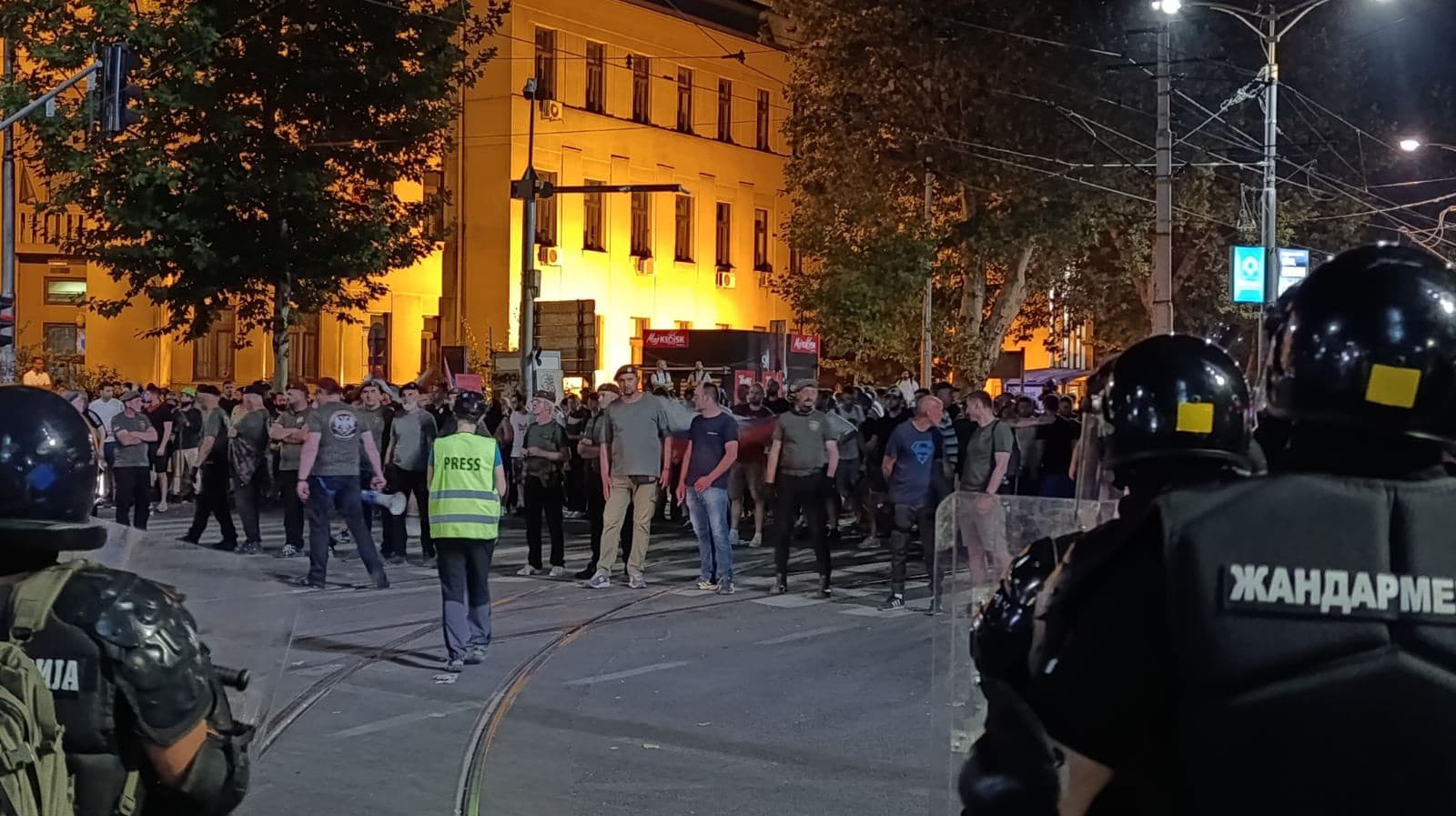
In reflecting on civil society and protests, it is noted that protests across the country continued throughout the year, following the collapse of a canopy at the train station in Novi Sad in November 2024, which resulted in the deaths of 16 people amid allegations of corruption that led to the collapse, raising widespread concerns about the dismantling of democratic institutions.
The HRW report states that authorities have sometimes used excessive force against demonstrators, including the use of tear gas.
HRW reports on an assessment by the NGO CIVICUS, which indicates that activists and civil society groups are facing intimidation, surveillance, and legal prosecution related to the protests, with claims that more than 400 people were detained in early July, and credible allegations of mistreatment in custody.
This suppression of protests has been criticized by UN experts, the Council of Europe Commissioner for Human Rights, and EU officials, according to HRW.
It is reported that the number of attacks on journalists increased over the past year, with the Independent Association of Journalists of Serbia (NUNS) recording 84 physical attacks and 113 threats against journalists from January to September of last year. The association noted 59 instances in which police arrested journalists, used physical force, threatened their safety, or refused to protect them when they were obligated to do so.
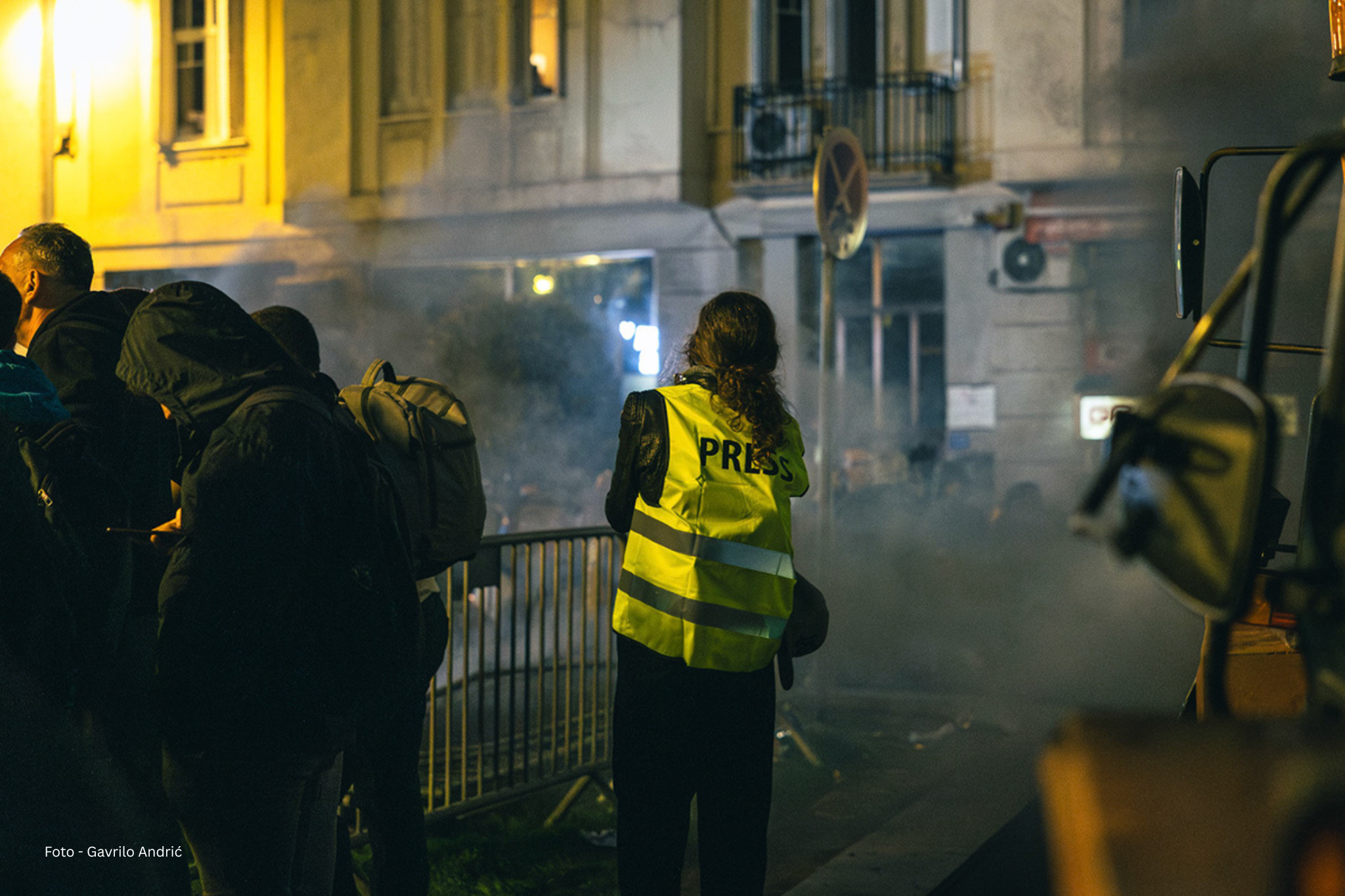
It is reported that in August, uniformed police officers at anti-government protests pushed and struck journalists, even though they were clearly marked with press vests and identification, and that they seized or destroyed cameras and phones. Media groups condemned this action as a deliberate obstruction of press freedom.
One example given is the case where police beat camerawoman Marija Čolaković with batons at an anti-government protest in Belgrade, despite her being clearly identified as a journalist, resulting in visible injuries to her legs and arms.
It is also noted that in September, during protests in Novi Sad against police brutality, riot police used excessive force and detained journalists, even though they had visible identification as media personnel.
In February, HRW states that two BIRN journalists were targeted with spyware "Pegasus" in identical Viber messages from the same Serbian number, adding that at the time of writing the report, it was unclear whether the authorities were investigating this case.
The problem of so-called SLAPP lawsuits, which are most frequently used against the media to prevent them from reporting on certain topics, remains, according to HRW, which adds that investigative media launched a network of media solidarity in May in response to combat such lawsuits.
Regarding women's rights, the report indicates that there is legal protection for women in Serbia, including the Gender Equality Strategy 2021-2030, but that implementation is weak. It mentions that gender-based violence remains prevalent, and that there are still wage disparities and economic inequalities, with women from marginalized groups, especially Roma, facing increased discrimination and unequal access to healthcare.
In addressing accountability for war crimes, the report states that between January and September of last year, the War Crimes Prosecutor's Office initiated eight new investigations into war crimes with named suspects, as well as an additional 15 investigations against unknown perpetrators. As of September, there were 20 cases ongoing in Serbian courts against 44 defendants, and ongoing proceedings were marked by significant delays, writes HRW.
It is reported that in September, the Belgrade Higher Court acquitted former commander of the Bosnian Serb Army Drina Corps, Milenko Živanović, of charges that he ordered and participated in the forced relocation of Bosnian civilians from Srebrenica in July 1995, which culminated in the genocide of over 8,000 Bosnian men and boys and the displacement of around 40,000 women, elderly, and children.
Also noted is the case in which the Belgrade Appellate Court increased the sentence of Danko Vladičić from nine to 12 years in prison after an appeal by the prosecution. He was found guilty in 2022 of the murder of two Bosnian civilians in Brod na Drini in 1992, and the victims' bodies have still not been found.
Author: Beta
Source: N1
Related Articles

Journalistic associations provided support to the editorial team of Nova.rs: Ongoing communication and updates with international stakeholders agreed upon.

Coalition for Media Freedom: Stop Attacks and Harassment of Journalists During the Election Campaign
.png&w=3840&q=75)