
Report on Serbia: A Dangerous Spiral of Violence Against Journalists
Record levels of physical violence against journalists, death threats, and online smear campaigns, rooted impunity, and strong political control over the media landscape – press freedom in Serbia is in an increasingly deep crisis, while the space for independent journalism is rapidly shrinking.
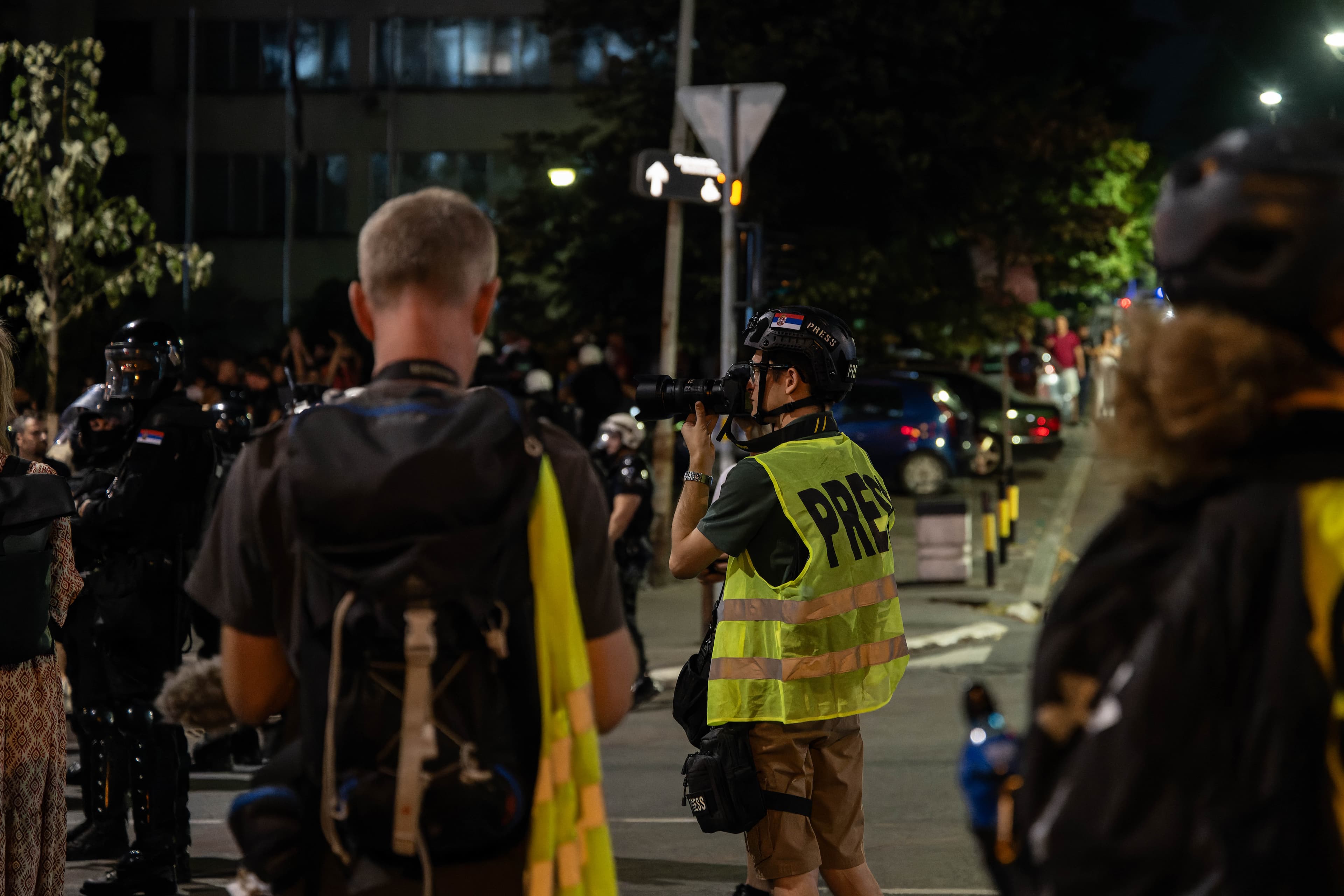
The European Federation of Journalists (EFJ), together with partners from the Media Freedom Rapid Response (MFRR) initiative and the Council of Europe Platform for the Safety of Journalists, today presents a report that highlights the deterioration of media freedom and the safety of journalists in Serbia. The report is the result of an international mission in Belgrade conducted in March 2026.
Read the full report here (in English).
In 2025, Serbia recorded 209 cases of media freedom violations, more than double the 84 cases documented in 2024, affecting 359 media workers and media organizations. As of June 16, 2026, there have been 100 recorded cases since the beginning of the year, impacting 170 media workers.
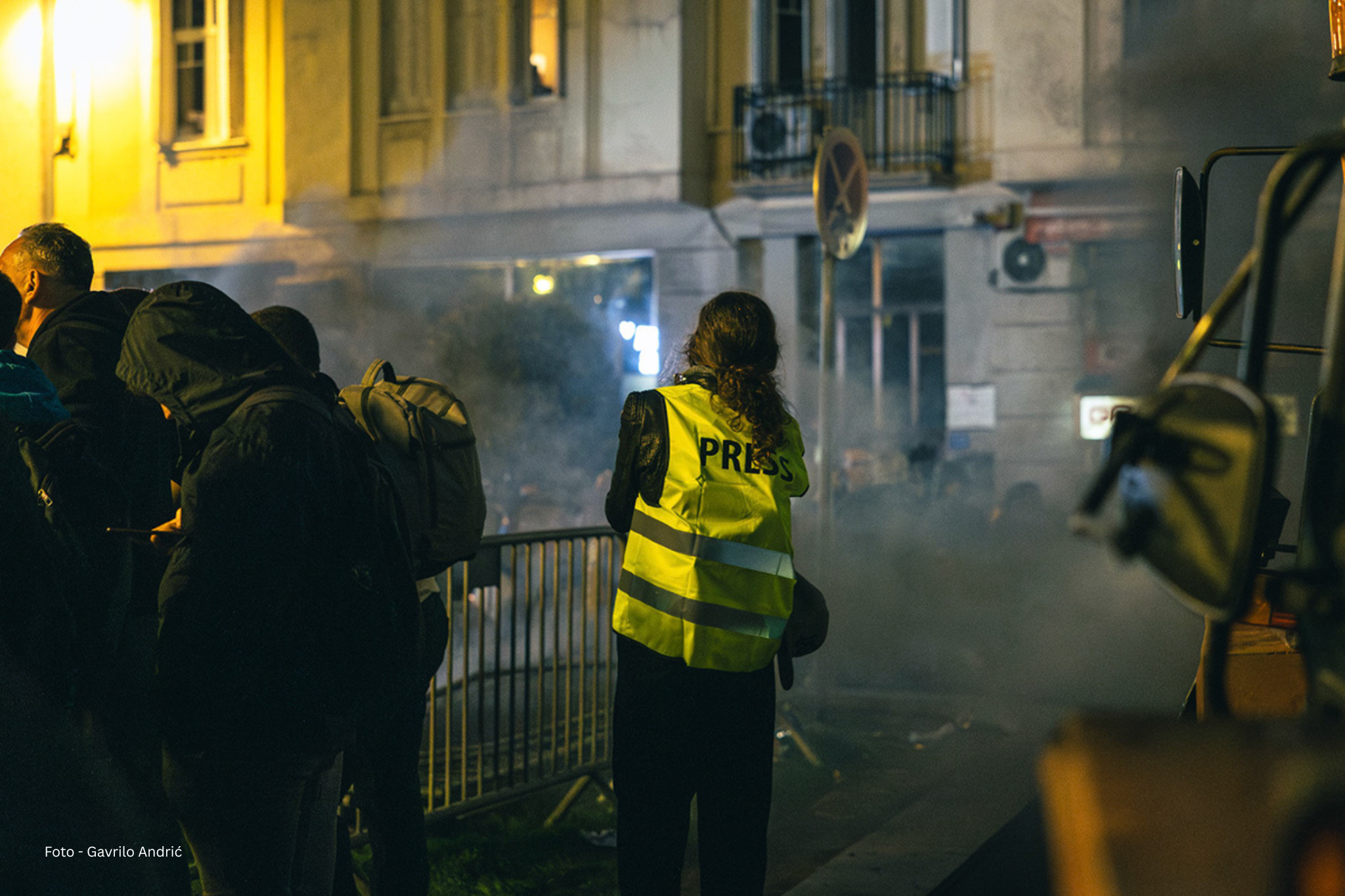
Since the deadly collapse of the canopy at the Railway Station in Novi Sad in November 2024, which triggered the largest protests in Serbia's history, the number of attacks on journalists covering the demonstrations has sharply increased. Law enforcement authorities not only failed to protect journalists but police officers themselves have increasingly become perpetrators of attacks. Since 2025, at least 38 police attacks on journalists have been documented.
The crisis far exceeds the issue of physical safety. Strategic lawsuits against public participation (SLAPP) continue to pose a serious threat to public interest reporting. According to data from the CASE coalition for 2025, Serbia ranks third in Europe for the number of SLAPP lawsuits. An additional chilling effect on the work of journalists is the fact that defamation remains criminalized.
Moreover, media pluralism is under serious pressure. The majority state-owned Telekom Serbia has expanded its media ownership, further consolidating pro-government narratives in the media landscape. The Council of the Regulatory Body for Electronic Media (REM) has not been functional for over 18 months, making Serbia the only candidate country for European Union membership without an operational media regulatory body. Coordinated bot attacks and the use of spyware, including Pegasus from the NSO Group, have become means of digital censorship directed against journalists and media houses.
The government has initiated several legislative initiatives, including efforts to transpose the provisions of the European Media Freedom Act (EMFA) into domestic legislation. However, journalists and civil society organizations have largely ceased to participate in these processes, citing a lack of transparency, short deadlines, and, above all, deep distrust in the authorities' intentions. The international community plays a crucial role in protecting media freedom in Serbia, which is rapidly deteriorating, as well as in stopping broader democratic backsliding.
Partners in the MFRR initiative and the Council of Europe Platform for the Safety of Journalists call on the Serbian authorities to:
- immediately cease incendiary rhetoric targeting journalists and refrain from all verbal, physical, and legal attacks on the media, including the misuse of SLAPP lawsuits;
- implement specialized training programs for police and judicial authorities to ensure the consistent application of protective measures for journalists.
Partners also urge the European Union to publicly and unambiguously condemn attacks on journalists in Serbia, as well as to condition direct funding to Serbia in strategic areas on measurable improvements in the safety of journalists and respect for media freedom standards.
The complete report contains detailed recommendations addressed to the Serbian authorities, including the Government, the National Assembly, the police, and the prosecution, regarding specific steps needed to overcome this crisis.
The mission was coordinated by the organization ARTICLE 19 Europe, with participation from the following international organizations: Association of European Journalists (AEJ), European Broadcasting Union (EBU), European Centre for Press and Media Freedom (ECPMF), European Federation of Journalists (EFJ), International Press Institute (IPI), Reporters Without Borders (RSF), Balkan and Caucasus Observatory (OBCT), Index on Censorship, and Committee to Protect Journalists (CPJ). The local partner was Independent Journalists' Association of Serbia (NUNS). The delegation met with journalists, editors, media associations, civil society organizations, police representatives, the Speaker of the National Assembly, the Chief Public Prosecutor, and other interlocutors.
Source: EFJ, NUNS
Related Articles

Journalistic associations provided support to the editorial team of Nova.rs: Ongoing communication and updates with international stakeholders agreed upon.

Coalition for Media Freedom: Stop Attacks and Harassment of Journalists During the Election Campaign

.png&w=3840&q=75)