
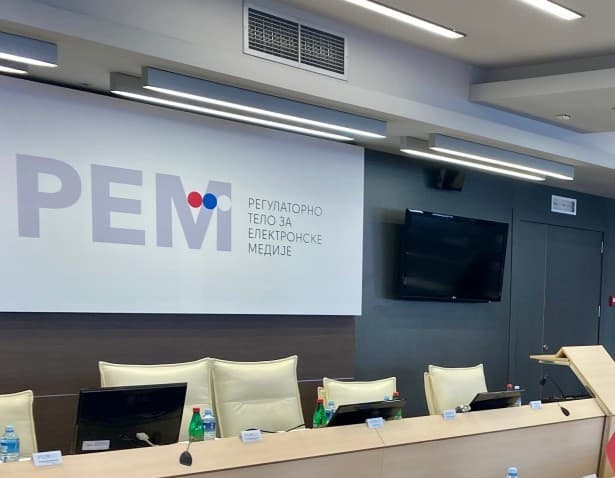
How will the new REM Council function?
The council will have to make decisions on a number of important issues, including announcing public competitions for the appointment of new members to the boards of RTS and RTV, as well as resolving complaints against broadcasters that have been sitting unresolved for months.
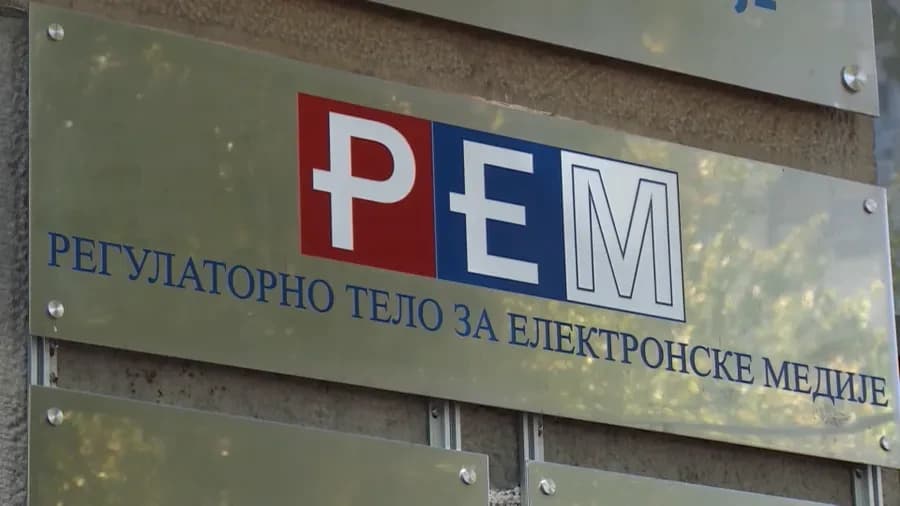
The decision of four independent candidates for the Council of the Regulatory Body for Electronic Media (REM) to assume their roles could represent the first step towards improving the extremely poor state of Serbia's media scene. However, considering that REM has been dysfunctional for a long time, it cannot be ruled out that the authorities will continue to obstruct the work of the regulator, assess the interlocutors of Savremena politika.
At the same time, media experts point out that a significant question remains whether a ninth Council member, who according to current rules should come from national minorities, will be elected soon. As they specify, it remains to be seen whether someone independent will take that position, as the ruling parties would significantly lose their mechanism to influence processes in REM, thereby avoiding a power balance of four to four.
Let us recall that Dubravka Valić Nedeljković, Ira Prodanov Krajišnik, Mileva Malešić, and Rodoljub Šabić announced on July 10 that after the National Assembly adopted the Authentic Interpretation of the Law on Electronic Media, they decided to participate in the work of the REM Council, which has sparked divided reactions from the professional public and political parties.
While some political actors assessed that such a step represents a "betrayal of the struggle of citizens and students," and that it is only beneficial to Aleksandar Vučić, organizations such as the Association of Independent Electronic Media (ANEM) and the Bureau for Social Research (BIRODI) welcomed their move.
“ANEM, as a proposer, respects and supports the candidates' decisions regarding their future participation in the REM Council. Anything is possible, including obstruction and potential dysfunctionality in operation and decision-making. I believe this is not a reason not to try and practically demonstrate with the example of four independent candidates in the REM Council whether there is political will for change in this field. Resignations can always be submitted, and therefore we should not retreat as long as it makes sense to fight and make what happens in REM transparent and public,” states Saša Mirković, project director at ANEM, for Savremena politika.
Speaking on the same topic, Maja Sever, president of the European Federation of Journalists, notes that the decision of the independent candidates must be “assessed primarily in relation to the impact it will have on the functioning of the regulator.”
“At this stage, it is too early to conclude whether this will lead to a significant change or whether the long-standing institutional impasse will simply continue in a different form,” points out Maja Sever for Savremena politika.
On the other hand, Nedim Sejdinović, a journalist for the weekly Vreme, claims for our portal that “we already have the first blockade in the making, which will seriously hinder any further work of the REM Council.”
“The first major problem the new Council will face is the election of the president and vice-president of this body. Six votes are required for the election, which means a two-thirds majority. Members who are representatives of the ruling party will certainly not allow the Council to be managed and publicly represented by any of the independent candidates, and I believe that the independent candidates will also not allow anyone unworthy to manage this body,” assesses Sejdinović.
First test – election of the Council president
The mandate of the members of the previous REM Council expired back in November 2024, meaning that this body has not functioned at full capacity for a long time.
At the end of last year, the REM Council was on the verge of being formed with the election of eight members. The ruling majority did not vote for the ninth member, who was supposed to come from the ranks of minorities, due to the opposition of the Alliance of Vojvodina Hungarians. Subsequently, four independent candidates resigned, and those positions remained vacant even after a repeated call, as no one applied.
The four independent candidates for the Council announced in a public letter that after the parliament adopted the Authentic Interpretation of the Law on Electronic Media on July 10, they decided to assume their mandates.
They emphasized, among other things, that the Authentic Interpretation “created a new legal situation,” meaning that “if we do not accept to take on the function in the REM Council in such a situation, the authorities would have the opportunity to present our actions as contrary to the law.”
The constitutive session of the REM Council is officially scheduled for July 20, with the main point and the biggest challenge being the attempt to elect the president and vice-president of the Council. If an agreement is not reached, leadership and scheduling of subsequent sessions will be taken over by the oldest member, Dubravka Valić Nedeljković, who will then have all the legal powers of an elected president.
Speaking about the possibility of a ninth, "missing" member of the Council being elected soon, Saša Mirković emphasizes for Savremena politika that he expects this to happen after the elections for the councils of national minorities, which will be concluded in November this year.
“I believe that this election will be conducted with strict adherence to the Law on Electronic Media, with rigorous monitoring from the European Commission and the OSCE, and that only credible candidates will be considered for filling the REM Council. Should a candidate from the Hungarian National Council be elected, who has always had the strongest support from the ruling coalition, I expect that they will represent the views in the media sphere that have practically been implemented by the Hungarian government led by Prime Minister Orbán in recent months,” says Mirković.
Accumulated obligations
The new composition of the Council will face an exceptionally extensive agenda and accumulated obligations, including announcing public competitions for the appointment of new members of the boards of RTS and RTV, as well as addressing complaints from citizens, organizations, or professional public regarding broadcasters that have been sitting idle in drawers for months.
Additionally, the Council is expected to address violations of media laws on pro-regime televisions, as well as to ensure equality and balanced representation of political actors in electronic media during election campaigns.
According to Maja Sever, “there are good reasons for caution” regarding the functioning of the new REM Council. She notes that the real test is not the candidates' decision to accept their mandates, “but whether REM will demonstrate greater independence, transparency, and consistent application of the law in its work.”
“The first decisions of the Council will be the clearest indicator of whether this marks the beginning of a true institutional recovery or just another phase of prolonged crisis,” concludes Maja Sever.
Nedim Sejdinović warns that “it is clear that the work of the Council will, in most cases, be blocked on the largest and most important decisions.”
“If the fifth member of the REM Council from the ranks of representatives of national minorities were also an independent candidate, something might be done, but only in a symbolic sense. However, that will not suit the regime. Therefore, I am sure they will not allow such a scenario at any cost. But even if that happens, they will have mechanisms to block even small advances,” believes Sejdinović.
He states that the public has seen what happened with the High Council of the Public Prosecutor's Office when those who were not under the control of the authorities had the majority.
“They distorted the electoral will of the prosecutors and adopted Mrdić's laws to block the institution's work, if nothing else. In the end, all institutions in this country are blocked, except for the presidency and the (ruling) party,” explains Sejdinović.
He emphasizes that the regime actually prefers the blocked work of REM, perhaps even more than having a complete majority, “just to keep up appearances now that warning voices have come from Europe.”
“REM will be an institution that will practically be unable to do anything to improve the media scene in Serbia. I feel sorry for the independent members of REM, who have been sacrificed in the political chess game of European institutions and the regime in Serbia to create the illusion that our country is still on the European path. I predict their resignations within a few months,” warns Sejdinović.
Which decisions require six votes, and which five?
The work and decision-making of the Regulatory Body for Electronic Media Council are detailed in the Law on Electronic Media, the Statute of REM, and the Rules of Procedure of the Council. In order for the Council to convene and make decisions fully, a quorum is required, consisting of at least five present members. For the adoption of the most important strategic, organizational, and sanctioning decisions, a strict two-thirds majority is required, which implies at least six votes from Council members.
A qualified majority means that at least five Council members must vote in favor of a decision for it to be adopted. When a quorum (at least five members) is present at the session, a simple majority means the majority of votes from present members. This means that in a situation where a minimum of five members are present at the session, a decision can be adopted with at least three votes in favor.
If REM were functional, it would have long ago imposed measures for the temporary and then permanent revocation of licenses from broadcasters who do not comply with the laws (in this context, "non-compliance" is an inadequate, hypocritical term). There is no doubt that all regime televisions, led by prominent media poisoners who violate both earthly and divine laws, would remain without licenses. For such actions, a two-thirds majority is needed, so it is clear that this will not be possible with this composition of the REM Council, even if the fifth candidate is worthy,” points out Nedim Sejdinović.
Our interlocutor adds that “a two-thirds majority is also needed to elect members of the boards in public services, so there is evident blockage here as well.”
“I do not see the possibility, in such a divided society, to find people who will be acceptable to both independent and regime members of the Council. It should be noted that regime members will only implement decisions made in the ruling party. A qualified majority of five members decides on the allocation of broadcasting licenses, which are important decisions, while a simple majority of those present at the session decides on complaints and submits misdemeanor and criminal charges,” concludes Nedim Sejdinović.
When asked which are the most important topics for which a two-thirds majority is not needed for decision-making in the REM Council, Saša Mirković emphasizes that “even though a two-thirds majority is not required, it is necessary to differentiate between decisions that can be made by a qualified majority of five votes and those that can be made by a simple majority when at least five members are present at the session.”
“Key decisions that can be voted on by a qualified majority of five votes in the REM Council include deciding on the allocation of broadcasting licenses for radio and TV programs; imposing measures for the temporary revocation of licenses for a duration of 30 days; granting consent for broadcasting programs via cable and satellite licenses; granting consent for the statutes of RTS and RTV; determining the amount of fees for broadcasting radio and TV programs; initiating proceedings for the dismissal of a Council member,” specifies Mirković.
Regarding key decisions that the Council can make by a simple majority when at least five members are present at the session, Saša Mirković mentions: submitting misdemeanor and criminal charges, making decisions and measures against hate speech, discrimination, and protecting minors, as well as issuing internal warnings to broadcasters.
Source: Savremena politika
Related Articles
What is happening with the REM Council: "Temperatures elevated, beyond all measure."
MIT: It is legally established that the members of the Board of Directors of public services continue to operate.



.png&w=3840&q=75)