
“Bloody Sunday” for Journalists in Serbia
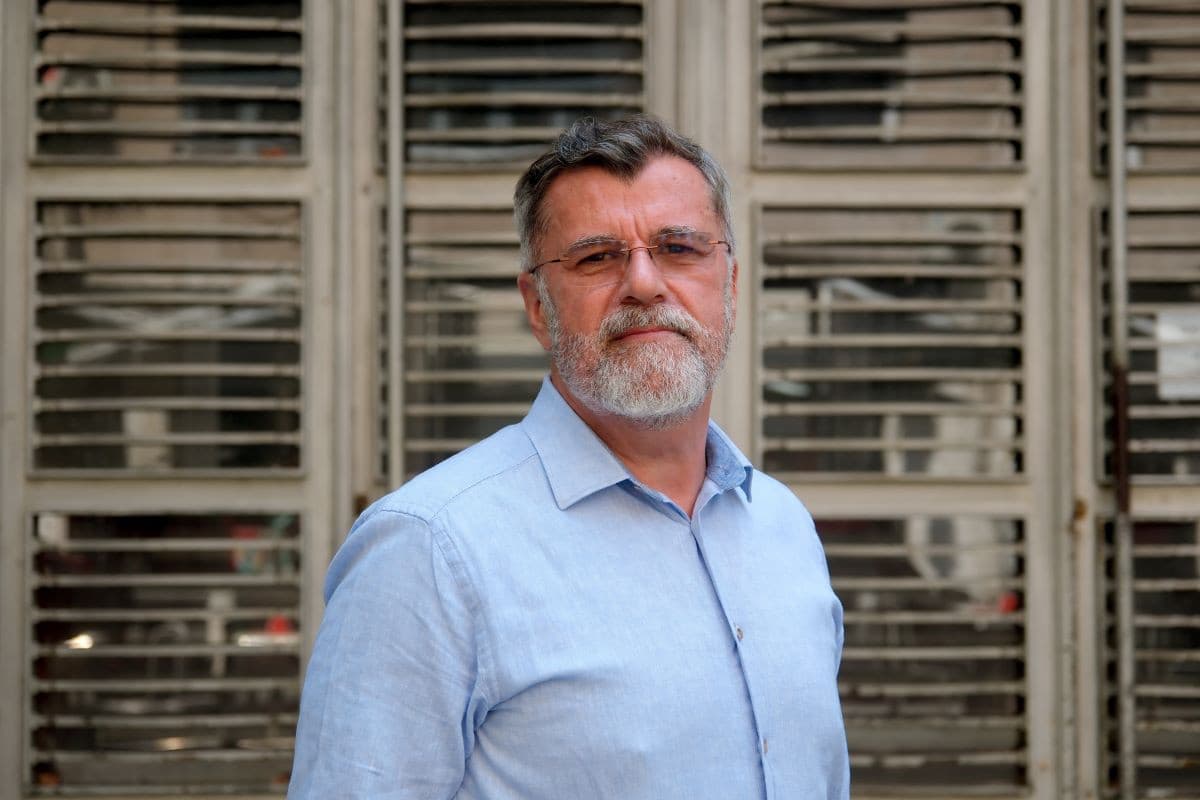
Written by: Veran Matić
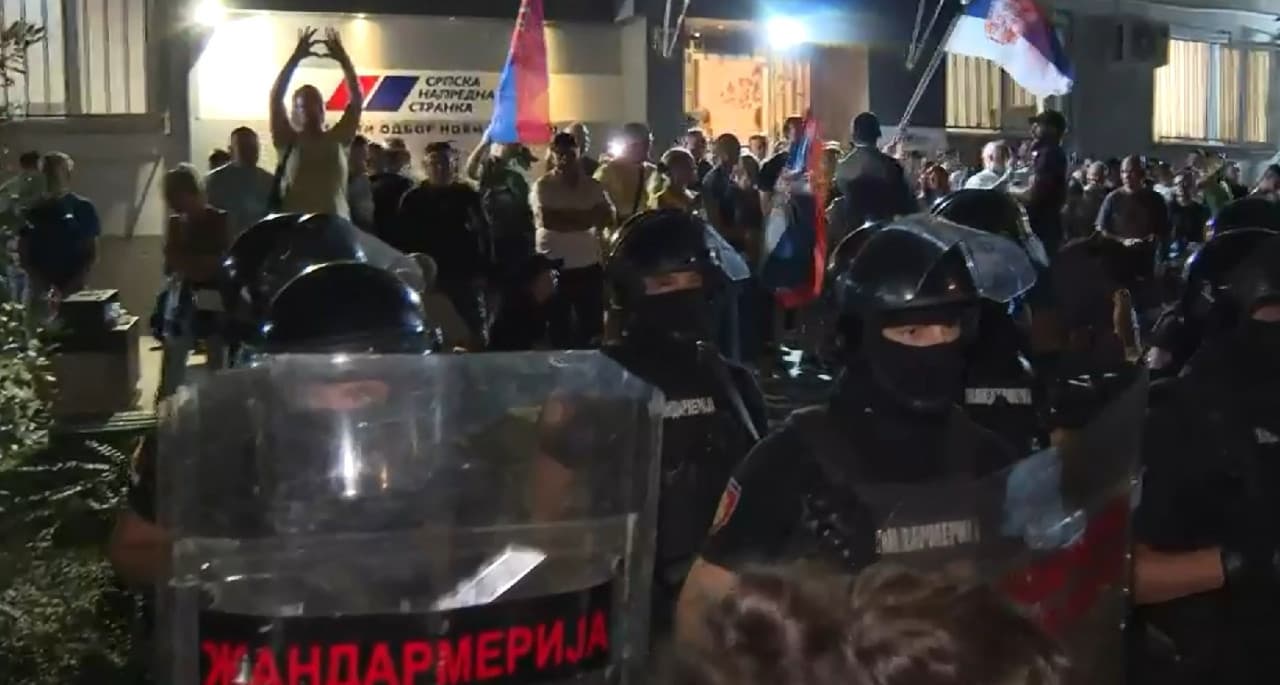
Election day on Sunday in Serbia became a bloody Sunday for journalists. The shattered, battered and bloodied heads of journalists symbolize the image of elections in ten municipalities across Serbia.
While carrying out their professional duty—covering local elections in the city of Bor and its surroundings— "Revolt" journalists Lazar Dinić and Ivan Bjelić, along with freelance journalist Zorica Popović, arrived at a polling station outside the city, in the settlement of Šarbanovac.
Shortly thereafter, three masked individuals arrived by car. They first snatched Zorica Popović’s phone from her hands and smashed it, then physically assaulted her, punching and kicking her in the stomach. Ivan Bjelić tried to protect her, but he too was attacked.
The attackers were in video communication with a person who was giving them instructions, hurling insults at Bjelić, calling him an “Ustaša” and issuing death threats.
The three masked men then physically assaulted him, seizing his phone and camera and destroying them. Soon after, another car arrived carrying five masked individuals who took axes out of the trunk, attacked Bjelić, knocked him to the ground and kicked him so severely that his eyelids swelled shut and he temporarily lost his sight.
At the same time, the masked attackers chased Lazar Dinić and caught up with him near the Timok River, where he was subjected to torture. In addition to beating him, they filmed him and forced him to shout, “Aca is president.”
With bloodied heads, the victims were transported to a medical facility where they received assistance. Due to the severity of his injuries, Lazar Dinić was later transferred by ambulance to the Clinical Center in Belgrade. Bjelić was also referred for further examinations.
Darko Gligorijević, a journalist with the Zoomer portal, was attacked in Bajina Bašta, punched in the head and sprayed in the eyes with pepper spray. Miroslav Pantović, a journalist with the Mačva News portal, was attacked by men dressed in black; his camera and accompanying equipment were seized and destroyed. Only after the police arrived was the broken camera returned, without its memory card, though. Both Darko and Miroslav received medical treatment at a local health center.
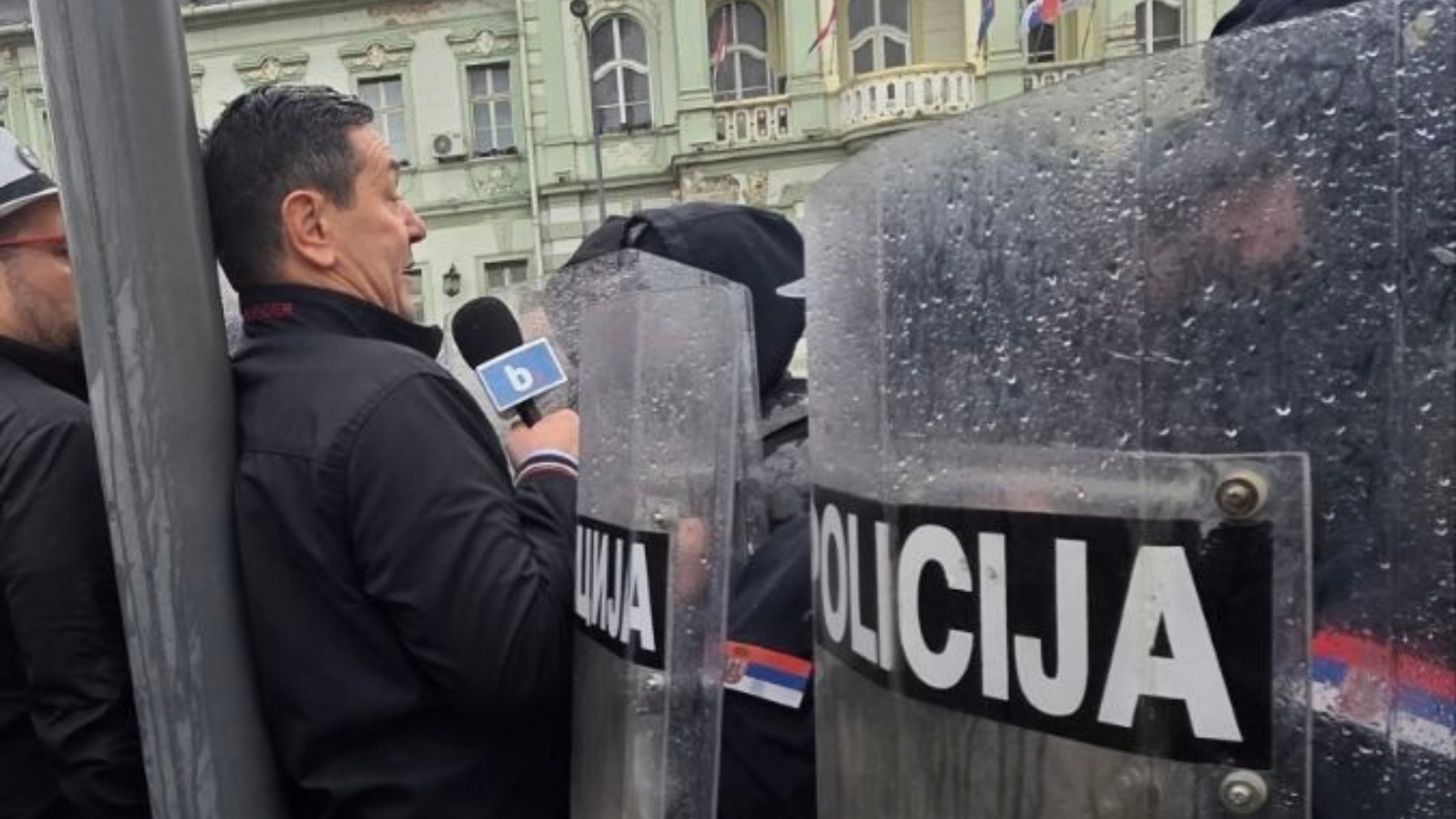
In Kula, journalists from various media outlets were obstructed in their work—their cameras were seized, filming was prevented, they were physically attacked, threatened, and insulted…
Yet the bloodied heads—indeed, the attempted murder of Lazar Dinić and Ivan Bjelić—evoke a chilling association with the killing of journalist Milan Pantić. He was murdered in 2001 in the early morning hours, beaten to death with a club in front of his apartment building. This time, in addition to clubs, the perpetrators carried axes and displayed a level of brutality typical of monstrous regimes. Under blows, and while being filmed, the victims were forced to shout: “Aca (Aleksandar Vučić) is president!” The young female journalist was repeatedly hit in the stomach, with the clear intent of inflicting lasting injuries.
This attack on journalists resembles terrorist acts involving persecution, physical and psychological abuse, filming, and coercion to deliver political messages, along with intimidation and interrogation about their work and engagement—all under the threat of being bludgeoned with axes.
Once again, the police failed to respond in time, arriving only later at the scene. Although the perpetrators returned and drove past the site of the violence, officers refused the victims’ request to stop, identify, and detain them.
Last week, a mission of the Council of Europe visited Serbia, composed of all relevant international organizations for the protection of journalistic and media freedom—the International Federation of Journalists, the European Federation, Index on Censorship, Article 19, the Committee to Protect Journalists, the International Press Institute, and others. Their conclusion was that the position of journalists in Serbia is the most difficult in Europe and that violence is escalating.
The authorities, particularly the ruling party of President Vučić, seemed through yesterday’s conduct not only to confirm these assessments but to signal: “We can do even worse.” Over the past year and a half, Serbia has recorded record numbers of attacks on journalists.
The attackers come from the ranks of masked enforcers recruited by the ruling party. Criminals, drug dealers, individuals convicted of serious violence, convicted killers, habitual thugs treated for psychological disorders, abusers of women, and similar profiles make up units deployed to flood Serbia—seeking to instill fear in anyone with a different opinion: students, citizens, activists, journalists, and political opponents of the ruling party.
Serbia is in a constant state of emergency created by masked, black-clad, party-affiliated enforcers.
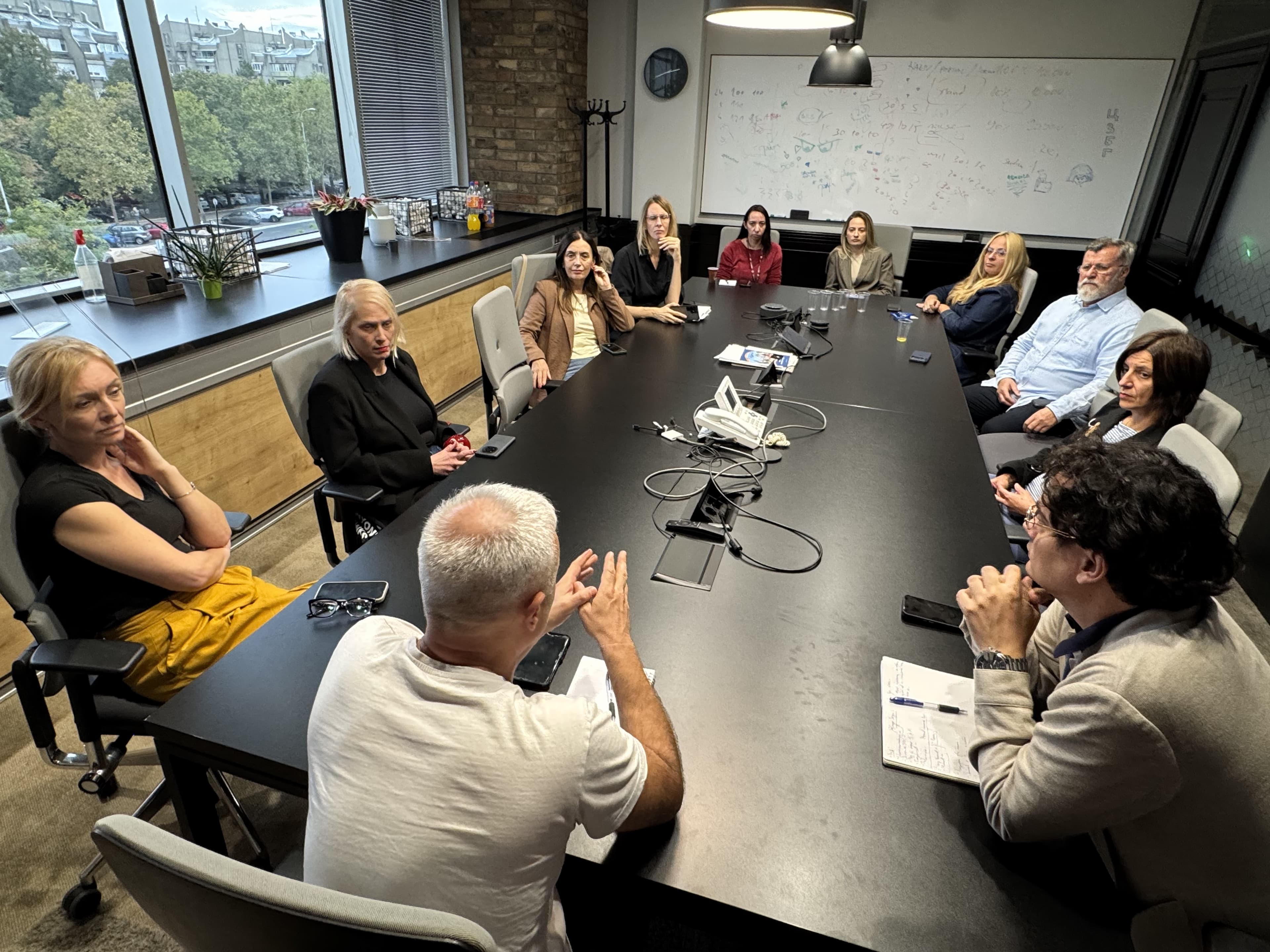
The media community prepared for these local elections in ten municipalities as if preparing for war. United within the Permanent Working Group for the Safety of Journalists, we visited all these locations ahead of the elections—speaking with local journalists about developments, issuing recommendations, and meeting with local prosecutors, discussing expectations.
Over the next year, parliamentary and presidential elections will take place across Serbia. In the past year and a half, there have been 165 attacks and threats against journalists, according to official statistics from the Supreme Public Prosecutor’s Office, of which only four have resulted in court verdicts. Impunity is nearly absolute. The violence witnessed during these local elections will only intensify in the coming months.
When it comes to the murders of journalists, there is also total impunity. The killings of Slavko Ćuruvija, Dada Vujasinović, and Milan Pantić remain unsolved.
Beyond severe injuries, intimidation, and the spread of self-censorship and censorship, such violence is highly likely to lead to new victims among journalists. These are not only our assessments from the field, but also those of observers from international organizations.
We must not allow another journalist to be killed. Not only because it is an unacceptable evil, but because it is clear it would be covered up. The murder of a journalist is the cheapest form of censorship, as someone once said—low cost, with no consequences.
That is why we must not allow this “bloody Sunday” in Serbia to become a permanent condition. Journalistic solidarity, along with solidarity among and with citizens, is crucial for now, while international organizations must maintain a permanent mission in Serbia to prevent it from becoming another dark Russia or Belarus—another country without journalists and without independent media.
The author is the president of the Management Board of the Association of Independent Electronic Media (ANEM), a member of the Permanent Working Group for the Safety of Journalists, and an operator on the Safe Line for Journalists 0800 100 115.

.png&w=3840&q=75)