
Local Media as State Enemies: Attacks from All Sides
Hacker attacks, smear campaigns, persecution, and institutional silence are the everyday reality for local newsrooms in Serbia that refuse to serve the authorities.
Let's start from the far southeast of Serbia. Far is a bilingual Bulgarian-Serbian portal run by journalists who firmly, and still, despite everything, believe in the journalistic code, reporting in the interest of citizens and the importance of local information. It is registered in Dimitrovgrad, a municipality that, according to the 2022 census, has more than 5,000 inhabitants, nearly half of whom are citizens of Bulgarian nationality. However, the real situation is undoubtedly different.
People are leaving in search of a better life, and young people are going to study – to nearby Sofia, and mostly do not return. The Bulgarian passport enables them to seek work throughout Europe. Others, however, go to work abroad in Pirot, Niš, or further north in Serbia. Most of them, due to outdated census methods and the disastrous state of electoral rolls, still appear among the counted and regularly receive voting invitations. Dimitrovgrad is not the only (border and multinational) place in Serbia experiencing dramatic depopulation. On the contrary, there are worse examples.
We will not delve into the numerous problems that have plagued public information in the Bulgarian language in Serbia for decades; we will only say that Far is the only media outlet that broadcasts content (also) in Bulgarian and has a serious editorial policy with a professionally critical stance towards the authorities. The non-governmental organization that publishes the portal also produces an exceptional children's magazine, creates documentaries on local topics, and organizes public gatherings and debates. Therefore, one might expect local and state institutions to recognize its significance – not only as a media outlet but also as a social and cultural asset, a kind of oasis in the desert. However, the reality is different.
Pressures on Far are increasing year by year, especially since the start of student-civil protests in Serbia, which this media outlet, unlike others locally – does not ignore.
Media reporting in minority languages face what we might call chronic problems. Their so-called sustainability is questionable due to the small, and ever-decreasing number of citizens they address, so the only way for them to survive is through support from public funds. But you can forget about that if you are not a propaganda outlet for the authorities. To this, we should add the issue of personnel: as we have said, young people are fleeing these places, especially those who would pursue journalism. However, this is just the beginning of the troubles for this portal.
In turbulent political circumstances, they are targets of continuous threats and insults. In messages they receive on social media, they are accused of being traitors, enemies of society, and some insults have an overtly chauvinistic content, which is somewhat unusual given that the people who govern this area are overwhelmingly members of the Serbian Progressive Party (SNS) of Bulgarian nationality. On several occasions, the portal has also been the target of hacking attacks.
And that's not all.
Two years ago, the editor of Far was stopped by traffic police and, for unknown reasons, had his mobile phone confiscated while giving a statement to the police. Slaviša Milanov says the conversation was strange, like champras-divan about this and that. And while he was talking with the inspector, the unknown reasons became known: it turned out that, in the meantime, data had been removed from his phone and spy software was installed, which was later confirmed by expert organizations. Milanov filed a complaint, but the case has languished in some drawer. Some time later, Far journalist Sergej Ivanov received serious, immediate threats from a local businessman behind a lignite exploitation project in the municipality. The journalist uncovered illegalities and questionable activities in the project's implementation, and then the "boss" called him and warned that "something would happen to him." This case was also reported to the police and the prosecutor's office, but to this day, there has been no response in this case either.
Ustaše in the heart of Šumadija
Now let's go northwest, to Šabac. The editor of the Podrinske portal, Isidora Kovačević, has been targeted by the local authorities and those who act in collusion with them – people on the other side of the law. The persecution is systematic and ongoing, occasionally intensifying.
Why is Isidora targeted? Simply because she writes about the scandals of the local authorities and reports on civil protests, not just the recent ones. When she leaves her house, young people in black immediately latch onto her and throw some comments her way. They practically stand guard in front of her house. One morning, the city was plastered with wanted posters bearing her image. After she filed a report, it was revealed who had posted them. However, after four years of legal proceedings, the perpetrator was acquitted. The threats and insults Isidora receives have contained and continue to contain overtly sexist and misogynistic elements. For instance, her photographs in a swimsuit are circulated on social media, with messages that she should be "exiled." Ultimately, she has practically been exiled from her hometown of Šabac: she decided to move away and no longer live in daily fear. It is particularly frightening that she has not received a single word of solidarity from colleagues working in media outlets close to the authorities.
If you didn’t know, “ustaše” live in the center of Šumadija. And not only in Šumadija but throughout Serbia. If you are a journalist, to be labeled a supporter of Ante Pavelić and the Independent State of Croatia (NDH), it is enough to report in accordance with the rules of the profession – such as reporting on student protests. Numerous insults arrive from real or fake profiles on social media, and there is no doubt that this is a widely organized action. The Glas Šumadije portal was refused answers by a private company involved in a local government scandal because, as they said, “they do not respond to questions from media outlets with an overtly anti-Serbian, i.e., Ustaša narrative”. A young journalist from Glas Šumadije was attacked by supporters of the ruling party, after which he decided to leave journalism. The portal was also the target of a serious hacking DDoS attack in February – not just him – and was non-functional for as long as 15 days.
For over a decade, independent media have been targets of cyber attacks, and no one doubts that they are part of systemic pressures on media freedoms. Local media are particularly vulnerable as they have reduced capacities to resist these attacks.
Targeting, political and economic pressures, attacks
Let’s now head to Vojvodina – to Bečej, where a bilingual Bečejski mozaik has existed for decades. Until recently, this media outlet also had a printed edition, but due to lack of funds, only the portal has survived. Kristina Demeter Filipčev, the editor of Mozaik, was pushed, insulted, and threatened by members of the ruling party while she was reporting from the "Zastani Srbijo" protests in November 2024. After a recording of the attack was broadcast and associations reacted, a barrage of insults and threats followed on social media. Journalists were called "Đilas's mercenaries," "scum," "traitors," "Ustaše," and Kristina was labeled a "Hungarian" and a "Slovak whore." The president of the Bečej municipality coldly targets and discredits the journalists of this media outlet during meetings.
However, things are taking on incredible proportions over time. Kristina has a child with a disability who has not been provided with the orthopedic aid to which they are legally entitled. When she asked the municipal officials why it had not been provided, despite it being a common practice in the past, she was told that she should have thought about it earlier.
Pressures also manifest financially. "Not a grain of wheat to the occupiers," seems to be the slogan of the ruling party in Serbia. This year, this media outlet did not receive a single dinar in the local competition for co-financing media content, and as a punishment, neither the municipality nor public enterprises advertise in it anymore. At the same time, Bečej allocates huge funds for media close to the authorities – both local and national.
Bački Petrovac is a small Vojvodina municipality with a majority Slovak population. Numerous incidents were recorded during student protests there. Nearby Kulpin is home to the editorial office of the bilingual portal Storyteller, which reports on protests and critically addresses local topics in a modern way. The portal long ago decided not to waste energy competing for public funds – it is on the state and local blacklist. "Not a grain of wheat...," as we have already noted. It is also on the blacklist of the Russian intelligence service, which published a list of media that should "complete the Serbian Maidan," whatever that means. (This list also includes the Far portal mentioned at the beginning of the text.)
At the end of April this year, officials from the Petrovac municipality and members of the ruling party gathered during working hours in front of the Storyteller editorial office and unfurled a banner that read "Serbia wins" – just before a panel discussion was held in the editorial office dedicated to social divisions and the role of media in creating conditions for public dialogue. The gathering was accompanied by loud newly-composed music that disrupted the discussion.
Editor Vladimira Dorčova Valtner says that the gathering in front of the editorial office had a symbolic dimension – as a public marking of the media and its physical location, with the message that this is an editorial office with which it is undesirable to cooperate or be associated. Interestingly, until this event, the local authorities had completely ignored this media outlet: they did not respond to questions, nor did they send them public information or invitations to events. Ignoring continued after this "performance."
The position of local media is becoming increasingly difficult
The examples we have cited in this brief tour of Serbia are certainly not exceptions but merely indicative examples of the position of local media that report professionally. Wherever else you might go, where it is not a media desert, you would encounter similar examples.
Snežana Milošević from the "Local Press" association believes that the position of local media in Serbia is becoming increasingly difficult year by year, and that this holds true for all parts of the country. She states that in certain areas, a certain type of pressure is tested and then applied in other locations. Simultaneously, the rhetoric of the president and other high-ranking state officials, as well as their unacceptable attitude towards media, is reflected at the local level. She notes a strong increase in hate speech locally, especially in the context of student-civil unrest, and states that all these mechanisms have a final goal – the destruction of unity within small communities.
"Local Press" has been investigating the pressures faced by local information since 2017. The results of this year's research are more than alarming. Media freedoms in the past two years, which were the timeframe for the research, were rated with an average score of 2.1 (on a scale from 1 to 10), which is a significant drop compared to the previous research (3.3) and the lowest rating of media freedoms since 2017. All surveyed local media have been subjected to some form of pressure, and some have been targets of nearly all forms of threats to media freedoms and rights.
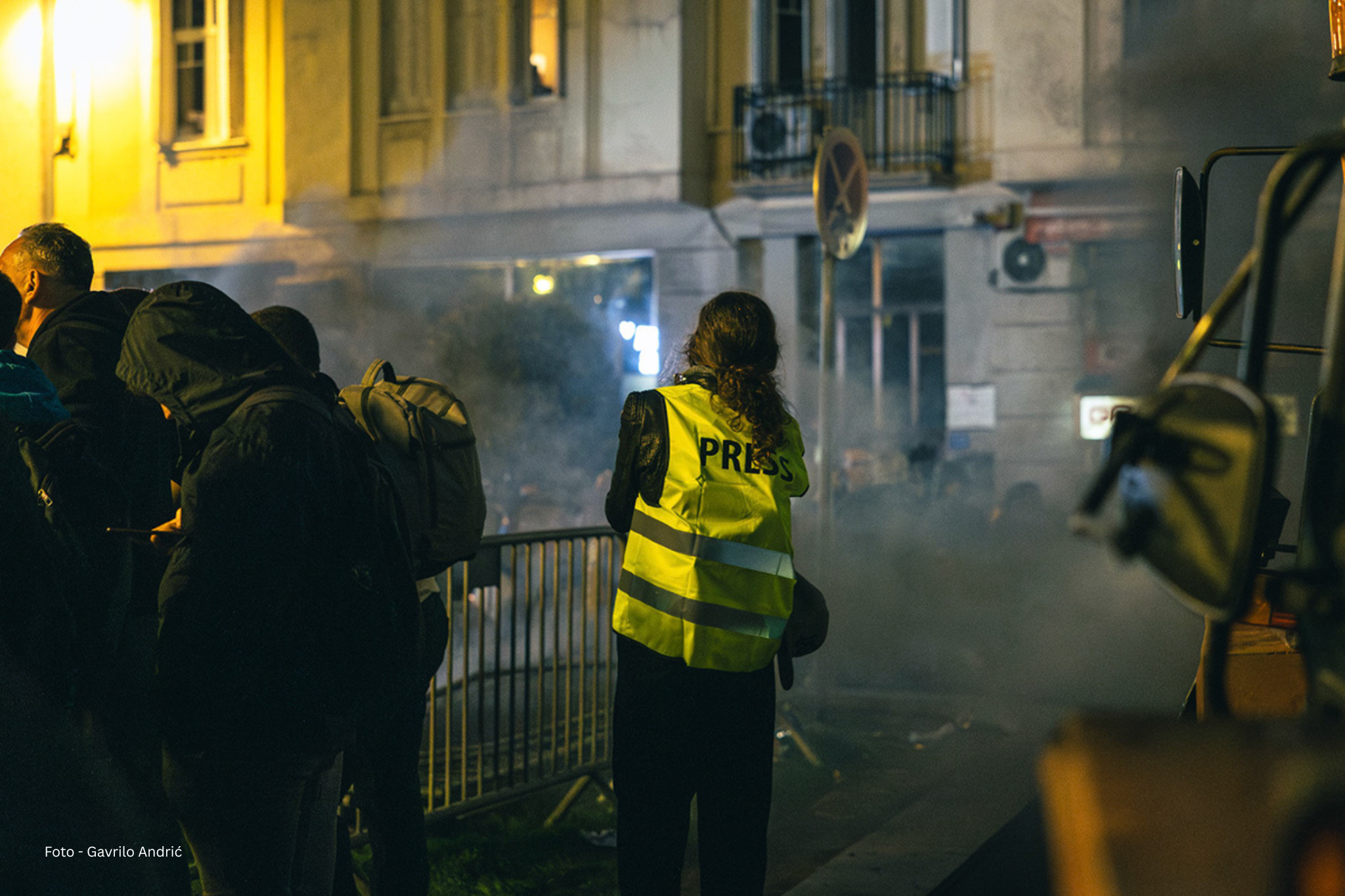
Researchers conclude that the pressures cannot be described as individual, covert, or "sophisticated," but rather as systematic, open, and increasingly intense attempts to intimidate and suppress critical reporting. Many participants in the research assessed that "the situation has never been worse," and they connect the escalation of pressures with reporting on student-civil protests. Media reporting from the protests have been subjected to physical and verbal attacks, various forms of intimidation, public targeting, and cyber attacks, SLAPP lawsuits, and most of them have lost public funding, even the symbolic ones.
The main sources of pressure continue to be representatives of the executive authority and ruling political parties, but among the actors, unknown faces and media close to the authorities are increasingly appearing, which operate at the local level as replicas of national tabloids and lead campaigns against critical editorial offices, as stated in this research which should be published soon, and to which we had access.
Interestingly, in the recent period, national tabloids and organizations close to the authorities are buying existing or founding new local media. Not only do professional local media face unfair competition that has direct access to state funds, but they also become targets of intimidating attacks and accusations from newly established outlets. Tabloidization is moving into every village.
The results of this research are in line with numerous other analyses, both domestic and foreign comparative studies of the media situation in Serbia. For instance, according to this year's report from Reporters Without Borders, Serbia has fallen six places (from 98th to 104th out of 180 countries observed). Although the situation is deteriorating throughout the region, Serbia remains the worst-ranked according to this research, and its media situation is described as "difficult." Particularly interesting is the indicator related to the political context, which measures the attitude of political elites towards media and journalists. According to this indicator, Serbia ranks as low as 151st. Ahead of it are numerous countries from Africa and Asia.
Author: Nedim Sejdinović
Source: media.ba
Related Articles
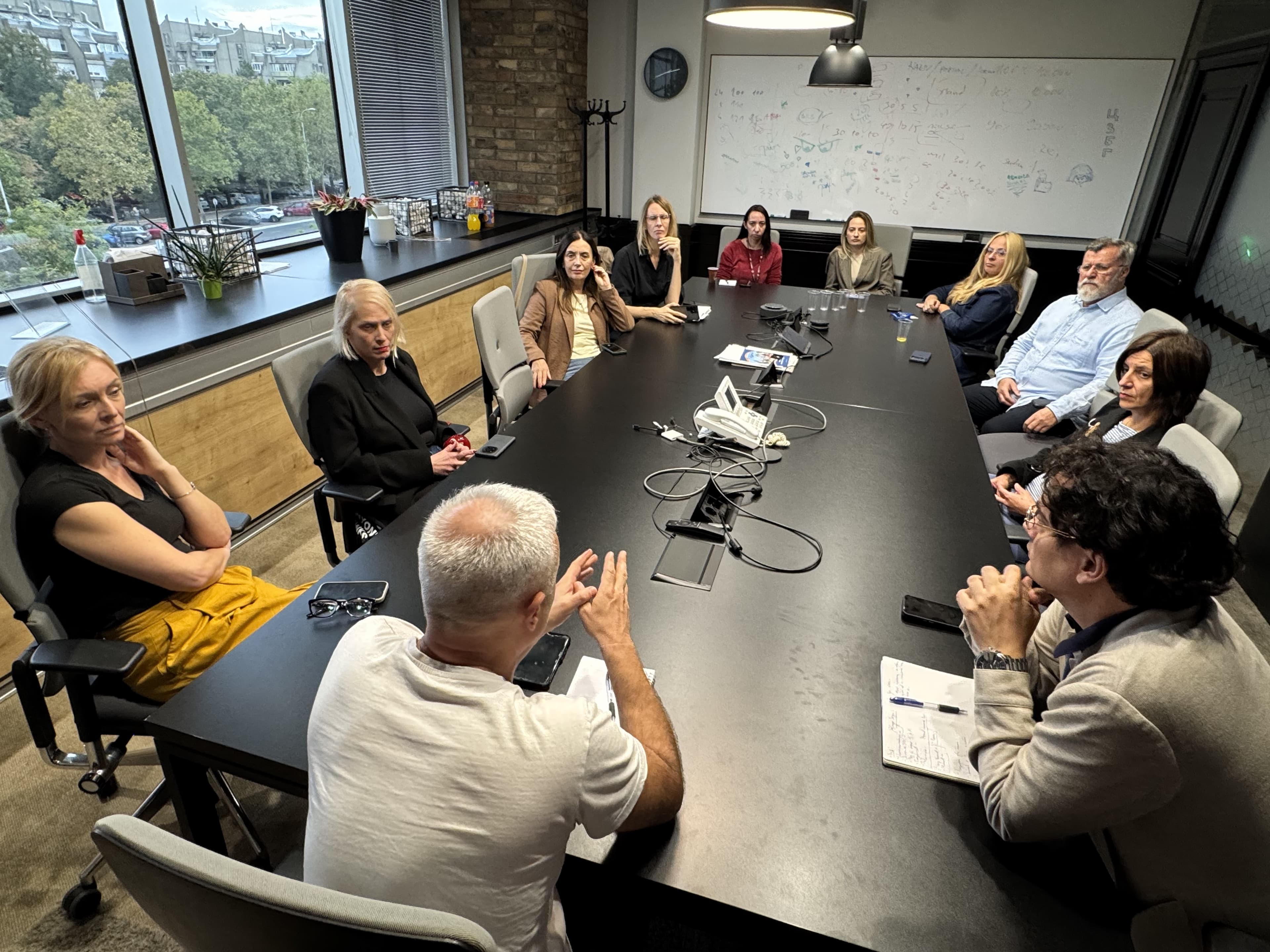
Journalistic associations provided support to the editorial team of Nova.rs: Ongoing communication and updates with international stakeholders agreed upon.

Coalition for Media Freedom: Stop Attacks and Harassment of Journalists During the Election Campaign


.png&w=3840&q=75)