
Monitoring report of the MFRR for 2025: 1,481 violations of media freedoms in 36 European countries, with 208 in Serbia.
The Media Freedom Rapid Response (MFRR) platform has published its Annual Monitoring Report for 2025, which states that last year it recorded 1,481 violations of media freedoms, including 208 in Serbia.
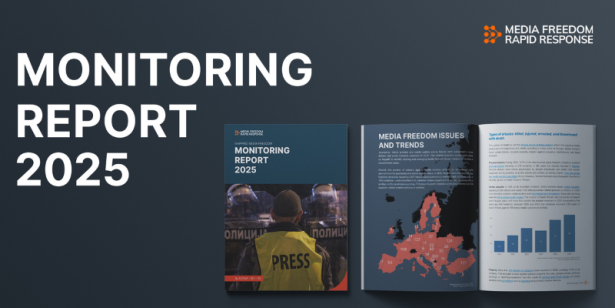
In 2025, violations of media freedom affected 2,377 journalists or media entities across 36 European countries, according to a report.
The section of the report concerning Serbia indicates that the state of media freedom deteriorated further in the past year, with a sharp increase in reported cases.
“During the year, 208 cases of media freedom violations were documented in Serbia, more than double compared to the 84 cases recorded in 2024, impacting a total of 358 media workers or entities,” the report states.
The monitoring report is based on cases recorded in the Mapping Media Freedom database and provides an overview of key threats faced by journalists in 27 EU member states and nine candidate countries.
“The findings indicate problems that transcend national borders and political systems. Verbal attacks, smear campaigns, and intimidation remain the most frequently recorded violations. Digital threats continued to grow, while political actors are increasingly identified as sources of pressure on journalists,” the report states.
The report was prepared by the European Centre for Press and Media Freedom (ECPMF), the European Federation of Journalists (EFJ), and the International Press Institute (IPI) as part of the MFRR project, co-financed by the European Commission.
What the report says about Serbia
Of the 208 cases of media freedom violations, as explained, verbal attacks accounted for the majority of incidents (62%), followed by attacks on property (23.1%), physical violence (21.2%), obstruction of work (19.2%), and legal threats (5.8%).
“The majority of cases were verified in cooperation with the SafeJournalists Network (SJN),” MFRR notes.
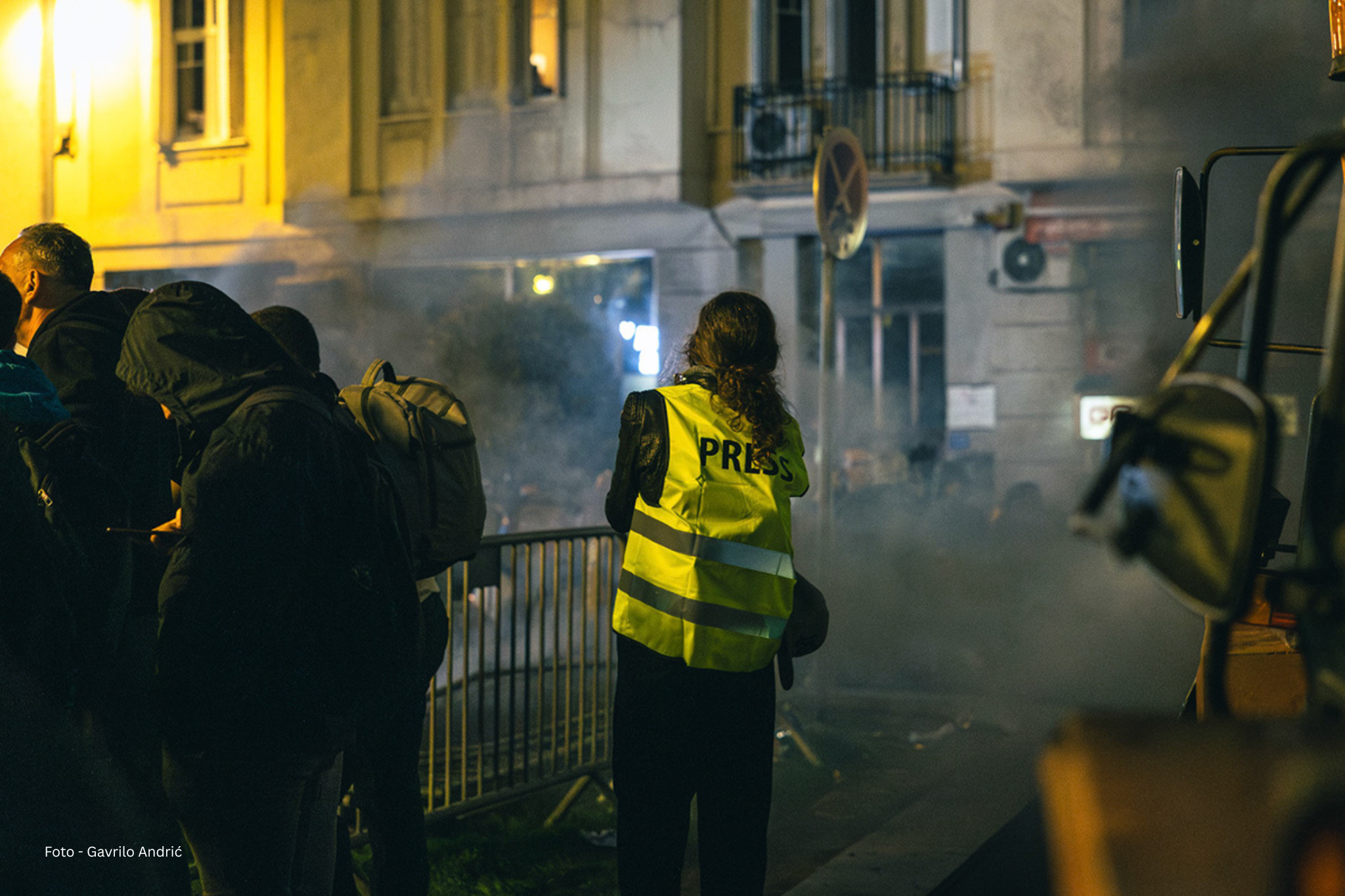
The media environment, the report states, was particularly dangerous for journalists covering anti-corruption protests following the deadly collapse of the railway station awning in Novi Sad on November 1, 2024.
“Increasingly intense pressures, marked by state repression, prompted the MFRR consortium to organize a solidarity mission in Belgrade and Novi Sad in April 2025. The mission established a 'state of emergency' in which censorship, political pressures, media capture, smear campaigns, and threats to journalists' lives are commonplace and often go unpunished,” MFRR writes.
In 2025, it is noted, physical attacks alarmingly increased — 44 cases were recorded, compared to 14 in 2024.
“Law enforcement officers shifted from inaction to excessive use of force against journalists reporting from protests. Of the 16 attacks attributed to the police, over 90% occurred during protests, and in five cases, journalists sustained injuries,” the report states.
More than half of the physical attacks, it is noted, were committed by private individuals.
"At least five media workers were attacked during the commemoration of the first anniversary of the awning collapse in Novi Sad, when they were assaulted by masked attackers. One journalist was forced to delete recorded material under the threat of having his bones broken,” the report states.
It adds, “In an effort to increase pressure in a tense political climate, high officials, including President Aleksandar Vučić, continued to discredit certain journalists, falsely labeling them as 'enemies' of the state.”
“This rhetoric, amplified by pro-government media such as Informer TV, fuels threats online and offline, with almost complete impunity. Discrediting by public officials is increasingly repeated at the local level,” MFRR writes.
MFRR: Targeting of N1 and TV Nova
This mission highlighted in the report that “the independent broadcaster N1 is one of the most frequently attacked, with at least 52 recorded incidents — ranging from repeated bomb threats and numerous death threats to physical intimidation and harassment of journalists.”
“Journalists from N1 are regularly publicly accused by President Vučić and other officials. The President accused N1 and Nova TV of 'pure terrorism,' after which numerous death threats and a letter mentioning an attack 'in the style of Charlie Hebdo' followed,” MFRR writes.
In December 2025, it is noted, the President publicly discredited and humiliated N1 journalist Mladen Savatović during a press conference, after which he received multiple threats of sexual violence.
Similar harassment, MFRR notes, was experienced by other independent media outlets, including Nova, Danas, Radar, as well as the Radar cartoonist Dušan Petričić.
“Podcast hosts Nenad Kulačin and Marko Vidojković, as well as journalist Dinko Gruhonjić, have also been subjected to persistent threats following smear campaigns in pro-government tabloids. Particularly concerning is the fact that 11 cases of serious threats were recorded against the parents and children of journalists in Serbia — representing a precedent,” the report states.
In this context, it adds, the newly formed pro-government Journalist Association (ANS) has also targeted organizations that protect journalists, such as the Independent Journalists' Association of Serbia (NUNS) due to its efforts to support endangered journalists.
Spy tools and hacking attacks on journalists and media
Additional concern is raised by the illegal use of advanced spy tools and targeted hacking attacks. Amnesty International, it adds, revealed that the devices of two BIRN journalists were infected with the Pegasus spyware.
Furthermore, MFRR recalls, two local media outlets were hacked, as well as the Beta news agency and the YouTube channel of a podcast, temporarily hindering access to information.
“During the reporting period, 12 legal incidents were documented, including the arbitrary detention of 11 journalists. A new defamation lawsuit was filed against KRIK, a media outlet investigating crime and corruption, by former Minister of Agriculture Jelena Tanasković,” MFRR states.
A concerning case, it further notes, involves the arrest of Aleksandar Dikić from KTV and the search of his apartment following the publication of a fabricated video that falsely promoted violence,” it writes in the report.
In an atmosphere of hostility toward critical voices, MFRR notes, additional irregularities were discovered in the process of appointing the Council of the Regulatory Body for Electronic Media (REM), the most important media regulator in Serbia, which has been criticized for a lack of transparency and independence despite reforms demanded by the EU.
Uncertainty is growing, the report states, regarding the future of N1 and Nova, the two remaining independent television broadcasters in Serbia, owned by United Media.
“Speculation about a possible sale has intensified after both channels were removed from the EON SAT service (Total TV), which is now owned by the state-linked Telekom Srbija. Additionally, a leaked audio recording indicated political pressure from President Aleksandar Vučić to undermine the editorial independence of N1,” MFRR writes.
As noted in the report, cases of political interference in the work of the public service RTS have also been recorded, which has not reported on protests for months.
The allegations, MFRR writes, include politically motivated dismissals and direct interference in editorial policy.
“Similar instances have been recorded in Euronews Serbia, ELLE Serbia, Večernje Novosti, and Politika, where journalists advocating for ethical journalism and opposing censorship have been forced to resign or have been dismissed. Throughout 2025, the media environment in Serbia continued to deteriorate at an alarming rate,” MFRR states.
As emphasized, concrete measures are necessary in the coming period to ensure citizens' rights to free and independent information and to reverse the trend of declining media freedoms.
Source: UNS
Related Articles

Journalistic associations provided support to the editorial team of Nova.rs: Ongoing communication and updates with international stakeholders agreed upon.

Coalition for Media Freedom: Stop Attacks and Harassment of Journalists During the Election Campaign
.png&w=3840&q=75)