
New Network of Local Portals, Old Media Control
Each new election year can bring new "phantom" media, while independent journalism will become increasingly difficult to sustain. Without free media that provide informed choices, elections themselves cannot be free. When (and if) local media emerge as projects of power, citizens receive only yet another, new level of managing the perception of reality.
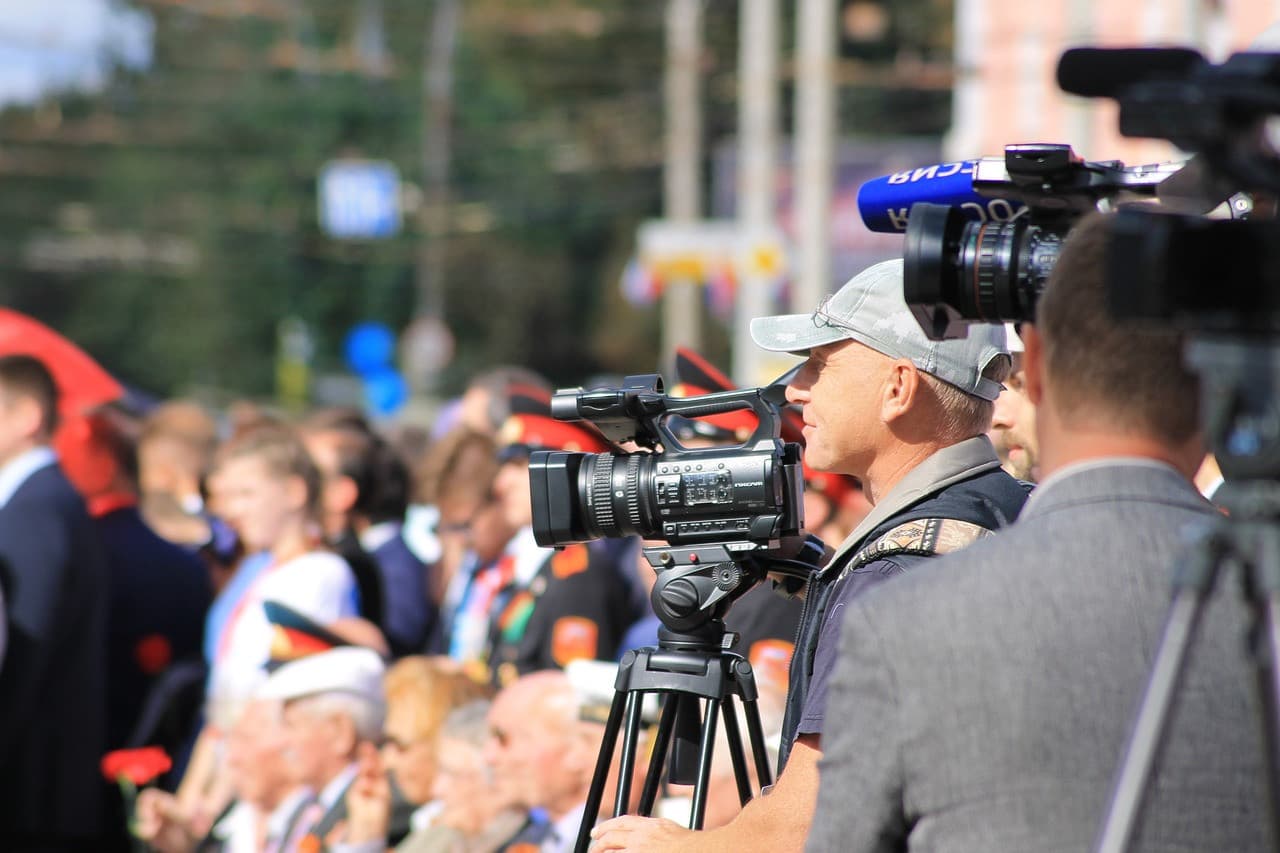
In the first weeks of 2026, the Serbian media landscape welcomed ten new local portals. A detailed analysis reveals a pattern – the same owner, the same editor, the same registration date, the same narrative. The Association of Independent Electronic Media states that all new portals were registered by the same Novi Sad company, Zaple Media Group. Its director is Gradimir Banković, known to the public as a collaborator of the Center for Social Stability. The first three media outlets – Serbia in the East, Palanačke Vesti, and Glas Aranđelovca, were registered on the same day, January 9, 2026. By February, the network had expanded to ten portals. This trend has been reported by Vreme, ANEM, Cenzolovka, and Mašina.
The portals cover precisely those municipalities where regular local elections will be held this year: Aranđelovac, Bor, Bajina Bašta, Kladovo, Knjaževac, Kula, Lučani, Majdanpek, Smederevska Palanka, and Sevojno. This is not a coincidence but a precisely targeted operation to build political-communication infrastructure that demonstrates an understanding of local electoral dynamics.
Election as a Trigger for Media Expansion
The upcoming local elections not only have a concrete impact and significance for the local community but also a symbolic value that will reflect the influence and consequences of civic and student protests during 2025 on the stability and strength of the SNS government. Each local election is an opportunity for major national narratives to be "localized" into municipalities, allowing the government’s reputation to be defended or created through more direct and locally relevant stories about development, stability, and investments. For such micro-targeting, there are no more effective channels than local media, which build their entire content, editorial policies, and influence around communal topics, community-known and present leaders, and the analysis of local issues, successes, and conflicts.
The significance of local media is often underestimated in public debates that focus on national television and large portals. However, local media represent the most direct communication channel between the government and citizens at the local level. In small communities, where people know each other and where personalized campaigns have a stronger effect, control over the local information space can be crucial for electoral victories. For citizens, local media are the primary source of information about events in their municipality, the workings of local administration, and issues that directly affect them. When these media become an extended arm of political propaganda, the last level of control over local power disappears. Citizens lose access to relevant information, receiving only content that serves the political interests of the ruling structure. For years, there has been a clear strategy from the authorities to build local legitimacy before each election through concrete themes – building roads, opening schools, factories, and attracting investors.
In such a system, local media serve as an important, irreplaceable "amplifier" of such events, especially if every critical or analytical approach is suppressed and they are turned into a continuous broadcast of positive news and the latest successes of "our government." Furthermore, local media can be a crucial link in some future crisis management and protests on the ground. If their content is organized around goals such as deflecting blame, discrediting organizers, and relativizing problems, images of civic unrest and protests will be easier to control. Ultimately, they can easily transform into a mechanism of discipline within the system and "internal" communication that defines and marks who is loyal, who is a "problem," and who or what will be promoted. The electoral benefit for the authorities can be substantial, with minimal cost. Local portals are inexpensive, can be set up quickly, and are easily filled with aggregated content.
Their goal is neither a mass audience nor a wide reach. It is sufficient for them to be dominant in the local ecosystem and present through easily shareable content within communities on social media. Creating a "network" instead of launching individual media suggests coordination and a pattern in which multiple media outlets under the same ownership "share" the same editorial policy. Thus, instead of authentic commitment to individual communities, the result of this wave of launching local media is almost certain to be uniform framing of events under the guise of local diversity. In this wave of launching local media, citizens of those communities get a sense (illusion?) that "there is more information and local voices," while in reality, transparency, reliability, the possibility of verification, clear accountability (who is behind the content), and, most importantly, local interest is replaced by a centrally produced narrative.
Center for Social Stability – Again
The connection between the new media and the Center for Social Stability is crucial for understanding this issue. The CZDS, formally a non-governmental organization, has become a generator of propaganda films and targeted campaigns against critically oriented journalists, public figures, and media in recent years. As reported by Javni servis, the President of the National Assembly, Ana Brnabić, referred to them as a "fantastic non-governmental organization," while President Aleksandar Vučić praises them as "true Serbian patriots." Such affirmation from the highest state levels legitimizes a structure that acts as a political extension of the government. Gradimir Banković, the editor of all ten portals, is not only registered as the director of the media company but also publicly appears as a representative of the CZDS. One of the founders of this association is the current Minister for Eurointegration, Nemanja Starović. This interweaving of political structures, pseudo-civil organizations, and media networks represents a perfect example of how political manipulation can create an illusion of pluralism while actually constructing and further strengthening a controlled media ecosystem.
Related Articles

Journalistic associations provided support to the editorial team of Nova.rs: Ongoing communication and updates with international stakeholders agreed upon.

Coalition for Media Freedom: Stop Attacks and Harassment of Journalists During the Election Campaign

.png&w=3840&q=75)