
Consultations have begun regarding the election of the REM Council: Brnabić accuses diplomats of interference while simultaneously seeking their assistance.
Without a new REM Council, Serbia will not make any progress on its path to the EU or receive the 1.6 billion euros from the Growth Plan, yet the election process has been stalled for nearly six months. The OSCE stated to Cenzolovka that discussions are ongoing, while the Serbian Assembly remains silent. At the same time, Ana Brnabić sharply criticizes the alleged interference of the European Union, despite having sought its assistance in this process herself.
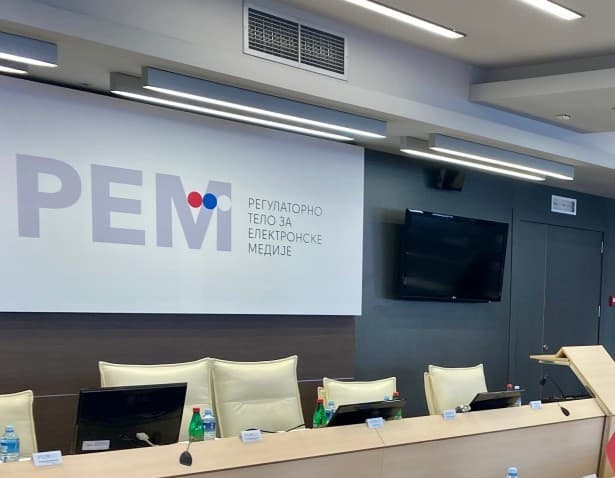
After the conversation between the President of Serbia Aleksandar Vučić and European officials at the EU-Western Balkans Summit in Tivat, the issue of establishing the Regulatory Body for Electronic Media Council (REM), which has been nonexistent for a year and eight months, has once again been revived.
After several unsuccessful attempts, the election of the REM Council has been on hold for almost six months, and concrete answers regarding when and how it will continue are lacking.
The National Assembly of Serbia has not responded to Cenzolovka's inquiries about progress and plans for enabling a lawful election of the Council for over a month, while discussions on the matter are taking place out of the public eye.
While the Assembly remains silent, the media freedom representative of the Organization for Security and Co-operation in Europe (OSCE) Jan Bratu tells Cenzolovka that "discussions are currently underway on how to move this process forward."
He emphasized that he is "carefully monitoring developments related to media in Serbia, including the issue of forming the REM Council."
The OSCE, the European Union, and several embassies of European states are not only actively observing but also assisting in the process of electing the Council.
As European officials increasingly emphasize that forming the Regulatory Council is one of the obligations Serbia must fulfill to open Cluster 3 on its path to European integration and receive 1.6 billion euros from the Growth Plan, the top authorities accuse them of directly interfering in the election of members.
Aleksandar Vučić previously described the discussions between Serbia and the European Union regarding REM as "humiliating" and stated that "Serbia has agreed to nonsense," while the Speaker of the Assembly Ana Brnabić today expressed discontent about the participation of foreigners – the same ones she approached for help in this process.
Brnabić: Pressure over REM because Serbia is "disobedient"
"The European Commission and certain EU member states have directly linked the resolution of the REM issue to progress in integrations," stated Ana Brnabić this week for Radio Belgrade, in a show hosted by Bojan Bilbija. This host was also proposed as a member of the Council. The expert public criticized his candidacy due to non-fulfillment of legal conditions, which ultimately led to his exclusion from the election.
When asked by Bilbija whether "in their countries, some external centers of political power determine who will be in their REM," Brnabić replied "absolutely not" and added:
"So, if we had made some different decisions – imposing sanctions on Russia, God forbid recognizing the so-called Republic of Kosovo, none of that would matter. We could have a REM however we wanted. You could have nine members of the REM Council, appoint nine in the premises of the SNS, and no one would say ‘a’ to us."
The Speaker of the Assembly emphasized that "any parliamentary majority is allowed to decide on the formation of the REM, but not in Serbia."
However, she confirmed that she discussed this topic with representatives of the European Commission on the same day.
"But it is about that principle. If you are again, in quotes, 'disobedient,' you will be asked for something that is not asked of anyone else, and to introduce some systems that do not exist anywhere else, neither in the world nor in the European Union. If you are obedient, then absolutely nothing will be asked of you," Brnabić said.
She did not explain what exactly the European Commission and other diplomats, with whom she is discussing the election of the REM Council, are asking of her.
______________________________________________________________________
THE IMPORTANCE OF REM FOR SERBIA'S PATH TO THE EU
The Growth Plan provides Serbia with around 1.6 billion euros in non-refundable funds and favorable loans. This money is disbursed to countries in multiple installments, upon fulfilling the measures outlined in the Reform Agenda.
One of the seven measures that Serbia was supposed to fulfill over a year ago to receive the first installment is the election of a new REM Council. At the beginning of 2026, Serbia received part of the allocated funds. The European Commission then concluded that three out of seven steps had been fulfilled, but the re-election of the Council was not among them.
The EU Commissioner for Enlargement Marta Kos stated in May that "they are constantly monitoring whether countries fulfill the criteria," adding that it has not been formally decided to freeze funds intended for Serbia, but that since the adoption of the judicial, so-called "Mrdić laws," the country has not received a single euro from the Growth Plan.
Previously, in addition to judicial laws, Kos highlighted the importance of restoring media independence and reforming the REM on Serbia's path to the EU.
At the Summit in Tivat, the President of the European Commission Ursula von der Leyen also stated that Serbia knows what its obligations are, that the accession process is merit-based, and that "reforms must be implemented," emphasizing the reform of the judiciary, electoral laws, alignment with the EU's foreign and security policy, as well as – the REM Council.
______________________________________________________________________
The Role of the International Community in the Election of the Council
While Brnabić claims that the international community would act differently if Serbia were "more obedient" and that the issue of REM, in that case, would "not matter" to foreigners – diplomats have been involved in the process of electing the Council from the beginning and at the invitation – of Ana Brnabić herself.
The Speaker of the Assembly addressed them, as Cenzolovka revealed, during the first attempt to elect the Council.
At that time, she sent a letter to the ambassadors of the Quint (USA, UK, France, Italy, and Germany) in which she dismissed objections regarding illegalities in the process, avoiding explaining the contentious details on which a part of the candidates and proposers, advocating for the process to be conducted in accordance with the law, complained. Simultaneously, Brnabić called out candidates whom she did not favor in front of foreign diplomats.
The first election process failed after some candidates withdrew due to irregularities.
The second was initiated after students blocked the building of Radio-Television of Serbia for two weeks, demanding a new call for the REM Council. This process was also accompanied by a series of irregularities, which soon led to 16 candidates and 78 proposers withdrawing from it.
The international community is actively re-engaging here, and in informal meetings with the actors in the process, insists that the election be inclusive and lawful.
Therefore, a new phase of the process was developed – re-evaluating the legality of proposers and candidates – to which representatives of the international community attended for several hours at a public session in the Assembly, two days later.
This unusual session of the Committee for Culture and Information began as an attempt to establish a dialogue with a higher goal – to lawfully form the REM Council – and ended as yet another, usual, tumultuous parliamentary debate, without a final solution.
As representatives of the authorities in the Committee and other actors failed to agree on whether certain proposers and candidates meet the legal criteria for participation in the process, the OSCE later "stepped in" – again at the invitation of Ana Brnabić – with an independent assessment.
Although the OSCE's analysis did not support the arguments of the ruling majority, their opinion was adopted, and the election process continued.
In the end, the Assembly elected eight members of the Council, but did not vote for the ninth – from the candidates of the national minority council. By electing one of the two candidates proposed by the Albanian and Bosniak councils, the majority in the Council would consist of members not supported by the current authority.
Half of the newly elected members, Rodoljub Šabić, Mileva Malešić, Ira Prodanov Krajišnik, and Dubravka Valić Nedeljković, conditioned their stay in the Council on the Assembly voting among the originally and legitimately determined candidates in the national minority category. Since this was not done, the four of them resigned.
The Committee attempted to fill the vacant positions, but the process was halted in January and has not been mentioned since – until the Summit in Tivat.
In the meantime, the remaining four elected members Miloš Garić, Milan Petković, Stevica Smederevac, and Snežana Miljković regularly receive compensation for the positions they were elected to – amounting to two average salaries per month – even though the REM Council neither operates nor has been convened.
In five months, more than seven million and 200,000 dinars, along with taxes, have been paid from the budget of the Regulator for these allowances, Cenzolovka revealed.
Source: Cenzolovka
Related Articles
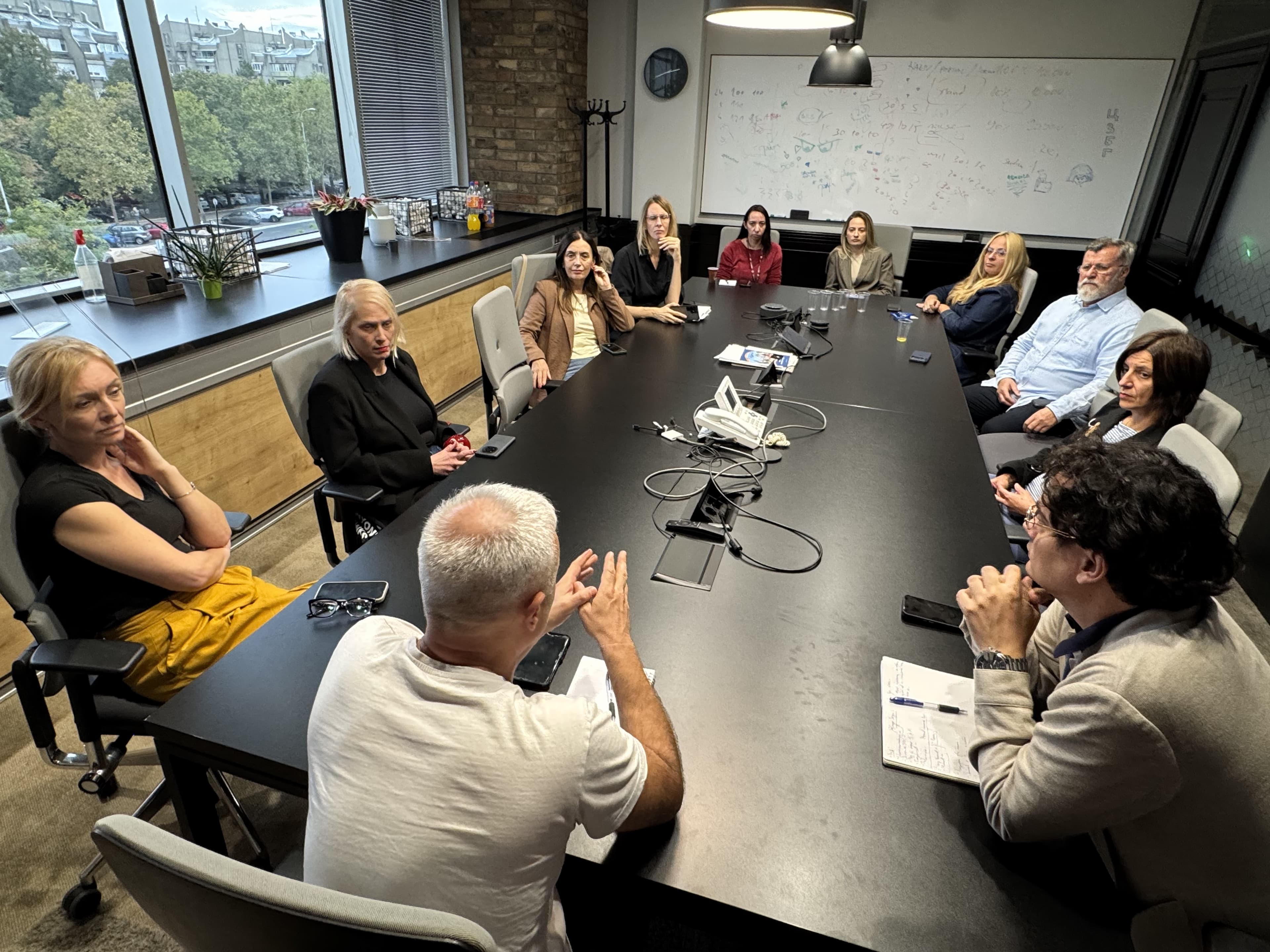
Journalistic associations provided support to the editorial team of Nova.rs: Ongoing communication and updates with international stakeholders agreed upon.

Coalition for Media Freedom: Stop Attacks and Harassment of Journalists During the Election Campaign

.png&w=3840&q=75)