
SĆF: 172 verbal attacks on journalists by politicians in June 2026.
In June 2026, the Slavko Ćuruvija Foundation recorded at least 172 verbal attacks by state officials, party officials of the Serbian Progressive Party (SNS), and other representatives of the government against journalists and the media. The attacks were directed via social media, in media appearances, at party gatherings, and during sessions of the National Assembly. In the first six months of this year, the SĆF recorded 980 attacks.
The trigger for the majority of attacks in June was the action taken by the Higher Public Prosecutor's Office in Belgrade, which initiated a preliminary investigation due to what was stated as "reasonable suspicion" that a "simulation of the use of a sound cannon" was staged during the protest on March 15, 2025, in order to "accuse state authorities, spread panic among citizens, and jeopardize state security."
The acting prosecutor, Miodrag Marković, announced on the public service Radio-Television of Serbia that four groups of individuals would be prosecuted. One group pertains to those, as the prosecutor stated, who provided "media support," meaning they "posted on social media or in certain media" claims about sound weapons, and whose "identity is more or less known."
For the second consecutive month, the highest number of attacks was recorded in statements by President Aleksandar Vučić (32).
Following him are: - Speaker of the National Assembly Ana Brnabić (23) - SNS President and Advisor to the President of Serbia Miloš Vučević (18) - National Assembly member and President of the SNS parliamentary group Milenko Jovanov (17) - National Assembly member SNS Vladimir Đukanović (12) - National Assembly member SNS Nebojša Bakarec (12)
The attacks involved the Ministry of Information, the Higher Public Prosecutor's Office in Belgrade, and 26 other officials, including: Ministers of Information Boris Bratina, of Police Ivica Dačić, of Culture Nikola Selaković, of Finance Siniša Mali, of European Integration Nemanja Starović, for Public Investments Darko Glišić, Minister without Portfolio Đorđe Milićević; Minister for Labor, Employment, Veteran and Social Affairs Milica Đurđević Stamenkovski; Deputy Speaker of the National Assembly Marina Raguš; Mayor of Belgrade Aleksandar Šapić; President of the Provincial Government Maja Gojković and Deputy President of the Provincial Government Sandra Božić; President of the City Assembly of Novi Sad Dina Vučinić, as well as other National Assembly members, state secretaries, city councilors, and SNS officials.
The most frequently attacked editorial offices were N1 and Nova S. Other targets included: Danas, Radar, Autonomija, Radio Free Europe, KRIK, BIRN, Vreme, Nedeljnik, “tycoon, blockade, and mainstream media,” as well as media from the region.
The prosecutor's announcement that it was investigating the alleged "simulation of the use of a sound cannon" triggered a wave of reactions from state officials, in which the media and journalists—who reported on the topic of sound weapons—were portrayed as part of an organized anti-state alliance.
In this campaign of criminalization, the media were accused, either independently or as part of the aforementioned alliance against the state, of inciting panic, civil war, attempting a violent overthrow of the government, and attacking Aleksandar Vučić personally.
Five days before the prosecutor's action, President Vučić "revived" the story of the use of sound weapons at the protest on March 15. He accused the media of participating in a "colored revolution" because they had published "hundreds of headlines" on the topic.
Following the prosecutor's announcement about initiating a preliminary investigation, state officials and pro-regime media shared two video clips featuring Vučić's statements from this appearance. His claims were accompanied by screenshots of media reports and excerpts from television shows, targeting editorial offices such as N1, Nova S, Danas, Radar, Nova, Radio Free Europe, Autonomija, Bez Cenzure, Razglas, Kosovo Online, RTL, Tačno.net, and others as actors in this alleged "conspiracy."
In the initial reactions to the prosecutor's announcement, Ana Brnabić shared these recordings and claimed that one of the main goals of the "lies about the sound cannon" was to "incite civil war," and to present Vučić as "inhuman," a "monster," and a "killer ready to shoot his own people in the back."
Ivica Dačić described this case as a "hybrid war against the state of Serbia and the Ministry of Interior," while Vladimir Đukanović mentioned the "monsters" who devised the "mess with the sound cannon," recalling the "campaign against N1, Nova S, Danas, Vreme, Nedeljnik, and the then NIN."
Nebojša Bakarec characterized the discussion of topics from "floods in Obrenovac, Jovanjica, the death of Vladimir Cvijan, the murder of Oliver Ivanović, lithium, tragedies in Ribnikar and Mladenovac, the collapse of the awning, to the Sarajevo safari and the sound cannon" as a long-term campaign aimed at portraying Vučić and his family as "evil" and preparing the ground for his removal.
As actors in the campaign of dehumanization and criminalization of Aleksandar Vučić, not only domestic media were identified but also regional outlets. They were attacked at least 33 times in June. Two-thirds of these attacks were recorded in statements by Aleksandar Vučić (10), Ana Brnabić (8), and Miloš Vučević (4).
The central target was Montenegrin media, particularly the Montenegrin editorial office Vijesti, which was attacked a total of 24 times—either independently or together with other regional media.
The most significant trigger for these attacks was the EU-Western Balkans Summit in Tivat, in the context of Aleksandar Vučić's security and reactions to Montenegro's decision to deny entry to a group of 87 men from Serbia for security reasons ahead of the summit.
Among other regional media, Croatian, "Ustaša," Zagreb-based, "Šiptar," and "part of Sarajevo's" media were mentioned... They were mostly presented as part of a broader narrative about the hostile environment surrounding Serbia and the alleged campaign against Vučić and Serbian policy.
During June, state and political officials also targeted individual journalists. The most frequently attacked was journalist and university professor Dinko Gruhonjić (22 times), while others targeted included: Ana Novaković, Ina Džakula, Ana Lalić, Milan Radonjić, Aleksandar Radić, and others.
Gruhonjić has been accused for years of hostile activities against Serbia, advocating for the secession of Vojvodina and hate speech against Serbs. This month, state officials labeled him as the "spokesperson for separatist structures in Vojvodina," "Ustaša," "ideologist of violence," a man who "truly hates the state and citizens of Serbia."
At five party gatherings across Vojvodina, SNS leader Miloš Vučević presented Gruhonjić as one of the leaders of the "attack on the state unity and integrity of Serbia." He urged the citizens of Vojvodina not to allow "Dinko Gruhonjić's dreams" of "putting us in tractors and relocating us" to come true.
The June campaign against Gruhonjić culminated in the destruction of his son's car in Novi Sad.
For the first time since the Slavko Ćuruvija Foundation began recording verbal attacks on journalists, the President of Serbia condemned this attack and called on the authorities to prosecute those responsible. However, he also used the condemnation to add that "action provokes reaction," and that Gruhonjić "has been provoking violence all the time and has been seeking violence against us." Nevertheless, "that does not justify anyone in the world to commit violence against him and his family," Vučić concluded.
Additionally, for the first time, a reaction from the competent Ministry of Information and Telecommunications was recorded in response to an attack on critical journalists. After the President of the ANEM Management Board, Veran Matić, was attacked in front of the National Assembly of Serbia, the Ministry of Information expressed concern over the attack and called on the authorities to establish the facts and circumstances of the event.
However, the relevant minister, Boris Bratina, continued to verbally attack critical media in television appearances. In June, he referred to the N1 and Nova S television stations as "propaganda stations," and accused Radio Free Europe of providing a "template" for the media to "constantly say something bad about their country."
**Source: Slavko Ćuruvija Foundation**
Related Articles
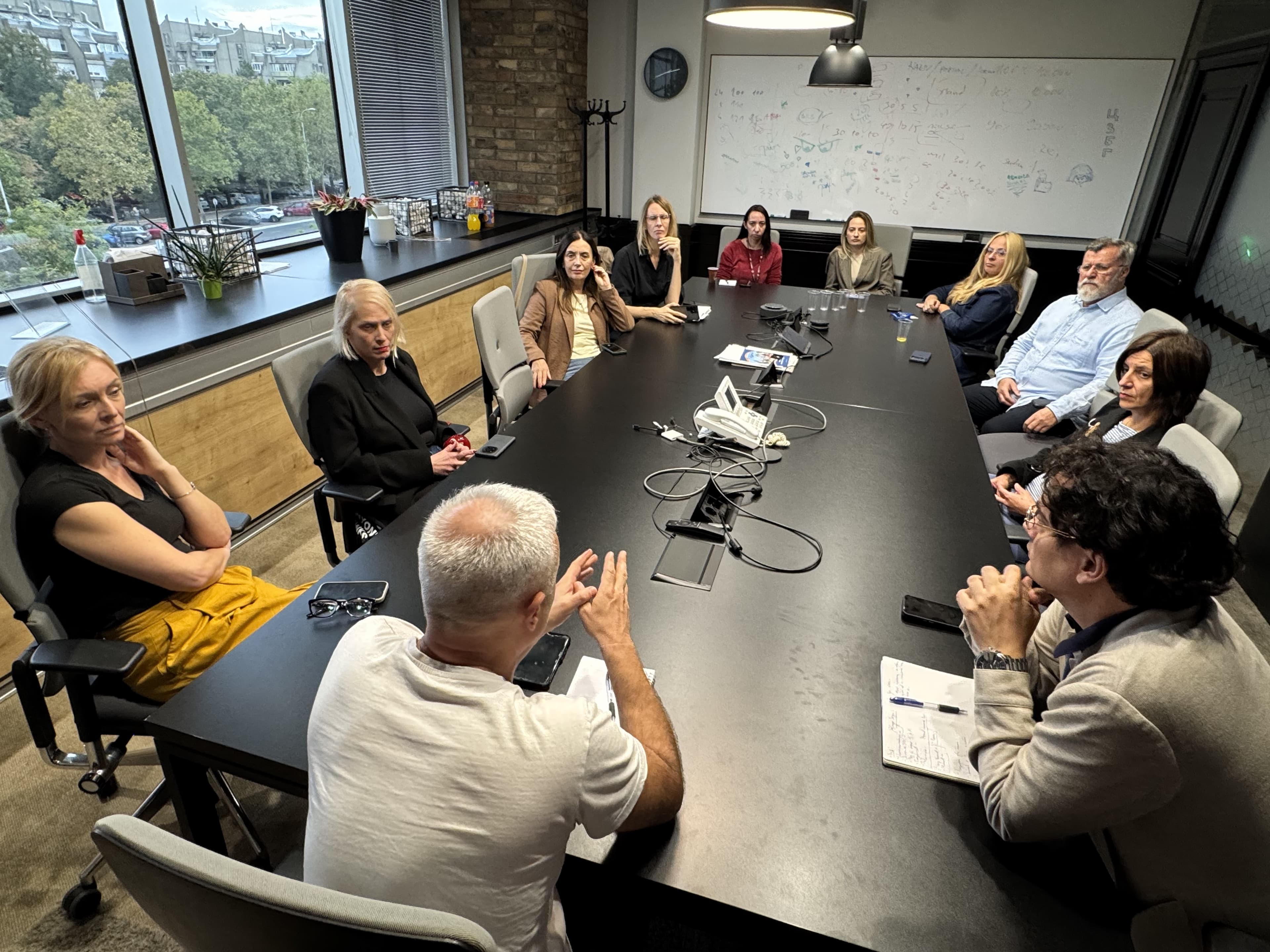
Journalistic associations provided support to the editorial team of Nova.rs: Ongoing communication and updates with international stakeholders agreed upon.

Coalition for Media Freedom: Stop Attacks and Harassment of Journalists During the Election Campaign

.png&w=3840&q=75)