

Trauma-Informed Journalism: How to Report Responsibly on Crisis Situations and Traumatic Events
How can we report on mass killings and other traumatic events in a way that informs the public in a timely manner while simultaneously protecting the dignity of the victims, survivors, and their families? And how can we take care of the journalists who are exposed to trauma through their work?
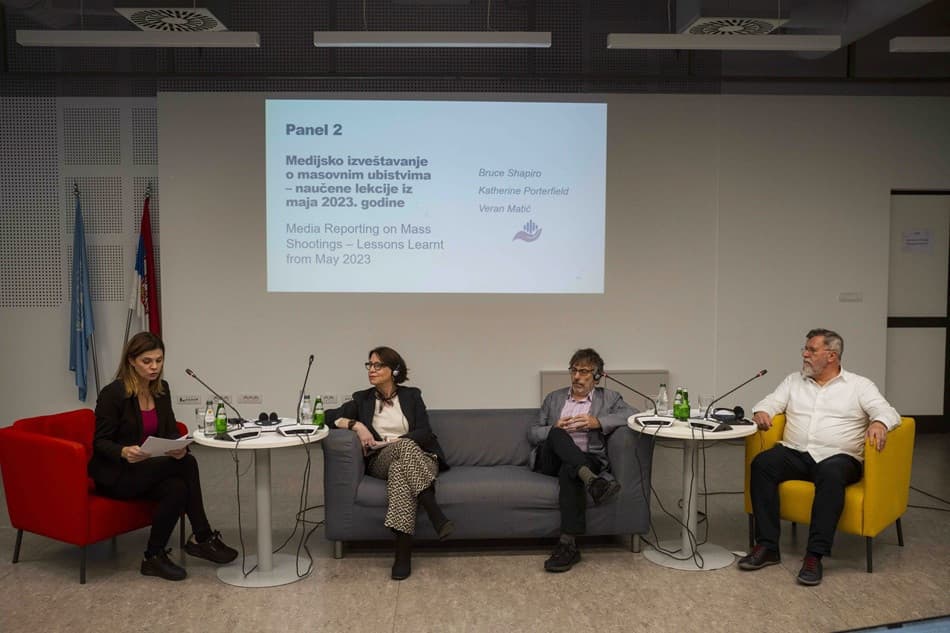
Today, journalists, editors, photographers, and other media professionals from Serbia and the region discussed these issues at the panel discussion titled "Trauma-Informed Journalism: Ethical Reporting in Turbulent Times," held at the United Nations building in Belgrade.
The event was organized by the group Journalists Against Violence, in collaboration with the Global Center for Journalism and Trauma (GCJT) and media and journalism associations, with the support of the United Nations Development Programme (UNDP) in Serbia.
A particular focus was on the experiences of media reporting on mass shootings in Belgrade, Dubona, and Mali Orašac in May 2023. At the beginning of the event, the findings of the Analysis of Media Reporting on Mass Shootings from May 2023, prepared by the group Journalists Against Violence with UNDP support, were presented. The analysis showed that reporting on mass shootings in May 2023 was generally informative but often lacked sufficient context, was characterized by sensationalism, focused on the perpetrators, and posed risks of secondary victimization for families and survivors. At the same time, the media played an important watchdog role in assessing institutional accountability, but their potential to contribute to long-term recovery, dignified remembrance, and informing about available support remained underutilized. The key recommendation of the analysis is to shift the focus from the perpetrators and the sensationalization of tragedy to the victims, public interest, accountability of responsible institutions, and the long-term monitoring of consequences and recovery.
“The way we talk about violence affects how we, as a society, understand it and how we respond to it. When discussing traumatic events, responsible journalism is not only a matter of professional standards but also a matter of trust, empathy, and social responsibility. Therefore, it is important for us to discuss together how to inform the public while simultaneously protecting the dignity and privacy of those affected by tragedy, as well as the well-being of those reporting on it,” emphasized Jelena Manić Petronikolos, head of the Sustainable Development Goals Sector at UNDP Serbia.
Part of the discussion was dedicated to the professional and ethical dilemmas faced by the media during crises, from verifying information and communicating with families and witnesses to the pressure to publish information as quickly as possible and assessing what is in the public interest.
“When it comes to violence with multiple victims, disasters, and other tragedies affecting the community, journalists are the eyes and ears of the public, but at the same time, they are witnesses to the experiences of survivors. Therefore, reporting on trauma is a delicate balance that requires special skills, professional rigor, and a strong ethical commitment. However, reporting on traumatic events can also have consequences for the journalists themselves, which in the most severe cases can lead to a form of 'silent censorship.' Caring for the well-being of journalists, as a responsibility of the media industry, is an essential element of media freedom,” said Bruce Shapiro, executive director of the Global Center for Journalism and Trauma.
Particular attention was also paid to the consequences of working on traumatic stories for journalists. Exposure to violence, human suffering, and distressing content can have long-term effects on their well-being, which is why support within newsrooms is an important part of responsible journalism.
The discussion also covered the ethical challenges of visual reporting, during which the importance of a responsible approach to visual journalism was highlighted. This approach includes careful selection and use of photographs and video materials, with full respect for the privacy and dignity of victims and survivors, as well as a clear distinction between public interest and sensationalism.
The panels featured Bruce Shapiro, Katherine Porterfield, and Gavin Rees from the Global Center for Journalism and Trauma, journalists Dragana Erjavec, Jovana Gligorijević, and Veran Matić, as well as photographer Marija Janković.
“Ethical standards are not a set of prohibitions. They are meant to help journalists and editors make responsible decisions even in the toughest situations – when there is not enough time, when it is difficult to determine which information is accurate, when public pressure is immense, and when the consequences of what is published can be particularly serious. However, we often forget this, which is why it is especially significant that the analysis by Journalists Against Violence also addresses the trauma of media workers due to what they have seen and recorded and how it affects their future professional decisions,” emphasized Gordana Novaković, Secretary General of the Press Council, during the meeting.
In concluding the discussion, participants pointed out the need for further development of practical guidelines that can help the media simultaneously respond to the public's need for information in crisis situations, respect the dignity and rights of affected individuals, and consider the well-being of media professionals.
The event was organized within the project "Reduce Risk – Increase Safety III," implemented by UNDP in Serbia with the support of the Federal Republic of Germany, the Kingdom of the Netherlands, the Kingdom of Sweden, the French Republic, the United Kingdom, and the Kingdom of Norway, as well as with the support of the European Union, through the Multi-Partner Trust Fund for supporting the implementation of the Roadmap for the Control of Small Arms and Light Weapons in the Western Balkans.
Related Articles
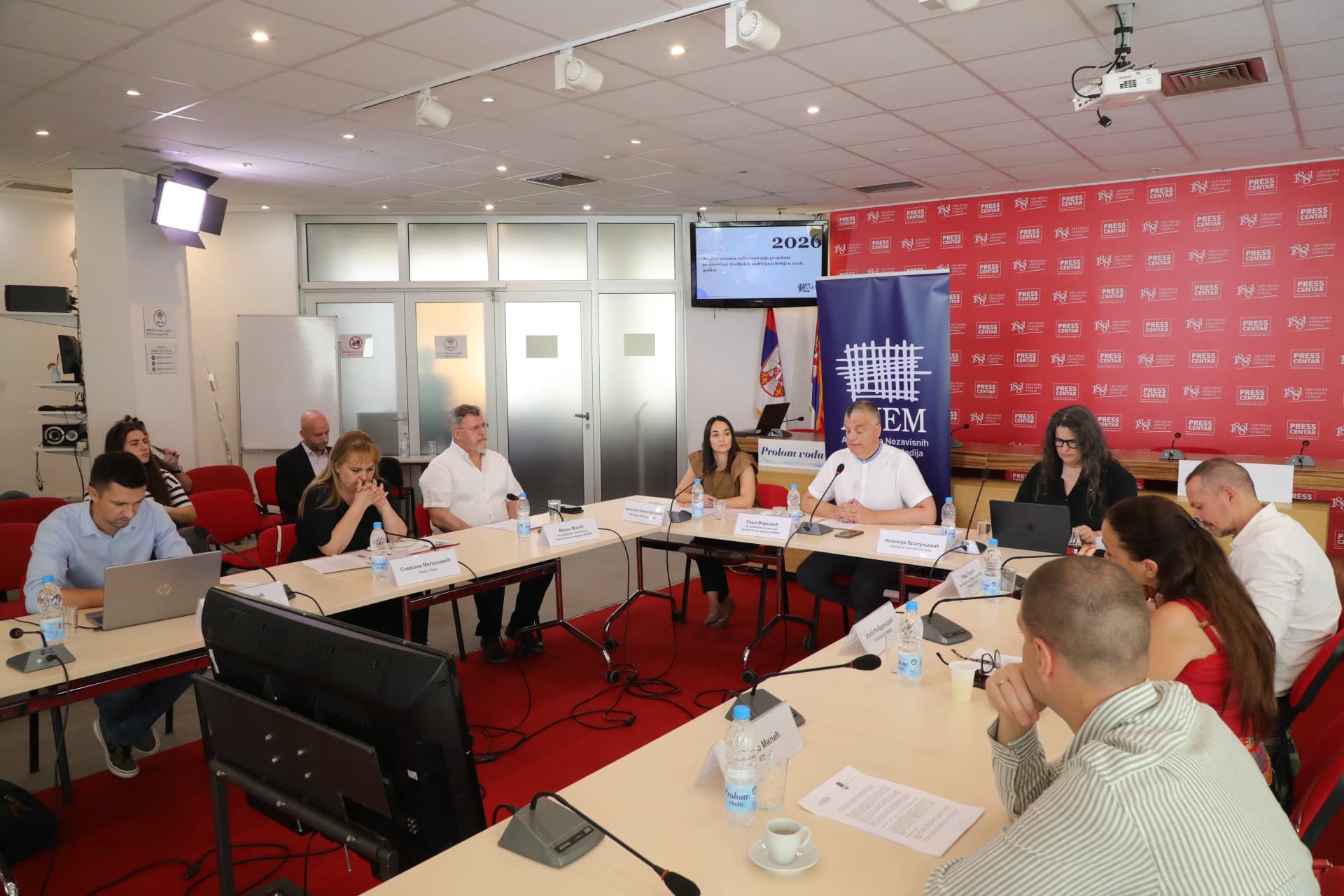
"Project co-financing of media has faced a fiasco": Media and journalism associations have sent recommendations to the Ministry for changes to the process.

ANEM organized a training for journalist safety at the N1 newsroom.


.png&w=3840&q=75)