
Veran Matić and Dinko Gruhonjić for BUKA: The regime targets us, but refusing to succumb to fear is the first condition of freedom.
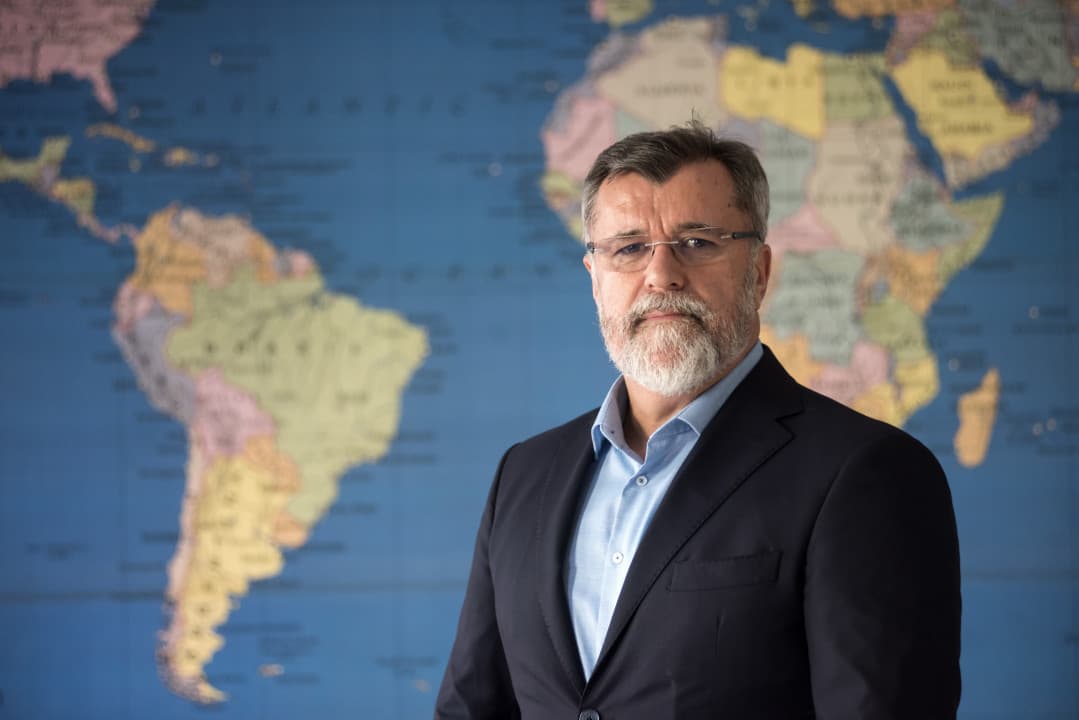
Veran Matić and Dinko Gruhonjić, two journalists and public intellectuals who have recently become some of the most visible targets of regime and tabloid attacks in Serbia, speak exclusively to BUKA magazine about the atmosphere of lynching, strategies of intimidation, and ways to defend the public interest in a country where critical thinking is increasingly treated as an enemy activity.
This conversation comes at a time when pressures on independent journalists, activists, students, and government critics have intensified, and attacks on those who refuse to accept the official version of reality are becoming increasingly open and dangerous. In such an environment, a journalist is no longer just someone who asks questions but someone who becomes a target as soon as they publicly articulate what the government seeks to silence, distort, or label as hostile action.
When the regime attempts to define what is truth, responding to any alternative version with political accusations, tabloid campaigns, threats, judicial pressures, economic exhaustion, and physical violence, the issue of press freedom becomes a matter of elementary security.
How is the truth defended in such circumstances? What are the most effective defense strategies when institutions do not protect those who are attacked? How is the public interest preserved in a society where critics are first labeled as "traitors," "foreign mercenaries," "blockaders," or "enemies of the state," and then violence against them is either relativized or ignored?
Veran Matić from the Association of Independent Electronic Media (ANEM) and Dinko Gruhonjić, a journalist and representative of the Independent Journalists' Association of Vojvodina, speak on this topic for BUKA. They are not discussing this issue from theory, but from the firsthand experience of individuals who have been subjected to hate campaigns, threats, and attempts at professional and personal discreditation for years.
Of the 250 threats and attacks on journalists in Serbia in the last two and a half years, only five have received a judicial resolution, says Veran Matić. Of these, 30 attacks have originated from Ćacilend, an area with the highest concentration of murderers and criminals per capita, our interlocutor states.
This happens because the police do not investigate and do not send the results of investigations to prosecutors, who are themselves divided into pro-government factions and those attempting to work professionally under the same repression, he says. In this situation, judges increasingly rule against the freedoms and independence of the media, he assesses.
Targets are drawn publicly, consequences come on the streets
The regime has extreme views towards dissenters, allowing it to more easily dehumanize, demonize, smear, and turn them into targets, says Matić.
The regime systematically targets critics through synchronized actions of political officials, tabloids, state-run television, bot networks, and parapolitical structures, says Dinko Gruhonjić from the Independent Journalists' Association of Vojvodina. The sequence is clear: first, you are portrayed as a "traitor," "foreign mercenary," "enemy of the state," or "hater of your own people," and then they act surprised when someone interprets that message as a call to violence, he assesses.
This is no longer an accident but a method of governance, Gruhonjić states.
From "traitor" to physical attack: How the atmosphere of lynching is created
It is enough for them to label someone as a blockader, and that becomes a designation for a person or institution seen as an enemy, which should be treated as any other enemy, warns Matić. Tabloids are additionally allowed to lie unscrupulously, amplifying the targeting to unprecedented levels, and this is done primarily as a campaign over an extended period, creating an atmosphere of lynching.
“You are on the street a Ustaša, blockader, traitor, foreign mercenary, and the list of insults is long. You are often spat on, they get in your face, provoking you to give them a reason to claim you are violent… and they hit,” says Matić.
He warns that tabloids do not stop at just lying and insulting. He recalls that the editor and director of the Serbian Telegraph physically attacked Vuk Cvijić, and later, Cvijić was attacked at least twice by members of special police units.
“Recently, Lazar Dinić was attacked with axes, which was assessed as an attempted murder. Our assessments indicate that such a level and intensity of violence, especially against female and male journalists and students, can easily culminate in murder,” he states.
The most common tools of intimidation are public targeting, smear campaigns, threats on social media, SLAPP lawsuits, pressures on families, economic exhaustion, physical surveillance, street intimidation, and increasingly, direct violence, says Gruhonjić.
“The spearheads of this system are the politicians in power, their tabloids, propaganda television, and an army of anonymous or semi-anonymous enforcers who do the dirty work in the field and online,” our interlocutor states.
Institutions that do not protect, but remain silent
The minimum security for regime critics today, unfortunately, almost does not exist, he assesses.
“When institutions do not protect citizens but remain silent or relativize violence, one can only rely on the solidarity of colleagues, international attention, and their own support networks,” he says.
Hybrid war against independent media
When it comes to media and journalists, a hybrid war is being waged against them, says Matić, noting that any flow of money to media outlets is being obstructed. Project co-financing from the state, which allocates about 15 million euros annually for content of public interest, is entirely directed to media that most violate journalistic codes, which daily publish multiple lies just in their headlines or central news, and which typically portray the president exclusively in a positive context, he assesses.
“Those who advertise in independent media face tax police and other inconveniences, leading to media losing advertising revenue. International aid is symbolic and cannot compensate for this action by the authorities,” he states, warning about the international community's relationship with the regime of Aleksandar Vučić.
Matić reminds that a judge from the Appellate Court, along with his wife, a lawyer and former official of the State Security, has sued four journalists from the KRIK editorial team in three cases, demanding prison sentences of 10 months each and a two-year ban on practicing journalism, along with financial compensation.
“There are many other forms of intimidation. Local media are in a particularly dramatic situation. Many have shut down, leaving Serbia with 'media deserts'—entire regions without professional local media. Those that have survived are impoverished and often lack any local protection. Physical attacks have become frequent, and the police not only do not react, do not protect journalists, but actively hinder their work and often attack them. Journalists prepare as if going to war when covering protests or elections,” Matić recounts.
The most dangerous time is when you are alone
The most effective defense strategy is not to remain alone, Gruhonjić states. Every threat should be documented, reported, and publicly disclosed when it is security-wise justified, and connections should be made with journalistic associations, lawyers, international organizations, and colleagues, he warns.
“The regime's favorite targets are isolated individuals because they are the easiest to break. Protecting the public interest begins with refusing to accept fear as a normal state, which means continuing to work professionally. It is essential not to respond with the same hatred, but also not to acquiesce to false civility in the face of violence. Critical journalism and civic resistance today are simultaneously a professional obligation and a form of self-defense for both the individual and society,” Gruhonjić states.
Solidarity as a remedy against fear
Although this struggle is incredibly exhausting—psychologically, physically, personally, and materially—it is also healing, as one sees they are not alone, he says.
“Solidarity is the best remedy against fear, and when you realize that the regime is no longer able to produce silence but rather resistance, then you know that this struggle is meaningful. As wise people say: it is better to fight in vain than to live in vain,” Gruhonjić concludes.
Source: Buka
Related Articles
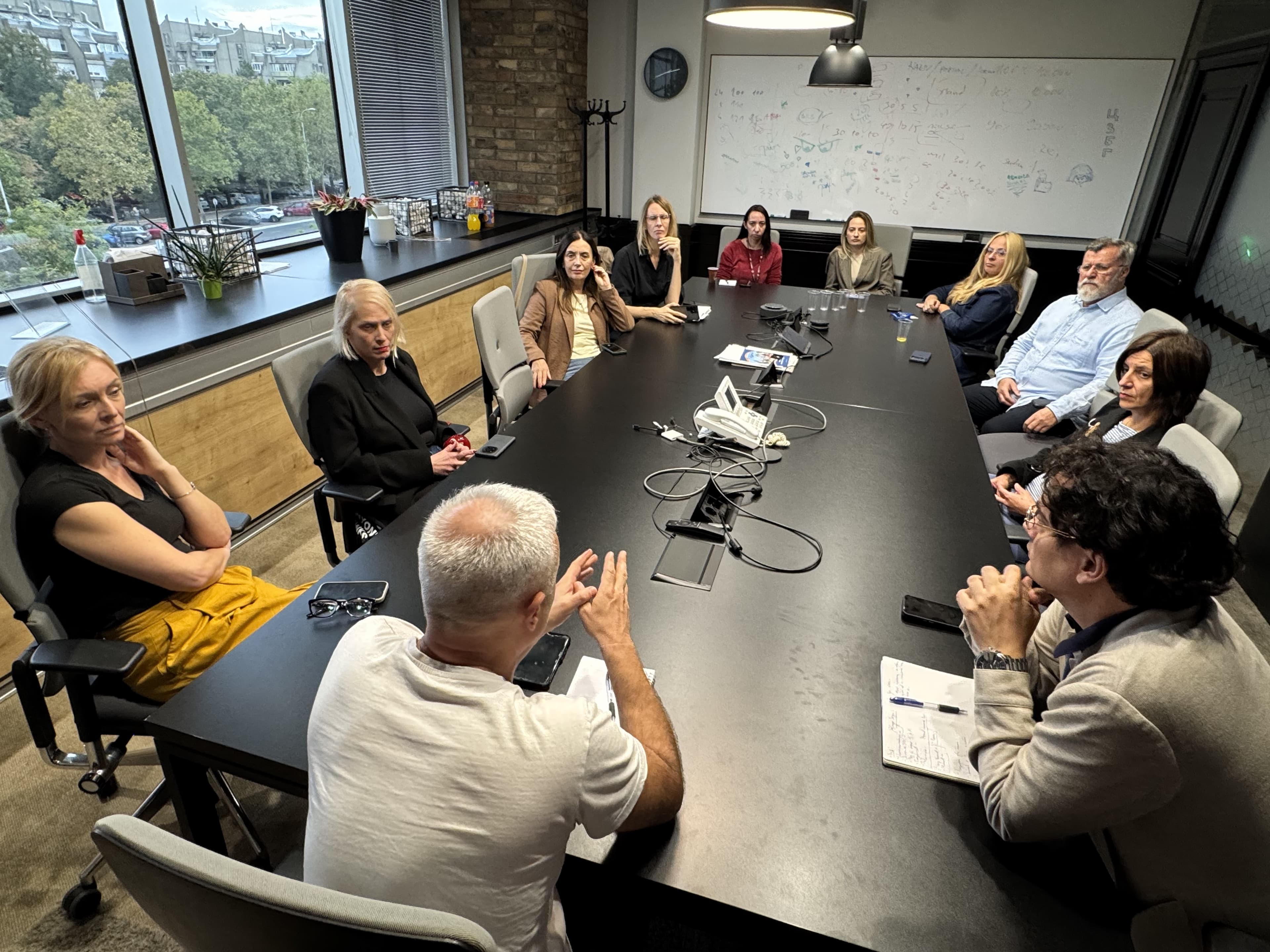
Journalistic associations provided support to the editorial team of Nova.rs: Ongoing communication and updates with international stakeholders agreed upon.

Coalition for Media Freedom: Stop Attacks and Harassment of Journalists During the Election Campaign
.png&w=3840&q=75)