(Mis)use of Media in the Election Campaign: The Regime's Hybrid War Against Journalists
It is likely that the previous attacks are merely preparations and trials for darkening social networks at the moment when the authorities wish to restrict access to independent information, in order to conceal the actual election results and/or information about post-election events across the country.

There is no autocrat in Europe who pays as much attention to the media, social media, and every form of communication as Aleksandar Vučić does. He primarily does this in two ways: by taking over direct or indirect control over the media, establishing loyalist media, and permanently employing an army of bots to suppress independent voices and block or shadow the accounts of independent media on social networks. The second approach is repression, which has not been seen since the 1990s when Vučić was the Minister of Information with the notorious Law on Information that shut down media outlets. At that time, the owner and chief editor of Dnevni telegraf, Slavko Ćuruvija, was murdered.
State of Affairs
Today, of the approximately 2,350 registered media outlets in Serbia, at least 90% of those engaged in informational programming are pro-government in character, with strong propaganda and content that grossly discredits and demonizes political opponents, independent journalists, and media not under government control.
In the past two years, there has been a sharp increase in threats and attacks on journalists, along with a noticeable decline in accountability. Of the three hundred cases registered in prosecutors' offices in Serbia, only 4% of the perpetrators have been punished. For comparison: during 2019, more than a third of cases were concluded with a judicial outcome in the form of some prescribed penalty.
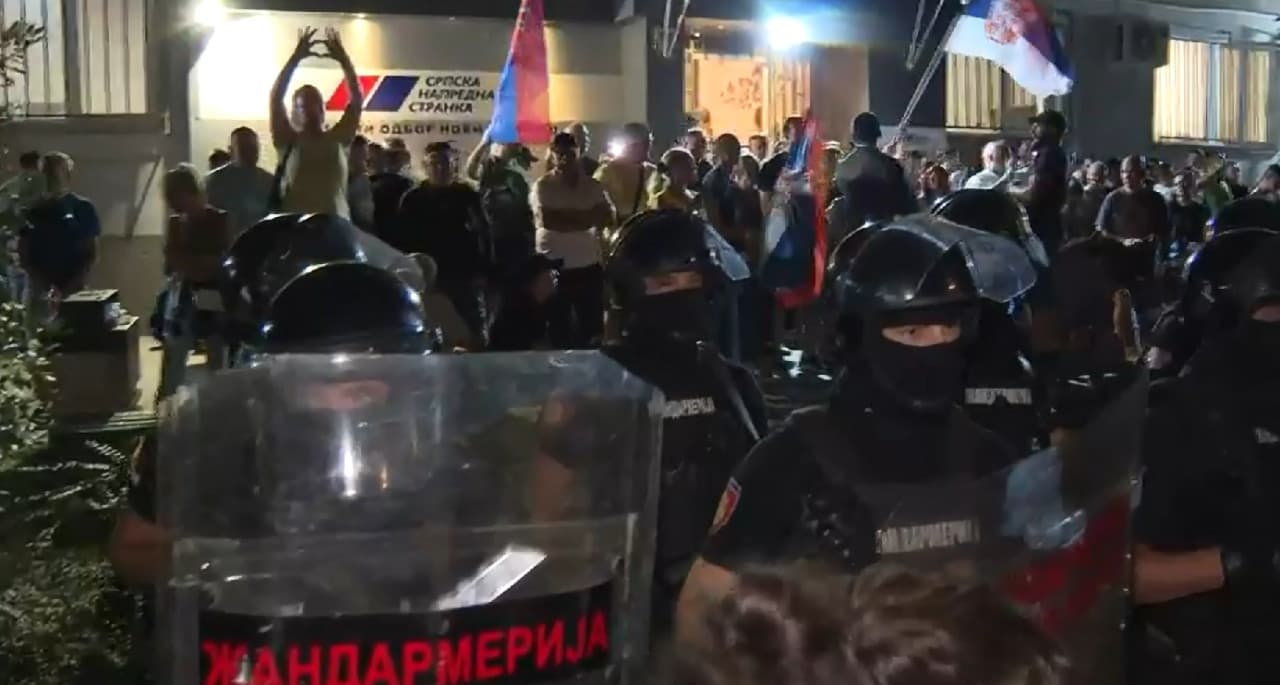
Furthermore, in the past nine months, in more than 60% of the cases of attacks on journalists, the police did not provide the prosecutor's office with the collected information about the investigation. The situation on the ground is even worse – the police not only do not respond to requests from the prosecutor’s office, but their members, although present during attacks on journalists, do not protect them and do not apprehend the assailants. Over the past year and a bit, several dozen incidents have been recorded in which members of intervention units have beaten, pushed, insulted, and humiliated journalists and media workers. Despite reports to the Ministry of Internal Affairs' Internal Control Service, no police officer has been punished.
(Pre)election Violence in Various Forms
During the pre-election campaign and on the very day of the local elections, there were instances of violence against journalists perpetrated by members of the ruling party. In addition to physical attacks and equipment destruction, there was an axe attack that can also be characterized as an attempted murder. The attacks were not provoked in any way – journalists and photojournalists were targeted solely because they were reporting on violence and documenting it. It is evident that this has become a practice that will be used in the upcoming parliamentary elections.
As the President of the Republic, Aleksandar Vučić has obstructed the formation of a functional independent Council of the Regulatory Authority for Electronic Media. He has not hesitated to state that he will not allow independent candidates to have a majority on the REM Council, as he will quickly shut down TV Informer. This falsehood is just part of his unwavering support for defending media that spreads regime propaganda minute by minute, while consistently using hate speech and lies to demonize the opposition, independent journalists and media, activists, students, and others. The result of this obstruction from the highest level is the current dysfunctional REM Council, which cannot significantly influence the sanctioning of violations of the Law on Electronic Media and a series of other legal acts during the pre-election campaign.
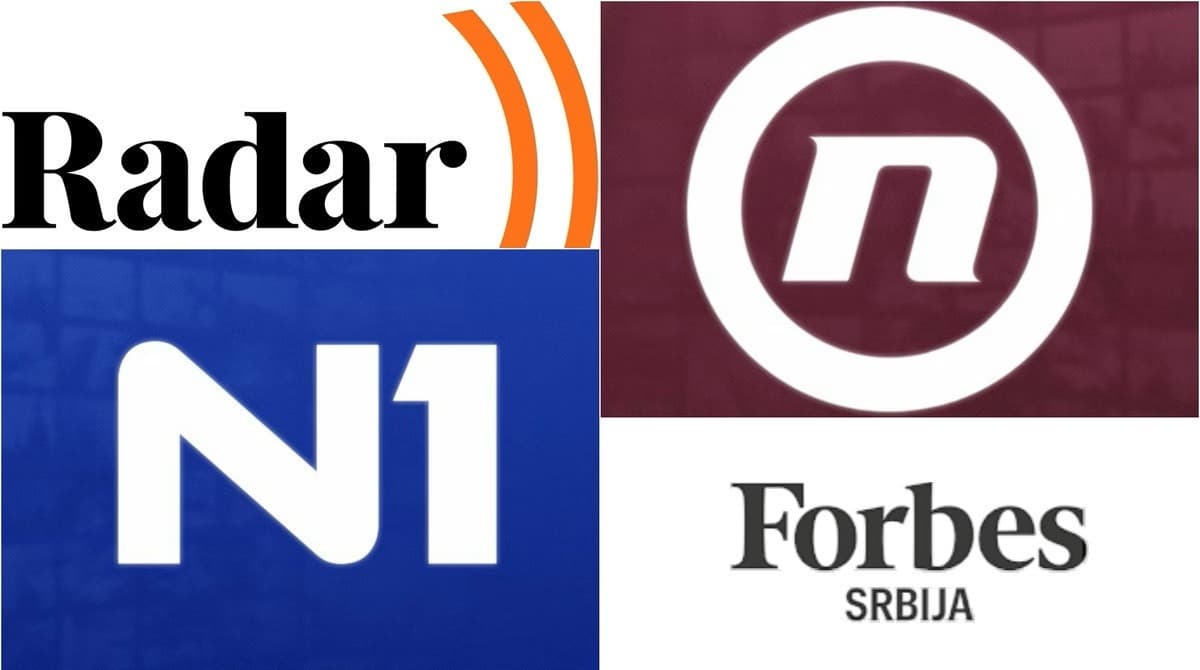
In preparations for the elections, activities to change the ownership structure of the former United Media group – N1, TV Nova S, nova.rs, Radar, Danas – have intensified. The Alpak Group, owners of Euronjuza, who are close to Viktor Orbán and Aleksandar Vučić, announced that they had purchased this media group, but regulatory approvals from Luxembourg, where these media outlets are registered, have not yet been obtained. Despite this, the owner of the Alpak Group registered himself as the owner in the local Business Registers Agency and began changing the personnel structure, first at N1 television, and then at the nova.rs portal. Following the suggestion of the Minister of Information and Telecommunications, the new owner requested a permit for N1 from the REM without notifying the editorial staff and the program director, abusing his personal documents. The director of nova.rs was also replaced, and then a new management team was imposed, brought in from the pro-Vučić Blic. The editorial staff refused to comply, demanding that discussions about the changes take place after the elections, as such changes directly affect the editorial policy and thus the results of the upcoming elections.
In the case of REM's obstruction and the prevention of media control during the pre-election campaign, as well as in the takeover of leading informational professional editorial teams during it, there are clear efforts to ensure the survival in power at all costs. This is done with immeasurable violence against journalists and media.
It is clear that with such moves in the media sphere, the regularity of the elections has already been compromised at the moment this text is being written, two weeks before the parliamentary elections. It is particularly concerning that all this is happening without a serious reaction from the international community, which could – if it wanted – use mechanisms to curb this type of violence from the authorities during the pre-election period.
Mirror of Society
Only in October, the month in which elections and the pre-election campaign are held, there are more than ten SLAPP lawsuits against investigative editorial offices, primarily KRIK and BIRN. The plaintiffs in these strategic lawsuits against public interests are leading politicians, mafia figures, and tycoons close to leading politicians. In the lawsuits, alongside high financial penalties (up to €50,000), prison sentences and bans on practicing journalism are also sought. Investigative journalists are, in addition to these threats, subjected to psychological pressures. They are prevented from doing their work during years-long court processes, which carry numerous threats and unpleasantness. Some editorial offices have been exposed to all of the aforementioned threats, hence the term “hybrid war” against journalists and media arises.
In parallel, for three years there has been a registered use of spyware embedded in the mobile phones of journalists and activists. In addition to domestic versions, for which international relevant institutions have determined that they have connections to the BIA, the use of Pegasus software has also been registered.
At the beginning of the year, several media outlets experienced bot attacks on their websites and social networks, through which access to these sites or accounts was blocked for several days. The same happened with accounts of individuals/influencers who have significant traffic thanks to very professional photos and video clips from protests.
All of this justifies the fear that these are merely preparations and trials for darkening social networks at the moment the authorities wish to restrict access to independent information, in order to conceal the real election results and/or information about post-election events across the country.
In such circumstances, it is clear how much we lack a truly independent Public Media Service, which has been under the complete control of the ruling oligarchy led by Aleksandar Vučić for years, both at the national and provincial levels. The Law on Public Media Services is merely a dead letter on paper, as no program councils, ombudsman, or administrative boards have been elected, whose mandates were extended in a dubious manner through interpretations of the law provided by the Ministry of Information and Telecommunications. The newly appointed general director of RTS is facing serious accusations of not fulfilling the prescribed conditions regarding her election to this position, which further undermines the already severely damaged credibility of this media house, which is primarily financed through the radio-television tax.
The serious impoverishment of media outlets not under government control has also been significantly contributed to by the abuse of project co-financing. During this year, at the local, provincial, and national levels, more than €15 million has been allocated exclusively to pro-government media, further undermining the media landscape that protects and promotes the public interest. This has severely endangered the survival of such media, and a similar pattern is visible in the non-governmental sector, which is critically inclined towards the authorities.
The state of the media is a mirror of the state of the entire society, which is why the upcoming moves of the authorities towards all those who oppose it should be followed with great concern, invoking the principles of the rule of law, which this regime has suspended.
Written by: Veran Matić
Source: Belgrade Open School (BOŠ), Speak Up About Negotiations, No. 137, “The Old Regime on the Edge”, p. 10, available at: Issuu – Bulletin No. 137