
The safety of journalists in Serbia: "From catastrophic to unbearable conditions"
“At the end of this year, we can say that the situation in which media workers in Serbia find themselves is the worst in Europe today and the worst in the last 25 years,” emphasized Veran Matić, the president of the Board of the Association of Independent Electronic Media, in an interview with FoNet.

Other participants in the series "Reflektor" assess that the security situation for journalists in Serbia has never been more alarming, warning that frequent pressures, threats, and attacks create an atmosphere of fear and jeopardize the fundamental principles of free and professional journalism.
Executive Director of the Slavko Ćuruvija Foundation, Ivana Stevanović, stated that this year the safety of journalists in Serbia has deteriorated from a catastrophic state to a horrifying and unbearable one, noting that this is the culmination of something that has existed for many years and is getting worse.
Pointing out that half of the attacks on journalists were perpetrated by the police, Ivana Stevanović questioned what needs to happen next regarding the safety of journalists in Serbia and their freedom to work in the interest of citizens, providing them with accurate and objective information.
She added that there are also "floods" of threats, intimidation, and messages that journalists in Serbia receive on social media from individuals who have adopted the narrative of the authorities and amplify it in the public space.
Ivana Stevanović noted that when the president of the country comes out and accuses someone of being a criminal, a thief, a terrorist, or the commander of a colored revolution—what then can an ordinary person who believes him think when they meet that journalist on the street?
When asked what the media community can do, she said that solidarity has proven to be crucial, as besides physical attacks, threats, and intimidation, there is also institutional harassment of journalists through various lawsuits and judgments that are inappropriate or disproportionate.
"I believe that as a community we must consistently and continuously present these numbers and cases of attacks on journalists and insist that institutions address them," she said.
She added that it is also necessary to constantly inform international partners about what is happening, while simultaneously working with citizens to help them understand what an attack on journalists means.
President of the Board of the Association of Independent Electronic Media, Veran Matić, assessed that previous reports from the Permanent Group for the Safety of Journalists have shown that the safety situation for journalists has sharply deteriorated in the last two years, especially with the protests.
Matić stated that last year the police stopped working on cases of attacks on journalists and began to assist the aggressors; instead of responding to them, removing them from the gathering, or arresting them, they primarily detained the journalists who were attacked and acted against the victims.
He added that in the second half of this year, it has also been observed that intervention units have started participating in attacks on journalists, with more than 20 incidents recorded, as emphasized by Matić.
Regarding the response of the prosecution, Matić noted that there are those who do their job well and handle cases professionally, but on the other hand, there are those who are disinterested or implement state policy just like the police.
Speaking about safety at the local level, Matić pointed out that journalists in those places work in a completely hostile environment and have no one to rely on, adding that the situation during local elections is very dramatic for their reporting.
"It is very important to understand that if we do not help them, they are left to fend for themselves, subjected to a certain kind of targeting, and that is something that absolutely cannot be allowed. The reporting of local journalists and media is strong and irreplaceable for the local community," said Matić.
General Secretary of the Independent Journalists' Association of Serbia (NUNS), Tamara Filipović, stated that since 2008, when the association began maintaining a database to track pressures and threats directed at journalists, there has not been such a large number as this year, exceeding 300.
Noting that these figures are up to the beginning of December, she points out that the number of physical attacks, which has exceeded 100, among which some have resulted in more serious injuries, is particularly concerning.
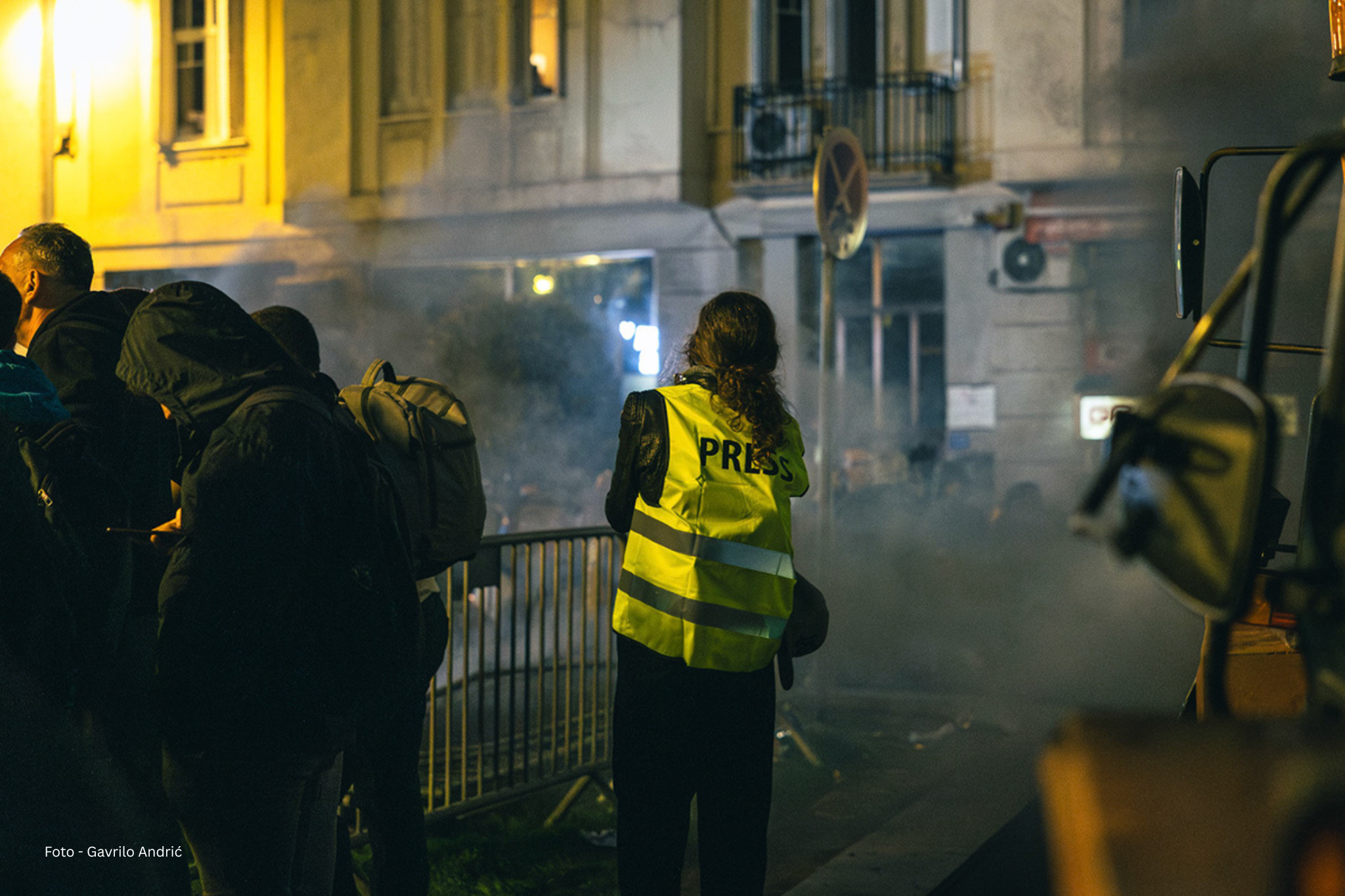
She assessed that journalists are marked by accreditations and vests as targets for attacks, even though these should protect them.
"I believe that it has happened to anyone; it does not necessarily have to be a journalist, but to any person in this country that someone physically attacks them. If a police officer is present, he must respond in accordance with his official duties. That is his obligation; that is why he exists, and that is why he receives a salary," emphasized Filipović.
According to her, the problem is that for a long time journalists and media workers have not had much trust in institutions to resolve their security issues, so they no longer want to report, as they do not see results.
"We must believe that at least some individuals within those institutions are still doing their job properly and want to do it. Therefore, it is important that everything is reported and leaves a written trace. Because maybe someday someone will want to do their job in accordance with the law, and then perhaps some old cases, if they do not expire, will be resolved," said Tamara Filipović.
She further emphasizes that Serbia has been recording the lowest or among the lowest indices of journalist safety for years, even in the Balkans.
"We are always somewhere below three on that scale, meaning ratings go from 1 to 7, where one represents a country where journalists are killed, and there is no accountability for abuse against journalists, while seven represents a Scandinavian country—an ideal environment where you have all freedoms at your disposal and can do your job without any problems," she noted, emphasizing how threes and twos depict a negative domain.
Filipović emphasizes that there is great support from colleagues in the European and International Federation of Journalists and the SafeJournalists network, which are trying to spread the story about the state of freedom of expression in Serbia.
"I believe that this is our last refuge because if people do not know what is happening here, then they will not care. If they know what is happening in Serbia, then perhaps some things will start to move in the right direction, as Serbia is still on the European path," concluded Filipović in an interview with FoNet.
Source: Fonet
Related Articles
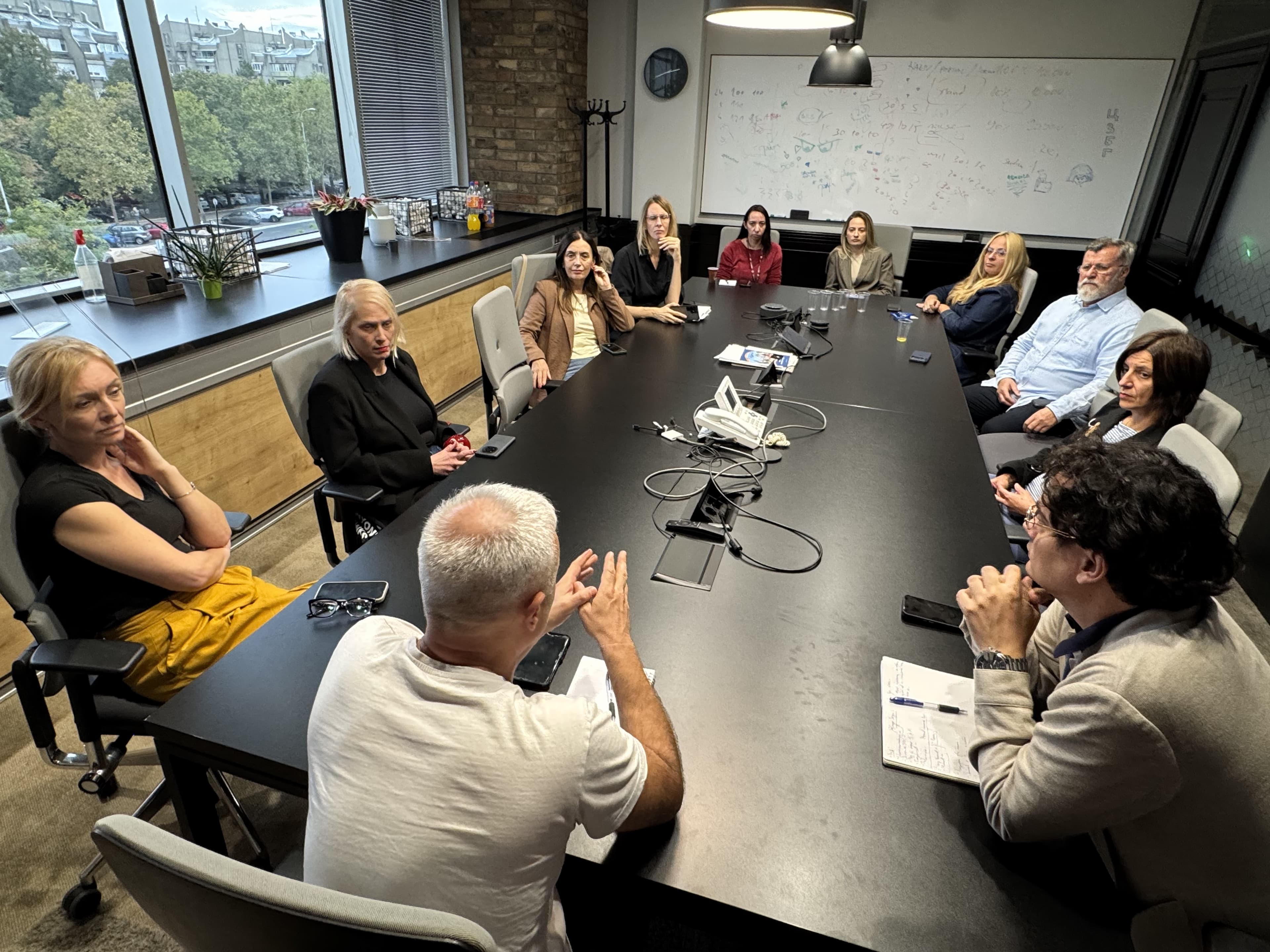
Journalistic associations provided support to the editorial team of Nova.rs: Ongoing communication and updates with international stakeholders agreed upon.

Coalition for Media Freedom: Stop Attacks and Harassment of Journalists During the Election Campaign

.png&w=3840&q=75)