
"Protectors for the Soul of a Journalist"
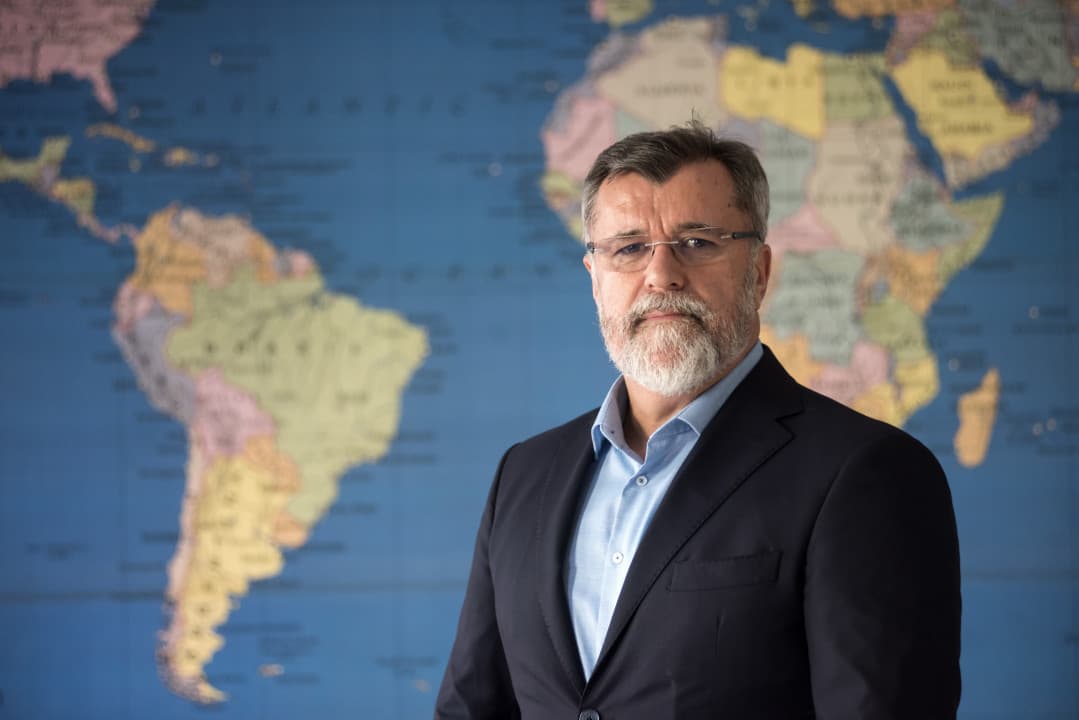
Written by: Veran Matić
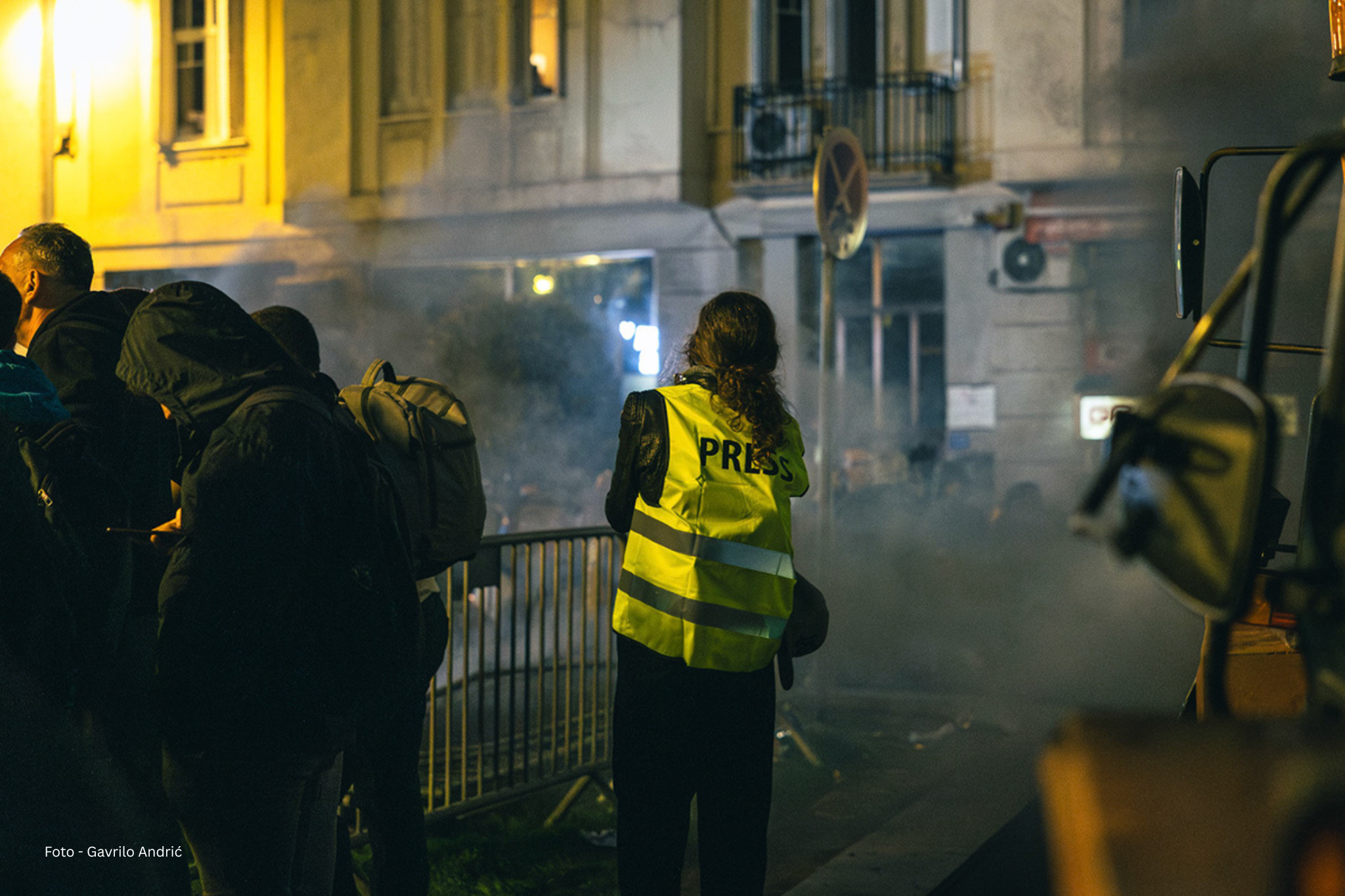
One of my colleagues, who is also the editor-in-chief of the portal he manages – which I believe does not even generate enough revenue for salaries – was among the most targeted during last year while reporting from the protests. He has the required equipment – both a helmet and protective gear, and possibly some form of body armor – but still left the following message on the X network:
“I got up a little after 6 (in the morning, note VM)... I was the first to arrive at 7... among the last to leave after 1 the next day... and all I have from it – an empty fridge and the sorrow of watching everything fall apart...”
This entry struck me because I know both him and all the female and male colleagues who have been brutally attacked and subjected to terrifying threats. They are the heroes of our time. I speak daily with journalists who work on the front lines, and I rarely have the opportunity for them to “open up.” Until a year or two ago, these were brief conversations about where they were attacked and when, how they were threatened – and then we would forward those cases to the prosecutor's office and the police and monitor them. However, for quite some time now, these conversations have been more than just factual accounts. They reveal the full complexity and weight of the situation faced by female and male journalists and media workers in Serbia today.
In addition to the SOS service for reporting threats, we are also becoming those to whom journalists can confide regarding feelings, fear, and anxiety. The violence they have experienced and the brutal threats become the reason for reaching out, but much deeper problems are opened that cannot be resolved with a single criminal complaint.
Scars on the soul, in the mind, in feelings – cannot be protected by helmets and bulletproof vests against knives or 9 mm bullets.
We need vests for the journalistic soul – for mental health that is not only undermined, but is permanently endangered in a state that resembles a state of emergency. And this applies not only to journalists, but the attacks on mental health also extend to their families (in as much as 70 percent of cases).
The first analysis of journalists' mental health was conducted in 2023, after the COVID pandemic. The results were dramatic for all of us, even though we could sense the state of affairs. Since 2020, when journalists were attacked by intervention units, we have been conducting educational programs for safe reporting.
Back then, we were not aware that working under extraordinary circumstances would turn into a permanent condition – an unannounced state of emergency imposed by the authorities in Serbia. The tragedies of May – the mass shootings at the “Vladislav Ribnikar” Primary School, as well as in Mali Orašje and Dubona – instead of leading to social consolidation, were exploited for further polarization and intensification of that state. The culmination followed with the collapse of the awning, resulting in the deaths of 16 citizens, as well as the exposure of systemic corruption on a vast scale in the period that followed.
For the past five years, female and male journalists, media workers, and professional media have been a special target. State institutions, once players in attempts to resolve issues of threats and attacks, have become part of those threats and attacks. The state has become an enemy of journalists and media who strive to report on dramatic events while respecting the code and public interest. Attacks on peaceful protesters, students, and citizens have become regular occurrences – just like attacks on journalists.
In the 1990s, we reported from the front lines of the wars in Croatia, Bosnia and Herzegovina, and Kosovo. Today, war has come to Serbia – at least in terms of media and journalists. A war of the state against professionals. Against those who want a free Serbia.
In the past two years, as this analysis shows, pressures and attacks on journalists are no longer incidents – they have become a systemic condition. Planned and continuous. This “permanent state of emergency” is evident in the rising number of threats and attacks, but also in the decreasing number of resolved cases – impunity is becoming the norm.
What is in play is a strategy of the authorities executed with enormous power and resources. Not only aimed at making Serbia a “scorched earth” without independent and professional media, but also through precise targeting of individual female journalists, male journalists, and newsrooms. Psychological operations combined with violence are being conducted: profiles of weaknesses are created, often targeting families; bot attacks are organized; paramilitary structures, party thugs, and even certain segments of the police are involved. There are also illegal detentions, unfounded accusations, with the participation of prosecutors and judges who become part of such processes. All this is accompanied by a continuous smear campaign in tabloids and on social media, as well as attacks on defenders who go through the same violence.
The goal is isolation, targeting, demonization, invasion of privacy – coupled with impunity.
In such circumstances, self-censorship or the desire to leave the profession easily arises.
Bullying, as well as concern for one's own and family's existence, become dominant sources of threat to mental health.
Attacks are no longer one-sided – they are hybrid. It is not enough to merely threaten or physically attack; long-term smearing, break-ins, SLAPP lawsuits, and exhaustion through legal processes are being carried out, along with additional pressures, and even police violence.
What follows in the coming months may be even harder. The authorities will further intensify repression, which is already among the most pronounced in Europe. Institutions will become increasingly ineffective in protecting citizens and journalists.
Therefore, we will become increasingly important to one another. Solidarity is crucial.
Love your neighbor – the female journalist and male journalist – and protect them.
Today, I saw a message from a female colleague on the platform X, in response to an accusation of making herself a victim, even though she had been targeted, smeared, and subjected to even wanted posters plastered all over the city she lives in, with complete impunity after a years-long process. She wrote:
“To prevent such comments, I want to say: there were months after the wanted posters when I had no salary, when I did not leave the house. Then came the months when I went out, but was intercepted by SNS thugs. All of this was accompanied by panic attacks and complete isolation. Then I started psychotherapy. I began, without exaggeration, to learn to walk, talk, and drive again. I started talking to people again and meeting new people. The least I want is to be a victim. I just seek justice.”
This violence has been ongoing since 2021 and continues, with obvious impunity. Nevertheless, we can be proud of the defense of professional integrity, of the resistance and strength that comes from family, but also from the media community. Today, she operates at the highest professional level in national media, while her family-run local media fiercely struggles without systemic support. And this is not an isolated example of professional and human heroism.
Despite everything – pressures, attacks, and poor working conditions – many journalists still perceive their work as a mission. As something important for society and change.
A female colleague from Mašina, while passing through Pioneer Park, took a few photographs. Surrounded by thugs, and then by police, she thought about the probable arrest that was to follow and was only thinking about how to inform someone to pick up her two-year-old child from kindergarten.
Her journalistic instinct was completely correct. It is an abnormal country in which we live – where thugs are found in the city center, in Pioneer Park, with police support.
Mom is a journalist. And mom is a hero.
Female journalists and male journalists, media workers, must receive free and unlimited psychological support. Support from newsrooms and management to overcome issues related to mental health.
Protection and prevention are also achieved through decent salaries to prevent pressure from concerns about existence. Working hours must be respected by management so that journalists can find enough time for psychological support.
Institutions must be activated, the police must effectively investigate threats and attacks on journalists, and prosecutors and judges must impose appropriate penalties to make violence against journalists unacceptable.
The most vulnerable journalists must receive appropriate protection to prevent them from being seriously harmed and to ensure their lives are protected.
A network of safe houses for journalists.
Raising awareness among all in newsrooms, from journalists to management, about the dramatic state of mental health to increase understanding and sensitivity and to take appropriate measures.
Solidarity among female journalists and male journalists – currently the greatest and often the only support that those struggling with mental health issues can rely on. Therefore, mutual communication should be strengthened and colleagues should “be there” for each other at every opportunity. We should be “guards” for one another.
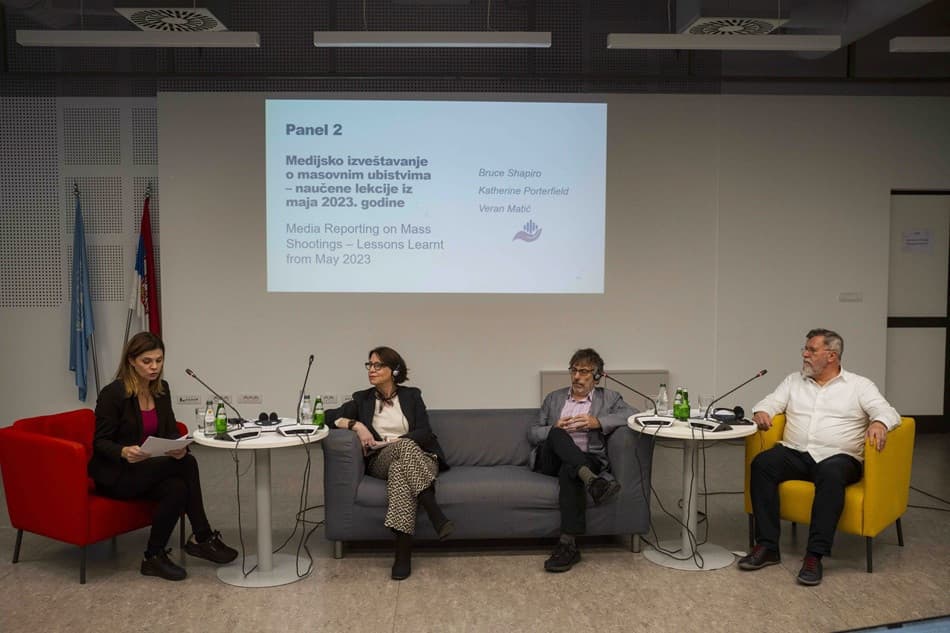
Parts of the text were used in the address by Veran Matić, President of the ANEM Board and member of the Permanent Working Group for the Safety of Journalists, at the presentation of the "Analysis of Journalists' Mental Health" on March 17, 2026, at the Miljenko Dereta venue in Belgrade.
The complete results of the research are available at this link.
Related Articles
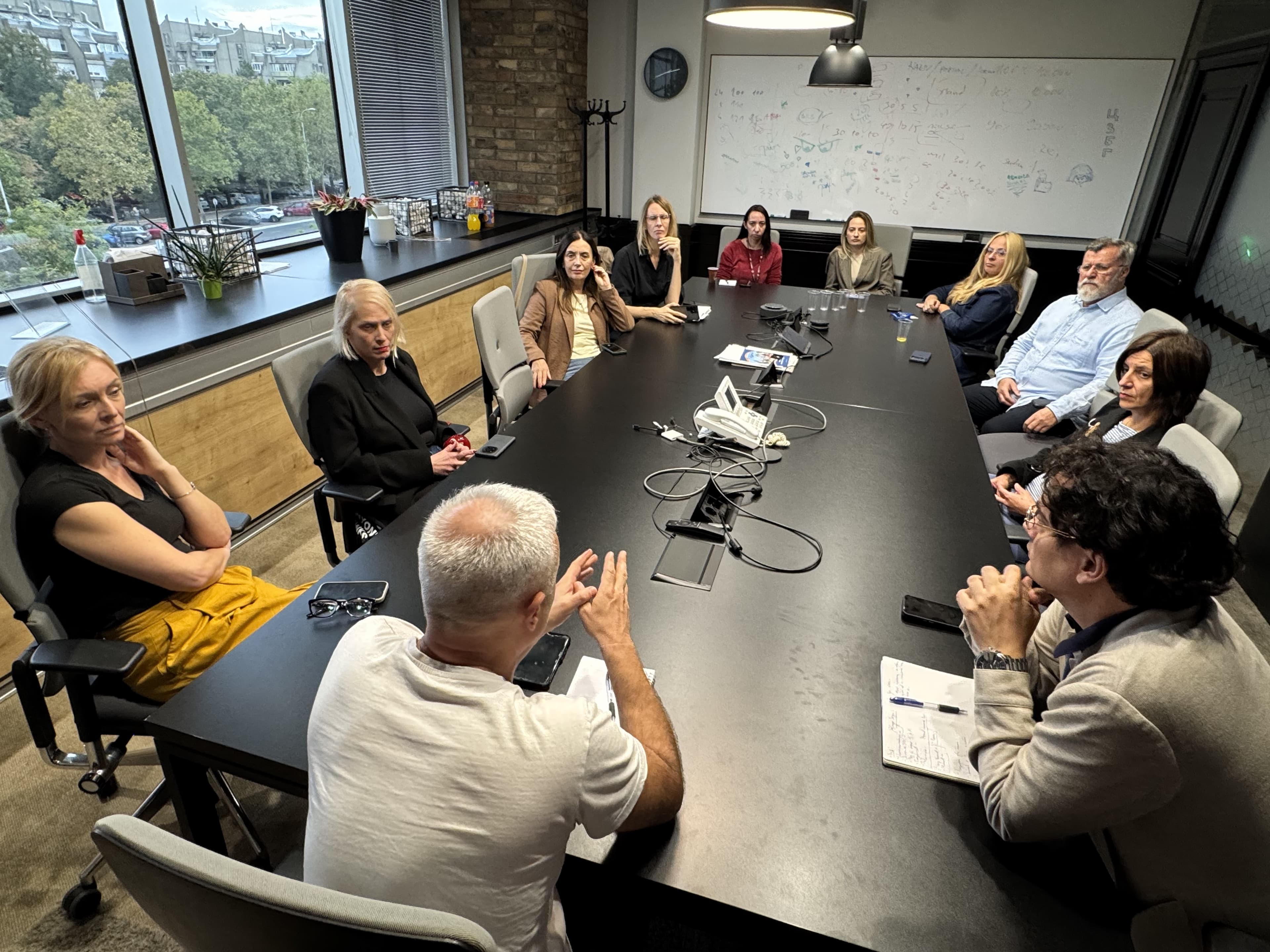
Journalistic associations provided support to the editorial team of Nova.rs: Ongoing communication and updates with international stakeholders agreed upon.

Coalition for Media Freedom: Stop Attacks and Harassment of Journalists During the Election Campaign
.png&w=3840&q=75)