
Instead of justice – new shots at Slavko Ćuruvija
Although he was shot by the Security Service on Easter 1999, during the bombing, the unresolved murder of Slavko Ćuruvija continues to painfully seek answers to a number of questions. Until 2014, the investigation was obstructed precisely by members of that service, which, in addition to journalists, also killed former President of Serbia Ivan Stambolić, Prime Minister Zoran Đinđić, and many others.
In the year when an indictment was raised against Ratko Romić, Milan Radonjić, Miroslav Kurak, and Radomir Marković, Serbia was at a record-high position on the Reporters Without Borders list of media freedoms. Despite constant obstructions, the accused were sentenced twice in the first instance to a total of 100 years in prison. The appellate court acquitted the defendants, although the Supreme Court of Serbia determined that the judgment was rendered with significant violations of the law.
This acquittal resembles more of an amnesty or a pardon.
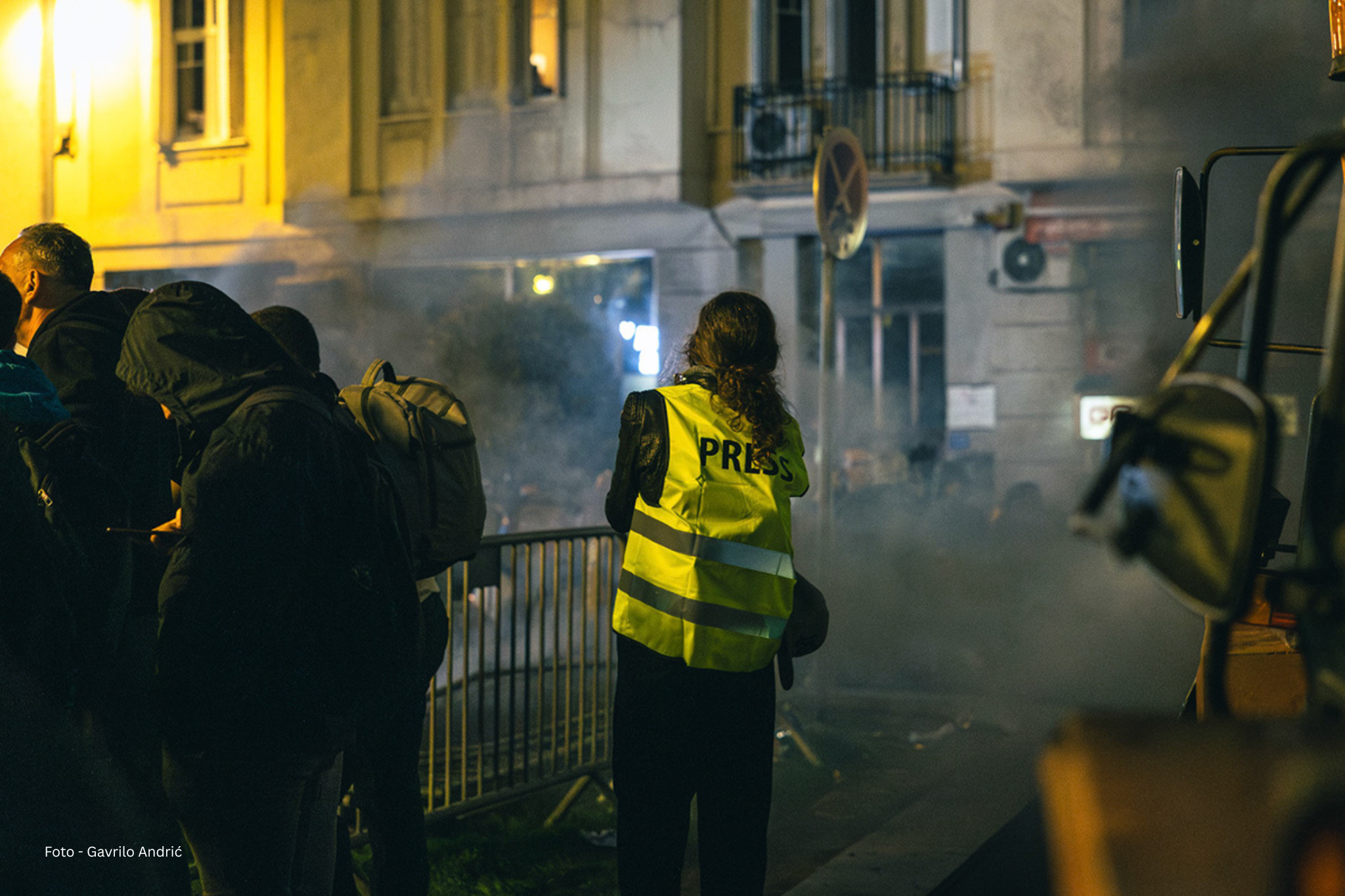
Following this, Radonjić, Romić, and Kurak filed lawsuits against the Slavko Ćuruvija Foundation, as well as a new wave of unpunished violence against female and male journalists. Today, the police not only fail to protect journalists as victims, but they also attack them. Some of these attacks have been characterized as attempts to murder journalists.
Instead of justice and punishment for the murder of Slavko Ćuruvija, we are once again living in a time of the greatest violence against the media and journalists. Everything resembles the period from 1998 to 2000, when Ćuruvija was murdered, numerous media outlets were destroyed, and journalists were imprisoned – a time when the then Minister of Information, Aleksandar Vučić, ruled the media sphere, and today, with much more power, almost absolute, he seeks to completely silence free voices – with even more violence and disastrous results.
Once again, the victims are the family members of the murdered Slavko Ćuruvija and the foundation that has preserved not only the memory of this journalist's work and his murder, but also the investigation itself, through investigative journalism and support for the work of the Commission for Investigating Journalist Murders. Since the day of the murder, Slavko Ćuruvija's family has suffered permanent victimization and insults, especially since their daughter and son established the foundation, helping the development of professional journalism and fighting for the freedom of journalists and the media.
It is bizarre that 27 years after the murder, the Ćuruvija family, through the foundation that bears his name, must pay more than one million dinars to those who were accused, sentenced in the first instance, and then acquitted with significant violations of the provisions of the criminal procedure in favor of the defendants, as stated by the Supreme Court of Serbia – and this is for compensation for non-material damage due to alleged violations of honor and reputation.
Judge Ljiljana Ilić did not take into account the evidence and arguments presented by the Foundation. She conducted the proceedings with a visible lack of knowledge of the circumstances and without a desire to familiarize herself with them. Instead of attempting to understand the arguments of the representatives of the Slavko Ćuruvija Foundation, which was founded by the victim's children, the court devoted its undivided attention to the prosecutors. This is clearly evident from the judgment itself. The judge conducted the proceedings and made a decision relying on the judgment of the Appellate Court, which the Supreme Court determined to have been rendered with numerous violations of the law in favor of the accused and those initially sentenced, rather than relying on the views of the Supreme Court.
The judgment reinforces the impression that is 27 years old that the question of the murder of Slavko Ćuruvija, which has become a symbol of the impunity of journalist murders in international contexts, is dangerous to open.
The condemnation of the Slavko Ćuruvija Foundation has a serious impact on the legacy of Slavko Ćuruvija, embodied in the activities of the foundation established by his children.
The suppression of freedom of expression regarding the acquittal for which the Supreme Court assessed was rendered with significant violations of the criminal procedure continues through more than 20 lawsuits against lawyers, public figures, and university professors who publicly spoke out during and after the ten-year trial.
This case clearly illustrates the reasons for Serbia's downfall in the realm of human freedoms as recorded by the European Commission, the United Nations, the Council of Europe, and numerous reputable international organizations. The “Ćuruvija” case is an example of drastic impunity for journalist murders, a catastrophic performance of institutions (especially the Appellate Court), to which we should add SLAPP lawsuits aimed at intimidating, financially exhausting, and deterring journalists from addressing issues of public importance. Additionally, some of the participants who worked on the investigation of Slavko Ćuruvija's murder have faced threats to their safety and lives, which were never investigated.
Reporters Without Borders, which ranked Serbia 54th in 2014, when the trial of those accused of murdering Ćuruvija began, has recorded a constant decline in media and journalism freedoms during Vučić's years in power, so that Serbia is now at a record low of 104th place this year.
The European Commission has been closely monitoring all details related to resolving journalist murder cases through its oversight of Serbia's obligations under Chapter 23. Through the Commission for Investigating Journalist Murders, it has received regular and detailed reports documenting the constant and systematic obstruction by the state apparatus in this area.
The despotism in which the president amnesties violent offenders who brutally beat and trample people, preemptively absolves ministers accused of criminal acts, and protects those in power, is evidently prepared to punish its own people for the sake of remaining in power and preserving the enormous wealth acquired through systemic plunder.
Free and professional journalism today, as in the 1990s, is crucial for the public to hear and see the facts about the wrongdoings we face every day. Therefore, it is important to do everything we can to prevent new victims and to actively oppose the war that the authorities are waging against independent and professional journalism.
It is time for the judgment against the Slavko Ćuruvija Foundation to set off numerous alarms.
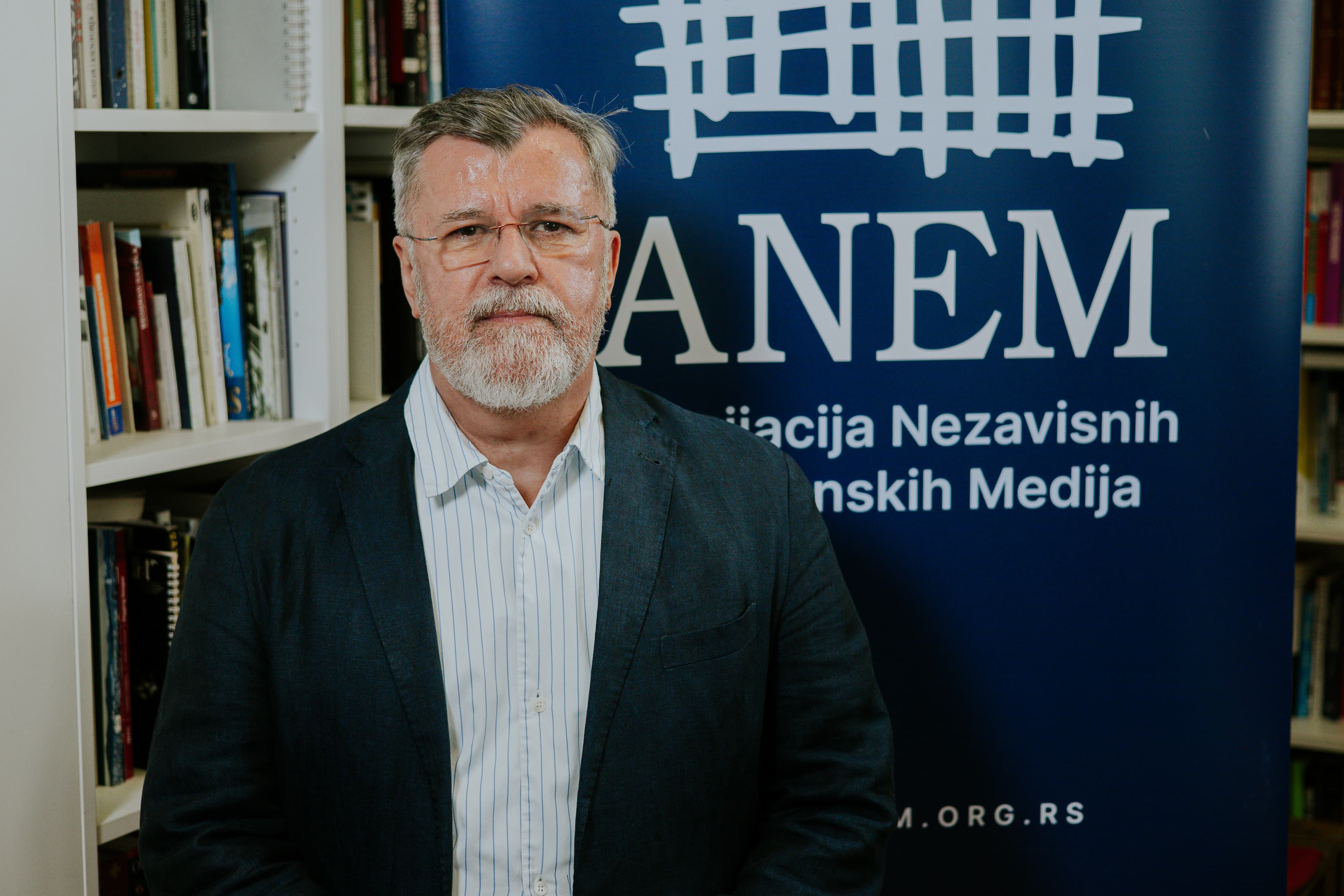
Veran Matić,
President of the Board of the Association of Independent Electronic Media (ANEM) and Chairman of the Commission for Investigating Journalist Murders
The project “Improvement of the System for Prevention and Response Mechanisms in Cases of Threats to the Safety and Life of Female and Male Journalists in Serbia” is being implemented by ANEM in partnership with Insider TV and the Center for the Development of Local Media, with the support of the European Union.


.png&w=3840&q=75)