
Former KRIK journalist at the trial in the judge's lawsuit: A clear attempt at intimidation.
Former KRIK journalist Jelena Radivojević stated today at the trial involving KRIK, following a lawsuit from the judge of the Appellate Court in Belgrade, Dušanka Đorđević, that she believes this is a clear example of an attempt to intimidate journalists. “The judge and her husband requested that no more articles be written about them and that previous texts be deleted – not because anything is inaccurate, but because they claim we do not have the right to write about it, even though the judge is a public official,” Radivojević noted.
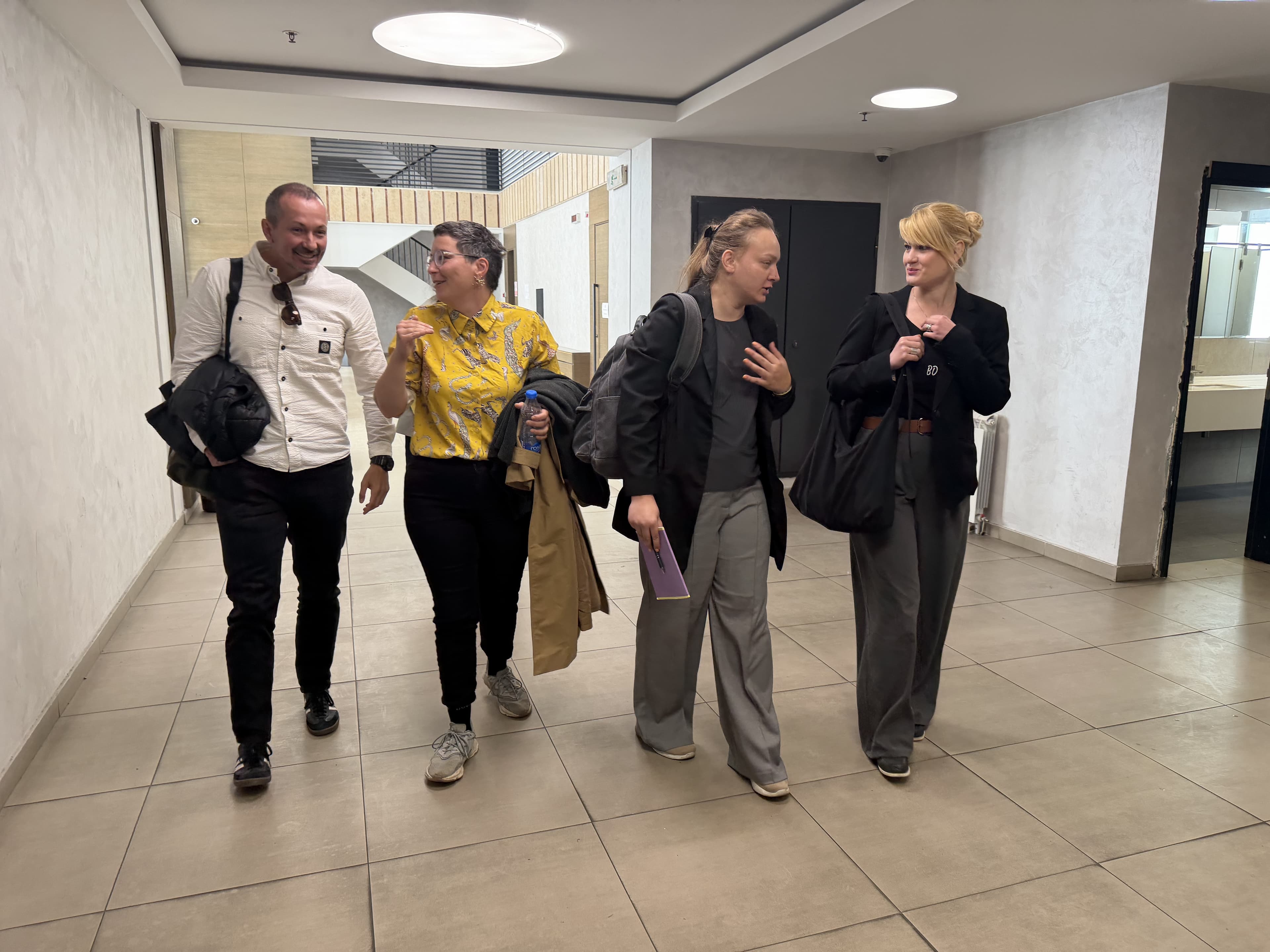
Radivojević, presenting her defense in the criminal lawsuit against her, explained in the courtroom of the First Basic Court in Belgrade that the purpose of KRIK's database on judges, “Prosudi ko sudi,” for which Judge Đorđević filed the lawsuit, is to inform citizens and hold judges accountable.
“We created the database with great care and professionalism, far exceeding the standards of most newsrooms in Serbia, and through this database, we have uncovered numerous investigative stories. A large number of judges wanted to talk to us,” explained the former KRIK journalist.
“That database was created entirely according to journalistic standards, with the idea that the public has the right to be informed. It received an international award and was presented at the Council of Europe as an important project, especially in the context of a country struggling with corruption,” Radivojević emphasized.
She also noted that Judge Đorđević filed the lawsuit, seeking imprisonment and a ban on practicing journalism, six months after she stopped working at KRIK.
“This is an attempt to intimidate journalists. The judge and her husband sought to prevent any further reporting about them and demanded the removal of previous articles—not because anything was inaccurate, but simply claiming that we do not have the right to write about it, even though the judge is a public official,” Radivojević stated.
She, along with her former colleagues who previously testified, clarified that during the investigation of judges, they used a uniform system and methodology and that “there was no different treatment” in the case of Judge Đorđević.
She added that no one except Judge Đorđević found anything legally problematic in their work on the database.
“None of the judges told us that there was anything legally problematic in our work. On the contrary, some judges were very helpful to us, even providing contracts and answering all our questions,” Radivojević added.
The lawyers for Judge Đorđević and her husband were interested in KRIK's working methods, the process of searching public registers, the formulation of requests for access to information of public significance, and they also asked her questions about “who assigned her the task” and whether she independently drafted the email with questions, as well as whether Judge Đorđević and her husband were aware “that data was being gathered about them.”
She explained that she investigated Judge Đorđević because she was following the case of the murder of Slavko Ćuruvija, in which Judge Đorđević presided.
Radivojević also clarified that the data in question is publicly accessible, that she “composed the email herself,” and that “the law does not require journalists” to notify individuals they are investigating.
The next hearing is scheduled for September. The lawyers for the Đorđević couple did not name Judge Đorđević as a witness in their opening statement, so only the testimony of her husband, Aleksandar Đorđević, is planned for the next trial.
**Judge's Three Lawsuits Against KRIK**
The lawsuit against Radivojević is the third lawsuit that the Đorđević couple has filed against KRIK journalists. It is a criminal complaint seeking prison sentences and a ban on practicing journalism for her and Bojana Jovanović.
Previously, in March 2024, they filed two lawsuits against KRIK's editor-in-chief Stevan Dojčinović and then-reporter Bojana Pavlović—a civil lawsuit for alleged damage to reputation and a criminal complaint in which they demanded that the journalists be sentenced to ten months in prison and banned from practicing journalism for two years.
There are currently two proceedings ongoing regarding these lawsuits, one criminal and one civil.
The “Prosudi ko sudi” database was published in 2020 and has since been updated with new profiles of judges. So far, data on 51 judges who have presided over some of the most important court cases in Serbia have been published. For each of them, KRIK has released information about the cases they handled, their assets, and any proceedings against them or their family members.
Despite Judge Đorđević's claims, the database does not contain information that could jeopardize safety.
In her lawsuits, Judge Đorđević states that the published information constituted a call for “public lynching,” that it “put a target on the forehead” of her family members, and that her privacy was violated.
The International Coalition Against SLAPP Lawsuits in Europe (CASE) has identified these proceedings as “classic examples of SLAPP lawsuits”—lawsuits filed without a legitimate legal basis, aimed at pressuring journalists and media to cease reporting on matters of public interest.
KRIK has been facing such pressures for years and is currently involved in a total of 13 legal proceedings. Besides Judge Đorđević, those who have sued KRIK include Predrag Koluvija, accused in the “Jovanjica” case, Aleksandar Vučić's godfather Nikola Petrović, former Minister Jelena Tanasković, and others.
**For more on what is happening in the trial regarding Judge Dušanka Đorđević and her husband, you can read HERE.**
**Source: KRIK**
Related Articles

Journalistic associations provided support to the editorial team of Nova.rs: Ongoing communication and updates with international stakeholders agreed upon.

Coalition for Media Freedom: Stop Attacks and Harassment of Journalists During the Election Campaign

.png&w=3840&q=75)