
Being a journalist in the '90s and today: "Everything is the same, but nothing is the same."
During January of this year, the Independent Association of Journalists of Serbia (NUNS) recorded a total of 38 incidents involving journalists and media workers.

Specifically, there were 8 recorded physical attacks, 8 death threats, and threats to the physical safety of journalists, along with 3 other threats to journalists and 4 threats directed at media outlets. Additionally, 15 attacks on media and media organizations were documented, as reported by this professional association.
In January, a series of coordinated attacks on media and media workers' Instagram accounts was recorded. According to NUNS, these “indicate organized abuse of bot and fake accounts,” as they occurred in short time intervals and followed an almost identical pattern, targeting the suspension or shutdown of media accounts, as well as intimidating journalists and editorial offices.
The network SafeJournalist continuously warns that the safety of media workers in Serbia has been seriously endangered over an extended period.
On the occasion of the International Day to End Impunity for Crimes against Journalists, observed on November 2, this organization pointed to a worrying trend present throughout the entire Western Balkans region: there are many reported and unreported incidents, numerous open cases, and few convictions.
Compared to other countries in the region, Serbia is no exception. Moreover, it leads in the number of pressures and attacks on media workers.
Thus, the database of this network recorded 238 cases of attacks on journalists, of which 136 were reported to the police and prosecutors, while 7 criminal complaints were dismissed, and the courts delivered only one conviction. All other cases, numbering 126, are still open before the prosecutors, and in only two cases have charges been filed.
Additionally, 33 unreported cases were documented, as reported by the SafeJournalist network, indicating the scale of distrust in institutional protection.
Media workers in Serbia are not facing unfavorable working conditions for the first time. One only needs to recall the 1990s, which were marked by wars, isolation, bombing, and political upheavals, during which even the most drastic cases of media worker killings were recorded.
However, despite this grim statistic, the general assessment from journalists interviewed by Magločistač is that the situation today is much more challenging.
Romić: "It’s worse today"
Subotica journalist Zlatko Romić, now a member of the editorial team of “Hrvatska riječ,” was employed at the local weekly “Subotičke novine” in the 1990s. During that time, he actively followed two major waves of protests – the student protests of 1996/97, as well as the protests in 2000 against electoral fraud, just before the fall of Slobodan Milošević.
When asked whether it was harder to be a journalist in the 1990s or today, Romić responds without hesitation:
“It’s worse today. What is common is that it was not easy then, nor is it easy now. Technically, of course, it is much easier to be a journalist today. However, the situation is much tougher than it was in the 1990s, primarily because the circle of violence is expanding to all layers of society. It’s no longer just about journalists, but also about citizens.”
He recalls that at the end of last year, in 2025, a series of incidents were recorded: from attacks on two female journalists, through attacks on citizens, to the burning of the car of a public prosecutor, which is unimaginable for Subotica – a city considered relatively peaceful.
There were incidents in the 1990s as well, says Romić, but they were “mostly the result of frustration and anger from dissatisfied individuals” who at that moment might not have been able to get where they intended.
“Today, it seems to me that all these attacks happening in Subotica and other larger cities are organized. And I wonder – are there lists and who is next,” Romić notes.
For him personally, the most disturbing aspect is that the current regime has turned against the one category of society we should all be placing our hopes in – the youth. “And that is,” he emphasizes, “unacceptable.”
Another problem, he adds, is that citizens have completely lost trust in institutions, which in the public eye no longer hold any credibility.
Isakov: Reporting has become more complex
Subotica journalist Aleksandra Isakov states that reporting from large gatherings, where there is strong emotional expression of citizens' views, is always extremely demanding, sensitive, and potentially dangerous, whether it concerns strikes or gatherings triggered by the political situation and a sense of injustice, as these are situations that are “often unpredictable.”
The common denominator of all such protests is the belief of citizens that they cannot achieve their rights and protection through institutional means, which is why they choose to take to the streets.
“As journalists, we are obligated to track all of this and provide the opportunity for the broader public to express their views because the right to assemble is a right of every citizen. In this way, citizens express their opinions about what is happening in their community,” Isakov emphasizes.
Speaking about the difference between the 1990s and today, Isakov points out that the overall environment is significantly different:
“Back then, not everyone with a mobile phone, and few had them, was a journalist and could send a journalistic report. The media situation was simpler, and various other situations could not influence your report, while today there is manipulation of images, tones, and statements.”
So, were journalists in Subotica facing a harder time in the 1990s or today?
“Somehow we survived those times, and now it seems that it is harder. I think that today it may be harder for journalists, not only because of the difficult situation and violence we observe but also because the credibility of every piece of information needs to be verified multiple times and cross-checked, regardless of where it comes from, to ensure the truthfulness of events,” explains Aleksandra Isakov.
“Kasa managed to save Subotica from destruction” Reflecting on the role of the former mayor of Subotica and then-president of the Alliance of Vojvodina Hungarians Jožef Kasa during the 1990s, journalist Aleksandra Isakov states that he was a contradictory figure who evoked mixed reactions. “On one hand, he was the longest-serving mayor of Subotica and undoubtedly left the deepest mark on the city. He was mayor during one of the most challenging periods for Serbia – at the time of sanctions, conflicting events in society, bombing, and the first democratic changes,” Isakov recalls. She adds that Kasa was very strict with many, but during that period, he managed to save Subotica, maintain peace in Subotica, and stabilize the situation in the city: “He was equally harsh toward nationalist figures and ideas that came from other countries. The demands he made back then, which were not viewed favorably, today represent the foundation of the cultural autonomy enjoyed by Vojvodina Hungarians and other national minorities in Serbia.”
Milanović: From wars to protests, the camera is always a target
The 1990s were extremely dangerous for television crews in Serbia, to the point where working in the field represented a serious risk to their safety, assesses Novi Sad cameraman Aleksandar Milanović in an interview with Magločistač.
He still remembers situations in which, as he says, “thanks to sheer luck” he remained alive.
During the most dangerous periods of his professional work, Milanović highlights reporting during the conflicts in Kosovo, as well as during NATO's bombing of Serbia, which carried the psychological burden of being emotionally very difficult to film war events and the suffering of ordinary people.
According to him, the job of a cameraman brings excitement, adventure, and travel, but that job in Serbia is significantly different from the experiences of colleagues in more organized countries:
“Today, it is most challenging for me to film any gatherings related to the Serbian Progressive Party because we are simply such a divided society, and in the media sense, if you go to such an event and say you work for N1, then you are by default a domestic traitor, a Ustaša… It’s just a question of luck who you will encounter at that moment. Anything is possible – from insults to physical attacks.”
Comparing the 1990s to today, Milanović describes the state’s attitude toward dissenters as “everything is the same, but nothing is the same.”
“Everything is absolutely the same in terms of how the state deals with dissenters. Everyone is a foreign mercenary or a secret agent, a Ustaša… However, there were no social media back then, and there wasn’t this exaggerated fear of the camera, and today everything has moved to social media,” he notes.
This pronounced fear among both citizens and political actors of being filmed by a camera or mobile phone, Milanović believes, contributes to more frequent attacks on journalists and camera crews than during the 1990s.
“At that time, if you found yourself in front of a cordon, you were in the wrong place at the wrong time, and there was a great chance of getting a baton strike on your back. Today, it seems to me that we are more targeted, that individuals intentionally prevent us from filming or hide by wearing masks. They simply prevent us from doing our job,” testifies Aleksandar Milanović.
Matić: Today's attacks on journalists are much more dangerous and complex
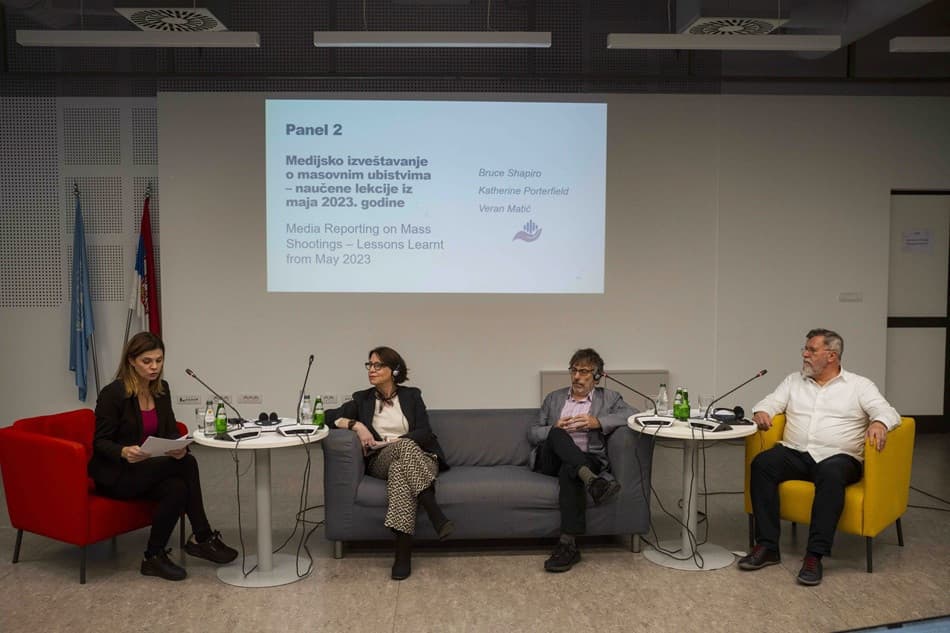
The president of the Board of the Association of Independent Electronic Media (ANEM) and a member of the Permanent Working Group for the Safety of Journalists Veran Matić has no doubt when answering the question of whether it was more dangerous to be a journalist in the 1990s or today: the pressures, threats, and attacks on journalists in the past year are incomparable in intensity and complexity to any earlier periods, as the situation, he assesses, is “much more dangerous and complex.”
During the 1990s, he says, repression was more directed at media outlets than at individual journalists – through work bans, high fines, and political pressures.
Today, however, there is a combination of institutional, economic, and digital attacks.
During the war in the 1990s, about 40 media workers were killed, Matić notes, and the cases we are still dealing with include the death of Dada Vujasinović in 1994, the murder of Slavko Ćuruvija in 1999, and then Milan Pantić in 2001.
“I was detained because journalists were being detained at that time, and I was released due to pressure from the international community. A bullet arrived in an envelope for me, and that was certainly terrifying, but it did not repeat, while today terrible threats appear minute by minute, from various Telegram groups and anonymous accounts, and it is almost impossible to defend oneself,” Matić shares his personal experiences.
He notes that there is no official statistics on the number of attacks on journalists during the last decade of the previous century, and that systematic documentation has only been conducted since 2008 by the Independent Association of Journalists of Serbia (NUNS), and since 2016 also through the documentation of the Permanent Working Group for the Safety of Journalists at the Higher Public Prosecutor's Office.
The reactions of institutions to these attacks, both in the 1990s and today, are equally inadequate, with the difference that they practically did not exist before, while now formal mechanisms are established but do not function.
There is a lack of effective punishment for perpetrators, emphasizes Matić, citing the fact that according to the latest records from last year, in 2025, there were only two final judgments for endangering the safety of three journalists – one in the case of the attack on Verica Marinčić and Miodrag Blečić from IN media, and the other in the case of the attack on N1 television cameraman Marjan Vučić.
In such circumstances, he concludes, it is essential for editorial offices, journalistic associations, and society as a whole to pay more attention to protecting journalists, as it is, he emphasizes, “only a matter of time before someone suffers serious harm.”
Source: Magločistač
Related Articles
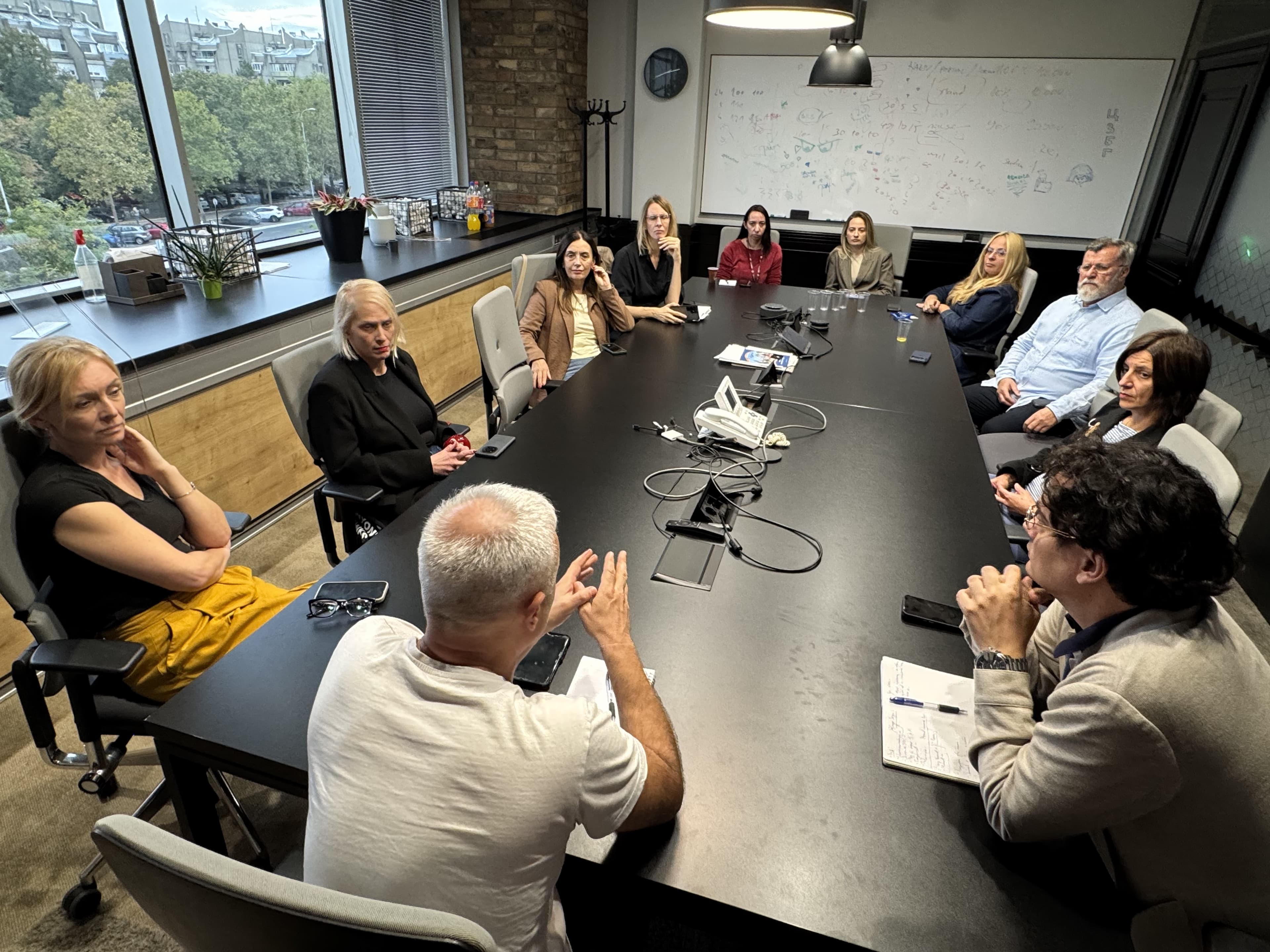
Journalistic associations provided support to the editorial team of Nova.rs: Ongoing communication and updates with international stakeholders agreed upon.

Coalition for Media Freedom: Stop Attacks and Harassment of Journalists During the Election Campaign

.png&w=3840&q=75)