
Gavrilo Andrić: The attack in Negotin was the most horrific; the police officer was practically an accomplice.
Gavrilo Andrić is one of the photographers who marked the student protests. Many will remember them for the footage he captured. Perhaps that is why he has been physically attacked so many times. In some of the attacks, the police were involved. He does not understand why, as a society, we do not respond more seriously to violence, but at the same time, he testifies to how photographic civic engagement can be beautiful.
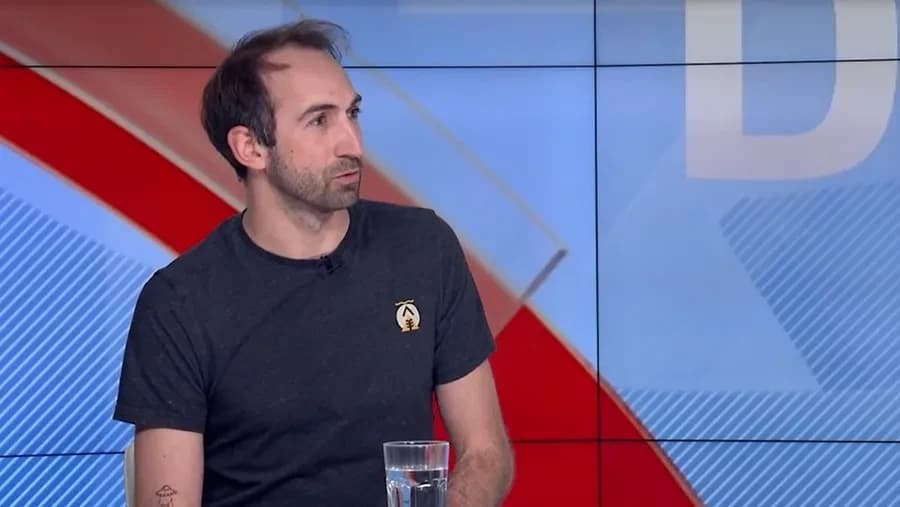
“The attack in Negotin was the most terrifying. It has happened before that I was hit. But now, for the first time, after my phone was violently taken from me, after I was hit, when I tried to retrieve it with a group of people, a group of men rushed out from the Serbian Progressive Party's offices and started beating us without a moment’s 'warning.'
In the past, they would try to scare us off, to make us move away, but now they immediately started punching the gathered citizens in the head. This really must wake us up,” said Gavrilo Andrić to Cenzolovka, an IT expert by profession and, unofficially, one of the official photographers for student platforms since the beginning of the protests.
The attack in Negotin on this photojournalist was the sixth, highlighted ANEM, which reminds us that Andrić has also been unjustly detained and identified before, with the police obstructing him and physically preventing him from working, and he has received death threats.
There have been more attacks against him, our interlocutor adds, and for that reason, as well as the police's inaction, he has filed reports with the Internal Control Sector of the Ministry of Interior.
“In Negotin, not only did the police not react, but they are also an accomplice in everything that has happened, from participating in election rigging to failing to do anything to reduce violence. This is the last point before something much worse happens. Minister Ivica Dačić must face greater pressure,” concludes Andrić.
Cenzolovka: Was the attack in Negotin the most terrifying?
Gavrilo Andrić: Absolutely. Every line of security I had in my mind lost its meaning the moment the thugs rushed out and started beating people. By sheer coincidence, no one was seriously injured or much worse than that. Previously, when my phone was taken, I tried to report it to the police, and they said I had to go to the station to give a statement. I showed them that I knew where my phone was, I saw its location on another device, it was in the parking lot in front of the Serbian Progressive Party, but they refused to act. The police are practically accomplices.
PHOTOGRAPHY AND ACTIVISM
Andrić: I have been participating in protests as a citizen for a long time, and I have been disappointed several times. I realized that if I get disappointed and give up, nothing will change for sure. I looked at what my next engagement could be and decided to take up photography as a hobby, to work and enjoy. And so I started photographing protests on the street. This has been going on for a couple of years, but last year it reached a slightly different audience.
From the start, I followed the work of the students. They recognized that I was somehow supportive; I try to respect their rules, which are often challenging. I made an effort to learn how to work while respecting their privacy, which was a challenge for me in the beginning. All in all, this interesting role shows how civic engagement can be beautiful.
Pure Caprice
Cenzolovka: Were you attacked while standing on the street and filming?
Andrić: That was their pure caprice. I was standing in the middle of the street, filming, and they were passing by me. One approached me, and his co-driver hit me and grabbed the phone from my hand. As I chased after them, another one who was passing behind kicked me, and I fell into the street.
I got up and continued to chase them for about 50 meters and found myself in front of the SNS offices. At that moment, there were more people with me, students and citizens. Then the thugs rushed out from the SNS premises, and the incident occurred.
It’s a scandal! I am very angry at the police, and I am quite sure that I will file reports with the Internal Control Sector due to their inaction. I have the names of certain police officers, and I think we need to build a society where there are consequences.
Cenzolovka: Do you see the attack as a consequence of the practice of impunity for attacks on journalists and media workers?
Andrić: When there are no consequences, of course, such behavior will continue, considering how many of these cases there are and how they are handled. It is very clear that these people have a free hand to do whatever they want. It’s not just that no one has been convicted; we also lack initial protection on the ground. We saw what happened at Nikola Pašić Square when a camera was broken for the N1 team.
A whole series of such events is a clear indicator and motivator for people attacking media workers that it is completely okay to continue doing this. Most attacks happen in the presence of the police.
Cenzolovka: In August, a police officer hit you?
Andrić: It’s not just criminals beating people on the street, but also the police, who directly attack journalists. They often go straight for the camera. I have witnessed that. It’s a clear attempt to remove information from the public's view.
And when it escalates a bit, it happens that the commander, before the action starts, declaratively explains that there are media workers present, and then asks his colleagues to take care of our safety. It is very performative.
I was present when the commander of the Belgrade Police Brigade, Repac, communicated this way and allegedly provided some kind of security, while two days earlier, he had attacked me on the street. How the police act and how the prosecution then functions sends a very clear message that we are not welcome, that we are a danger to autocracy.
WE COULD NOT ACT, THERE WERE TOO MANY CAMERAS
Cenzolovka: Is the goal of the attack to prevent the public from seeing that photograph?
Andrić: That is not a presumption at all. On the ground, I have heard a thousand times police officers telling other colleagues to be careful how they act because there is a camera present. I could hear that all over the country, in different situations.
The first time I heard this was during the arrest of a student in Novi Sad, on November 5 of last year. A team of 7-8 plainclothes police officers was arresting a student from the Academy of Arts, dragging him behind buildings down the street, and they called for the intervention unit. When Goran Ješić got into a conflict with the police, that guy somehow managed to free himself, and I heard members of the intervention unit scolding the others because they failed to arrest one person. And they responded, “we couldn’t act; there were too many cameras.”
I was the first camera there, photographing, and very quickly, an N1 team arrived, which had a live broadcast, and other journalists started to gather. That live broadcast also gives a sense of security that there will be no attacks while it is ongoing.
SNS Official Hit Me in Front of the Police Station
Cenzolovka: Has anyone been held accountable for the attacks against you?
Andrić: I have one closed case, in a very poor manner. When a local SNS official, the director of the Tourist Organization, hit me in Kosjerić after the elections, he entered the police station, hit the camera while I was photographing, and it hit me directly in the head. I tried to report it, but the police essentially prevented me from doing so. I was persistent; I returned to the police station a few hours later, around two in the morning, and filed a report.
The case was closed by determining that a warning measure should be issued to that person, to be careful in the future. This is completely absurd because he hit me in the head in front of the police station while I was photographing.
Two cases of threats were combined into one; we have suspects, it is currently in court, and anything is possible. They threatened to kill me via messages. I was attacked, as far as I know, by the police commander in New Belgrade, in broad daylight, while students were displaying banners in front of the Sava Center. He tried to grab my camera; there is also a recording, even though I was clearly marked as a journalist and showed him my ID.
It was reported to the Internal Control Sector, but it was dismissed with the explanation that I refused to identify myself. That is not true, and it can be seen in the recording that it is not true.
I have appealed further. I try to report everything, even though I have not encountered positive outcomes. I want everything to be documented; I will not give up because everyone must be held accountable for their actions.
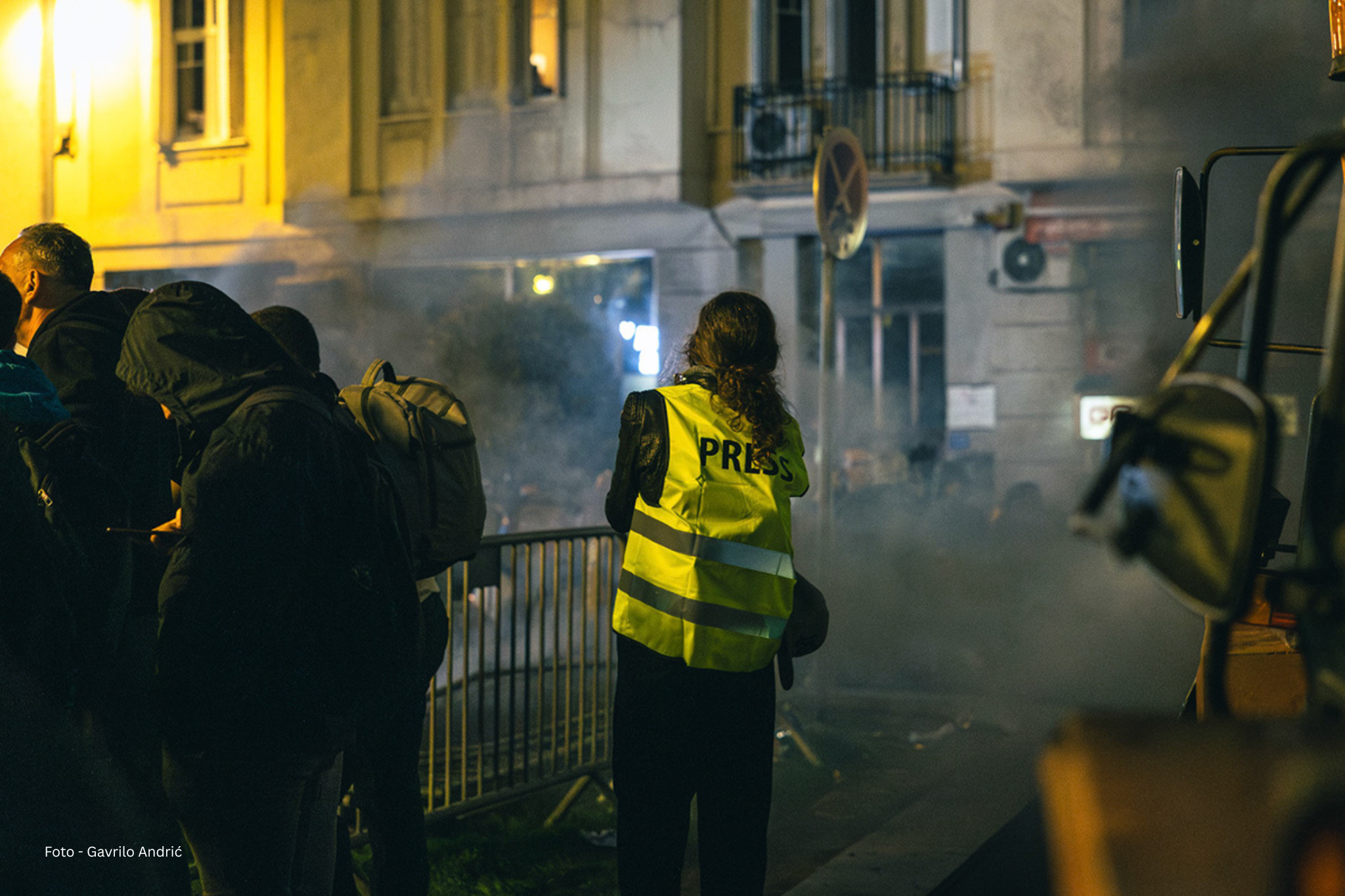
Cenzolovka: Since March, it has become clear that photographers and cameramen are the most targeted group of media workers at protests. How do you protect yourself?
Andrić: As the situation on the ground has become warmer, there has been an opportunity to build experience every second on the street, to train my senses, to pay attention to what sounds, movements, colors… Very dedicated to this, I read and watch, asking more experienced people. To make everything safer, protective gear helps: helmet, gas mask, jacket, long pants…
Over time, you learn where the police's and certain people's tolerance zones end, and you shouldn't cross those lines. The most important photographs are often taken if you are close to the event, and that is not simple. With a lot of thought and observation from the sidelines, it can be much safer.
Blokada.info
Cenzolovka: How much does being a member of NUNS help you with reports and information?
Andrić: It helps a lot. Honestly, I wouldn’t know how to do it on my own. I wouldn’t know some things, and I also wouldn’t have time for others. That is a great benefit that membership in such an association provides.
Cenzolovka: You are a direct participant, a witness to events, and you have the opportunity to observe the media reporting from the protests. Besides traditional media, we also have Blokada.info, student platforms… How have they, as young reporters, managed to master everything important to report to the public?
Andrić: Very good question. Considering that I am also learning, I would say that Blokada.info is a great example of young people who, in extremely difficult conditions, try to deliver important, relevant, accurate information, even from multiple angles. And they do all this voluntarily. That’s phenomenal! I see them on the ground, and their effort deserves a “bravo and thank you.”
Cenzolovka: Your work, the photographs that visually capture everything that happens, are most visible on Instagram. What motivates you the most?
Andrić: I try to show something beautiful that motivates whenever there is an opportunity. I have no motivation to look at something ugly and frightening, so I even avoid sometimes photographing such things or keep them in my archive. Going to an SNS gathering and chasing tortured, intimidated people who don’t know where they are going, with their pants burned down to their knees, should not be a motivator. It’s much more motivating to photograph students putting up a banner over the Gazela at five in the morning. At a time when such young people could be enjoying themselves in the city. That photograph motivates people, and many times, people have told me on the street – I saw your photographs and decided to go out.
WHY DON’T WE AS A SOCIETY REACT MORE SERIOUSLY?
Andrić: It is hard for me to understand why we do not react a bit more seriously as a society. I often have the impression that each of us must experience some catastrophe to understand what is happening to others. All this intimidation and attacks are attempts to send a message to all of us engaged in this work that we will not be protected. The common thread in all of this is that we do not have a state that reacts when we are attacked, and this has escalated in the past year.
Author: Jelena L. Petković
Source: Cenzolovka
Related Articles
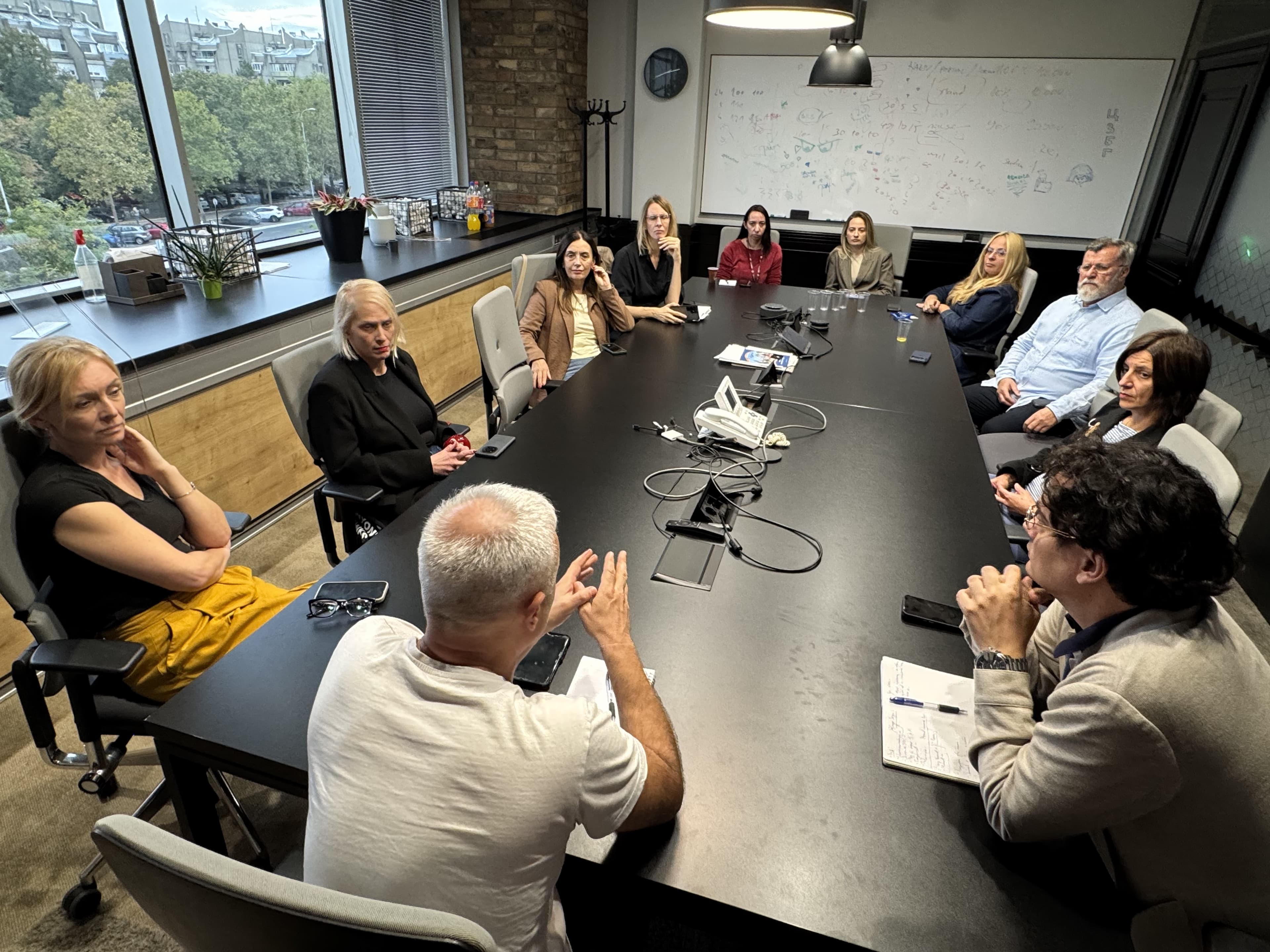
Journalistic associations provided support to the editorial team of Nova.rs: Ongoing communication and updates with international stakeholders agreed upon.

Coalition for Media Freedom: Stop Attacks and Harassment of Journalists During the Election Campaign

.png&w=3840&q=75)