
Attacks on Professional Journalists: Almost an Unpunished Sport of the Progressive Regime
According to the data from the Supreme Public Prosecutor's Office, in 2025, there were four times more physical attacks on journalists than in 2024. Verbal attacks are almost a daily occurrence. How can one protect themselves when the repressive regime has no intention of safeguarding those who criticize it?
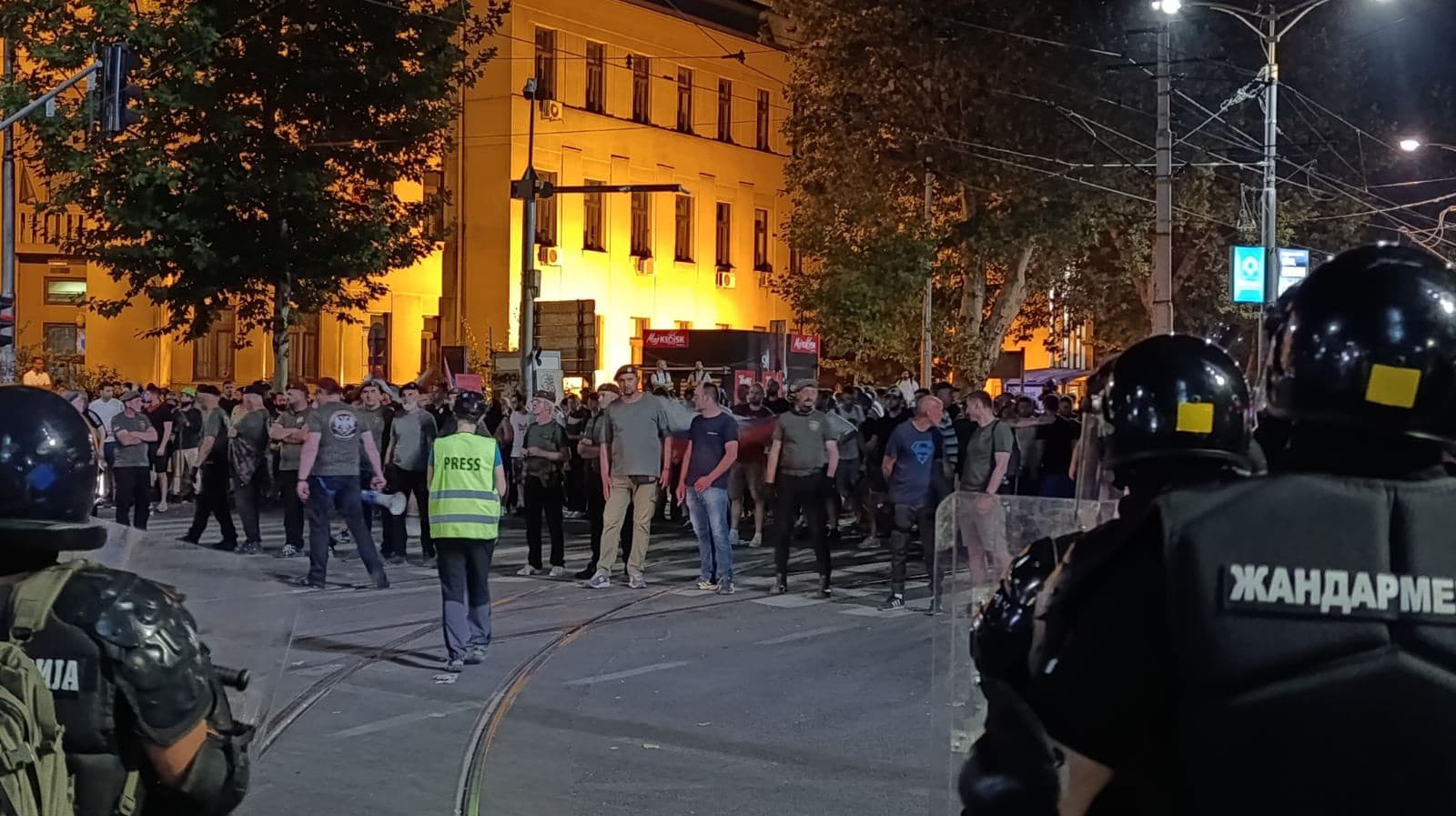
The attitude of Aleksandar Vučić's regime towards attacks on professional journalists, or rather, the de facto impunity of those who verbally—and increasingly physically—aggressively target journalists, is a clear indicator that the authorities and the state do not wish to protect journalists from attacks, as this would require them to sanction themselves.
On the contrary, high-ranking state and party officials, without hesitation and with malice, in their public appearances and addresses to the media, through targeting, belittling—and increasingly overt threats—only further incite aggression towards journalists.
Thus, the narrative that the only protection for journalists lies with the public is slowly but surely becoming the prevailing opinion, thereby transferring the safety of journalists from the hands of state institutions (which, by all their competencies, should protect all citizens, including journalists) into the hands of an amorphous, vaguely defined public characterized by only one constant—arbitrariness in actions.
In such an insecure environment, it is questionable whether anyone can truly stand up for the protection of journalists and what the public, if it is indeed the only remaining safeguard for journalists, should do.
How to Protect Yourself
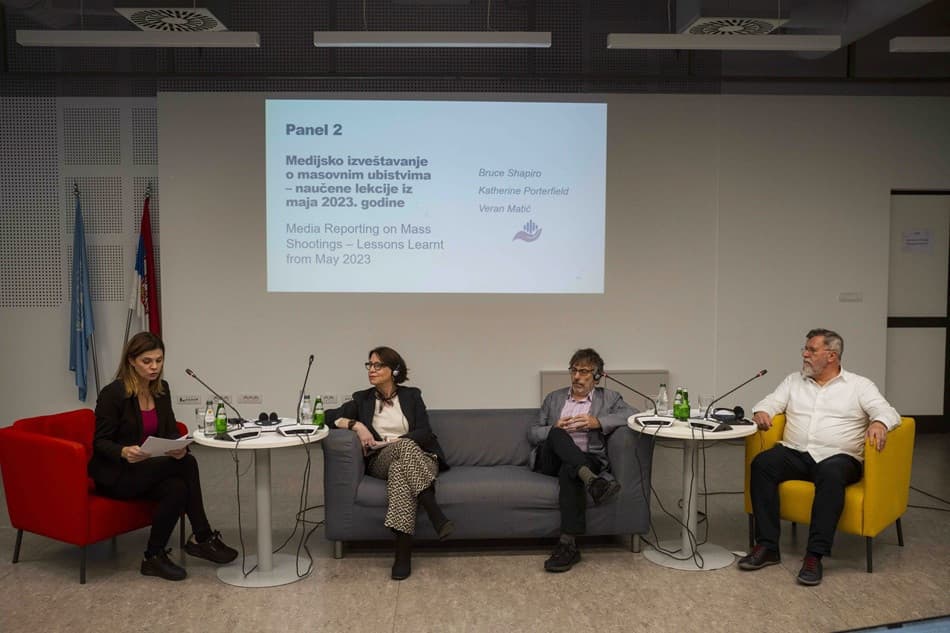
These questions are addressed by Veran Matić, a member of the Permanent Working Group for the Safety of Journalists, for “Vreme.”
“When there is no systemic protection from the relevant institutions, journalists, media, associations, and organizations must self-organize and seek to protect journalists and media through various forms of support. First, through free legal assistance, not only when they are sued but also to request protection from those who threaten or attack them through lawsuits—preferably with the best lawyers, and through free psychological support when needed,” says Matić.
He adds that expert technical assistance is also needed to protect against unlawful surveillance and eavesdropping of journalists, and that, if necessary, protection can also involve relocating journalists and their families to a safe house, or moving them out of the country, temporarily or permanently.
He notes that protection can also be achieved through the engagement of professional security and with professional protective equipment for conducting journalistic work safely, such as helmets, protective vests, gas masks, and goggles.
“It is essential that every journalist and media worker undergo training for safe reporting. That editorial offices adopt security protocols that every journalist will adhere to. That they always carry some legal means of self-defense, and if they feel threatened, they should not walk alone in poorly lit streets, near places where those who could harm them might be,” says Matić.
He reminds that during violent demonstrations, it is important to report from a safe distance and connect with other reporters to exchange information, especially regarding dangers.
Connecting with Honest People
He adds that it is important to use the ANEM Safe Line 0800 100 115 and reminds that both NUNS and UNS have similar contact lines for reporting all suspicious situations, threats, and attacks.
“The police should be notified of any threat to safety. Journalists and media must be vocal when it comes to their safety, so the public is informed and easily mobilized. Remember the socialists led by Vulin who gathered in front of the entrance to N1, only to be quickly dispersed by employees of nearby office buildings who gathered in larger numbers. Independent journalists who often find themselves in dangerous situations are at risk because they want citizens to be well-informed about the greatest violations of the law, the corruption that is destroying society, and the life problems that citizens face. Citizens must also help journalists and media survive,” says Matić.
He adds that everything he has mentioned is currently being utilized to a large extent in Serbia as a form of self-organization.
“It is very important for the international public to be informed, for international organizations to react, and for the media to report on the repression in Serbia. Connecting with honest people in various professions is also necessary: there are responsible individuals in the police, in the prosecutor's offices, and in the courts. Civil society organizations are important partners, especially those that deal with freedom of speech, assembly, human rights, minorities, and vulnerable groups. Many of them have budgets that serve to assist those who are endangered, including journalists,” concludes Matić.
Everything is Getting Worse
In 2025, Serbia recorded a drastic increase in the number of attacks on journalists, with a record number of physical incidents in recent years.
According to data from the Supreme Public Prosecutor's Office, in 2025, four times more physical attacks on journalists were reported than in 2024. By June 2025, 20 physical attacks were recorded, compared to only three during the same period in 2024.
In November 2025 alone, 154 verbal attacks were recorded, many of which came from the parliamentary podium, with the aggressors being members of parliament.
The Independent Journalists' Association of Serbia (NUNS) had registered over 120 attacks and pressures by the end of October. August was a record month with 46 incidents, 14 of which were committed by those who are supposed to protect citizens, including journalists—police officers.
The situation is further exacerbated by a high degree of impunity and institutional sluggishness; even though the number of attacks is at a record high, the number of final convictions remains low. According to data from the Supreme Public Prosecutor's Office and professional associations, by the end of September 2025, 12 convictions were issued in cases initiated during that year. Additional data for the period up to the end of October mentions a total of four convictions, specifically for cases started in that month or recently concluded.
Of the total number of cases initiated in 2025 up to September, which amounts to 94 cases, only 13 percent were resolved with convictions. In 14 cases, decisions were made to dismiss criminal complaints, and in as many as 27 cases, state authorities allegedly failed to identify the attackers on journalists even after preliminary investigations.
Cases of threats are often processed as misdemeanors rather than criminal offenses, which the profession criticizes as inadequate protection.
Collapse of the Rule of Law
Media associations criticize the police for not responding to requests from the prosecutor's office, as well as for selective approaches, such as banning certain media from attending Ministry of Interior conferences.
The trend in Serbia shows a continuous degradation of journalist safety. In 2023 and 2024, the number of physical attacks on journalists was relatively low, but opponents of impartial and objective reporting used SLAPP lawsuits and verbal insults in a substantial number of cases.
Brutal physical violence and direct death threats against journalists returned to public discourse alongside the general civil unrest in 2025, and due to such treatment of journalists, Serbia experienced a collapse of the rule of law with respect to media protection.
Source: Vreme
Related Articles

Journalistic associations provided support to the editorial team of Nova.rs: Ongoing communication and updates with international stakeholders agreed upon.

Coalition for Media Freedom: Stop Attacks and Harassment of Journalists During the Election Campaign

.png&w=3840&q=75)