
From Public Money to Party Spoils: How the Project Co-Financing System Has Collapsed
The system of project co-financing for media content, which is intended to ensure media pluralism and the production of content in the public interest, has, in practice, become one of the most controversial mechanisms for distributing public funds in Serbia over the past few years. Instead of supporting professional journalism, numerous competitions increasingly end up as a model of political allocation of funds, where the fate of hundreds of millions of dinars is decided by a small group of people who appear year after year in dozens of competition committees across the country.
There are others, but the key issue, according to numerous assessments by media workers and ANEM's research and analysis of media project co-financing in 2025, remains the way competition commissions are formed, as it is at this level, during the selection of members, that the foundations for later decisions on the allocation of funds are laid.
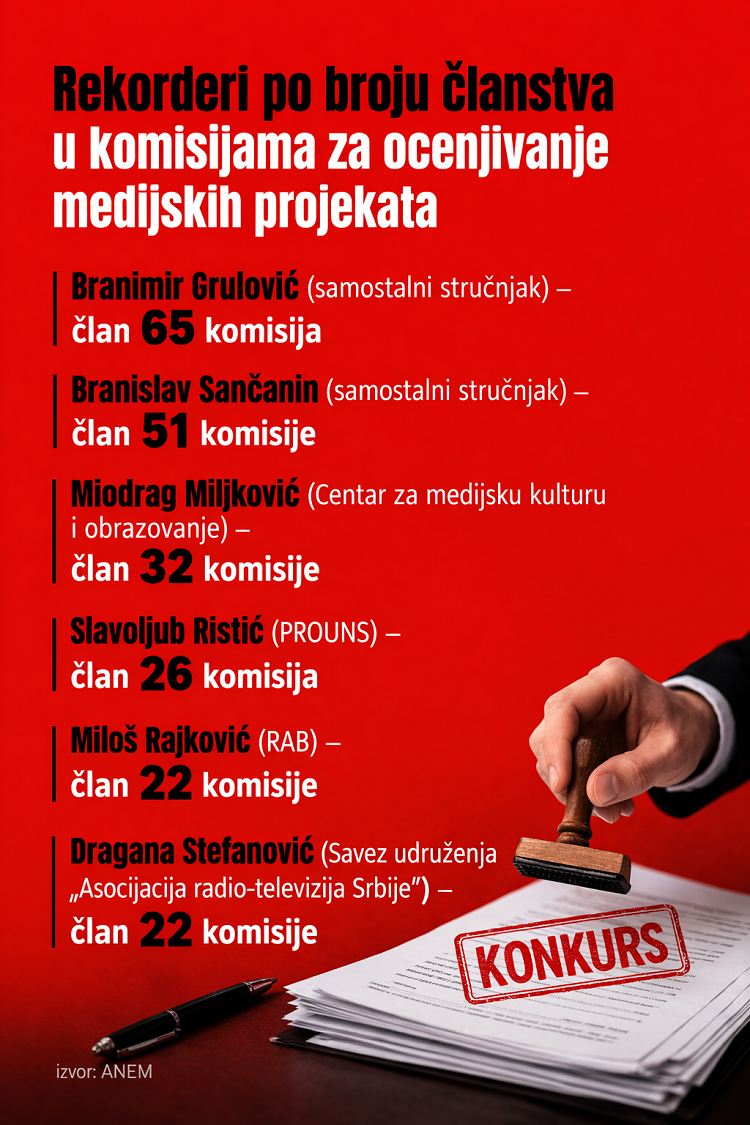
According to data from this research, the largest number of engagements in media commissions were held by:
This practice, as representatives of journalistic associations, journalists, and editors of local and regional media warn for the Krug portal, has been undermining the very idea of project co-financing for years. Instead of encouraging quality journalism and informing citizens, the system, according to their assessments, has become a mechanism through which public money is directed to politically favorable media, while professional and independent editorial offices are left without support.
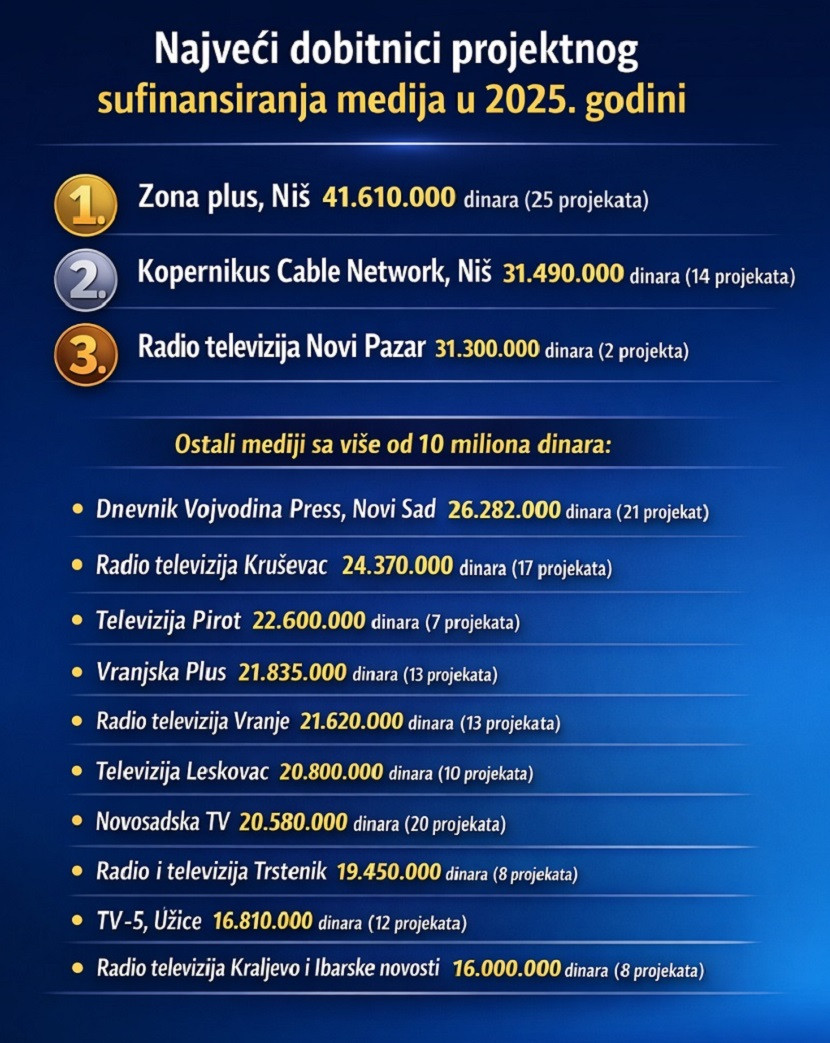
The largest beneficiaries of funds in the competitions for project co-financing in 2025 are shown in the analysis of the media competition results database created by the Association of Independent Electronic Media (ANEM).
Tamara Filipović (NUNS): The system has become a mechanism for political distribution of money
Data on allocations and the functioning of competition commissions show that the project co-financing system has increasingly distanced itself from its original purpose in recent years, assesses general secretary of NUNS, Tamara Filipović:
“I think we have taken a few steps backward, even compared to the period before the adoption of new laws at the end of 2023. Already during 2024, there was a drastic decline in funds for project co-financing – about 600 million dinars less than the previous year, and we did not reach the level of allocations from 2023 in 2025 either.”
Filipović also warns that at the same time the number of credible media receiving funds is decreasing, while in many cases, competition commissions are made up of individuals who, as she states, act in the interest of the authorities, rather than the public:
“We have seen some sort of record holders among the commission members, some of whom have turned participation in dozens of commissions into a lucrative business. The process is completely exposed today, and there is no longer even an attempt to maintain at least the appearance of impartiality.”
According to the assessment of the interlocutor from the Krug portal, it is indicative that in some competitions, projects from media that receive funding for their regular operations pass, even though the idea of project co-financing is quite different. According to the law on state aid, such funds should be used for content that is non-commercial and in the public interest – for what the market cannot finance and what citizens need:
“Projects should relate to topics that are not part of the regular work of the media, but rather to areas where citizens lack information, and the state is, according to the Constitution, obliged to provide that. In practice, however, we see that this concept is increasingly being undermined,” emphasizes Filipović.
Vladimir Malešić, TV Forum Prijepolje: “Everything remains just pretty words; in practice, nothing changes”
Vladimir Malešić, the editor-in-chief of TV Forum from Prijepolje, believes that the same story about the problems of project co-financing is repeated year after year and that the key objections of journalistic associations and the Local Press network have not been taken into account.
“The proposals to change the scoring method for members of the commissions for project co-financing have not been adopted. The majority of Local Press members see this as the biggest problem, as the same individuals are repeated from commission to commission, making similar decisions that we believe are politically or interest-motivated. This has resulted in catastrophic outcomes in the 2025 competitions, both at the local and ministry levels,” notes Malešić.
He emphasizes that TV Forum performs poorly in local competitions year after year.
“If we look at it globally, a large portion of money from the municipality of Prijepolje goes to media that are not from our municipality, that is, to television and media from other cities. It all gives the impression that decisions are politically motivated and that there are no funds for those engaged in independent journalism in Serbia today.”
When asked whether the authorities' efforts to improve the situation are sincere or merely a façade, Malešić responds:
“In my personal opinion, everything that is happening in Serbia today is a farce, including what is happening regarding project co-financing of media. Sometimes we can hear positive signals and nice words, but everything remains at those words – in practice, nothing changes.”
“If the system remains as it is, independent local media can only fail”
Ljiljana Stojanović, editor of the Regional Information Agency Jugpress from Leskovac, states that the problems faced by this media outlet are increasing year after year and that the essence of the pressures lies in their editorial policy.
“We believe that media exist for the interest of citizens and that it is the job of journalists to ask questions, which politicians do not like. We have had problems with previous authorities, but now the problems are escalating. In addition to threats and other types of pressure, including website hacking and SLAPP lawsuits that we managed to win thanks to the support of the Local Press network and its lawyer, today the problems are primarily financial in nature – directly related to project co-financing.”
Jugpress has existed for 19 years, and as Stojanović says, it is normal for a media outlet to sometimes succeed in competitions and sometimes not, but on the condition that the criteria are fair and the commissions are qualified.
“We increasingly have individuals of dubious qualifications in the commissions, along with direct political influences on their decision-making. In Leskovac, commission members receive a list of media that should pass and the amounts they should receive. For years we have not received a single dinar in local competitions because the mayor was annoyed by our column – he openly stated that. This year, ten days before the commission meeting, he told us he would cut funding for both Jugpress and the weekly 'Nova Naša reč' to give it to a third media outlet. And that’s exactly what happened.”
Last year, 50 million dinars were allocated from the budget for media projects in Leskovac, of which, as Stojanović notes, 15 million was given to media that “nobody has heard of.”
“This is shocking. When you visit their websites, you see that some news has not been updated for months. Their content is often taken from Wikipedia or rewritten from other portals. Some have as many as 30 portals and hire agencies to write projects for them. Perhaps those projects are technically better written, as we in the editorial office write projects ourselves and do not have the money to pay for that separately, but when you look at their capacities and implementation, it is clear that it is a major deception.”
Stojanović dismisses the thesis that “the commissions are rude, and the authorities are good.”
“The commission is a servant of the authorities. The authorities select the commission. I was also a candidate for a commission member at the ministry – on the preliminary list I had more points than in the final tally. They called me from the ministry to send them my CV, even though it was already part of the application. This shows that everything is subject to manipulation and political influence. Those who do not operate according to the dictates of the authorities find it difficult to succeed in the competitions.”
Speaking about the survival of local media, Stojanović says that without a change in the system, sustainability is not possible.
“If local media do not survive, who will tell citizens when they will not have water or electricity? Who will ask how much it costs to renovate a street that is full of holes again after a year? Central media report the same news, but local stories are unique and important.”
Although she believes that there is no political will to change the system, she has faith in the survival of local journalism.
“Local media are important to citizens, but they are becoming increasingly impoverished and cannot sustain themselves financially. Donations and crowdfunding campaigns are not a permanent solution. A sustainable systemic solution and political will are needed. I think this is the last phase of attempts to extinguish the few independent local media, but I believe we can fight for the survival of what is fundamentally important: local information.”
“Project co-financing has not functioned properly for years”
Tanja Trifković, editor-in-chief of the weekly Glas Podrinja from Šabac, believes that the model of project co-financing from the perspective of local media has not yielded expected results for years.
“I think project co-financing has not functioned properly for years. We have not managed to obtain the quality content that was the goal of that system, nor to justify the method by which local media are financed. On the contrary, many have been pushed into even greater dependence on various sources of funding and donors.”
According to her, a solution could be sought through broader dialogue between the state and the media community:
“There may be much better ways to sustain local media. We can only reach them through a joint dialogue with those who make decisions, but also with us who work in the media.”
Trifković notes that Šabac announces competitions and that the editorial office of Glas Podrinja receives funding almost every year, but that does not address the wider problems of the system.
“There are also so-called pseudo-media. The problem is that citizens often cannot distinguish between what is a real media outlet to trust and what are portals that merely disseminate information without verification and without valid sources.”
As she says, an additional problem is that part of the audience believes such content:
“A large number of citizens believe such media, as their publications resonate with their personal views or what they have heard in town. Professional media, however, have the obligation to verify the news first before publishing it.”
The general assessment of all interlocutors is that the project co-financing system for media content, which was supposed to provide support to media for the production of content in the public interest, showed no signs of recovery in 2025.
Although the total sum of money allocated for media projects was slightly increased compared to 2024, the way in which the funds were distributed once again raised the question of whether public money truly serves the realization of public interest or political control of the media space.
According to the interlocutors from the Krug portal, the answer to that question also depends on the survival of a large number of local editorial offices. The answer to that question is not only a media issue but also a democratic one, and for many local media, an existential topic.
Source: Krug.rs
Related Articles
Results of 156 competitions: Most funding awarded to Alo, Informer, and their subsidiary companies, followed by media companies owned by Radoica Milosavljević.
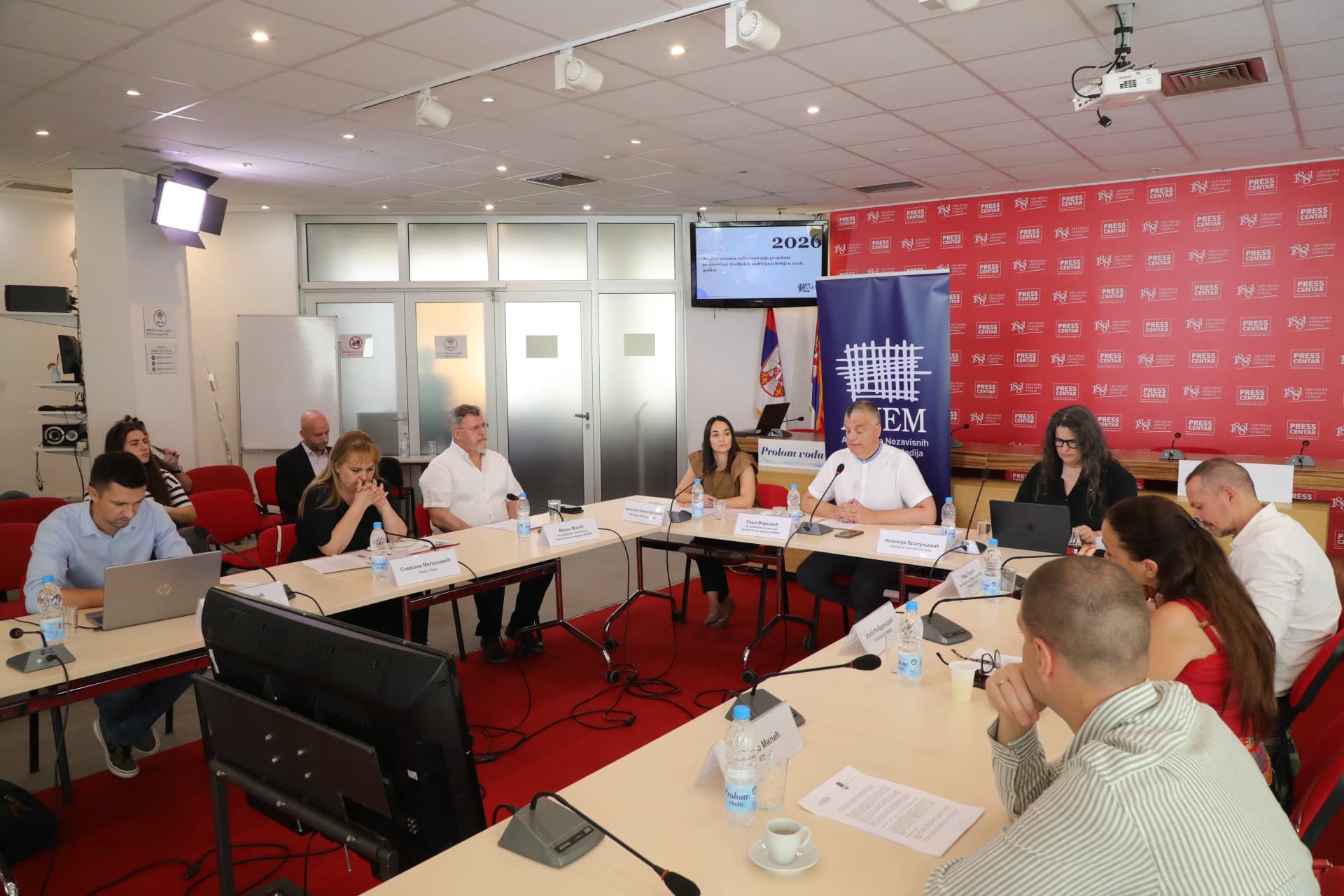
"Project co-financing of media has faced a fiasco": Media and journalism associations have sent recommendations to the Ministry for changes to the process.


.png&w=3840&q=75)