
The platform "Media Measurement Rights" has been presented: Without data, there is no sustainable media market or media pluralism.
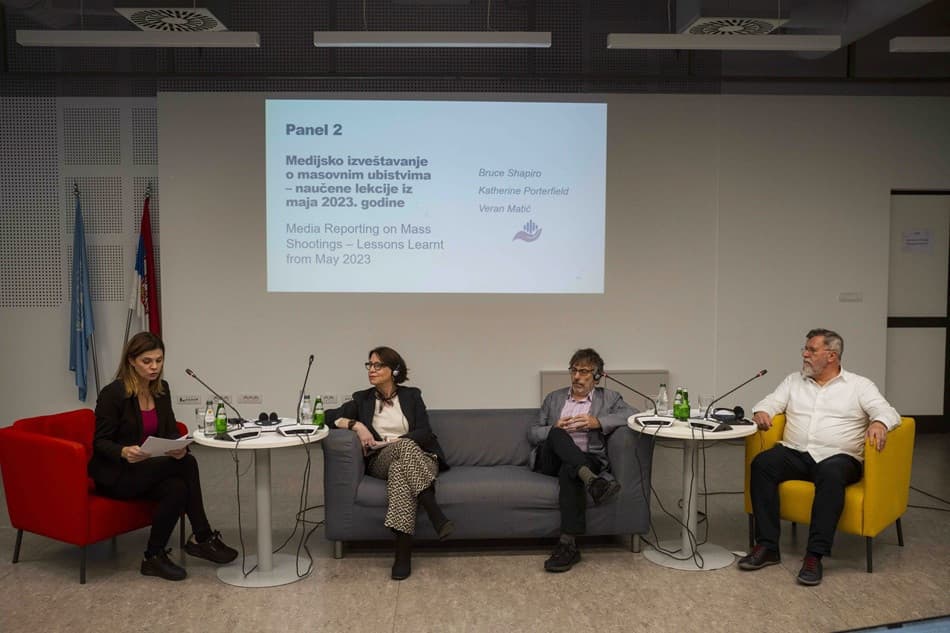
The "Right Media Measure" platform of the Media Association, which for the first time consolidates publicly available data on the media being measured in Serbia for the years 2020 and 2024, was presented at the premises of the OSCE Mission in Serbia in Belgrade.
.jpg&w=3840&q=75)
At the presentation of the platform and the study "The Right Measure of Media 2025," it was highlighted that the majority of media in Serbia still do not measure data regarding their readership, viewership, listenership, or traffic. This situation complicates the assessment of their market position, business sustainability, and the overall state of media pluralism in the country.
The Head of the Media Department of the OSCE Mission to Serbia, Dominique Thierry, emphasized that the platform represents an important contribution to understanding the actual reach of media in Serbia — their readership, viewership, traffic, and listenership. He pointed out that the existence of fair competition is crucial for the media landscape in Serbia, as the measurability of media is one of the foundations of media pluralism.
"Fair competition is key, and 'The Right Measure of Media' serves as a basis for media pluralism and the economic consequences it brings. Media financing and media pluralism directly depend on advertising," Thierry stated.
Izabela Branković, Executive Director of the Media Association, presented the study and noted that according to data from the Media Register for 2024, nearly 2,200 media outlets are registered in Serbia, with just under a quarter, or 23 percent, being part of official measurements.
She pointed out that the platform pravameramedija.rs for the first time consolidates data from three official media measurement auditors — Nielsen Audience Measurement, Ipsos Strategic Marketing, and Gemius RS d.o.o. — and that the platform currently includes data for the years 2020 and 2024.
"With the support of the Balkan Trust for Democracy, we attempted to include some media that are not part of the official measurement. Questionnaires were sent to 1,650 media outlets to provide data they use in the market, with a clear indication of sources. Only 110 media recognized the importance of this process and responded to the questionnaire," Branković said.
She added that the platform currently represents a framework for monitoring trends in media consumption for the years 2020 and 2024, and that, with the support of the European Union by January 2027, data for another two years will be included, allowing for an overview of trends over a total of four years.
Prof. Dr. Galjina Ognjanov from the Faculty of Economics in Belgrade, one of the authors of the "The Right Measure of Media" studies for 2018 and 2025, assessed that the platform is an important supplement to the report itself as it enables continuous updating and monitoring of data about the media that are measured.
She pointed out that the platform also contains a large number of media for which no data are available, which in itself represents an important indicator of the state of the media market and its prospects. As she emphasized, the fact that a large number of media are not measured must become part of a serious discussion about the sustainability of the media system.
Dejan Radosavljević, an author from Ipsos, assessed that the last six years have been extremely turbulent for the media market in Serbia, but that despite the changes, there has been no decline in the total number of media outlets.
"Some are closing, some are emerging, but the number of media remains approximately the same," Radosavljević said, adding that from the audience's perspective, significant changes are occurring, indicating that the two images of the media market are not fully aligned.
According to him, print media is inevitably losing audience, radio manages to maintain its position, television records a slight decline, while consumption of digital media is increasing year by year.
Radosavljević noted that as much as 97 percent of the population aged 15 to 60 uses digital media, describing it as a "fascinating picture" of changes in audience media habits. Regarding podcasts, he added that 27 percent of citizens over the age of 12 in Serbia follow them, which shows that a new media space is gradually forming.
Speaking about the advertising market, he emphasized that total advertising budgets are growing, but they are still not sufficient to ensure the financial sustainability of a large number of media outlets.
"Currently, our market does not have the capacity for so many media outlets to function. Consolidated data are essential for assessing where to invest advertising budgets, for audience monetization, and for valuing the position of media in the market. Without data, small media remain invisible to advertising," Radosavljević conveyed.
Milan Kovačević, the former regional director of Gemius, pointed out that the technology for data collection has significantly changed since 2018, but that the domestic market has not invested enough in tools that would enable more qualitative and reliable measurement, especially concerning local and smaller publishers.
He warned that a significant portion of the budget for digital advertising goes to global platforms, while local media remain in a disadvantaged position.
"Information is power, and information is mainly in the hands of two large global platforms. The Serbian market needs to understand that investing in existing technologies is important and will be very profitable in the long term," Kovačević said, adding that investing in data is an issue of importance not only for commercial media but for society as a whole.
Media law expert Miloš Stojković assessed that the data presented in the study could be significant for analyzing media concentration, better understanding market mechanisms, and developing future strategic documents in the field of public information.
He emphasized that, although there are advancements in the regulatory framework, the problem of implementing regulations remains crucial.
"Until the REM operates effectively, newly established registers cannot be launched. Until we develop an awareness of the importance of measurement and the market, we will not have the right picture, but this study and portal represent a step in the right direction," Stojković stated.
The platform pravameramedija.rs was created with the aim of consolidating publicly available data about media in Serbia, research, expertise, and recommendations relevant for understanding the media market. It provides insight into which data about media are available, who measures them, how they are collected, and how they can contribute to the sustainability of the media sector.
Participants in the event agreed that without investing in quality, independent, and verifiable data, there can be no sustainable media market, fair competition, or true media pluralism.
The study "The Right Measure of Media 2025" and the platform pravameramedija.rs are intended to serve as an important analytical basis for developing a new media strategy, ensuring that future public policies in the field of information are based on verifiable data, the real state of the market, and the needs of the media sector.
Related Articles

Journalistic associations provided support to the editorial team of Nova.rs: Ongoing communication and updates with international stakeholders agreed upon.

Coalition for Media Freedom: Stop Attacks and Harassment of Journalists During the Election Campaign

.png&w=3840&q=75)