
SĆF: 156 verbal attacks in April 2026.
The Slavko Ćuruvija Foundation recorded 156 verbal attacks by state officials on journalists and media in April 2026, directed through social media, in media appearances, as well as during sessions of the National Assembly. During this month, new narratives were observed that contribute to creating a hostile atmosphere, disqualifying journalists and media, and spreading distrust towards investigative journalism.

New narratives include accusations against the media for colluding with the opposition or "renegade" institutions in activities against the state, where independent media are even assigned a coordinating role. In addition, state officials use cynicism and mockery in their attacks that go beyond the bounds of appropriateness given their positions of power.
This month, the attacks were particularly emphasized by members of parliament from the Serbian Progressive Party: Milenko Jovanov (42 attacks), Nebojša Bakarec (38), and Vladimir Đukanović (21), the President of the National Assembly Ana Brnabić (12), and the President of Serbia Aleksandar Vučić (11).
Journalists were also attacked by: the Prime Minister of Serbia Đuro Macut; the Deputy Speaker of the Assembly Nevena Đurić; the President of SNS and advisor to the President of Serbia Miloš Vučević; the Minister of Culture Nikola Selaković; the Minister of Labor, Employment, Veteran and Social Issues Milica Đurđević Stamenkovski; the Minister of Environmental Protection Sara Pavkov; the President of the municipality of Zemun Gavrilo Kovačević; and the President of the Municipal Assembly of Trstenik Mario Spasić; members of parliament Uglješa Mrdić, Aleksandra Tomić, Marijan Rističević, and Dragan Nikolić (SNS); advisor to the Minister of Science Zoran Tomić; and the President of the Board of Directors of the National Theatre Dragoslav Bokan.
This time, the editorial offices of the United Group were once again the primary targets of officials: N1, Nova S, Danas, and Radar. The attacks employed qualifications such as "tycoon media," "blockade media," and other expressions combined with the name Dragan Šolak, the founder of the United Group, who has not been part of the company's management structure for nearly a year: "Šolak's media," "Šolak's poisoners," "Šolak's day laborers," and "Šolak's propaganda machinery." The changes in leadership positions within the United Group media have brought about new forms of retribution against journalists, which most clearly illustrate the current government's relationship with critical journalism as an enemy activity that must be overcome.
The dismissal of the former director of N1 Igor Božić and the concern of employees and the media community that this dismissal signifies a change in editorial policy served as a pretext for a multi-day campaign against N1 journalists.
Although some of the recorded statements could, under normal circumstances, be treated as dark humor or criticism of questionable journalistic appropriateness, in the context of Serbia, such statements cannot be separated from the overall atmosphere of pressure, intimidation, and threats directed at critical journalists on a daily basis. At a time when Serbia is at its historically lowest position on the Reporters Without Borders Media Freedom Index (104th place), and the highest number of criminal acts against journalists, according to prosecutor's office data, relates specifically to threats directed at the N1 editorial office, such statements from top state representatives encourage the creation of a hostile environment towards that and other editorial offices of the United Group.
Mockery regarding the changes in the United Group from the highest positions of power, as well as cynicism and gloating in the obvious declaration of "victory" over critical journalism, contribute to the discrediting of journalists and the denial of their professional autonomy, thereby undermining trust in the media and journalism as a profession.
In the last days of April, a campaign to discredit N1 journalist Žaklina Tatalović was launched, during which, within just 48 hours, three politicians (Jovanov, Đukanović, and Bakarec) shared at least 43 posts about her. The campaign was triggered by a controversy initiated by pro-government tabloids regarding the journalist's claims that academician Nikola Hajdin is her grandfather.
Due to the lack of all relevant facts, the Slavko Ćuruvija Foundation did not separately analyze this campaign, but regardless of whether Žaklina Tatalović's claims are true or not, the intensity, tone, and inappropriateness of the posts led us to include them in the April issue of verbal attacks, considering the positions from which they come. This decision was reinforced by the fact that, in some recorded posts, this event was also used to settle scores and discredit the entire N1 editorial office. Therefore, the entire campaign, conducted by the three SNS representatives on social media minute by minute, cannot be viewed in isolation from the broader context.
Verbal attacks on journalists also came from parliamentary podiums this month. The televisions N1 and Nova S were accused of being "televisions that poison the citizens of Serbia" and televisions that "create psychopaths." The President of the SNS parliamentary group, Milenko Jovanov, referred to the United Group media at least eight times as "Šolak's propaganda-terrorist garbage," and during one of his speeches, he dedicated even five minutes to explaining this phrase.
In his defense at the trial for abuse of official position due to the General Staff affair, the Minister of Culture Nikola Selaković accused part of the media of colluding with the Organized Crime Prosecutor's Office. According to him, this alliance aims to change the government in Serbia. He repeated the same accusations in parliament.
In April, the editorial office of the weekly Vreme was also attacked, which was compared to toilet paper, as well as the investigative portal KRIK, which the Prime Minister incorrectly accused of not being a registered media outlet and of engaging in "attack journalism."
Journalists Žaklina Tatalović, Vuk Cvijić, Branislav Šovljanski, as well as Jovana Gligorijević ("the worst journalist after Žaklina Tatalović") and Vesna Radojević ("smells of inhumanity from a kilometer away") were also targeted. Minister Selaković referred to journalist and university professor in media studies Dinko Gruhonjić as "installed and created to attract someone to do something bad to him" and as "a figure that would be held accountable before the judicial authorities in any other country."
In April, both the Journalists' Association of Serbia and the Independent Journalists' Association of Serbia were accused of bias, and the Speaker of the Assembly Ana Brnabić criticized the Media Platform of the Council of Europe and the European Federation of Journalists for "double standards," as they did not condemn the criminal complaint against the editor of a pro-regime tabloid.
Source: Slavko Ćuruvija Foundation
Related Articles
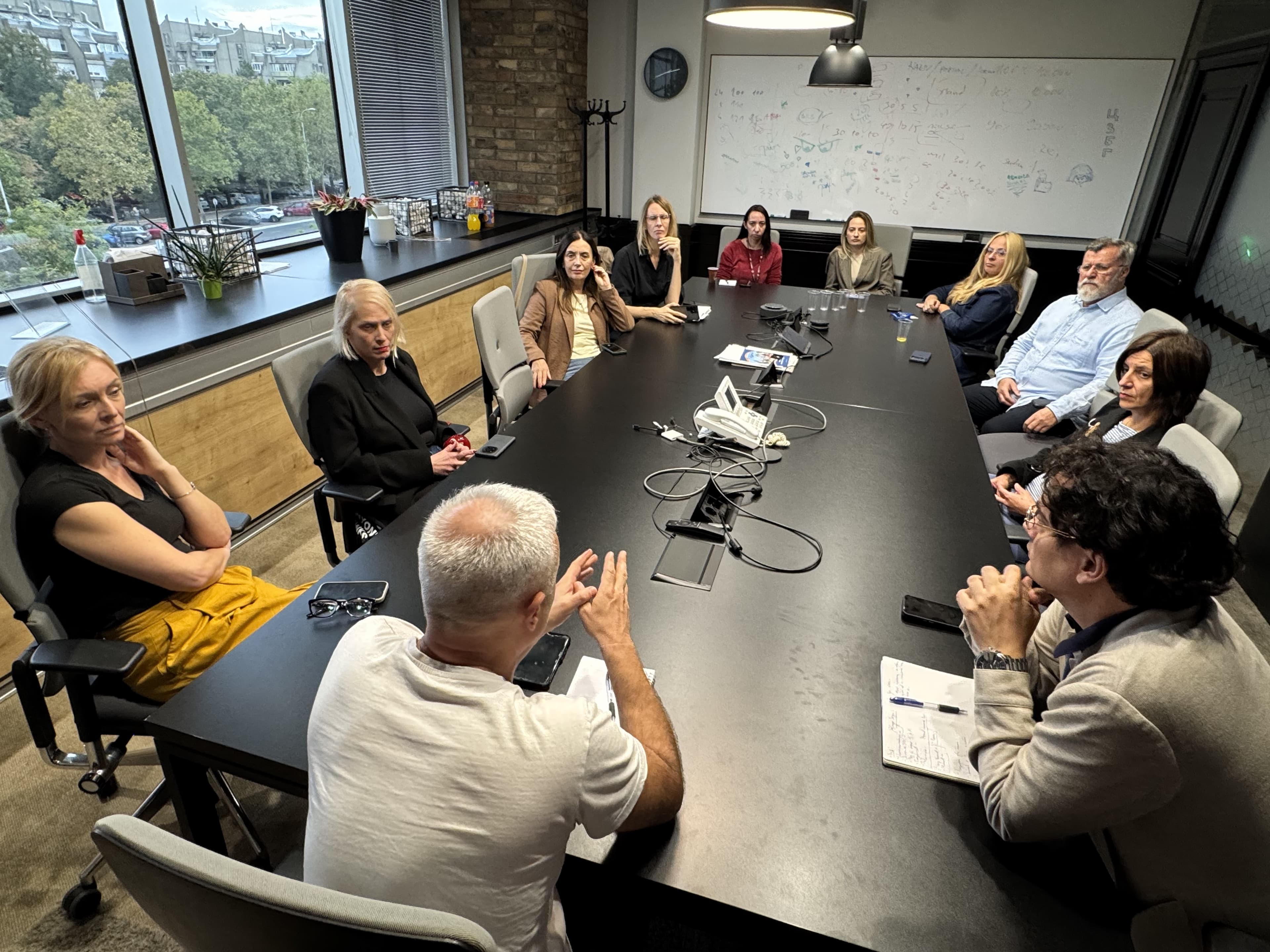
Journalistic associations provided support to the editorial team of Nova.rs: Ongoing communication and updates with international stakeholders agreed upon.

Coalition for Media Freedom: Stop Attacks and Harassment of Journalists During the Election Campaign
.png&w=3840&q=75)