

Reporters Without Borders: Half of the physical attacks on journalists in Serbia were carried out by the police, and no one has been punished.
Although this year there have fortunately been no killings, kidnappings, or imprisonments in our country, Serbia, with 91 confirmed physical attacks on journalists, unfortunately deserves a special mention in the report from Reporters Without Borders. Just like Aleksandar Vučić, who appears on the list of "predators of press freedom" by RSF. Reporters testify to a deadly year for journalists worldwide: 67 killed, 503 imprisoned, 135 missing.
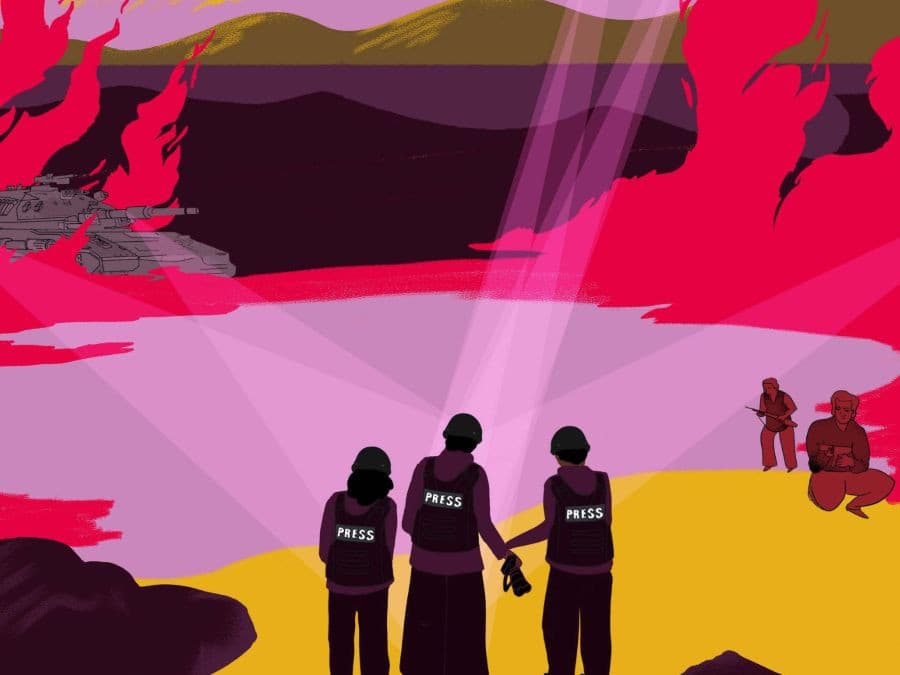
Today, the annual report by Reporters Without Borders (RSF) on violations of press freedom and violence against journalists, published here, is always a sad read, but when the number of journalists killed, imprisoned, and missing reaches the highest levels in recent years, it becomes alarming.
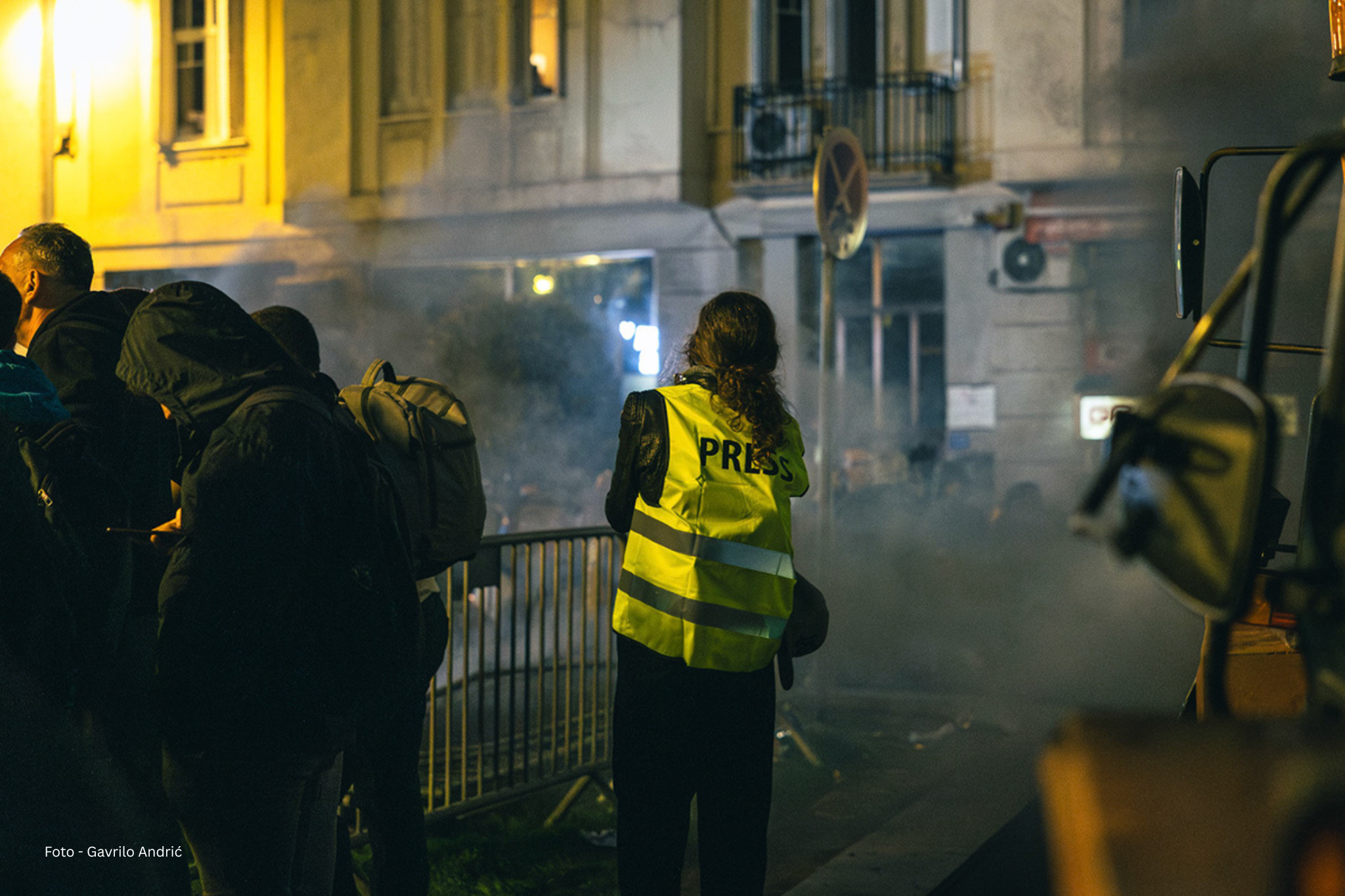
Although fortunately there have been no killings, abductions, or imprisonments in our country this year, Serbia has sadly warranted special mention, with 91 confirmed physical attacks on colleagues covering demonstrations. Just like its president, Aleksandar Vučić, who has a place on the list of "predators of press freedom" by Reporters Without Borders for this year.
Nothing is still known about our five colleagues who went missing during the conflict in Kosovo, and this disheartening fact continues to feature distressingly in these reports year after year.
This year's report states that half of the physical attacks on journalists in Serbia were carried out by the police "with complete impunity, in a climate shaped by the verbal attacks of President Aleksandar Vučić on journalists."
In light of one of the deadliest years for journalists in recent decades, highlighting the violence without legal protection faced by reporters in Serbia speaks to the international attention that the increasingly brutal crackdown on our colleagues is attracting.
Almost Half Killed in Gaza
The number of journalists killed worldwide in 2025 has primarily increased due to the actions of military forces – regular and paramilitary – and organized crime, the report states. At least fifty-three (53) out of sixty-seven (67) media professionals killed last year were victims of war (37) or criminal organizations (16).
Almost half (43 percent) of the journalists killed in the last twelve months were slain by Israeli armed forces in Gaza. Since the conflict began in October 2023, the Israeli military has killed around 220 journalists, with at least sixty-five (65) killed because of their work or while performing it.
Sudan has emerged as a new, extremely deadly war zone for media professionals. Four colleagues have been killed, at least two after being abducted by paramilitary forces.
In Mexico, organized crime groups are responsible for the disturbing increase in the number of journalist killings in 2025 – nine (9). Following the horrific, record-breaking year of 2022, in which 19 colleagues lost their lives, two years followed with seven killed each year, only for this year to see a resurgence in this disturbing statistic.
Mexico is the second most dangerous country for journalists in the world. Although it has been a year since the new president Claudia Sheinbaum took office and committed to representatives of Reporters Without Borders and the public that she would do everything possible to protect journalists, not only has she failed to do so, but colleague Kaletano de Jesús Guerrero was killed while under state protection.
The news is even more ominous – the trend has spread across Latin America, which is becoming "Mexicanized," with 24 percent of the world's journalists killed, despite accounting for only about eight percent of the global population.
Most Dangerous at Home
Journalists are at the greatest risk in their own countries. Only two foreign journalists have been killed this year: French photographer Antoni Lalikan, killed in a Russian drone attack in Ukraine, and Javier Hercules, a journalist from El Salvador, killed in Honduras, where he had lived for over a decade. All other journalists killed were reporting from their own countries.
Five hundred and three journalists are currently detained worldwide. The largest prison for journalists remains China (121), followed by Russia (48), which holds more foreign journalists in its prisons than any other country in the world – twenty-six (26) Ukrainian journalists.
Myanmar ranks third with forty-seven (47) journalists imprisoned. Since February 2021, seven journalists have been executed, at least two hundred have been arrested, and those in captivity live in inhumane conditions and are often victims of torture.
One of the favored allies of Aleksandar Vučić's government, Saudi Arabia, following the outrageous murder of Jamal Khashoggi in the Saudi embassy in Turkey in 2018, under the rule of Crown Prince Mohammed bin Salman, executed journalist Turki al-Jasira after seven years in prison on charges of terrorism and treason. The last journalist in the world to be sentenced to death and executed before him was Ruhollah Zam in Iran, in 2017.
"We were arrested to be removed from journalism because we uncovered the corruption and crimes of Ilham Aliyev (the president of Azerbaijan) and his associates," were the last words of Sevinj Vagifgizi, editor-in-chief of Abzas Media, before she was sentenced by the court, along with six other colleagues, to nine years in prison for "smuggling foreign currency."
Twenty-five journalists are currently behind bars in another of our government’s favored partner states, Azerbaijan.
______________________________________________________________________
INTERNATIONAL INSTITUTIONS ARE NO LONGER CAPABLE OF PROTECTING JOURNALISTS OR ENFORCING THE LAW
"It is common to blame the citizens of democratic countries for their indifference, despite the fact that they bear no responsibility for the crimes committed," says the director-general of Reporters Without Borders, Thibault Britten, in the preface to this report:
"Their apathy is merely an echo and stems from the failure of international institutions, which are no longer capable of protecting journalists or enforcing the law – especially United Nations resolution 2222 concerning the protection of journalists in armed conflicts. This is the result of a global decline in government courage, which today does little more than issue statements, when they should be implementing public policies for protection. This fosters the fatalism and pessimism that spreads through society."
"Here, the stakes are not just the principles of journalism and trust in reliable information, but literally the lives of reporters. Hatred towards professional reporters fuels the anger of those who protest and the violence of armed forces, culminating in the physical elimination of journalists. The discrediting of the media breeds the worst kind of behavior and sometimes results in an unbearable license to kill. It is our responsibility to stand with those who defend our collective right to information. We owe them that."
"As key witnesses of history, journalists have gradually become collateral victims, uncomfortable witnesses, bargaining chips, pawns in diplomatic games, men and women to be eliminated. Let us be wary of false suggestions about journalists: no one gives their life for journalism – their lives are taken from them. They did not simply die – they were killed," wrote Britten.
______________________________________________________________________
Abducted
Twenty journalists worldwide have been abducted at the time of writing this text. By far the most colleagues held hostage are the Yemeni Houthis – nine of them. Although most were abducted before 2018, eight colleagues in Syria are still in the hands of various paramilitary groups, some of which are part of the current government.
Two colleagues have been in the hands of a paramilitary group in Mali for two years, most likely jihadists. During the abduction, a third colleague, Abdul Aziz Jibril, was killed. The abductors are demanding around six thousand euros from the families of the abducted journalists for their release.
The case of Jembema Lab, a journalist and activist in India, is interesting; he was abducted by about thirty armed members of a militia in Manipur after criticizing that militia in the Indian state where he lives. He was released the next day after recording a video apology in which he stated, among other things, that the militia had transitioned to political rather than armed action, even though they did not bring copies of the Indian constitution and arguments for the abduction, but guns.
Missing
One year after the fall of the regime of Bashar al-Assad in Syria, many arrested or captured journalists are still unaccounted for, making Syria the country with the highest number of missing professionals – thirty-seven, more than a quarter of the total number in the world.
In 37 countries worldwide, 137 journalists are recorded as missing, some for over 30 years.
Besides Syria, Mexico stands out for the number of journalists whose fates are unknown, with twenty-eight, and in this country and the Middle East, seventy-two percent of the disappearances of colleagues still being searched for have occurred.
This sad category also includes five colleagues who disappeared in Kosovo, whose fate remains unknown.
Demonstrations and Violence
As stated in the report: "From Nepal to Serbia, from Indonesia to France and even Madagascar, journalists covering protests were particularly obstructed in their work in 2025," and the violence was mainly perpetrated by "law enforcement agencies."
In Nepal, one journalist was burned during royalist demonstrations, and six months later, when the youth of Nepal rose against corruption and the abolition of online media, the police injured several journalists, after which riots broke out in which ten editorial offices and three journalists' associations were burned and vandalized.
In Ecuador, during protests over rising diesel prices, police and unidentified individuals attacked fifty-five journalists. In the most recent incident, one colleague was shot with a firearm.
More than thirty media workers were attacked and/or intimidated during two waves of protests in Indonesia.
Yet, Serbia is at the beginning of this section of the Reporters Without Borders report, with the aforementioned numbers, impunity for violence against journalists, and a president who incites an atmosphere of intolerance towards media workers and the media whenever it suits him.
In addition to all this, there are hundreds of journalists in exile, many of whom are facing trials in absentia in their countries, and many are hiding from the long arms of secret services that seek them even abroad. They flee from wars, but more often from authoritarian regimes and their violence, legal, physical, and existential.
Source: Cenzolovka
Related Articles

Journalistic associations provided support to the editorial team of Nova.rs: Ongoing communication and updates with international stakeholders agreed upon.

Coalition for Media Freedom: Stop Attacks and Harassment of Journalists During the Election Campaign

.png&w=3840&q=75)