
There has been a reported 10 percent increase in cases of violations of the digital rights of citizens in Serbia.
The latest BIRN report on the violation of digital rights of citizens in Serbia shows that there were 10 percent more cases recorded last year, which is interpreted as a consequence of a more repressive system of government.
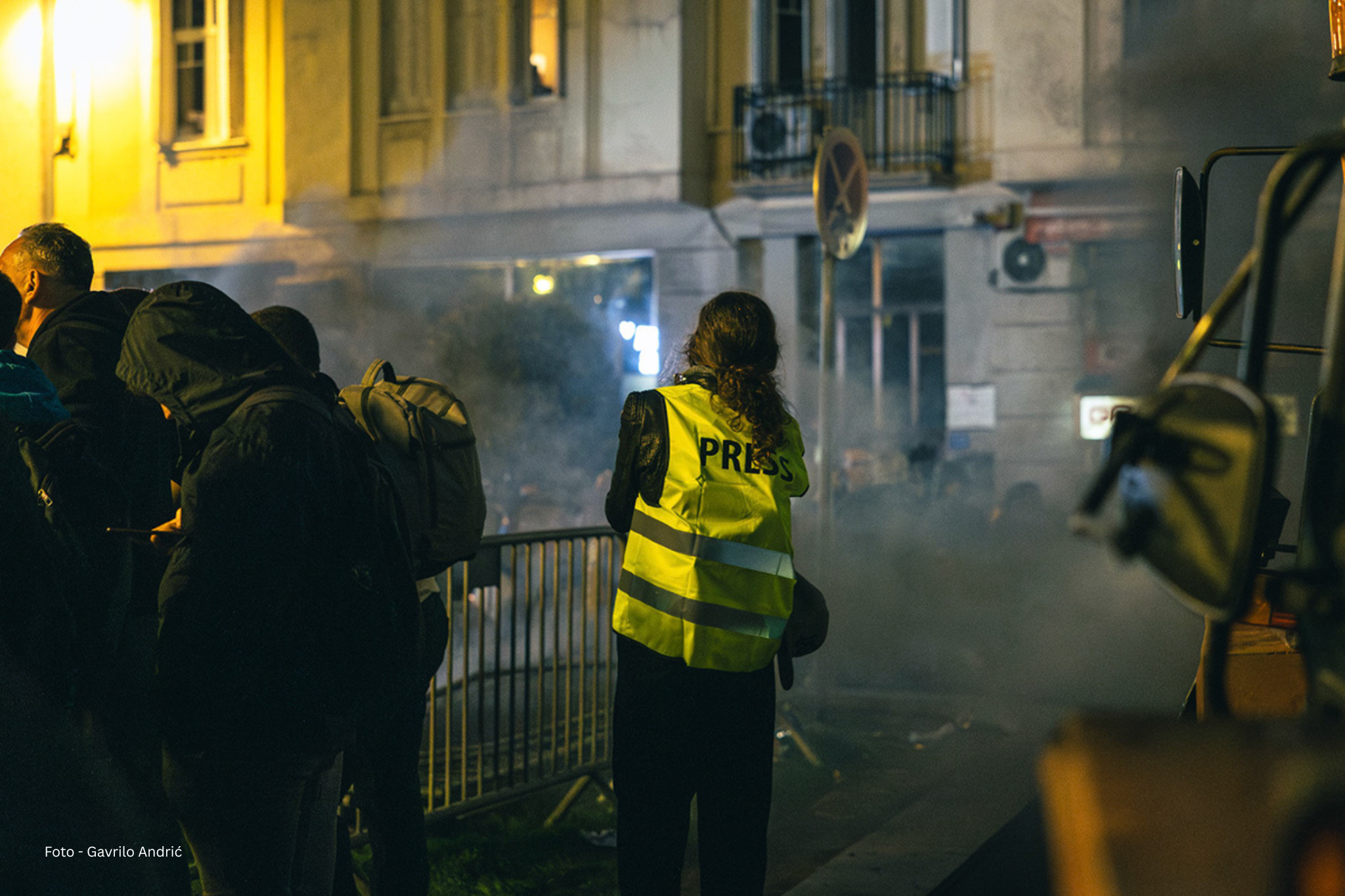
The report noted 195 cases up to September, of which 60 percent were related to student protests. There has been an increase in violations of media freedom, with one-fifth of the attacks targeting journalists.
Interestingly, the largest number of perpetrators of criminal acts remains unknown at 36 percent. It is particularly concerning that over 50 percent of the attacks originated from political and public officials (26 percent), while tabloids and government-friendly media accounted for 25 percent.
Trends observed include attacks and threats against journalists, spinning and spreading misinformation, hate speech, as well as doxxing and surveillance (the use of spyware).
According to data from the Safejournalists network, institutional pressures are the most common form of threats against journalists, affecting 46.2 percent of journalists, while economic pressures and job insecurity impact 40.2 percent of journalists.
Particularly notable is the issue of news spinning, in which tabloids and pro-government media participate. There is a noticeable spread of narratives such as "colored revolution and Vojvodina separatism." The report states that misinformation has turned protesters into targets, and there have been artificial attempts to create protest leaders.
In cases of doxxing, the majority pertained to violations of the right to privacy (80 cases), as well as the publication of names, personal documents, family information, contacts, and residential locations.
The role of the spyware Spyware was particularly highlighted.
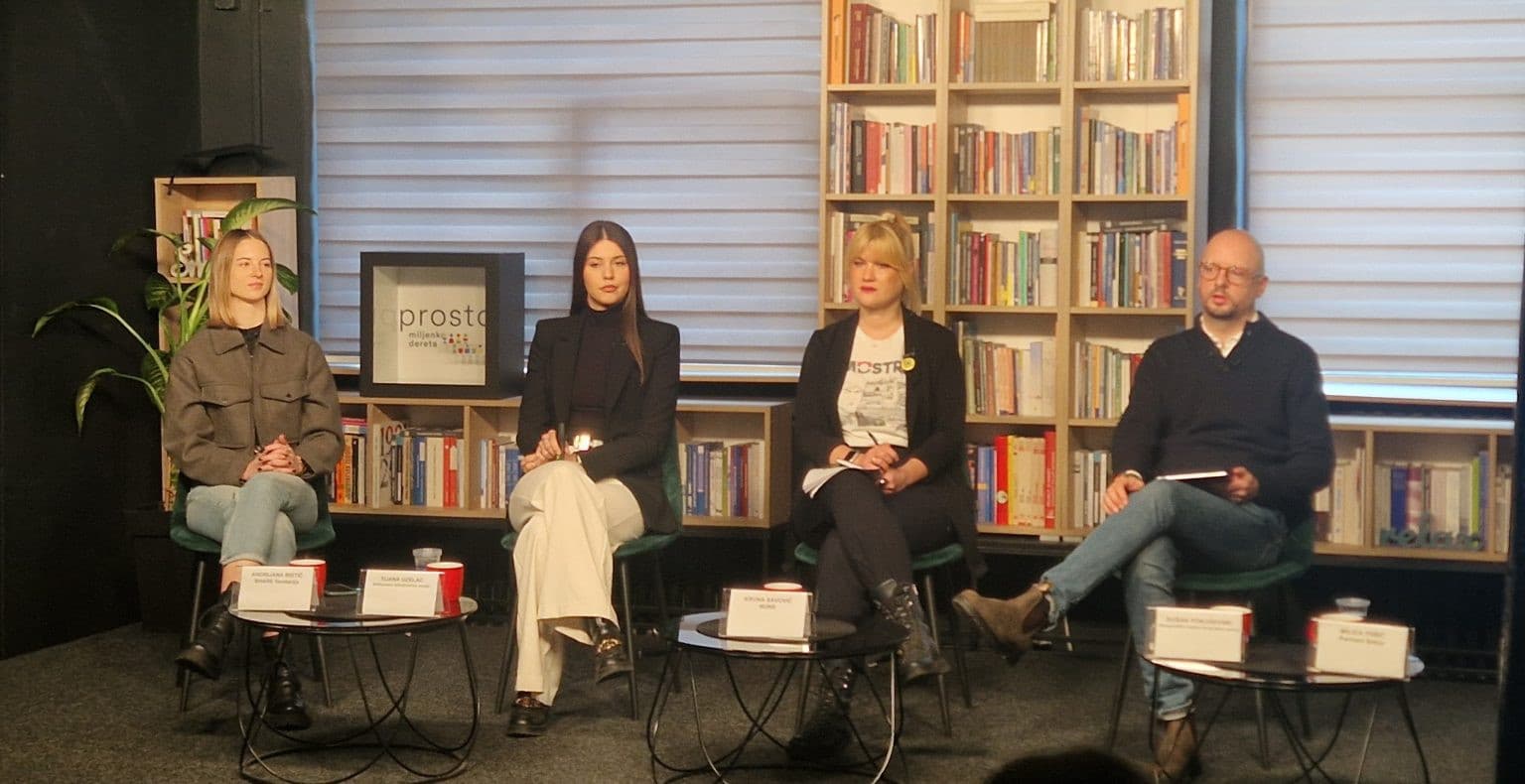
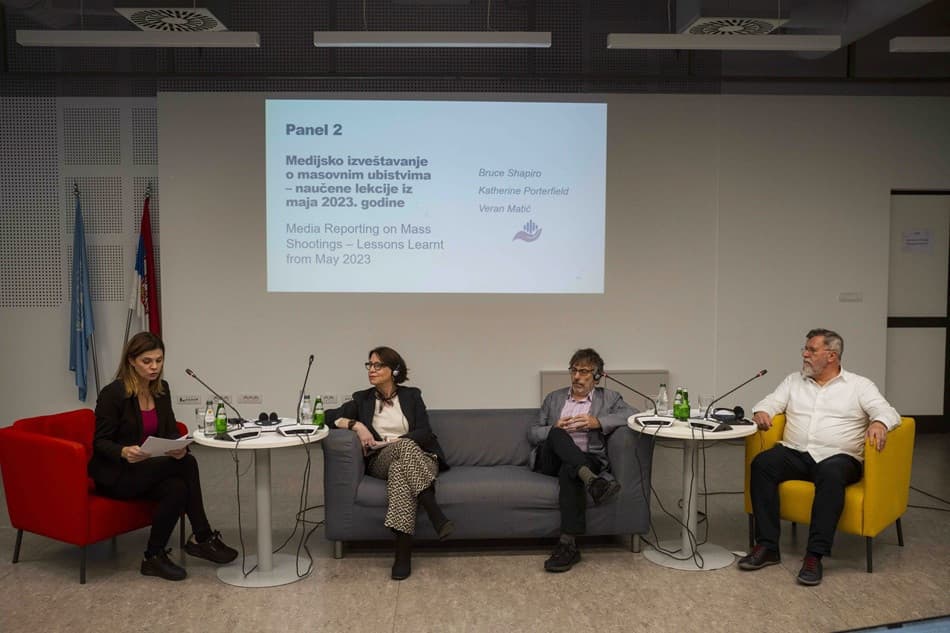
Dušan Pokuševski from the Belgrade Center for Human Rights stated that the use of spyware exceeds the legal standards of the EU, and that the European Court of Human Rights recognizes it only in exceptional cases, such as terrorism, which was not the case in Serbia.
Lawyer Kruna Savović, who represents journalists, pointed out that narratives from the 1990s ("foreign mercenary") are still prevalent in society, and the need to extract information from journalists remains unchanged.
"From the stage of monitoring, we have now moved to spyware that indiscriminately processes data," Savović noted, adding that Serbian institutions remain silent on cases of this software being used against journalists. She recalled the case of FAR journalist Slaviša Milanov, the first recorded instance of such a case.
According to her, the proceedings in his case have not progressed, and there has been no response from the Permanent Working Group for the Safety of Journalists.
"Milanov has still not received a summons to testify," Savović emphasized.
Andrijana Ristić from the Share Foundation pointed out that there have been cases of forced unlocking of phones and automatic data extraction. She stated that there is clear forensic evidence for this, and that our institutions remain silent, even when Amnesty International points to its misuse.
According to her, the role of these spyware programs is currently less noticeable, but there is a dilemma as to whether they are being used less frequently or if there has been a transition to even more sophisticated software.
Source: NUNS
Related Articles

Journalistic associations provided support to the editorial team of Nova.rs: Ongoing communication and updates with international stakeholders agreed upon.

Coalition for Media Freedom: Stop Attacks and Harassment of Journalists During the Election Campaign

.png&w=3840&q=75)