
Black record of verbal attacks on journalists: "Poisonous words from politicians will have consequences."
The highest number of verbal attacks on journalists, since monitoring began, according to data from the Slavko Ćuruvija Foundation, was recorded in March of this year.

The Slavko Ćuruvija Foundation reported that during this period, at least 186 cases of verbal attacks on critically oriented journalists, media, and media workers by high-ranking state and party officials were recorded.
The Foundation noted that this reflects a continuous increase in pressure over the past few months, as a record was already broken in February with more than 170 attacks.
"This is the highest number of verbal attacks since monthly monitoring has been implemented," they stated.
The most frequently targeted individuals include the hosts of the show "Mental Stretching," Marko Stepanović and Srđan Jovanović, journalist Uglješa Bokić from Danas, as well as journalists Branislav Šovljanski, Ivan Bjelić, Slobodan Georgiev, Dinko Gruhonjić, Žaklina Tatalović, Nenad Kulačin, Vuk Cvijić, and others.
At least 20 officials participated in their discrediting, criminalization, and labeling, with the most active being members of the Serbian Progressive Party (SNS) Nebojša Bakarec and Milenko Jovanov, President of Serbia Aleksandar Vučić, Speaker of the National Assembly Ana Brnabić, and SNS President Miloš Vučević.
In this regard, we were curious whether this trend indicates a systemic pattern of targeting critical media and what consequences it may have for the safety of journalists, as well as for the broader social and democratic environment in Serbia.
Journalist Antonela Riha emphasizes that the authorities have been polarizing society with hate speech for years in a perpetual search for state enemies.
According to her, we see this in the cited statements of state officials, from the president to members of parliament, and in the accusations directed at non-regime media.
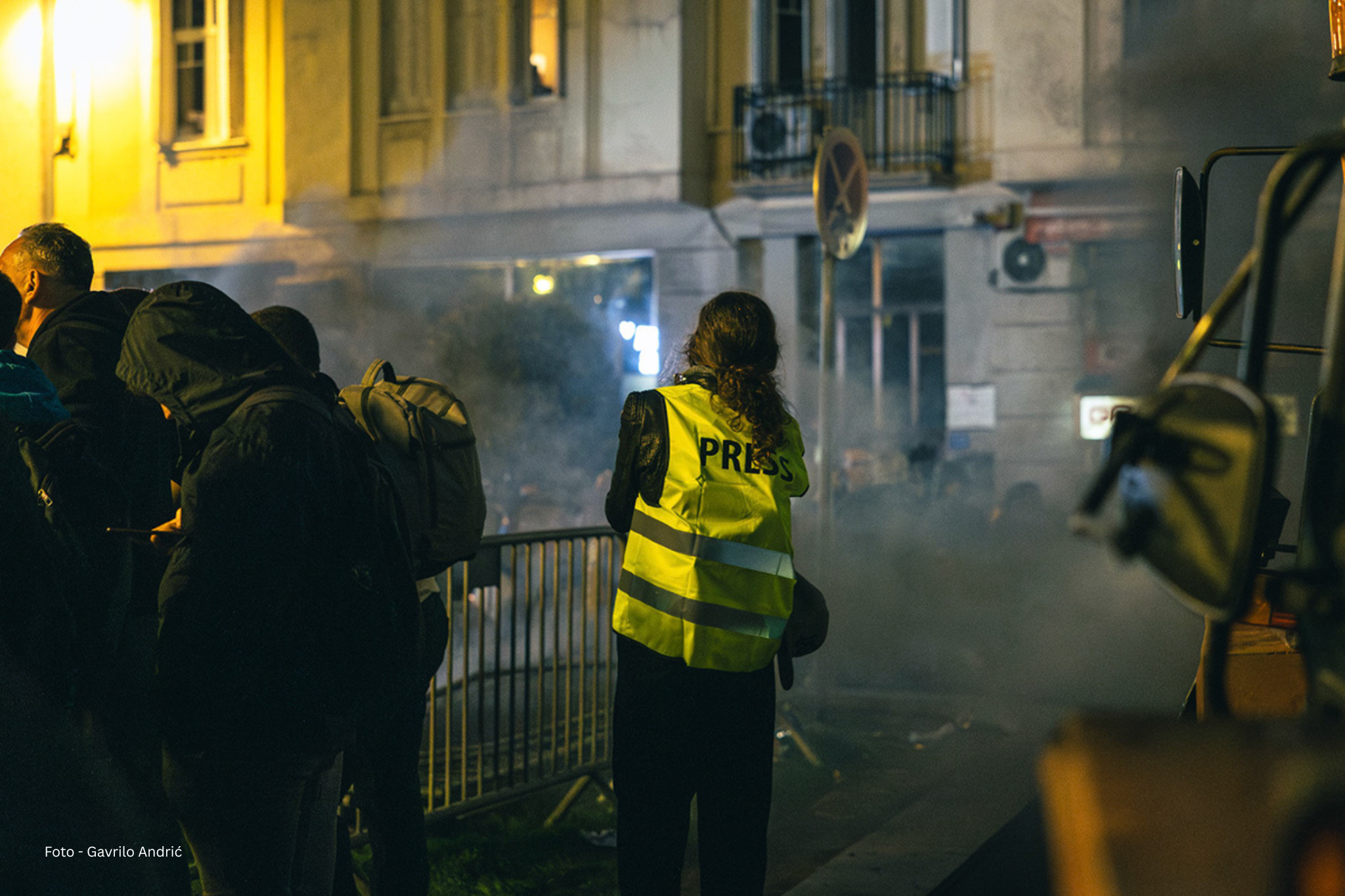
She clarifies that this is dangerous for the entire society as it normalizes the language of violence in public space, because after words come actions, which creates discomfort and fear among citizens.
“When you target media and journalists by name, you open the door for anyone to freely attack them physically. Likewise, you provide yourself with an alibi for silencing free speech, as you 'eliminate enemies.' Part of the citizens believes this, but I believe that many more clearly see the game and I hope they will openly and loudly support colleagues and media under pressure,” Riha emphasizes.
Journalist Bojan Cvejić notes that this is a continuation of a trend that has been ongoing for years and has intensified particularly in the last year and a bit.
March was unique, he observes, as we had elections in ten local governments, during which the authorities tried by all means to suppress any criticism and free speech while simultaneously spreading propaganda and a negative narrative towards anyone questioning the actions and work of the ruling structure.
“Representatives of the authorities behave unacceptably towards media that report professionally and critically, that is, in the public interest, and for everything they do not like, they launch counterattacks instead of re-evaluating the work of people from their ranks based on media reporting,” Cvejić points out.
He emphasizes that the authorities use all means: spreading falsehoods, targeting journalists and media, obstructing their work, which is then continued through campaigns in tabloids, all of which directly threatens the safety of media workers.
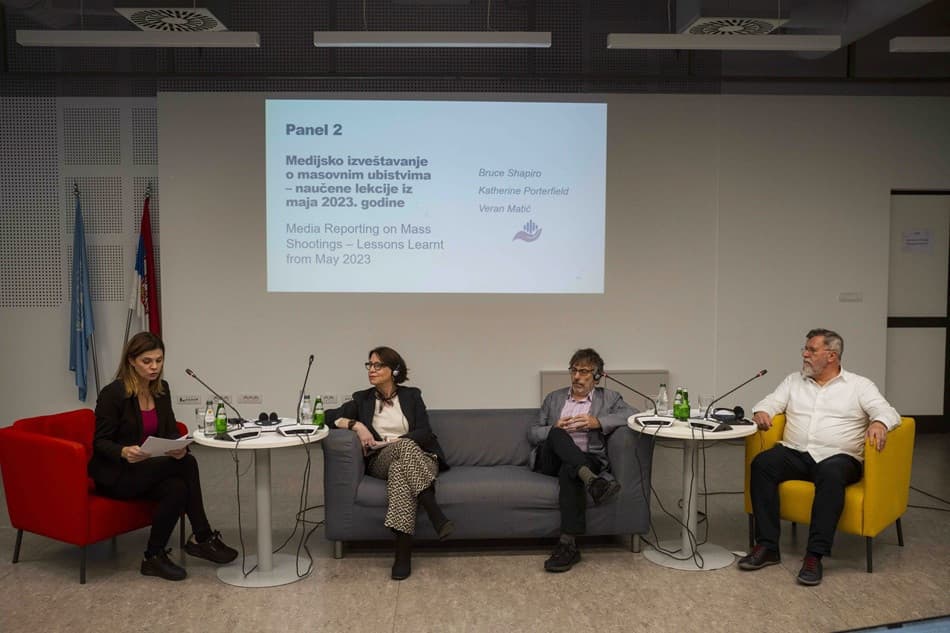
President of the Association of Independent Electronic Media (ANEM) Veran Matić emphasizes that these are alarming data, but not unexpected.
According to him, the spiral of violence from the authorities is accelerating, and words are turning into bullets, as was the case with the murder of Slavko Ćuruvija or the murder of Milan Pantić. The rhetoric of the authorities is unimaginable within European frameworks, he adds.
“Slander, targeting, and threats coming from the top of the authorities produce direct violence against journalists, students, and citizens. The horrific campaign against Lazar Dinić and Ivan Bjelić reached them beside the Timok River through a targeted attack, an attempted murder, and torture akin to what we have seen from terrorists in the Middle East: we had persecution, beatings, dehumanization, interrogation under duress, and forcing them to express messages in praise of President Vučić while recording it to continue the humiliation,” Matić emphasizes.
The poisonous words coming from the mouths of leading politicians who govern this country will soon have such epilogues for everyone mentioned, he believes.
And when violence occurs, especially by representatives of the police, Matić adds, there comes the justification with claims, which are lies—that the police have the right to beat and kill.
“This is not just justification but also incitement for police officers to do so. This amount of toxic rhetoric, combined with violence, grinds us down day by day. Every new act of violence, every new statement—which constitutes a call for violence—aims to suppress and forget the unspeakable violence from just a few days ago,” Matić points out.
He also adds that when we have complete impunity over the past year and a half, it is clear that we have no one to complain to.
That is why he has reached out to representatives of the European Commission and Parliament, the Council of Europe, and the OSCE, demanding that they sanction such behavior from the authorities in Serbia. So that it does not become too late… and that moment is rapidly approaching, Matić realizes.
“A few days ago, a passerby asked me: 'Aren't you afraid you'll get killed walking around like that…,' as if we should feel guilty for that. A colleague who was photographing an event and doing her job, who was kicked and had her camera taken, feels guilty because members of the masked violent authorities attempted to murder a journalist, because if she hadn't been doing her job, maybe she wouldn't have been attacked. But they were attacked because it was planned in advance, evident from the nature of the attack and how it was carried out. We are inundated with this violent rhetoric from politicians, which is amplified by tabloid media that serve as a press office for President Vučić, alongside an incredible violation of the Journalists' Code and all laws,” Matić emphasizes.
According to him, international institutions must understand that in Serbia, a model of a totalitarian state is being created and tested daily in a postmodern context, with the aim of completely subjugating any space in which freedom of speech and thought can be practiced.
“The attack on the media is mirrored in the university, the judiciary, and on social media… Our resistance must be comprehensive, and solidarity at every level must be as strong as possible, and the battle for every free voice must be complete. The suppression of the media is accelerating, and so must our resistance and solidarity,” Matić emphasizes.
Source: Danas
Related Articles
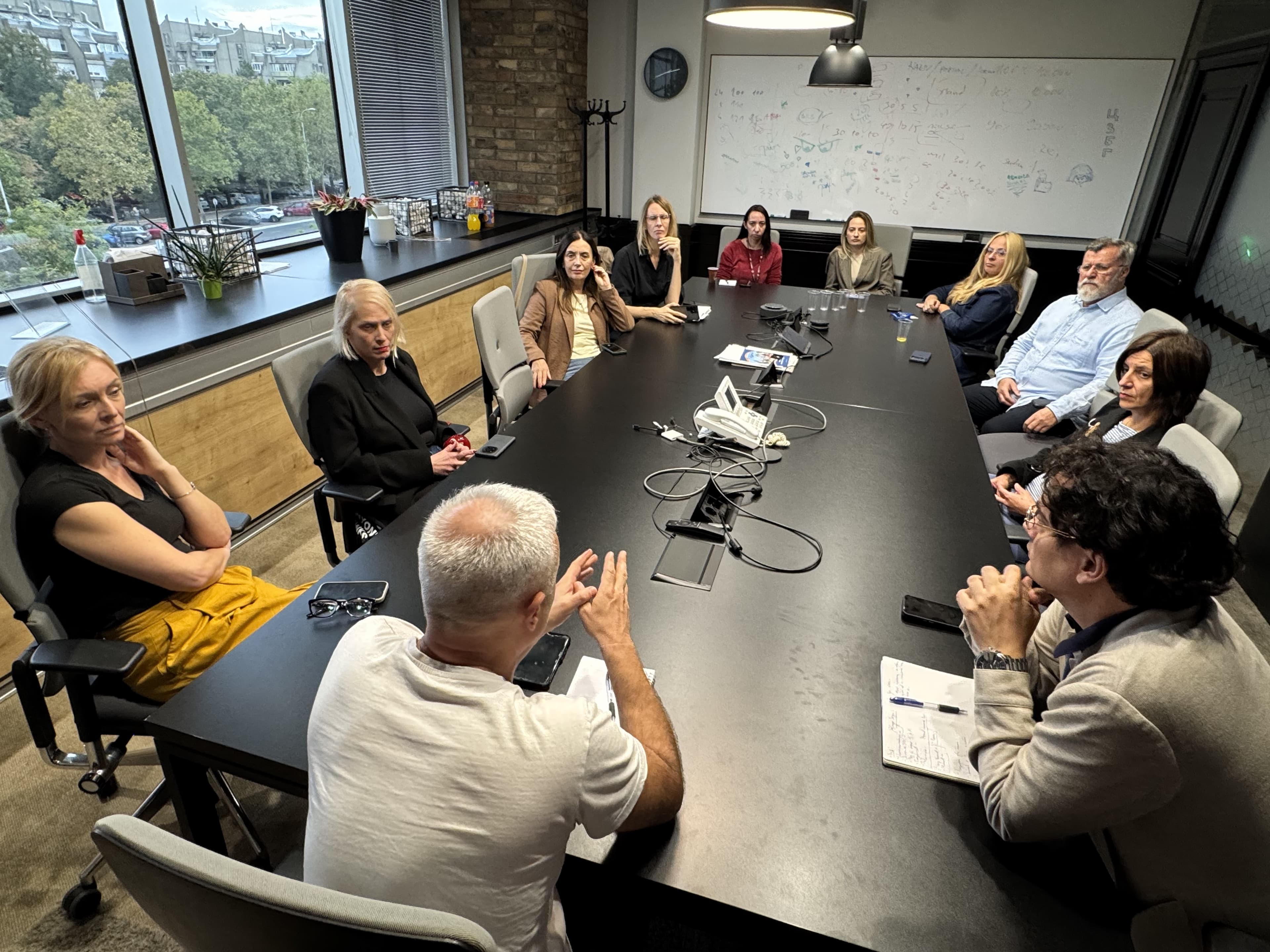
Journalistic associations provided support to the editorial team of Nova.rs: Ongoing communication and updates with international stakeholders agreed upon.

Coalition for Media Freedom: Stop Attacks and Harassment of Journalists During the Election Campaign
.png&w=3840&q=75)