
INTERVIEW Sanja Petrov, Editor of Slobodna Reč: The Truth in the Race with the Cap Wearers
A conversation with Sanja Petrov, a journalist from Vranje, exposes the harsh reality of working in an environment where powerful individuals do not shy away from exerting pressure, and threats on the street become part of the ordinary workday.
The interviewee for the portal Vranje News maps the difference between media loyalists, protected by the regime's umbrella, and those who, due to their commitment to the public interest, are forced to choose between their own safety and the citizens' right to know the truth. Through the lens of personal experiences, ranging from bizarre online threats to direct physical intimidation of her colleagues, she highlights the dangerous phenomenon of the normalization of fear that erodes the foundations of the profession.
Her testimony about the systemic sluggishness and distrust in the institutions that should protect journalists is particularly alarming, as they often appear powerless in the face of orchestrated campaigns of discreditation. This interview is not just a story about journalism in one city but a deep analysis of a society where the truth comes at a high price, and the solidarity of colleagues through associations like NUNS, of which Sanja is the commissioner for Vranje and the surrounding area, remains the last line of defense.
What is it like to work as a journalist in Vranje today in terms of personal safety? Is the sense of danger taken for granted or does it still come as a surprise?
"It depends on which media house you work for and what is considered when we say safety. As long as you are unprofessional, spreading regime propaganda, creating reports at the level of a school journalism club, pretending that everything is fine and that Vranje is a well-organized city without any problems, with a government that is flawless and everything functioning as it should - you are safe. But only at first glance."
Do you think that regime journalists have a problem, apart from their conscience?
"When you scratch the surface a bit, regime journalists may be protected from ordered attacks and campaigns, attempts at discreditation and discrimination by the authorities, but within their newsrooms, they face serious bullying, which they often do not want to speak about publicly."
On the other hand, there are independent journalists and colleagues who respect the Code and work in the public interest...
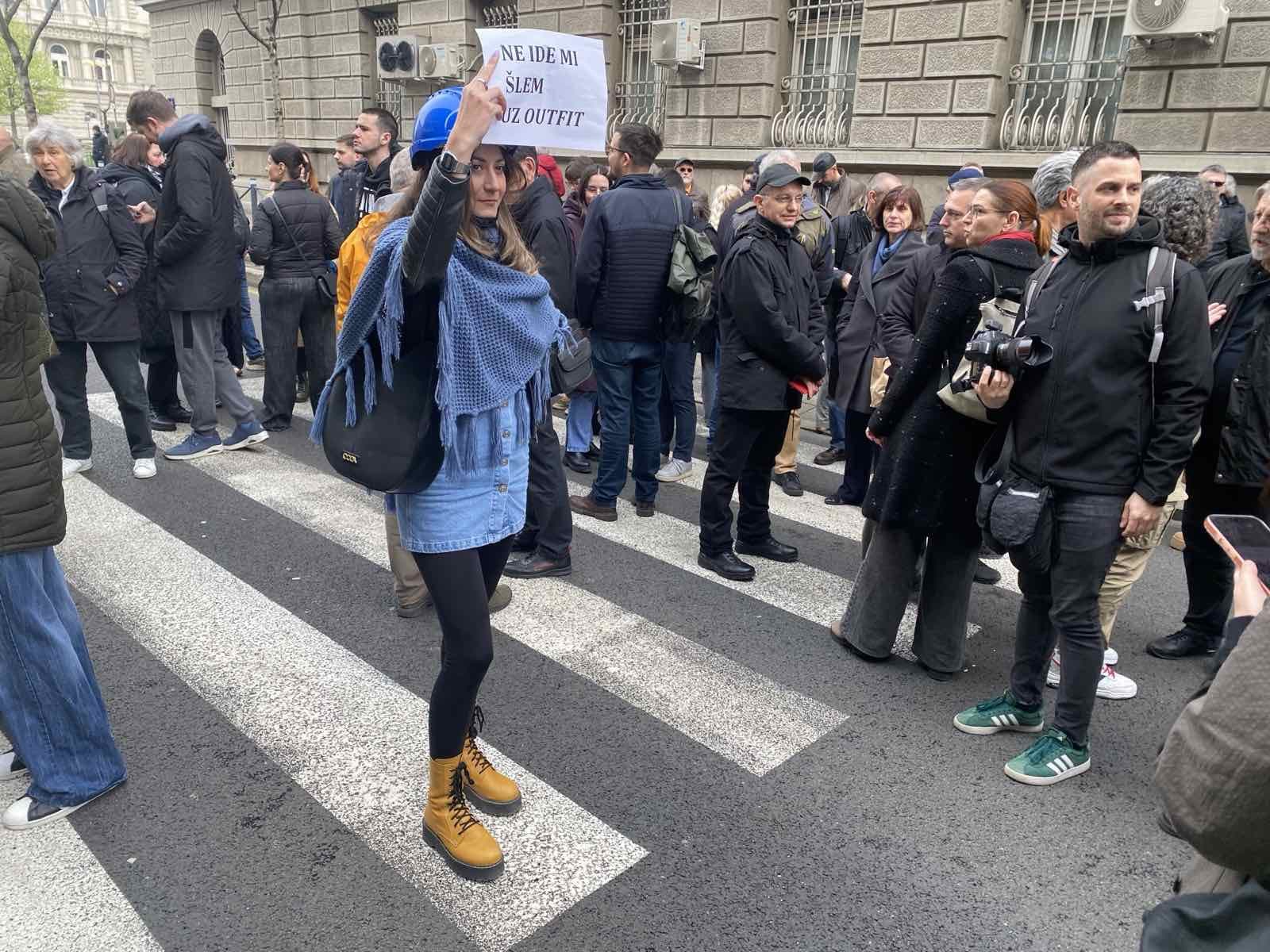
"Unfortunately, among colleagues who report in the public interest, the feeling of danger is normalizing, and that scares me. I do not want to accept the fact that wearing a helmet while reporting on things that the public must see and know is common, because that does not suit the authorities. That is not normal."
Have you or members of the editorial team at Slobodna Reč had specific experiences with threats, pressure, or attacks? Please provide examples.
"Yes, it mostly involved online threats, which we only began to officially report regularly starting last year; we often ignored them. In person, there were comments, I remember one that said, what legs, too bad they will break, when I was reporting from an event. We were also on some list of the Russian intelligence services as alleged organizers of some Maiden in Serbia, so our editorial name was dragged through tabloids. There were attempts to influence the content of our texts, etc."
What was the hardest part for you in those situations – the incident itself or what comes after it?
"What comes after, but that also depends on upbringing, concern for mental health, and support from colleagues and family."
What are the most common forms of pressure on local journalists – are they open and direct or subtle?
"Subtle, at least that’s our experience. These are various attempts at discreditation, blocking information, delaying responses, discrimination when journalists are invited to events, etc."
How do such working conditions affect editorial decisions? Is there self-censorship, and how is it recognized in practice?
"Here’s a recent example. I told two of my journalists that I could not guarantee their safety during a recent gathering in Vranje, which was formally state-organized, and we all know it was actually a party event, so I would understand if they did not want to go, and we would manage. However, they are people who think for themselves, so they decided to go anyway. The outcome – my colleague Andrej was chased by several baseball cap wearers while filming buses in the neighborhood Češal, which were organized to bring people from other cities to Vranje. He’s young and fast, so he got away. Also, it seems to me that editors are increasingly writing for judges, rather than for readers, in case the powerful involved in some affairs resort to SLAPP lawsuits."
How do you evaluate the reactions of institutions in cases of attacks on journalists? Does the system protect journalists or further discourage them?
"That also depends on many factors and the willingness of contact points in those places from where the journalists come. Generally, cooperation with local contact points is fine. I do not believe that the system fundamentally protects journalists; the system is evidently unable to protect itself when you have police officers who step back in front of aggressors. There is no system, no accountability to the public. There is only accountability to the regime. Justice is either selective or slow to be achieved."
Is there trust in the police and the prosecution when it comes to reporting threats?
"I’m not sure. I’m afraid it’s shaken due to the overall situation."
Is there a specific example that could illustrate this?
"Some time ago, I was subtly asked through acquaintances to withdraw a report that I allegedly filed against an unknown person. From that acquaintance, I learned that there was an ongoing procedure, that this person had been questioned, and I saw a statement mentioning my name. Neither the police nor the prosecution informed me about it."
Is there a conclusion?
"Even today, I do not have official information from them that it is related to the proceedings concerning our letter to local contact points for the safety of journalists about multiple threats on social media from a few years ago."
Local journalists are more exposed
How specific is the position of local media compared to national ones when we talk about safety and pressure?
"It’s simple – the people who insult and threaten you you meet on the street, and your family is more exposed to pressure."
To what extent does financial dependence on local budgets or advertisers affect the freedom of reporting? Is economic pressure perhaps the most effective form of control today?
"Vranje does not have the standards or a market that allows editorial offices to function and pay salaries to journalists and cover costs from marketing revenue and occasional advertisers. Citizens who pay taxes should, in theory, support media that report in the public interest, or co-finance their projects through local and national competitions."
What happens in practice?
"In practice, that money goes to subordinates and loyalists who create a parallel reality and promote officials."
Social media often becomes a space for targeting journalists. How does your editorial team deal with online attacks and hate speech?
"We report. We discuss. We seek advice from colleagues and lawyers."
Do you have internal mechanisms for protecting journalists – legal, security, or psychological?
"No one is alone. Joining together means a lot. We are, specifically, members of the Independent Journalists' Association of Serbia, which has all these mentioned mechanisms available to both individuals and editorial teams."
What do you think would be the first concrete step toward improving the safety of journalists locally? Are laws or their application the problem – where do you see the key issue in the system?
"I believe the problem is not just in the system and the laws, but in the overall position of the journalistic profession which has been seriously degraded – journalists today are either insulted or pitied. Often, giving journalists the status of official persons is mentioned as one of the solutions, but in practice, especially where repression is like in Serbia and institutions are not sufficiently independent, that can mean that journalists become even more exposed because they enter a framework that the authorities can more easily regulate, interpret, and potentially abuse. This status does not only bring protection but also additional obligations and responsibilities, so many actions of journalists who are deemed unsuitable would likely be interpreted as grounds for additional pressure. When institutions are no longer captured, we can talk about what comes next."
Are there topics that you see in advance as risky, and where is the line today between professional courage and personal safety?
"Currently, we all ask ourselves who will protect us when it comes time to follow parliamentary and local elections, especially on election day. I fear that due to the self-censorship of journalists who justifiably fear thugs, the public will remain in the dark."
Profile
Sanja Petrov (1992) graduated from Bora Stanković Gymnasium (where she was the editor of "Gimnazijalac") and Faculty of Education. From 2011 to 2016, she worked for the weekly “Vranjske”. From 2016 to 2018, she was involved in sales, marketing, education, singing, and the civil sector, and was the coordinator of the local SOS corner for girls. Then from 2018 to 2019, she was part of the Erasmus project in Malta focused on improving work with children on the autism spectrum, as part of the Maltese delegation at the European Youth Week in Brussels.
Since 2020, she has been the editor of the portal "Slobodna reč", and since 2022, she has been leading the NUNS Commission in Vranje. For the past few years, she has also worked freelance for "Južne vesti" and "Nova", as well as on international journalism projects. In her free time, she enjoys music and singing. Besides Serbia, she has performed in Norway, Azerbaijan, Greece... She is a former member of the widely speculated choir "Daskal", which exists at the Faculty of Education in Vranje.
Source: Vranjenews
Related Articles
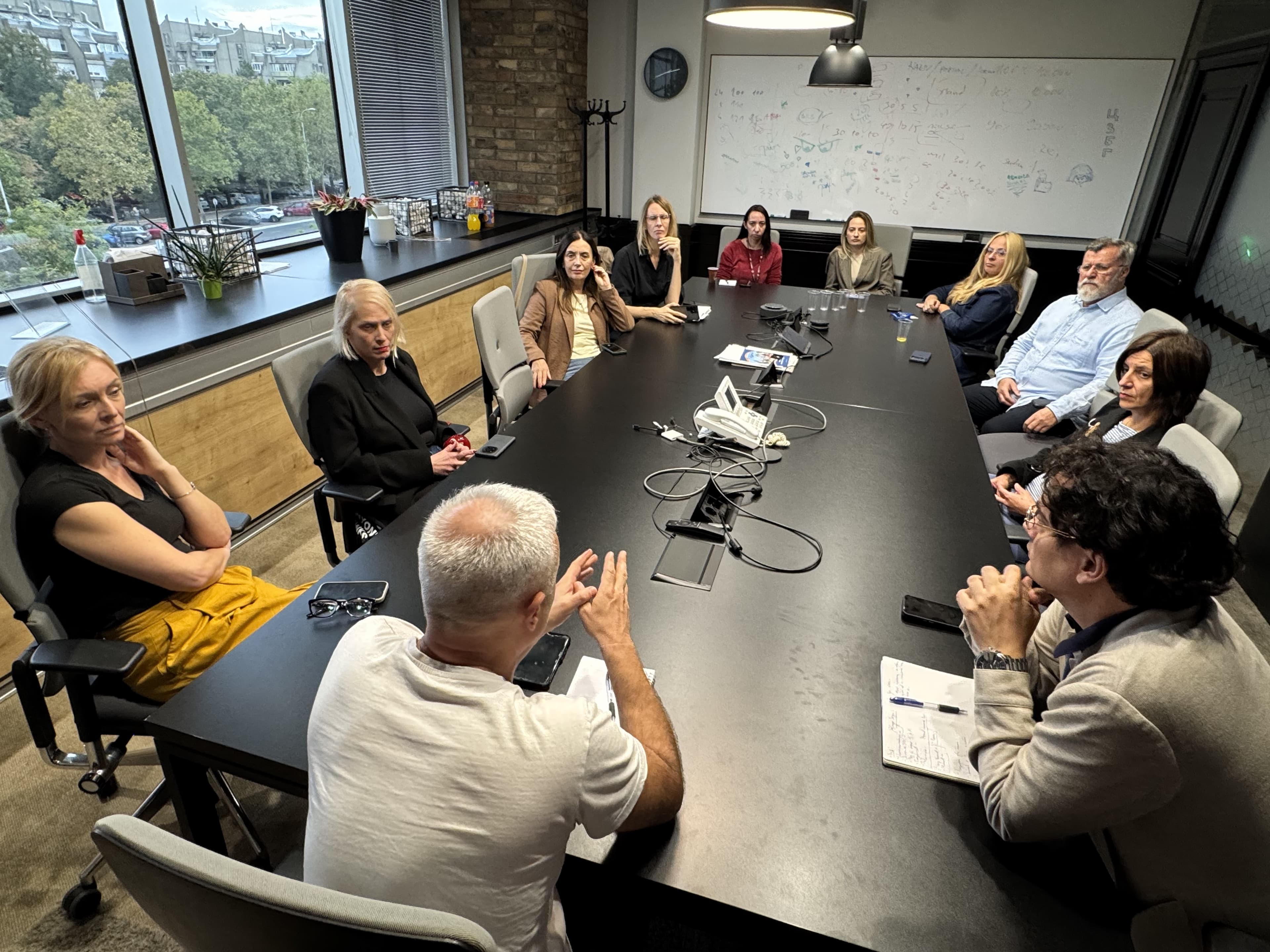
Journalistic associations provided support to the editorial team of Nova.rs: Ongoing communication and updates with international stakeholders agreed upon.

Coalition for Media Freedom: Stop Attacks and Harassment of Journalists During the Election Campaign

.png&w=3840&q=75)