
"The same handwriting as in the nineties, it ended with the murder of Slavko Ćuruvija": Veran Matić for Danas on the film in which he is targeted.
Televisions with national frequencies B92 and Prva, along with the cable television Informer, aired a documentary film about Veran Matić during prime evening slots. Matić assesses in Danas that the film presents an open call for lynching and continues the pattern of persecution of journalists that dates back to the 1990s.
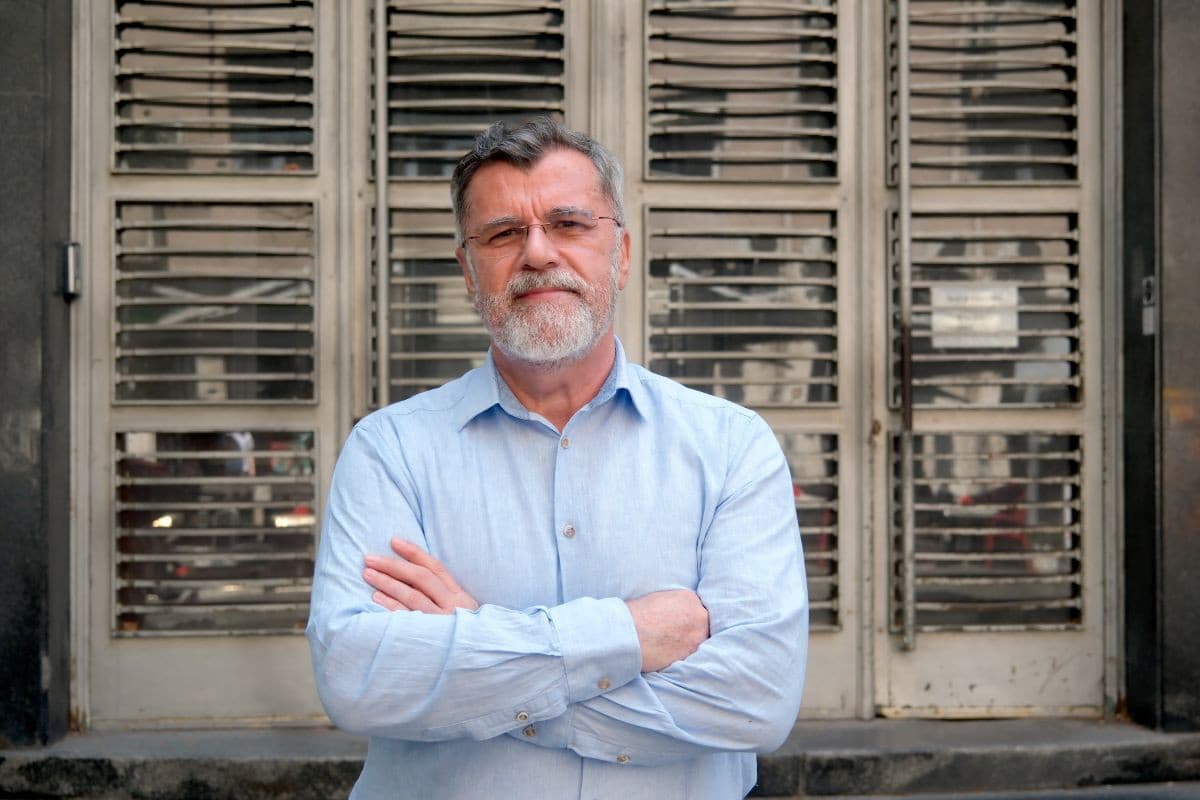
He states that the film was made in a manner reminiscent of the period when Aleksandar Vučić was the Minister of Information and recalls that the confrontations with journalists at that time did not end solely with media attacks, but also with violence.
“The same handwriting from the nineties can be recognized, which accompanies amendments to laws that facilitate the judicial prosecution of journalists and media. We know how that ended – with the murder of Slavko Ćuruvija,” Matić notes.
He reminds that the Supreme Court has issued a ruling stating that the acquittal in that case was made in violation of the law and assesses that today a “full circle” is being formed in relation to the authorities' attitude towards professional media.
Matić emphasizes that throughout his journalistic career he has been threatened with death multiple times and has been under police protection 24 hours a day for five years, but adds that now, like most journalists in Serbia, he feels both attacked and unprotected.
“Basically, the state, its representatives, and institutions are completely against professional journalists and media. Such defamatory attacks aim to incite violence against those who have succumbed to lies and propaganda,” Matić states.
He warns that such attacks occur in an atmosphere where, as he says, a large number of criminals and murderers are present in the center of Belgrade, reminding that journalists and media workers have previously been targets of physical attacks.
Matić also cites the statement made by the President of Serbia in August during the program “Hit Tweet,” when Aleksandar Vučić said that those who were imprisoned due to his activities “should have their files erased,” claiming that Matić should apologize to them.
“These are bullies who have attacked journalists and media, walled up editorial offices, burned journalists' houses, and have been accused of the most serious criminal offenses,” Matić notes.
Speaking about the consequences of broadcasting such content, Matić assesses that the pattern is already well known – after public targeting, hundreds of threats follow against female and male journalists, including death threats against them and their family members.
“The decision is made at the top of the state, then a spear is launched through hate speech, and afterward, it multiplies through national frequency televisions, tabloids, and their internet channels. After that, an army with the most primitive and sickening threats is activated,” Matić states, adding that in several cases attackers admit they were directly inspired by such reporting.
He points out that the increase in the number of threats is particularly pronounced during 2024 and the previous year, while regarding the lack of institutional protection, as he says, the fact that out of 134 opened cases in prosecutors' offices, only three end with convictions speaks volumes.
Matić assesses that the current situation represents a direct threat to his safety and states that he must implement preventive measures, but emphasizes that he is more concerned for female and male journalists who are more exposed to pressure, especially at the local level.
“We are building solidarity and tightening our ranks to help each other and protect ourselves. But there is no room for fear,” Matić states.
Reflecting on the claims from the film that he was one of the actors in the “colored revolution” of the nineties, Matić assesses that such statements are comical and that the authorities, as he says, actually fear the “awakened and rebellious Serbia.”
“This rebellion will also end with a change of power, and I hope with the prosecution of all those responsible for the unimaginable scale of plunder and systemic repression and violence against citizens,” Matić concludes.
It is worth noting that in the film, the President of the ANEM Board is dangerously targeted through twisted facts, placed in a narrative and context that portrays Matić as a traitor to Serbia, a foreign mercenary, and an agent, along with accusations that he embezzled large sums of money.
This film titled “Evil Era” was produced by the Center for Social Stability, which is already known for similar works that label media, organizations, and individuals who critically speak out in public about the activities of the authorities, state issues, and societal problems in the most horrific ways.
Source: Danas
Related Articles

Journalistic associations provided support to the editorial team of Nova.rs: Ongoing communication and updates with international stakeholders agreed upon.

Coalition for Media Freedom: Stop Attacks and Harassment of Journalists During the Election Campaign

.png&w=3840&q=75)