
Local media and journalists: Most vulnerable, first under attack.
The significance of local media has been emphasized countless times in various international documents, media research, and analyses, as well as in social theories. It is considered that the state of local information is an "indicator of the health of democracy," and that without strong and independent media, it "weakens at its most fundamental level." In countries like Serbia, where democracy exists only in fairy tales, local media finds itself in a dramatically difficult position. However, it must be noted that the crisis of local information is also identified in the most developed countries of the world, and has been for quite some time. This applies both to the sustainability of media and to the pressures they face and the safety of their employees.
For a long time now, various countries have implemented incentive measures aimed at the survival and development of professional local media. The crisis they are facing has multiple causes, but perhaps the most significant is that traditional advertising has collapsed, having moved to large digital platforms. Previously, advertising was an extremely important source of revenue for local public media. Moreover, the internet has created a habit among citizens of accessing media content for free, making them increasingly unwilling to purchase media content or subscribe to it. Thus, not only local, but especially local media have become highly dependent on funding from public revenues, making them much more vulnerable and susceptible to political pressures.
When it comes to pressures and safety, it should be emphasized that, unlike large national media, local media are in immediate physical and social proximity to centers of power. In smaller communities, there is a significant chance that the people you report on are part of the same social networks, which creates room for direct and personalized pressures.
Weak Points Easily Recognized
In a study on pressures facing local media in Serbia published in 2024 by the Association "Local Press," it is concluded that local media and journalists are particularly vulnerable when it comes to political pressures and safety. The pressures are more direct and less visible. It is often said that journalists in larger cities have some degree of protection from the large public. It is a fact that in large cities, you do not necessarily encounter someone you report on every day on the street or elsewhere, and there is a smaller chance of having mutual acquaintances or relatives. Local power holders can more easily identify the weak points of local media and journalists, or their families, and strike at them with a hammer if they feel it is necessary.
In this context, there is also economic insecurity. If you are a professional with a critical stance towards the authorities, you can forget about any public funding, which in large quantities goes to media and journalists close to the authorities, not just local but also national. For local media, which have a narrow market, this literally represents a matter of survival.
Media researcher Tijana Blagojev, one of the authors of the aforementioned study, tells "Glas Šumadije" that pressures and attacks on local media are less visible and news about them often goes unnoticed, passing “under the radar.”
“Attacks and pressures are often more direct because everything happens in smaller communities where people know each other, and local journalists feel more exposed to various forms of intimidation. According to the latest research, a significant issue among representatives of local media is the lack of solidarity at the local level, leading journalists to feel that they do not have the necessary protection within their industry in the local environment. It is very important that these problems are recognized, that more discussions occur about them, and that efforts are made to develop solidarity and a more efficient protection system for local journalists and media workers,” she says.
Locals First Under Fire
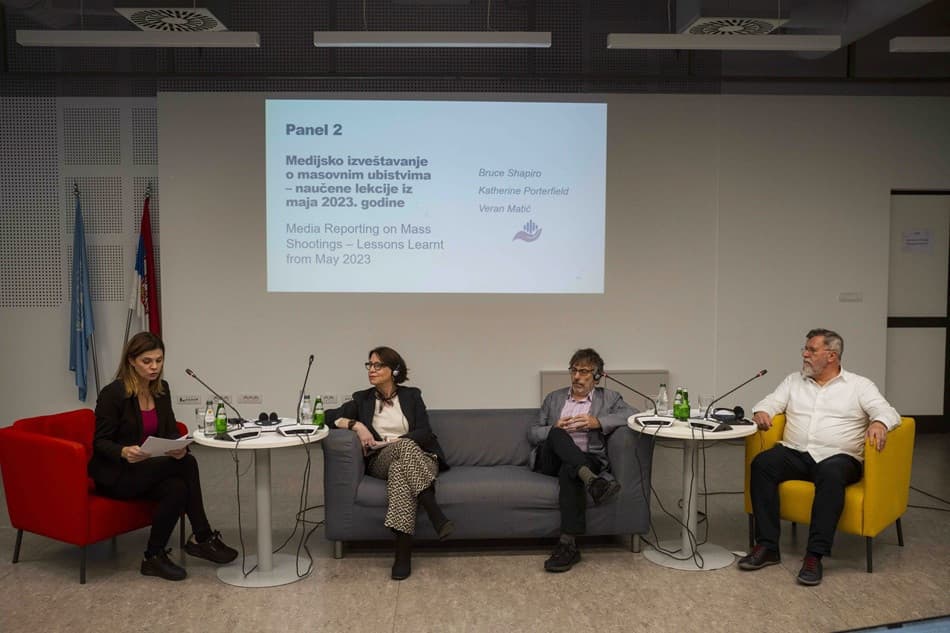
The president of the Association of Independent Media (ANEM) and member of the Permanent Working Group for the Safety of Journalists, Veran Matić, reminds in an interview with "Glas Šumadije" that local media were among the first to experience what is now increasingly recognized as a systematic strategy to silence free voices in Serbia. The result is “media deserts”—entire regions without free and professional media.
“Local media were the first to be exposed to so-called hybrid attacks: simultaneous threats and violence, SLAPP lawsuits, denial of funding from project co-financing, loss of advertising revenue, as well as pressures from local power holders. All this occurs with very limited protection options at the local level, without support from institutions, organizations, or other media outlets,” says Matić.
According to him, the first and most severe consequence of such an environment is self-censorship—abandoning topics that could provoke problems. This is followed by attempts to “repair relations” with local authorities, as well as pressures through various forms of hidden corruption, most often in the form of “business cooperation contracts.”
“In all these situations, the endangerment of safety remains a common denominator. Threats are often direct and unequivocal: ‘if you don’t do this, it won’t go well for you,’ or ‘we want to help you, but if you don’t want to—things will go as they must.’ Such messages are increasingly accompanied by harassment from anonymous accounts on social media, but in an atmosphere of almost complete impunity, perpetrators are less and less inclined to hide,” concludes Matić, noting that, according to available data, impunity for attacks on journalists is nearly complete.
In such circumstances, the state and local governments act as though they are waging a continuous war against professional media and journalists who adhere to the principles and standards of the journalistic profession.
Proximity as a Problem
Journalist Isidora Kovačević from Šabac is one of those local journalists who has gone through long-term organized torture backed by local authorities and criminal organizations. Isidora agrees with previous interlocutors: journalists and media in local communities are particularly vulnerable, and self-censorship is the most common response to that vulnerability.
“In local communities, especially in smaller ones, almost everyone knows each other. This proximity often becomes an obstacle that primarily leads to self-censorship. Through personal acquaintances—direct or indirect—not only is the safety of journalists endangered, but also that of people in their surroundings,” Kovačević tells "Glas Šumadije."
She notes that in such an environment, “friendly” advice, requests, and warnings often arise, causing media workers to frequently avoid presenting the complete picture of events and conditions on the ground.
“What we see in local media, especially during election campaigns, is often just a fragment of the real situation—enough to hint to the public about what the electoral process in Serbia looks like, but insufficient to seriously disturb local officials or informal power centers. Pressures on journalists do not only reduce to physical and verbal attacks. They encompass a whole spectrum of psychological pressure: discrediting professional work, creating a false image in public, and exposing details from their private lives. In this way, not only are journalists endangered, but also their families and friends,” she states.
She adds that in such pressures, not only officials or aggressors participate but also individuals who support them or wish to prove themselves to them, often for minor personal interests; the consequence of all this is living and working in constant uncertainty, anxiety, and fear.
The Aim of Pressures – Silencing “Unwelcome” Local Media
Editor of Leskovac's Jugpress, Ljiljana Stojanović, in an interview with "Glas Šumadije," states that pressures on independent local media are diverse, but have a clear goal—to silence them if they cannot be intimidated and brought under control.
“In addition to open and direct threats, insults, and targeting on social media—often organized through political bot networks—one of the most severe forms of pressure is financial pressure. Projects of independent local media usually do not pass in competition for co-financing of media content. And when they are approved, they are allocated minimal funds, insufficient for sustainable operation. At the same time, independent media labeled as ‘undesirable’ by local authorities practically lose access to the advertising market. Local businesses and institutions avoid collaboration, depriving these media of one of their key sources of income and further jeopardizing their sustainability,” says Stojanović.
She states that when it comes to safety, the situation for local media is very complex.
“In smaller communities, journalists encounter people daily who threaten them or exert pressure. A particular problem is that you never know who might interpret verbal attacks and insults from social media as a ‘signal’ for a physical attack, especially in environments where local power holders send messages that such behavior is acceptable. An additional issue is the lack of adequate institutional response—the police often do not take measures that would ensure effective protection for journalists,” says Stojanović.
Like Isidora Kovačević, she emphasizes that pressures do not stop at the journalists themselves.
“Members of their families often become targets, especially if they are employed in the public sector. In this way, an additional layer of pressure and fear is created, which seriously affects the professional and personal lives of media workers,” says Stojanović.
Revenge on a Child
Editor of "Bečej's Mozaik," Vladan Filipčev, in an interview with "Glas Šumadije," recounts a horrific, inhumane example of pressure from local power holders on the family of a journalist from this publication.
“Pressures on local media have lasted for years and are almost daily occurrences. Recently, in addition to the usual harassment and labeling of journalists engaging in investigative journalism and publishing content that irritates local power holders, new, extremely dishonorable mechanisms have been applied, far below any civilizational level. One of the most striking examples is a case where a journalist's child from ‘Bečej's Mozaik’ was denied the procurement of a legally guaranteed orthopedic aid in an educational institution. When the parent asked why the aid was not provided, so that their child could attend school without hindrance, they were told that they ‘should have thought about it earlier,’” says Filipčev.
He adds that such cases clearly depict the environment in which local media and journalists who adhere to the Journalist Code of Serbia operate. Besides such examples, he also witnesses systemic discrimination against local media that report according to the standards of the profession. For instance, they are blocked from access to public funds allocated to media on various bases, including competitions for co-financing media content.
“Through so-called public procurements, millions are allocated to regime media, while some media that present themselves as independent and fighters against corruption actually refrain from publishing information that could undermine the image of the authorities. In such circumstances, media that are not favored by local authorities systematically have all funding sources cut off, while those that daily violate the Code, such as ‘Informer,’ receive substantial funds. Professional local media are also denied advertising that was previously customary, contracts are terminated or not renewed, and business partners are discouraged or directly prevented from collaborating with them,” says Filipčev.
He cites another illustrative example from his work. "Bečej's Mozaik" recently published the fourth edition of a photo monograph of Bečej— a representative publication that local institutions have used for years as a gift for the most successful students and partners from both the country and abroad.
“However, last year, for the first time, the director of one school, after having already ordered a certain number of copies, was forced to withdraw from the purchase, with the explanation that the municipality had informed him that it was not allowed. In such an environment, it is clear that the normal functioning of independent local media is almost impossible. As a result of such pressures, ‘Bečej's Mozaik’ ceased its printed publication—its issue number 914, published on January 24, 2025, was the last to reach readers. It now exists only as a portal,” says Filipčev.
Local Media – Cultural Treasure
In conclusion, a bit of optimism. It is not an exaggeration to say that local media and journalists who professionally carry out their work, thanks primarily to their enthusiasm and dedication to their profession, are a kind of cultural treasure. Despite a sea of bad news, it is encouraging that citizens are increasingly recognizing this. Many initiatives from various associations that strive to help them as much as possible are also encouraging. It is also encouraging that international donors are increasingly recognizing the importance of local media, as well as the fact that independent national media houses have recently shown much more interest in local issues than in previous years, so local journalists and media are not left to fend for themselves. They cannot be, as the saying goes, drowned in shallow water.
Source: Glas Šumadije
Related Articles
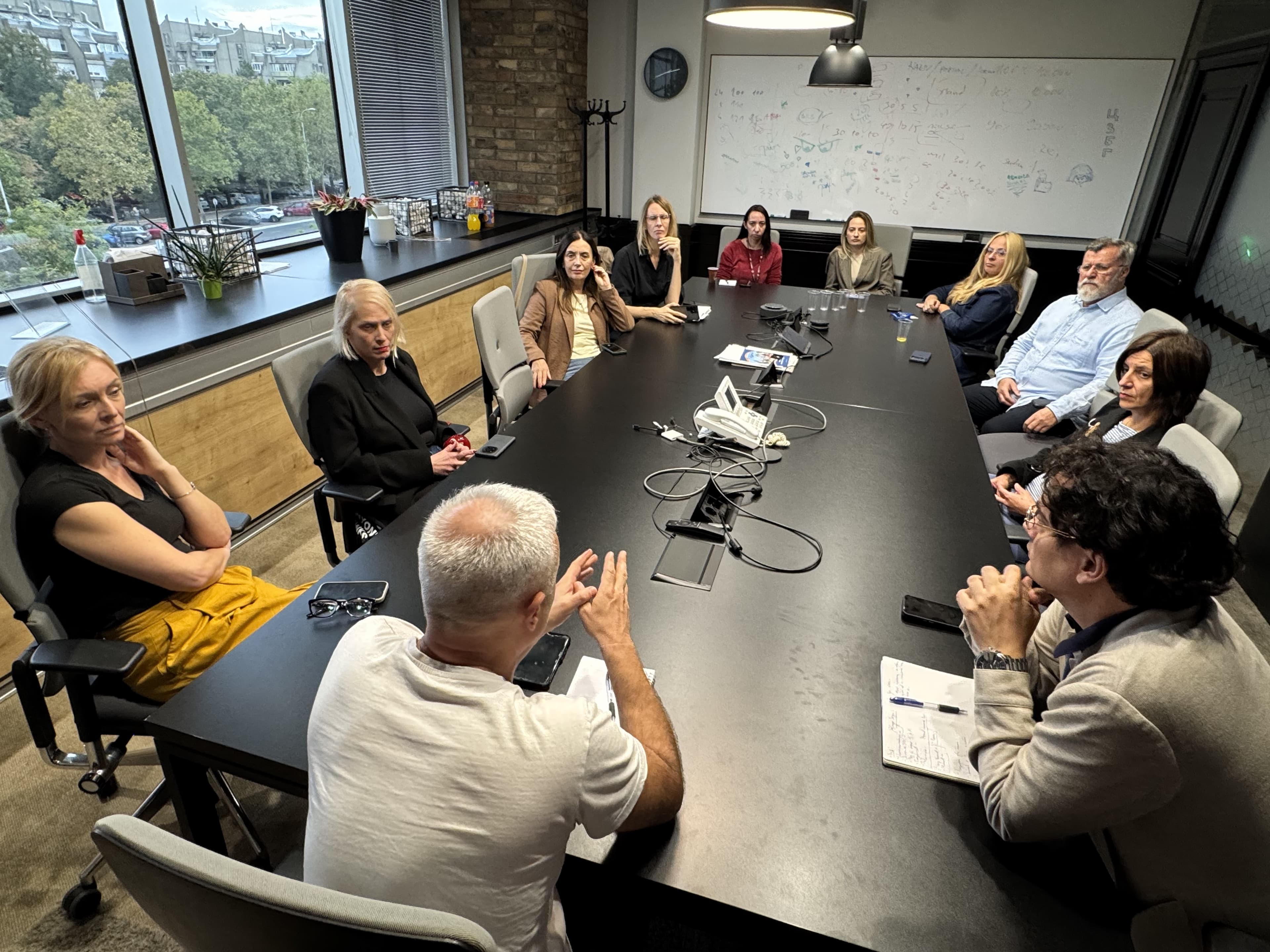
Journalistic associations provided support to the editorial team of Nova.rs: Ongoing communication and updates with international stakeholders agreed upon.

Coalition for Media Freedom: Stop Attacks and Harassment of Journalists During the Election Campaign


.png&w=3840&q=75)