
Mental Health of Journalists: And why do you ask how we are? We are alive…
Written by: Jovana Gligorijević
The title of this text is a line from the song “Gitare morte,” a duet by Arsen Dedić and Kemal Monteno. The music is by Arsen, and the lyrics were created based on the letters they exchanged during the siege of Sarajevo. It is in poor taste to compare anything to the hell of Sarajevo, but here we are discussing a line, not an event.
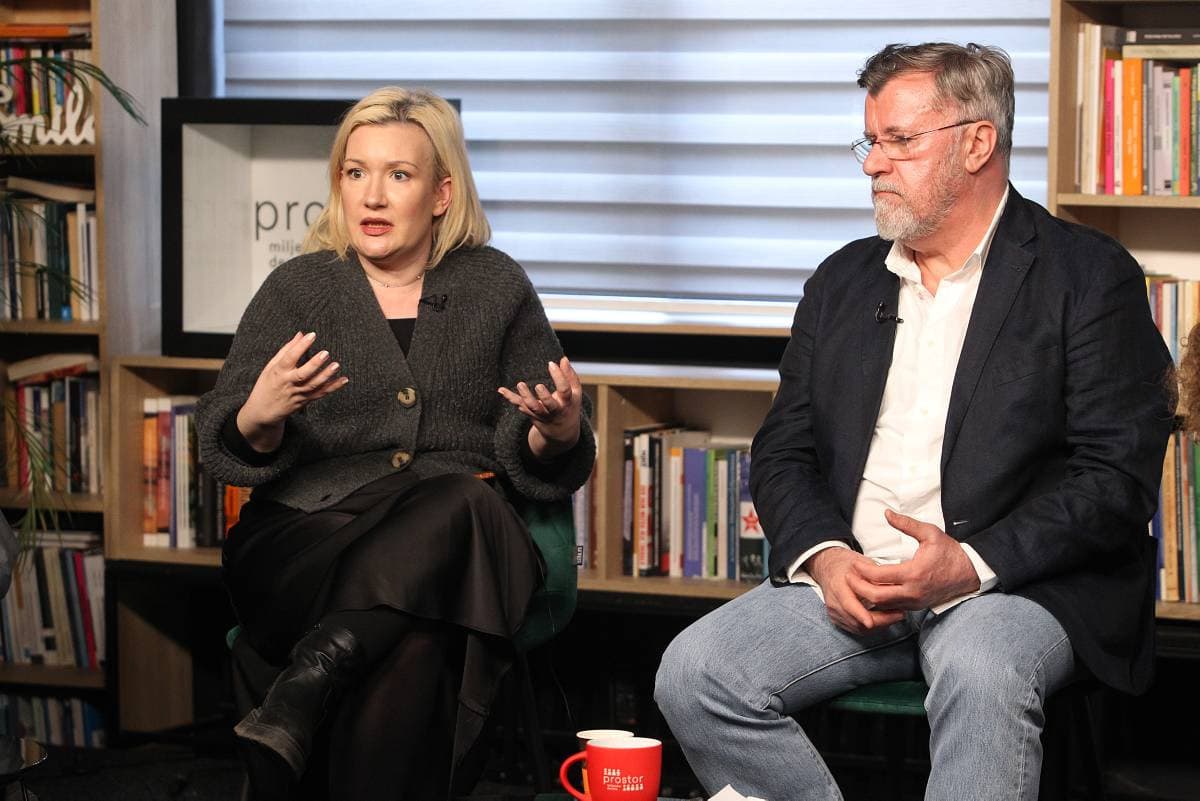
When the "work" of the Center for Social Stability on Veran Matić was released, one tweet about it felt like a punch to the stomach: "Do you ever wonder how it feels for the person informing you?" I didn't recognize myself; I didn't perceive him as a journalist but rather as a person who gets information through the media. I became aware that I know how it feels for the person informing me, and I know more than I would like to.
Image 1: "I was angry"
In the past few months, I have been working with Anema on workshops about the safety of female journalists. We don't just talk about threats and attacks; we discuss everyday struggles. Often, at the beginning, colleagues say they have never been discriminated against because they are women, and by the end of the day, they realize situations that are not right. At one of those workshops, we had already reached the end and transitioned to casual chatting.
“I was put in the trunk,” suddenly spoke one colleague. She said it as if she were telling us that her lunch had burned. We all fell silent. “But I wasn't scared; I’m just claustrophobic. When they brought me to that field where they wanted to leave me, I started screaming that they must be crazy, why put me in the trunk, they should have just put a bag over my head.” By now, she was speaking through laughter. She even knew who had kidnapped her and where they had taken her; she returned home on her own.
Image 2: Secret sign
A colleague follows the protests and regularly reports from them. She has had a series of unpleasant situations that, against her will, brought her into the public spotlight. She confides in me that she is developing mild social anxiety, and we are going to an event together, which is harmless, but many people know her and will approach her to say hello. She tells me this drains her. She has the urge to curl up on the floor and hide. She needs someone she feels safe with. We go to the event, and what she anticipated really happens: people approach her, hug her, everyone has something to ask or tell her. I can see in her eyes that all of this is slowly overwhelming her. It’s a sunny day, and we are outside. I suggest that every time she feels overwhelmed, she should lift her sunglasses to her head so I can come over and pull her out. The secret sign works. Later, over coffee, she says: “I’m terrible; all those people like me, and I would scream at each of them to leave me alone.”
Image 3: Blade of grass
We are sitting in a café. S. is fine; she doesn’t need the psychological help she could receive through the Independent Journalists’ Association. A few days earlier, she had been a victim of police brutality. We talk about it as an anecdote, an exciting event she will recount to her grandchildren. She takes off the mask from her phone; I can’t remember why. A blade of grass falls out. Her expression changes. It’s from that day… Imagine, it has remained. I ask if I should pack the grass to keep it safe or if I should burn it in the ashtray. She wants to keep it. I keep an eye on it for weeks afterward to make sure it’s okay. She decides to seek psychological help. She will be fine.
So, how are we
Now that we have the Analysis of Journalists' Mental Health in front of us, we have black on white how we are doing. The numbers don’t lie. Almost 19 percent of respondents indicated that they have a diagnosed mental disorder, while over 18 percent subjectively believe they have psychological issues but do not seek help from a psychiatrist. In the previous cycle of research, this response was given by 12.8 percent of respondents, indicating the largest increase in self-diagnosis and not seeking help.
The main cause of stress they cite is financial insecurity. So, how does this differentiate them from the rest of Serbia, someone might ask? It’s easy to say—there’s no difference. There are more dangerous and difficult jobs. But there’s one huge but: not all jobs are in the public eye; not every profession allows anyone who wants to find you, ambush you, write you threats and insults, or obtain your phone number to harass you. And on top of that, you have bills waiting, a child to pick up from kindergarten, and bailiffs constantly looking for something. You know, life as it is.
So, how are we? We are alive. For now, that is enough.
The author is a journalist and one of the contributors to the "Analysis of Journalists' Mental Health."
The complete results of the research are available at this link.
Related Articles
Journalistic associations provided support to the editorial team of Nova.rs: Ongoing communication and updates with international stakeholders agreed upon.

Coalition for Media Freedom: Stop Attacks and Harassment of Journalists During the Election Campaign

.png&w=3840&q=75)